
Microsoft takes action on Copilot: cutting redundancy, merging applications, and introducing AutoPilot agents
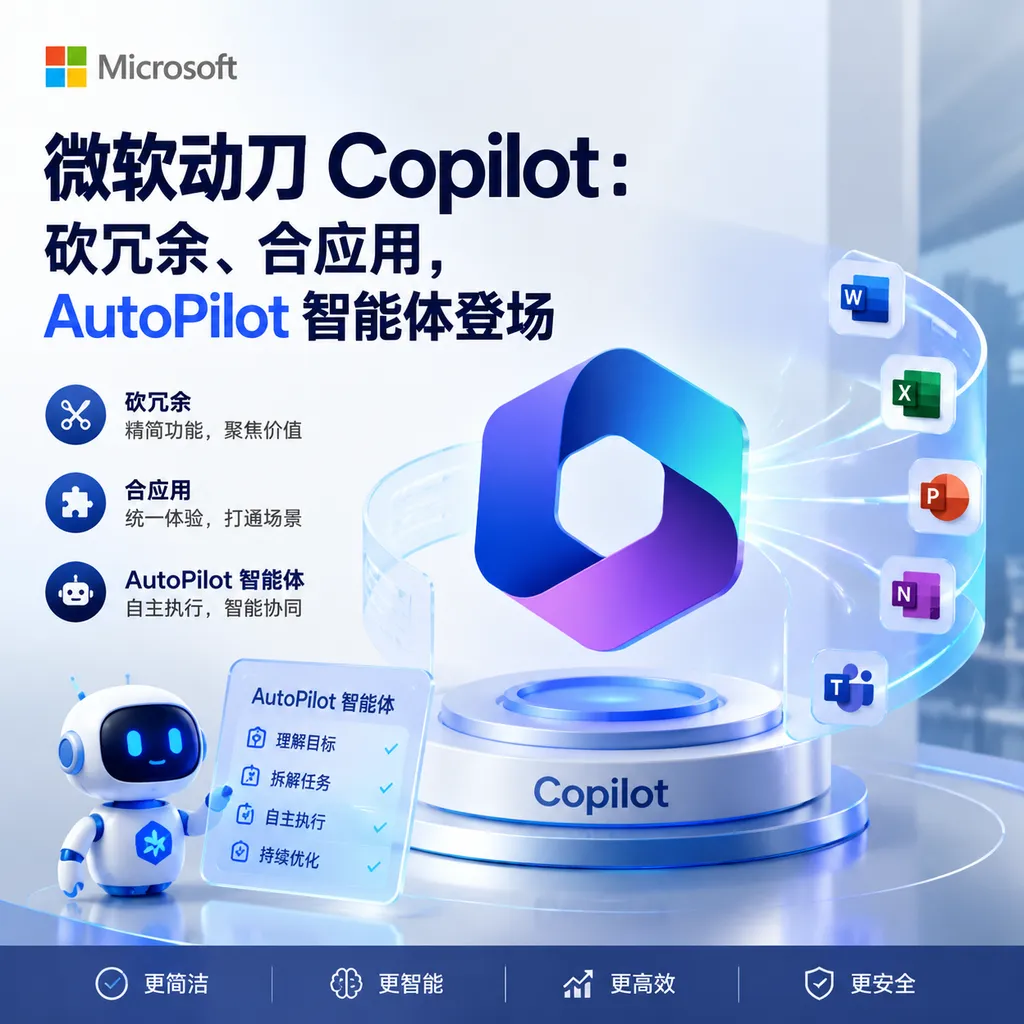
Internal memo from Microsoft Executive Vice President Jacob Andreou leaked: Consumer and Enterprise versions of Copilot will be merged into one; features like Podcasts and Labs will be cut; a new background helper agent called AutoPilot will be added, expected to launch in August.
Microsoft has finally decided to tackle the scattered Copilot ecosystem.
Yesterday (July 3), The Information obtained an internal Microsoft memo written by Executive Vice President Jacob Andreou, the newly appointed head of Copilot. The memo stated bluntly: consumer and enterprise Copilot applications will be merged into a single product, launching in August; a batch of features deemed “ineffective parts” will be cut—experimental items like Copilot Podcasts and Copilot Labs are on the list; meanwhile, two new additions are coming—a new AI programming tool and a backend intelligent agent named AutoPilot.
This isn’t a regular iteration—it’s a reconstruction.
Why Microsoft is doing this
If you’re a long-time Microsoft user, you’ve probably been tormented by Copilot’s “clone technique.” There’s a Copilot in Office, GitHub, the Windows taskbar, Edge sidebar, and Teams. Same name, different entry points, different capabilities, different subscription systems—GitHub Copilot has its own account structure, Microsoft 365 Copilot has another. Enterprise admins have to configure permissions separately across platforms.
Microsoft’s financials exposed the flaw: revenue from Microsoft 365 Copilot enterprise subscriptions rose 180% year-over-year—sounds great—but around 65% of enterprise users only use one or two Copilot tools. In other words, the money’s coming in, but engagement is low. The cause isn’t complicated—too many scattered entry points; users simply don’t remember which icon to click in which scenario.
In comparison, Google’s integrated Gemini Ultra app, launched Q3 2025, merged Search, Workspace, and Cloud into one app; by Q1 2026, enterprise users surpassed 10 million. Meta’s AI assistant, combining social and productivity functions, reached 230 million monthly active users. Microsoft controls four massive ecosystems—Windows, Office, GitHub, and Azure—yet Copilot is still fragmented. In 2026, when the “super app” concept has become mainstream, this approach is already outdated.
Therefore, after taking charge, Andreou initiated an internal project codenamed “Delivering one Copilot”—its goal: unify the scattered Copilot ecosystem into one powerful product.
What the new Copilot looks like
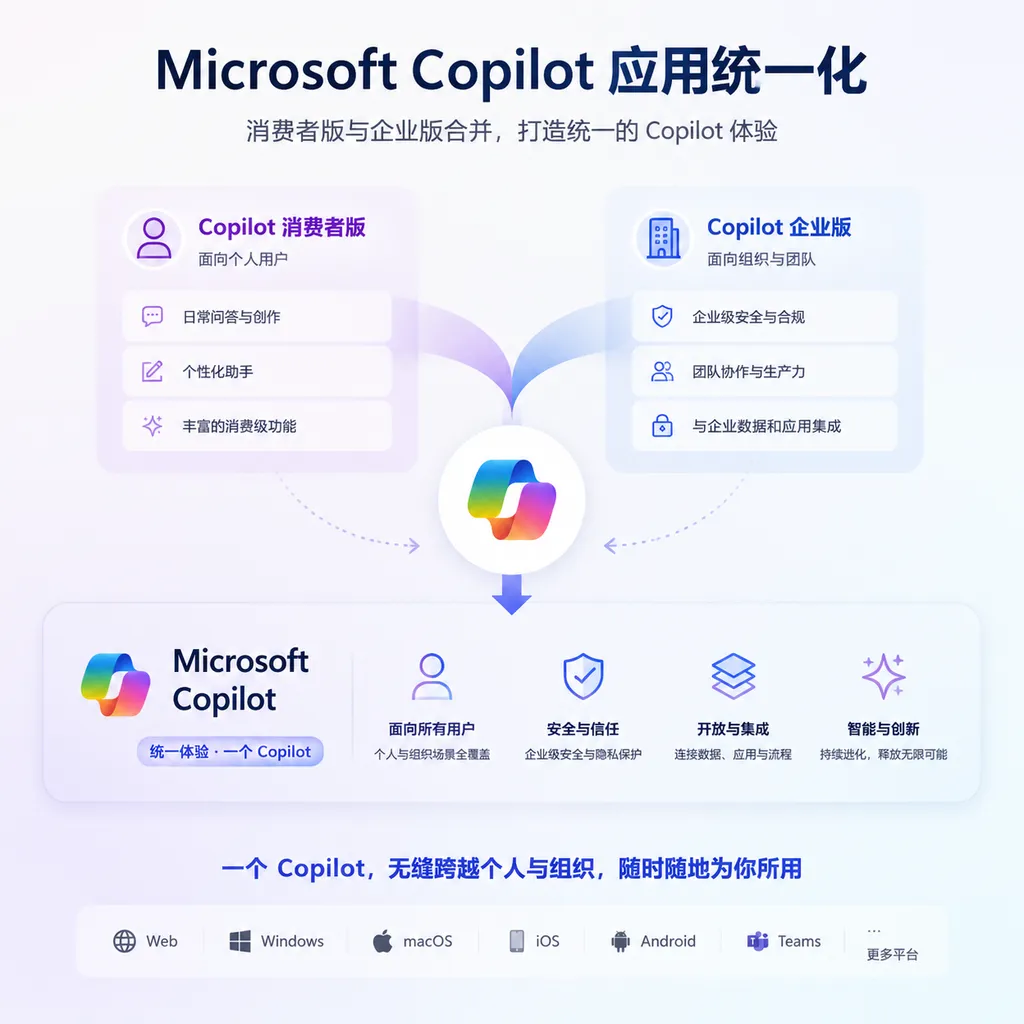
According to the memo and leaked images, the new Copilot integrates four core components:
- Copilot Chat: the general conversational assistant—multi-turn interaction, the familiar interface we know.
- GitHub Copilot: code generation and debugging—used by 15 million developers as of Q2 2025.
- Copilot Cowork: real-time collaboration, syncing document edits and task assignments.
- AutoPilot: the newcomer—a backend intelligent workflow agent.
All four parts fit together; users can toggle between personal and enterprise modes with one click. Enterprise admins can customize permission and data isolation policies. It runs on Azure OpenAI Service with a unified context layer—meaning that when you write code in GitHub Copilot, you can directly pull Chat discussions into the context, or let AutoPilot deploy the code to Azure—all without switching windows.
Sounds great, but the real breakthrough is AutoPilot.
AutoPilot: From “answer machine” to “runner”
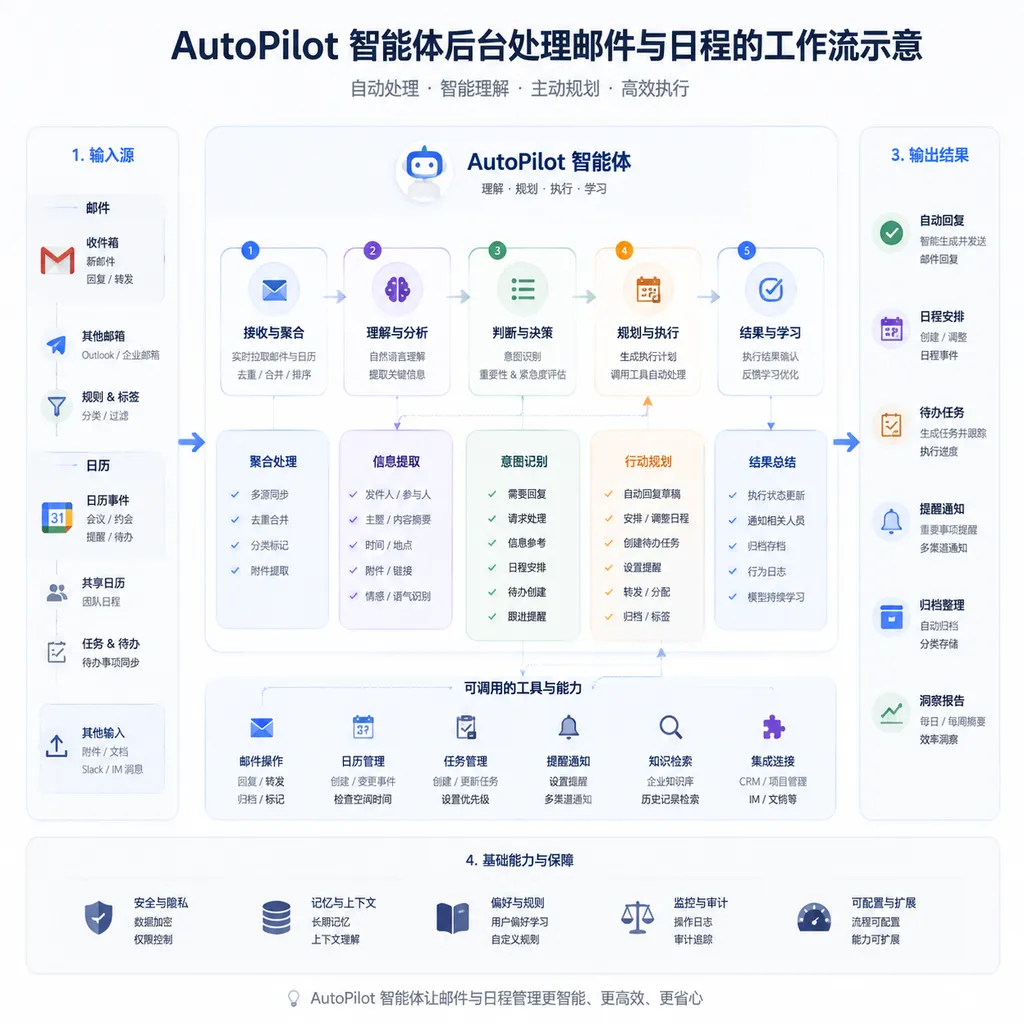
AutoPilot’s positioning is clear—it doesn’t wait for your prompts; it works proactively in the background. Andreou’s examples included scheduling and email summarization—not flashy, but the direction is right.
Over the past two years, AI assistants’ biggest weakness has been passivity. Unless you type something, they’re static icons. Even GPT or Claude, no matter how smart, just sit there waiting for prompts. Yet the true time-saving scenarios are the opposite: it categorizes incoming emails, pulls summaries, flags those needing your decision; handles calendar conflicts by proposing options; scans pending PRs for static analysis before you review.
Other companies have similar workflow agents—OpenAI has Operator, Anthropic has Claude Code’s background agent, Google has Gemini Actions. Microsoft’s AutoPilot enters this race with a natural advantage—it’s embedded inside Outlook, Teams, Office, and GitHub workflows. You don’t need to grant permissions—it already lives within your work data.
Leaked images mention another proactive agent, codename Scout. Not much info yet, but “proactive” is notable—if AutoPilot runs tasks by rules, Scout seems to be a “problem detector.” That’s Microsoft’s second bet on the agent layer.
The “ineffective parts” being cut
Copilot Podcasts was Microsoft’s experiment during last year’s “AI-generated podcast” craze—it turned documents into AI host dialogues. When Google’s NotebookLM feature went viral, Microsoft and several others followed. A year later, the hype’s gone, user retention flat—so this feature is being axed.
Copilot Labs was a preview space for experimental features—similar to Google Labs. Problem is, ordinary users rarely visit, and developers prefer using Foundry SDKs or GitHub directly. Labs ended up a product with no real audience.
Andreou’s memo phrased it as: the new Copilot must “focus on real work scenarios and be results-oriented.” In plain language—stop making gimmicks; users come here to get work done.
From a product philosophy standpoint, this is rare “addition by subtraction.” Microsoft has piled too much onto Copilot over the years; Andreou’s first move is shortening the feature list. Within big tech’s AI product lineups, such slimming-down is unusual.
My take on this reconstruction
On the bright side—the direction is absolutely right. The next AI assistant battlefield is transitioning from “multiple entry points” to “single hub + multi-agent.” Google’s doing it, OpenAI packs all features into one ChatGPT app, Meta too. If Microsoft doesn’t act, Copilot may sink under its own product matrix.
Challenges remain. Merging two user groups is notoriously hard—consumers want simplicity and intuition, enterprises need compliance and granular control. One app means solving this tension through UI layers and permission systems—poor execution could please neither side. Plus, AutoPilot’s autonomous operations face trust issues—automatic email replies? Enterprise IT will object first. So the initial release will likely be conservative; AutoPilot’s “autonomous actions” will be fewer than advertised.
Another concern: GitHub Copilot’s developer user base and Microsoft 365 Copilot’s office user base are fundamentally different. Merging them—will developers feel diluted? Will GitHub’s brand independence weaken? We’ll see after August’s launch.
From a competitive perspective, Microsoft’s move sends a subtle signal to OpenAI. ChatGPT Enterprise has recently added team collaboration, code review, and document generation modules—overlapping Copilot’s direction. The two remain deeply integrated, but product-wise, they’re colliding head-on. With Sam Altman pushing ChatGPT as a consumer entry point and Microsoft positioning Copilot as an enterprise gateway—their supposed separation is blurring fast.
Developer perspective: why this matters to you
For developers, three things to watch:
- API/SDK changes for GitHub Copilot: If unifying the app also unifies underlying models and toolchains, boundaries between Foundry SDK and Copilot Studio may shift.
- AutoPilot’s openness: Will Microsoft allow third-party developers access to AutoPilot’s workflow engine? If yes, it opens new routes for enterprise automation; if not, it remains a walled garden.
- Agent collaboration protocol: Microsoft is pushing the Microsoft 365 Agent SDK; AutoPilot will likely be a first-class citizen in that SDK. If you’re building enterprise agents, study the docs early.
For developers in China, direct access to Copilot products still faces network and account barriers. If you need to call and compare multiple mainstream models (GPT, Claude, Gemini, etc.) within one workflow, OpenAI Hub offers unified key access across models—OpenAI-compatible and China-accessible—useful for multi-model selection or building your own agents.
See you in August
Microsoft’s schedule is tight: new Copilot launches in August; according to leaks, the full major release will arrive late August to early September 2026. The June Build conference teased progress but showed no product. That means over the next two months, Microsoft will gradually unveil more details.
One key watchpoint: will the new Copilot gain deeper integration into Windows 12 itself? If AutoPilot becomes a resident system-level agent—appearing in the taskbar, notification center, or file explorer—it would mark not just an app merger but an OS-level AI transformation.
Over the past two decades, Microsoft’s product reconstructions have had more failures than successes. This bet is bigger than any before—not merely a product overhaul, but an attempt to make an AI assistant the next platform entry after Windows itself. We’ll find out in August.
Sources
- ITHome: Microsoft to restructure Copilot AI—streamlining Podcasts and other redundant features, adding AutoPilot agent — summary of Andreou’s internal memo, August release timeline, AutoPilot, and cut features.


