
# Pylon Sync Released: A Real-Time State Synchronization Framework for Multi-Agent Systems
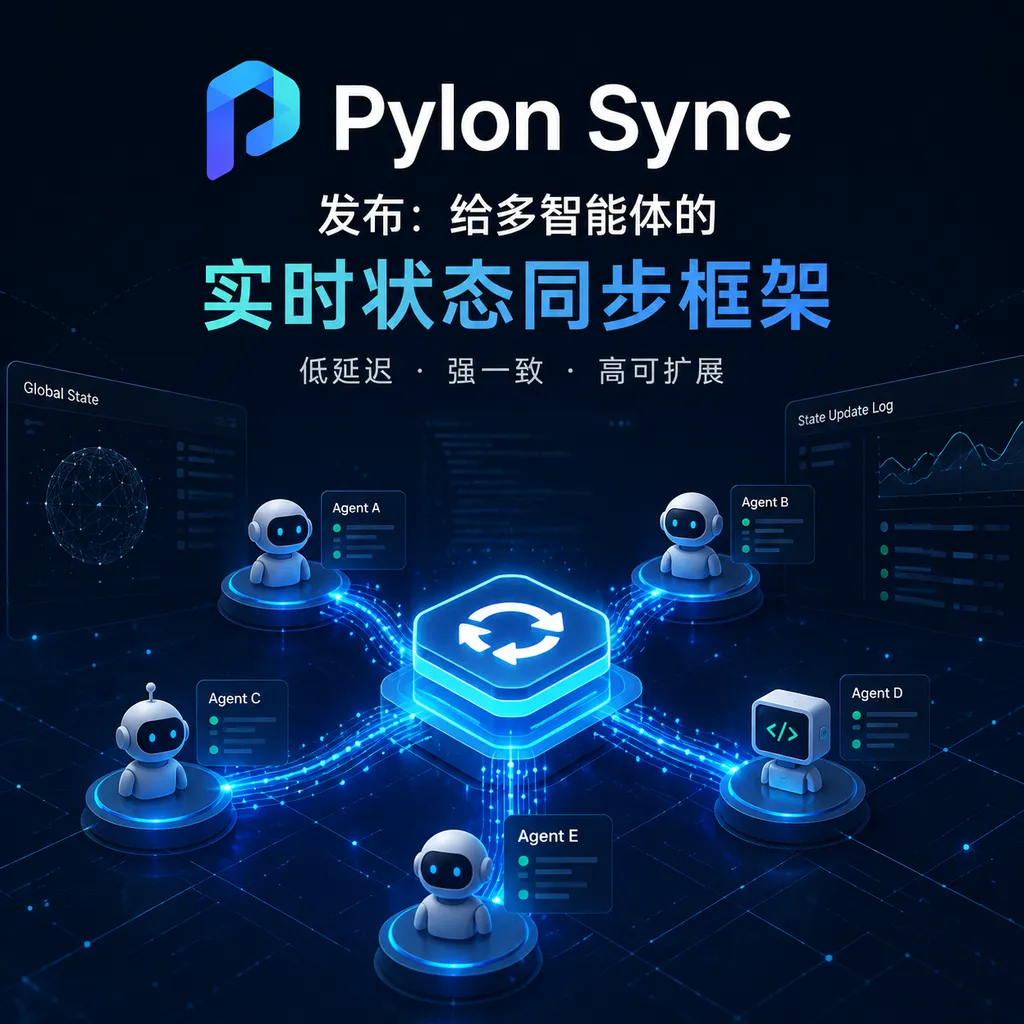
Pylon Sync enters the real-time full-stack framework space with an Agent-First positioning, pushing the state synchronization problem in multi-agent collaboration down from the application layer to the framework layer, aiming to redefine the development paradigm for AI applications.
Pylon Sync Launches an Agent-First Full-Stack Realtime Framework: Native State Sync for Multi-Agent Collaboration Has Finally Arrived
On July 8, an open-source project called Pylon Sync debuted on Hacker News as a Show HN post and quickly climbed to the front page. The project’s positioning is straightforward: an Agent-First full-stack realtime framework focused on one thing—making realtime synchronization between multiple AI agents, between agents and users, and between agents and backend state a native framework capability instead of something every team has to cobble together themselves with WebSocket + Redis + state machines.
This space is already crowded with players, from early projects like Liveblocks and Yjs to later entrants like Convex and Jazz, and agent-focused frameworks such as Mahilo and LangGraph. But Pylon Sync is the first framework to put “agents are first-class citizens” on page one of its design document.
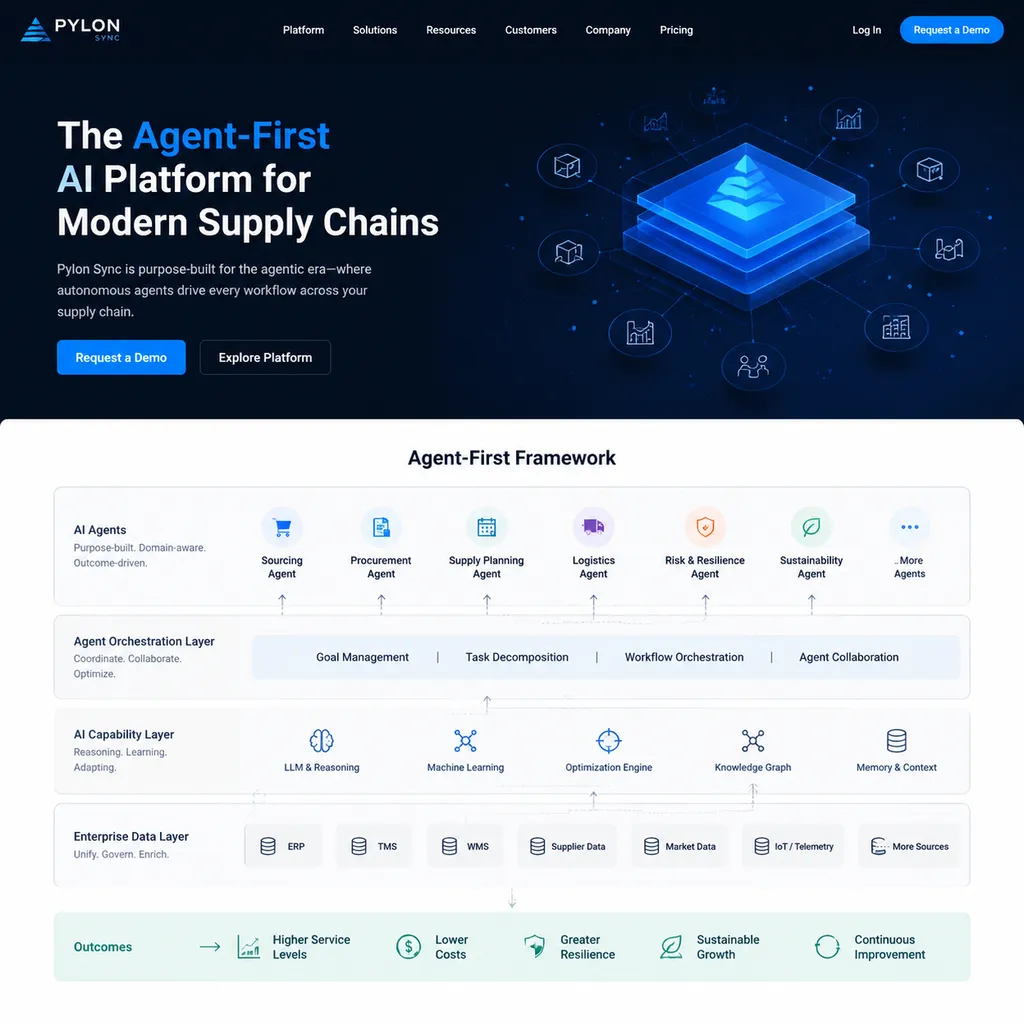
In One Sentence: What Problem Is It Solving?
Take this scenario: you’re building a collaborative writing app with multiple agents. One agent gathers research, another drafts content, another proofreads, and the user can jump in and edit at any time. Every action here is a state change—the retrieval results need to be broadcast to the writing agent, the writing agent’s token stream needs to flow to both the proofreading agent and the frontend, and user edits need to interrupt the current generation while notifying downstream agents.
How would you build this today? Probably with some combination of:
- WebSocket or SSE on the frontend
- Redis Pub/Sub or NATS as the backend message bus
- A message queue between agents, maybe Kafka or an in-memory queue
- Custom state consistency logic and manual conflict merging
- Frontend delta patching for UI updates
The codebase explodes in complexity, and every time you add an agent or a new state field, you end up touching five different places. The core argument behind Pylon Sync is that developers should not have to repeatedly reinvent synchronization logic. The framework should handle agent state the same way React handles UI state.
Technical Breakdown: How Does It Work?
CRDT Is the Foundation, But Not the Whole Story
Pylon Sync uses CRDTs (Conflict-Free Replicated Data Types) underneath. That part isn’t new—Yjs and Automerge have been doing it for years. But Pylon Sync does two things differently.
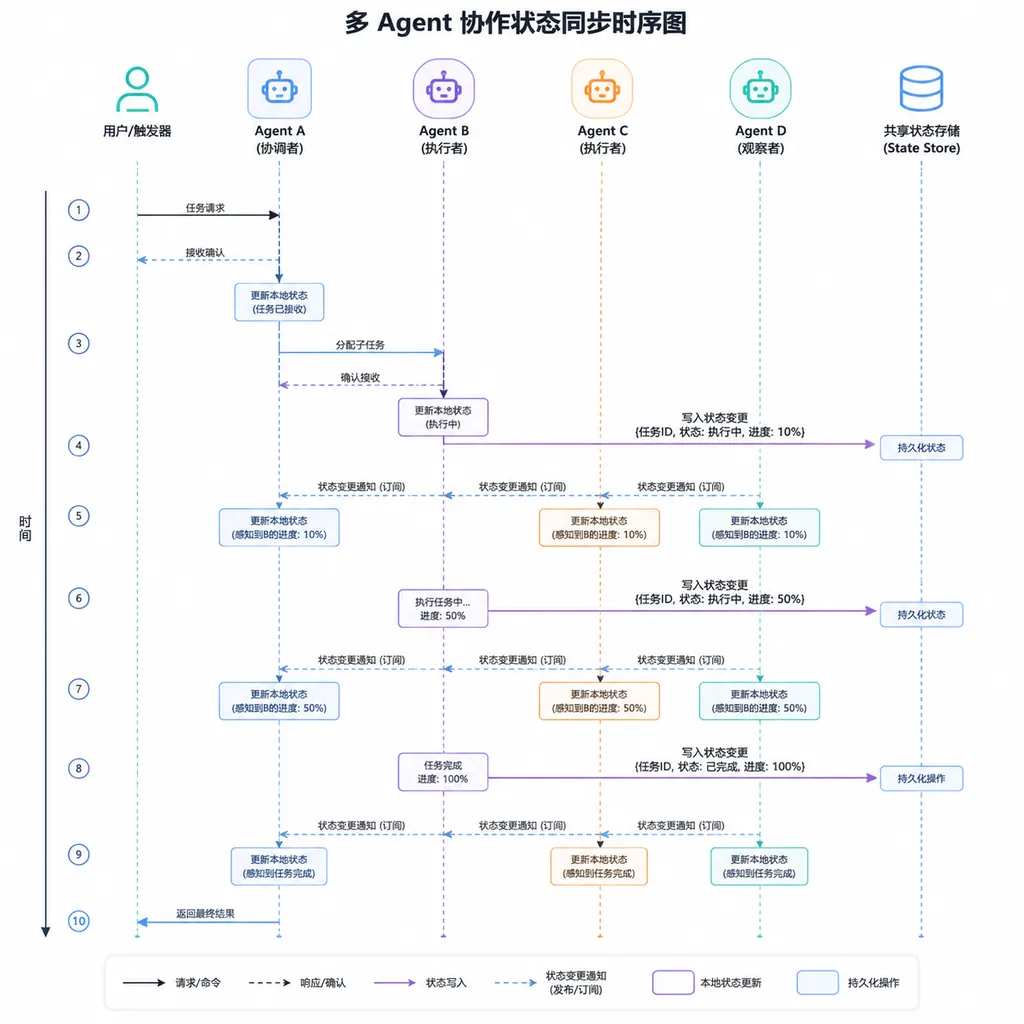
First, it brings the agent’s intermediate state into the synchronization graph. Traditional CRDT systems synchronize documents and data; Pylon Sync also synchronizes the agent’s reasoning process, tool calls, and token streams. That means one agent can immediately observe what another agent is “thinking” without waiting for a final output.
Second, it introduces a layered synchronization strategy. Not every piece of state needs strong consistency. An agent’s scratchpad can be eventually consistent, while tool execution order must remain deterministic. Pylon Sync lets developers declare synchronization semantics at the field level, which is still relatively uncommon in frameworks.
“Full-Stack” Actually Means Full-Stack
Many so-called “full-stack frameworks” simply put frontend and backend code in the same repository. In Pylon Sync, “full-stack” means that the same state definition works across the browser, server, and agent runtime—and synchronizes automatically.
Writing code with it looks something like this:
// Define an agent session state
const session = defineState({
  messages: syncedList<Message>(),
  activeAgents: syncedSet<AgentId>(),
  scratchpad: syncedMap<AgentId, string>({ consistency: 'eventual' }),
  toolCalls: syncedLog<ToolCall>({ ordered: true }),
});

// Read/write on the agent side
session.scratchpad.set(agentId, 'analyzing user intent...');
session.toolCalls.append({ name: 'search', args: {...} });

// Read on the frontend with automatic reactivity
const pad = useSyncedState(session.scratchpad);
The frontend subscription pad updates across all connected clients within milliseconds regardless of where the change originates. The experience is similar to Convex or Jazz, but the difference is that Pylon Sync ships with built-in agent lifecycle primitives: agent startup, pause, interruption, and context switching are all framework APIs instead of custom implementations.
Interruptions and Forking Are Native Features
This is arguably the most interesting part. Suppose a user interrupts an agent halfway through generation and redirects it. In LangGraph, you can technically do this, but rollback handling, downstream synchronization, and UI state all need to be managed manually.
Pylon Sync turns interruption into a first-class primitive. Any synchronized state node can be forked, rewound, or replayed. This gives agent applications a Git-like timeline model, making it feasible for multiple users to experiment with different branches of the same agent session.
Who Is It Competing With?
Here’s how several related frameworks compare:
| Framework | Positioning | Agent Support | State Sync | Full-Stack | |------|------|-----------|---------|------| | LangGraph | Agent orchestration | Strong | Weak | No | | Convex | Realtime backend | Weak | Strong | Yes | | Jazz | Local-first collaboration | Weak | Strong | Yes | | Mahilo | Multi-agent communication | Strong | Medium | No | | Pylon Sync | Agent-First full-stack | Strong | Strong | Yes |
LangGraph is more like Airflow for agents. It excels at orchestrating agents into DAGs, but it doesn’t handle frontend state or realtime synchronization. If you build with LangGraph, you still need to wire up SSE and patch frontend state yourself.
Convex is a general-purpose realtime backend where agents are just one use case among many. Its strength lies in tightly integrated database and function execution, but it lacks agent-specific abstractions. Interruptions, concurrency, and context switching all remain application-level concerns.
Jazz takes the local-first route and has strong CRDT infrastructure, but offers almost no native support for agent workflows. It behaves more like collaboration infrastructure.
Mahilo has a closer positioning, focusing on human-agent collaboration and multi-agent communication, but it leans backend-heavy and places less emphasis on frontend state and persistence.
Pylon Sync is targeting the territory between these projects—combining LangGraph’s agent abstractions, Convex’s full-stack realtime experience, and Jazz’s CRDT rigor. It’s an ambitious goal.
Developer Reactions: High Interest, Plenty of Skepticism
The Hacker News thread has already passed 400 comments, and opinions are sharply divided.
Positive feedback mostly centers around:
- Clean API design with far lower cognitive overhead than LangGraph plus custom WebSocket infrastructure
- The combination of CRDTs with intermediate agent state feels genuinely novel
- High-quality docs and examples, unusually polished for a Show HN launch
The criticisms are equally direct:
- The abstraction is too heavy. Some developers argue that for simple apps with only 2–3 agents, Pylon Sync is overkill and a plain WebSocket setup is enough.
- CRDTs carry cognitive overhead. Declaring consistency semantics at the field level sounds elegant, but developers still need to understand eventual consistency, causal consistency, and strong consistency.
- Lock-in risk. The usual problem with full-stack frameworks—once you commit, migration becomes difficult. Convex has already faced this criticism.
- Agent runtime compatibility. Pylon Sync’s integrations with ecosystems like LangChain and LlamaIndex are still relatively shallow, making migration expensive for teams heavily invested in those frameworks.
One comment captured the tradeoff well: “This is not a framework that makes agent development easier. It’s a framework that makes complex agent applications maintainable.” Where that boundary lies depends on the team.
Is It Worth Adopting Right Now?
That depends on the scale of what you’re building.
If you’re creating a simple ChatGPT wrapper or a single-agent RAG application, avoid Pylon Sync. A combination like Vercel AI SDK plus a backend framework is more than enough, and you don’t need the abstraction overhead.
But if you’re building a complex application involving multi-agent collaboration, realtime multi-user participation, interruptions, and branching—such as an AI coding IDE, AI meeting assistant, or collaborative AI writing platform—then Pylon Sync is worth serious evaluation. It packages several notoriously difficult infrastructure problems (distributed state consistency, agent lifecycle management, realtime frontend synchronization) into framework APIs.
On the model side, Pylon Sync itself is model-agnostic and only handles synchronization. So if you want GPT-5 generating code, Claude 4 reviewing it, and DeepSeek V4 processing long-form text within the same app, an aggregation gateway like OpenAI Hub can unify access through a single API key. Since it’s compatible with the OpenAI API format, the way you define agents in Pylon Sync remains the same regardless of which model provider you connect.
The Bigger Signal: Agent Infrastructure Is Becoming Layered
Stepping back, the emergence of Pylon Sync signals something larger: the rapid stratification of agent infrastructure. That trend matters more than the framework itself.
Before 2024, the agent ecosystem was largely dominated by LangChain, which tried to do everything. By 2025, specialization had begun. Agent orchestration (LangGraph, Temporal Agent), agent communication (Mahilo, the A2A protocol), agent memory (Mem0, Zep), agent observability (LangSmith, Langfuse), and agent sandboxing (E2B, Modal) have all become independent categories.
Pylon Sync is targeting the previously empty category of the agent realtime state layer. Once that layer exists, agent application stacks start to resemble modern web stacks—specialized tools at every layer, with developers primarily focused on selecting and composing components.
That’s good news for developers. Three years ago, building a serious agent application required creating much of the infrastructure yourself. Today, you can assemble an agent stack the way modern web apps combine React + Next.js + Vercel + Supabase.
The downside is that architectural choices are becoming more complicated. Every layer now has multiple competing options, and integration and migration become new challenges. Whether Pylon Sync can establish itself in this layer depends on how deeply it integrates with existing agent orchestration frameworks over the next six months—and whether real production users emerge to validate it.
Show HN is only the beginning. The real test is just getting started.
References
- Pylon Sync Show HN discussion thread - Initial Hacker News discussion of the Pylon Sync launch (community discussion)


