
Why Write Code in 2026: Why Developers Still Need to Write Code Themselves in the Age of AI

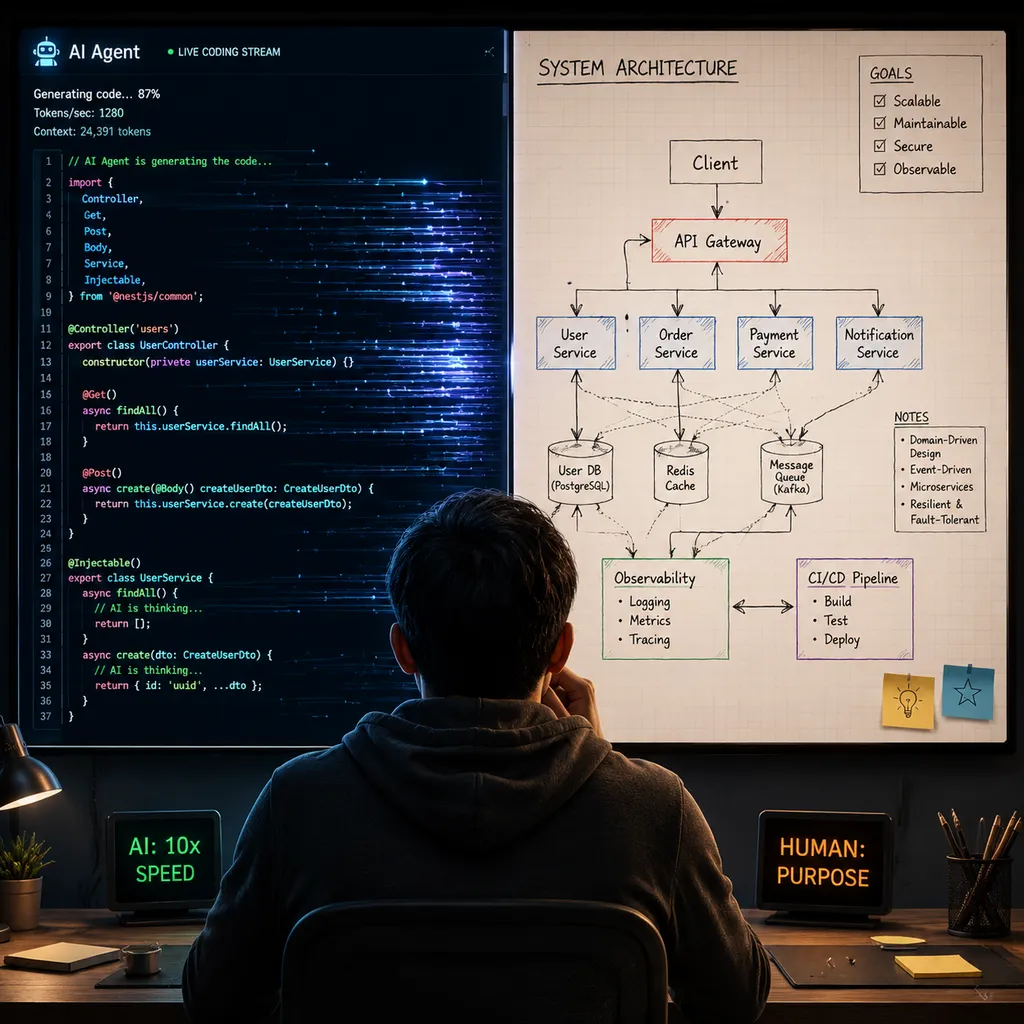
In 2026, when AI coding tools generate 42% of all code, an article titled "Why Write Code in 2026" sparked widespread discussion. As Claude Code and Cursor can produce thousands of lines of code within seconds, where exactly does the value of developers writing code by hand still lie? This article takes an in-depth look at this core question of developer identity.
Why Write Code in 2026: In the Age of AI Coding, Why Developers Still Need to Write Code Themselves
On July 9, 2026, independent developer Doug Turnbull published a short essay titled “Why Write Code in 2026” on his blog softwaredoug.com, sparking extensive discussion on Hacker News and across the tech community. The article raised a question that feels somewhat “out of step” with the times: when Claude Code, Cursor, and GitHub Copilot Agent can already generate thousands of lines of well-structured, logically rigorous code in seconds, why should human developers still sit down and type code themselves?
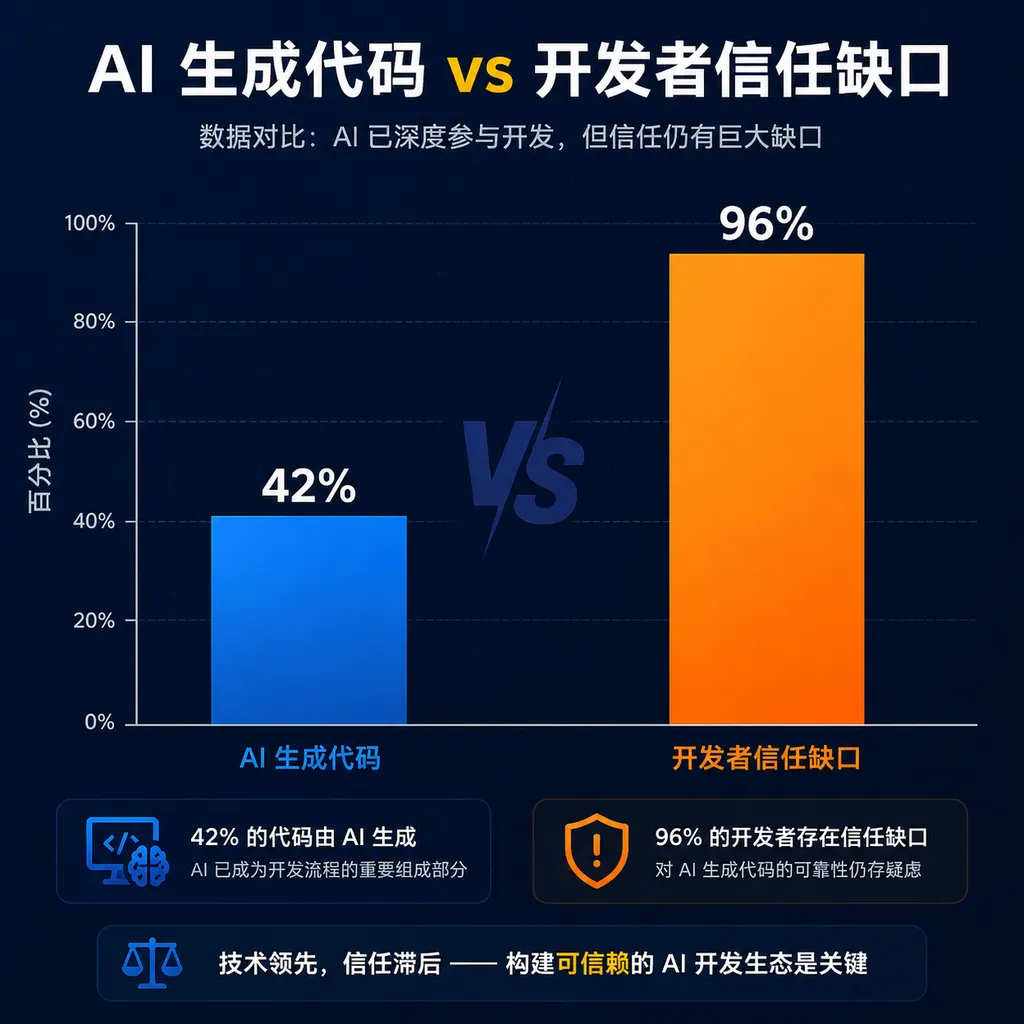
This is not a contrived concern. According to Sonar’s 2026 “State of Developer Code” report, globally, 42% of production code is already generated or assisted by AI, and 72% of developers use AI coding tools daily. That number is expected to rise to 65% by 2027. Meanwhile, Fortune magazine’s May feature “AI Playbook” directly labeled 2026 as “the first year developers stopped writing code.” Against this industry backdrop, Doug’s question is no longer nostalgic sentimentality, but a practical decision every practitioner must confront.
1. “Writing Code” Has Been Redefined
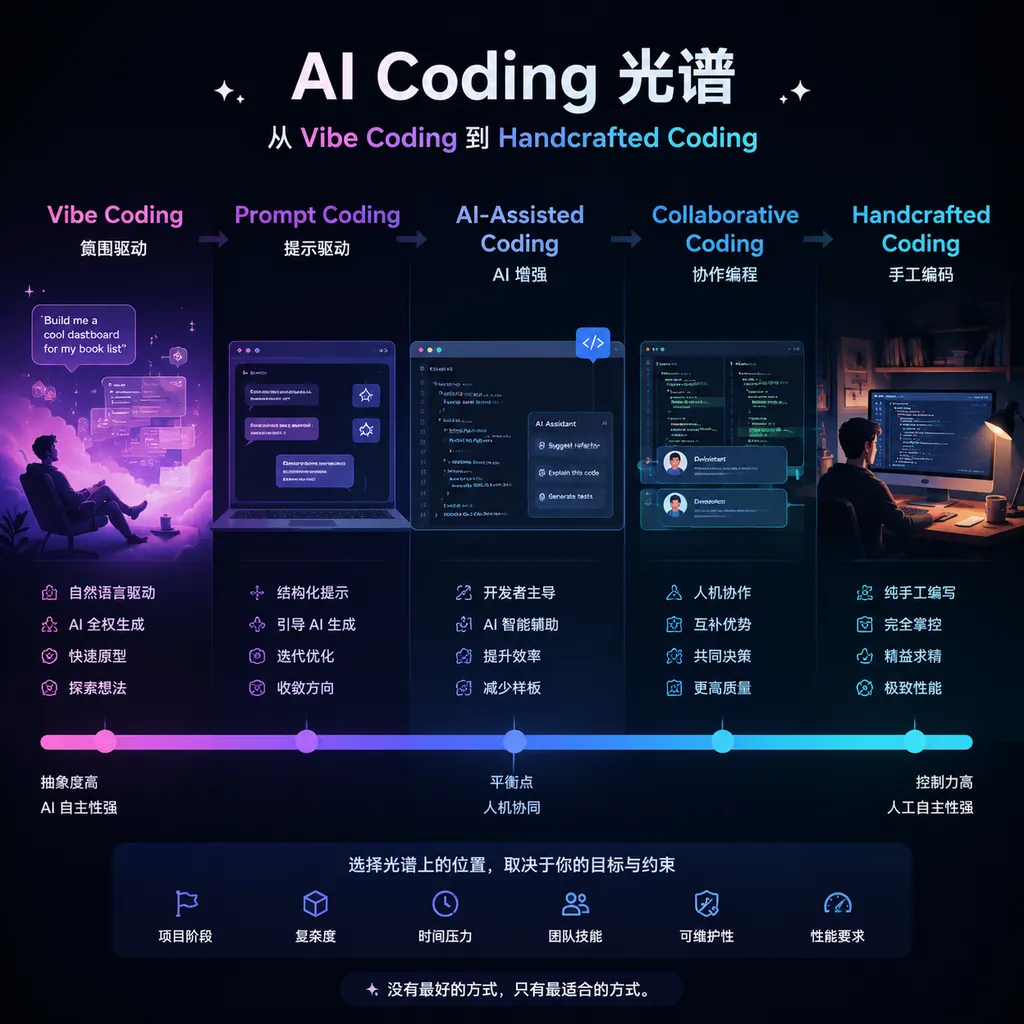
To answer “why still write code,” we first need to clarify what “writing code” even means in 2026. In the GPT-3 era, writing code meant starting from a blank editor and typing implementation details line by line. But in the 2026 era of agentic coding, “writing code” has already been split into at least four fundamentally different modes:
- Vibe Coding: A concept proposed by Andrej Karpathy, where you tell AI what you want in natural language, sometimes without even looking at the generated code itself—only the runtime result.
- Spec-Driven Coding: Humans are responsible for writing precise specifications, while AI “compiles” those specs into executable code.
- Pair Coding with Agent: Humans retain control, while agents handle the “dirty work” such as boilerplate, test cases, and refactoring.
- Handcrafted Coding: Every line is written manually by humans, now more commonly found in core algorithms, low-level systems, and passion projects.
Doug’s central argument is that these four modes do not replace one another; instead, they form a continuous spectrum. The real question developers need to answer is not “Should I write code?” but rather “Where on this spectrum should I be for this specific scenario?”
2. AI Is 55% Faster, but Makes 75% More Mistakes
One widely circulated set of data from the first half of 2026 came from a joint study by GitClear and Uplevel: developers using AI coding tools improved coding speed by an average of 55%, but defect rates simultaneously increased by 75%, while code duplication nearly doubled.
Another industry observation, referred to as “the harshest truth,” pointed out that AI made developers write code 30% faster, yet overall software delivery speed actually declined.
Why this counterintuitive outcome? Multiple reports point to three main reasons:
1. Review Costs Are Far Higher Than Expected
At first glance, AI-generated code often appears logically coherent, well-named, and neatly formatted. But senior engineers frequently spend more time reviewing it than rewriting it themselves. When you write your own code, the motivation behind every line is crystal clear. With AI-generated code, you must first reverse-engineer the AI’s “intent” before determining whether that intent aligns with your own goals. As codebases grow into the thousands of lines, the review burden increases exponentially.
2. Bottlenecks in the Delivery Pipeline
Software delivery is a complete pipeline: requirements analysis → architecture design → coding → testing → code review → integration → deployment → operations.
AI currently accelerates only the “coding” stage. Testing, integration, and deployment have not sped up proportionally. Once coding ceases to be the bottleneck, downstream stages become overwhelmed with even more code waiting to be processed, disrupting the overall rhythm.
3. “Try First, Think Later” Creates Technical Debt
Previously, developers mentally worked through architecture before implementing a feature. Now the process often looks like this: ask AI to generate a first version, then iterate after seeing the result.
In the short term, this feels highly efficient. But it accumulates hidden technical debt. Code gets written faster, but architecture becomes messy; features ship quickly, but system complexity skyrockets. When refactoring eventually becomes unavoidable, all the “saved” time has to be paid back with interest.
3. 96% of Developers Don’t Fully Trust AI — So Who Signs Off on Production?
Another revealing statistic from the Sonar report: while 42% of code is AI-generated, 96% of developers still do not fully trust AI-generated code. Put together, these two figures illustrate the defining “trust gap” of 2026.
One interviewee in the report stated bluntly:
“I approve deploying this code into production and accept all associated risks. The biggest challenge in 2026 is finding someone willing to say that.”
This statement reveals the first hard-core reason why developers still need to write code themselves: accountability. When production code fails, AI cannot bear legal or reputational responsibility. Ultimately, some human engineer must sign off on it. And to confidently sign your name, you must genuinely understand what the code is doing and why it was written that way.
If you don’t write the code, you can’t truly own the code.
This also explains another troubling Sonar statistic: around 35% of developers bypass enterprise-approved tools and log into third-party AI platforms using personal accounts—commonly known as “shadow AI.” The mismatch between compliance and accountability has already become one of the biggest governance headaches for large enterprises in 2026.
4. Doug’s Three Reasons Why Developers Still Need to Write Code
Doug offered three core arguments in his original article, later expanded upon in Hacker News discussions:
Reason 1: Writing Code Is a Medium for Thinking, Not Just Producing Code
Many senior developers report that the act of writing code is itself a form of thinking. As your fingers hit the keyboard, name variables, and abstract interfaces, your brain simultaneously builds a mental model of the system.
If you completely outsource “coding” to AI, you also outsource your understanding of the system. When difficult bugs emerge or architectural evolution becomes necessary, you may discover that you are no longer the system’s owner—only a “reader.”
Reason 2: Taste Cannot Be Prompted Into Existence
AI can imitate style, but it struggles to develop “taste” on its own. What abstractions are appropriate? What degree of coupling is acceptable? When should things stay simple? When should extension points be preserved?
These judgments are built from years of hands-on coding experience.
Prompts can only express what you already know. Writing code can help you discover what you didn’t know before.
Reason 3: Core Business Logic Remains the Moat
For companies, generic boilerplate, CRUD operations, UI code, and configuration can indeed be safely delegated to AI. But business rules, core algorithms, performance bottlenecks, and domain models often form the company’s true competitive moat.
Such code usually lacks abundant public training data for AI to learn from, and it cannot tolerate hallucination risks. This code should be written by the people who understand the business best.
5. The Polarization of Languages: Natural Language vs. “AI Intermediate Representation”
Any discussion about whether humans should keep writing code inevitably leads to the future of programming languages themselves.
Prominent Chinese Go developer Tony Bai argued in his March 2026 article “Farewell to the Golden Age of Traditional Programming” that in the AI era, a programming language’s vitality no longer depends on syntactic elegance, but on its “corpus weight” inside large models.
His logic chain is brutal:
No one writes it → no training data → AI can’t write it → humans don’t want to learn it → even fewer people write it
This means languages like Rust, Go, Python, and JavaScript—already deeply entrenched on GitHub—will remain stable in the short term, while any brand-new language will face extreme difficulty breaking through.
Tony Bai further predicts that programming languages may split into two extremes in the future:
- One end is natural language: humans describe requirements directly to agents in Chinese or English, without learning syntax.
- The other end is AI-specific intermediate representations (IRs): machine-optimized intermediate code defined by AI vendors, rarely read by humans.
If this prediction comes true, then “humans writing code by hand” will become closer to a kind of personal “artistic hobby” or “mental exercise” rather than a mainstream industrial production method. Tony Bai even jokingly calls it “traditional programming.”
6. Practical Advice for Developers in 2026
Combining Doug’s original article with broader industry perspectives, here are several practical recommendations for developers in 2026:
- Treat AI as an accelerator, not a replacement. Let it write boilerplate, generate test cases, and perform refactoring; architecture design, technology choices, and core logic must remain under your control.
- Move dynamically along the coding spectrum. During prototyping, lean toward Vibe Coding for rapid validation; for core modules, return to Handcrafted Coding and examine every line carefully.
- Invest in specification-writing skills. One of the most valuable future skills will be translating vague requirements into precise specs—what Karpathy calls the core of Software 3.0.
- Build a “quality gate” mindset. Treat SonarQube, static analysis, contract testing, and end-to-end testing as mandatory checkpoints that prevent questionable AI-generated code from reaching production.
- Beware of “shadow AI.” Using personal accounts to bypass enterprise-authorized tools may feel convenient in the short term, but it creates long-term compliance risks, especially when handling customer data.
- Preserve a “traditional programming reserve.” Spend a few hours each week away from agents, manually writing a Rust lifetime example, a Go concurrency scheduler, or an algorithm problem in the most old-school way possible. This is the last line of defense against losing engineering intuition.
7. Conclusion: Writing Code Is a Developer’s “Meta-Skill”
Returning to the original question: Why Write Code in 2026?
The answer may not be “because AI isn’t good enough,” but because writing code is a developer’s meta-skill for thinking, judgment, and accountability.
Just as photographers in the digital age still need to understand aperture and shutter speed, pilots in the age of autopilot still need manual flying skills, and doctors assisted by imaging AI still need to make diagnoses themselves—the more powerful the tools become, the more humans must retain hands-on capability at critical moments.
Developers in 2026 may not need to write more code than they did in 2020, but they must understand more clearly than ever before: why each line of code exists, why it was written this way, and who is responsible if something goes wrong.
That is the truly scarce skill in the age of AI coding.
As Doug wrote at the end of his article:
“AI can write code, but only you can decide what code is worth writing.”
References
- How Powerful Is AI Code Writing? — 55% Faster, but 75% More Error-Prone (Zhihu Column) — A data-driven analysis of the speed gains and defect-rate changes brought by AI coding tools.


