
OpenAI’s first hardware revealed: a moving, screenless speaker
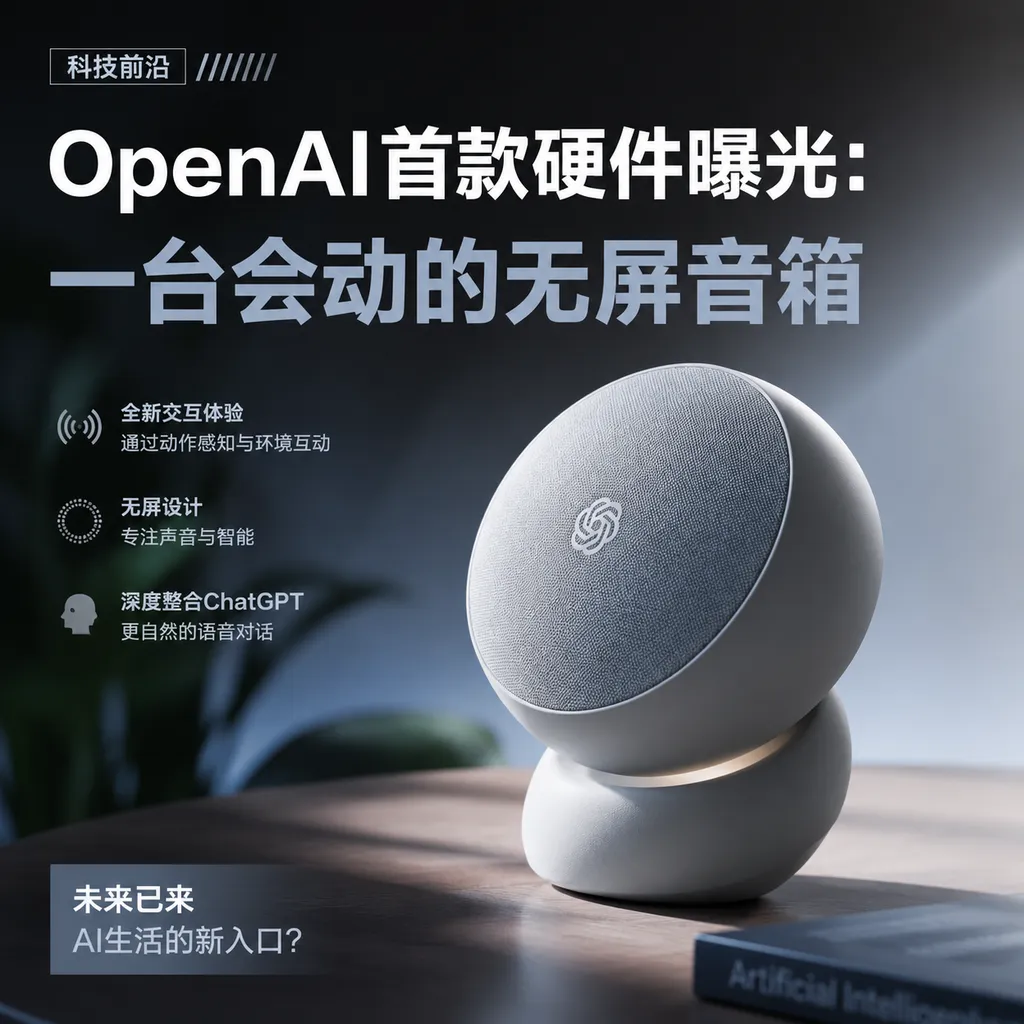
Bloomberg revealed that OpenAI’s first consumer-grade hardware is a portable, screenless smart speaker positioned as an AI companion. It’s planned for release in 2026 and official launch in 2027, but Apple’s trade secret lawsuit is casting a shadow over this timeline.
On July 14, Bloomberg dropped an exclusive that largely revealed OpenAI’s long‑rumored hardware plans — the first consumer‑grade device is a screen‑less, mobile smart speaker designed not as “a smarter Echo,” but as the physical embodiment of ChatGPT. It’s planned for unveiling later this year and commercial launch in 2027.
If that direction looks familiar, it’s because it’s almost exactly what Jony Ive’s io team — acquired by OpenAI last year for $6.5 billion — has been hinting at. Observers originally guessed it would be a wearable or some kind of “non‑phone portable device.” Instead, the debut product is a speaker — but one quite unlike anything on your shelf.
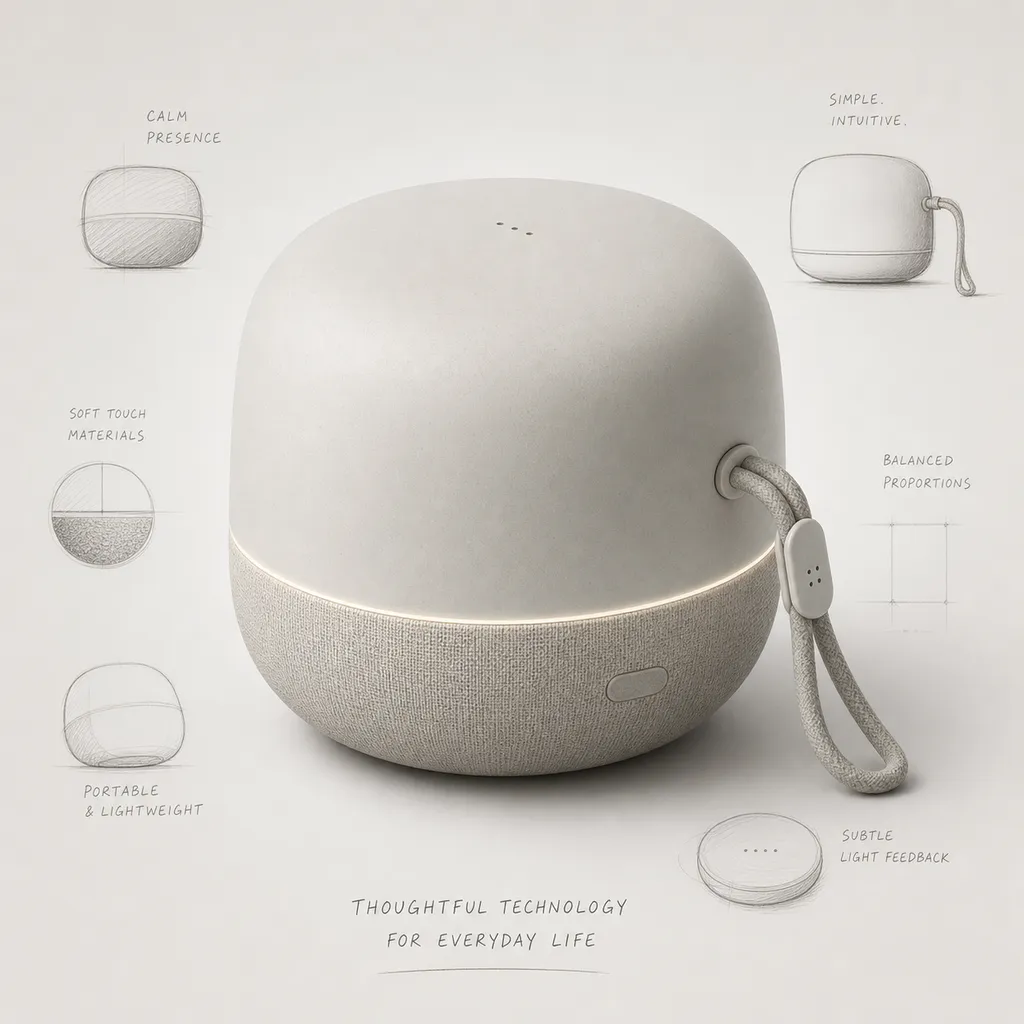
Screen‑less, mobile, with a camera — this isn’t a speaker
Let’s sort out the key specs, since the information pieced together from several outlets (Bloomberg, TechCrunch, The Verge, Wallstreetcn) is quite dense:
- Form factor: speaker‑like design, internally called “a computer built for AI.”
- No display: interaction primarily via voice.
- Mobile: built‑in rechargeable battery, can be moved around the house.
- Built‑in camera + multiple sensors: to “understand environment and context.”
- Mechanical components: the device itself can make dynamic movements to create a sense of “aliveness.”
- Smart‑home hub: can control connected devices (protocol compatibility not yet disclosed).
- Voice engine: advanced version of the GPT‑Live series — the real‑time voice mode that supports simultaneous listening, responding, and interruption.
Put all that together and you see it’s a completely different species from Echo, HomePod, or Xiaomi’s speakers. Traditional smart speakers are passively summoned — you shout a wake word before they respond. OpenAI’s core concept is proactive companionship: the device observes you via its camera, perceives context through sensors, gradually learns your lifestyle, and then initiates information or conversation on its own.
Those mechanical elements make it clearer still — it’s not a static sound‑emitting column; it moves. It can turn toward you, swivel toward a sound, or sway responsively. In short, the design language aims to make it psychologically feel more like an electronic pet in your living room than a typical appliance.
OpenAI is betting big on the “AI companion” track
At this point it’s worth making a judgment: AI companion hardware has been a graveyard over the past two years — Rabbit R1, Humane AI Pin — all raised plenty of capital but embarrassed themselves on release. Their problem wasn’t insufficient intelligence; it was that they tried to replace the smartphone but couldn’t match its information density. A voice‑only device becomes frustrating within minutes.
OpenAI clearly learned from that — it stays home‑focused. That neatly avoids the deadlock of “competing with the phone for the main portal” and instead targets Echo/HomePod’s place as the household hub. Echo‑class growth has barely moved in three years, while Alexa’s intelligence now lags two generations behind GPT‑4o, leaving an under‑served market ripe for disruption.
Stronger still is the “personalized persona” design. The longer you use it, the more it understands you and the more it becomes your dedicated helper — a promise every voice assistant has made but never delivered due to weak base‑model capability. With GPT‑Live’s real‑time conversation, memory, and interruption handling, the “trainable AI” concept finally has technical feasibility.
Personally, I remain cautious about the camera + active interaction combination. A camera in the living room will set off Europe's GDPR compliance alarms — and Chinese users will be skeptical as well. When ChatGPT’s memory feature launched last year, OpenAI was criticized over default privacy settings. So when placing a device that can see, hear, and move in someone’s home, it must clearly explain “this is a companion, not surveillance” on launch day.
Apple’s lawsuit may slow the release timeline
The variable lies with Apple. Last Friday, Apple filed a lawsuit against OpenAI, claiming it systematically obtained Apple’s unreleased hardware trade secrets through poaching ex‑employees, recruiting tactics, and supplier relations — all to accelerate its own hardware plans. The complaint demands that OpenAI destroy related materials, redesign the product to ensure no Apple technology remains, and even seeks an injunction against its hardware business.
OpenAI’s Tuesday response was firm — “we don’t believe the suit is supported by any evidence,” stressing that the speaker is fundamentally different from any Apple product. Technically true: Apple’s HomePod is purely an acoustic device, whereas an animated, perceptive AI companion is another creature entirely.
But trade‑secret litigation isn’t about resemblance — it’s about how long the discovery process delays things. If an injunction is granted, the hardware supply chain could be frozen for months. With OpenAI also preparing for an IPO, any legal risk is magnified. The timing of Bloomberg’s July 14 leak is therefore telling — likely OpenAI’s own controlled disclosure to shape the product narrative before the lawsuit dominates headlines.

Hardware roadmap: five devices — the speaker is only the first shot
Worth noting: the speaker is positioned as “the starting point” in OpenAI’s hardware roadmap. Reportedly, the division is developing about five different products:
- Screen‑less smart speaker (the leaked device, 2026–2027)
- Codex Micro — the Codex hardware accessory announced today with Work Louder
- Three other undisclosed form factors
- A long‑term plan for a mobile AI device that could replace the smartphone
That “smartphone replacement” is the real ambition behind Jony Ive’s work — and what the $6.5 billion io acquisition really bought. The speaker launches in the home scenario, Codex Micro in the developer scenario; together, the five devices form an integrated hardware ecosystem.
Here we can see where OpenAI diverges from Anthropic and Google — everyone is searching for AI’s next interface entry point. Google bets on Android + Gemini integration, Anthropic focuses on model APIs and enterprise clients, while OpenAI pushes model capability + agent + hardware, attempting to turn ChatGPT from an app or webpage into a multi‑form existence.
The advanced GPT‑Live matters most
Technically, what could make this device work is the next‑gen GPT‑Live. GPT‑Live is OpenAI’s new real‑time voice model, with key traits:
- Simultaneous listening & responding: not turn‑based “you finish—AI processes—AI replies,” but concurrent processing and interruptibility.
- Improved conversational adaptability: adjusts pacing based on tone and pauses.
- Human‑like latency: response delay down to a few hundred milliseconds.
Together, these create true live conversation. Every previous assistant, from Alexa to Siri, has been turn‑based — one speaks, the other listens. GPT‑Live breaks that, producing a shift from incremental to transformative.
If the speaker ships with the advanced GPT‑Live, it likely adds visual understanding (via camera input) and conversation initiation. The first lets it recognize scenarios like “you’re cooking” or “you’re holding a child”; the second turns it from a Q&A machine into an active partner.
By the way, the GPT‑Live real‑time speech API is already callable on OpenAI Hub. Developers building voice agents can use one key to benchmark GPT, Claude, and Gemini voice models side by side.
Open questions
Some issues that must be answered at launch:
- Price range: Echo sits at $50–200, HomePod at $300–400; with io + GPT‑Live + mechanical parts + camera + battery, costs won’t fall below $300. Will it aim for volume or premium?
- Data‑processing location: are audio and video processed locally or in the cloud? Home users are privacy‑sensitive.
- Smart‑home ecosystem compatibility: Matter? proprietary? How will it integrate with Home Assistant, Google Home, or HomeKit?
- International rollout: China is nearly impossible (licensing + data‑export hurdles); Europe requires GDPR compliance; Japan and Korea may be primary markets.
- Battery life: mobility means a battery, but movement + sensors + cloud calls make “one‑charge‑per‑day” difficult.
Between now and its projected 2027 launch, OpenAI still has over half a year for product finalization and regulatory work. If Apple’s lawsuit doesn’t stall the schedule, this speaker could well be the first true “iPhone‑moment” of OpenAI’s hardware era — even if it looks nothing like an iPhone.
For AI‑app developers, note this: once model capability spills into hardware form, the battlefield for AI products will no longer be limited to the App Store.
References
- Reports say OpenAI’s first hardware is a screen‑less smart speaker positioned as an AI companion able to control smart homes – IT Home — Chinese summary of Bloomberg’s original report, including details on the camera and GPT‑Live.


