Alibaba aims to rebuild “Xiami” with AI music: HappyShrimp beta test revealed
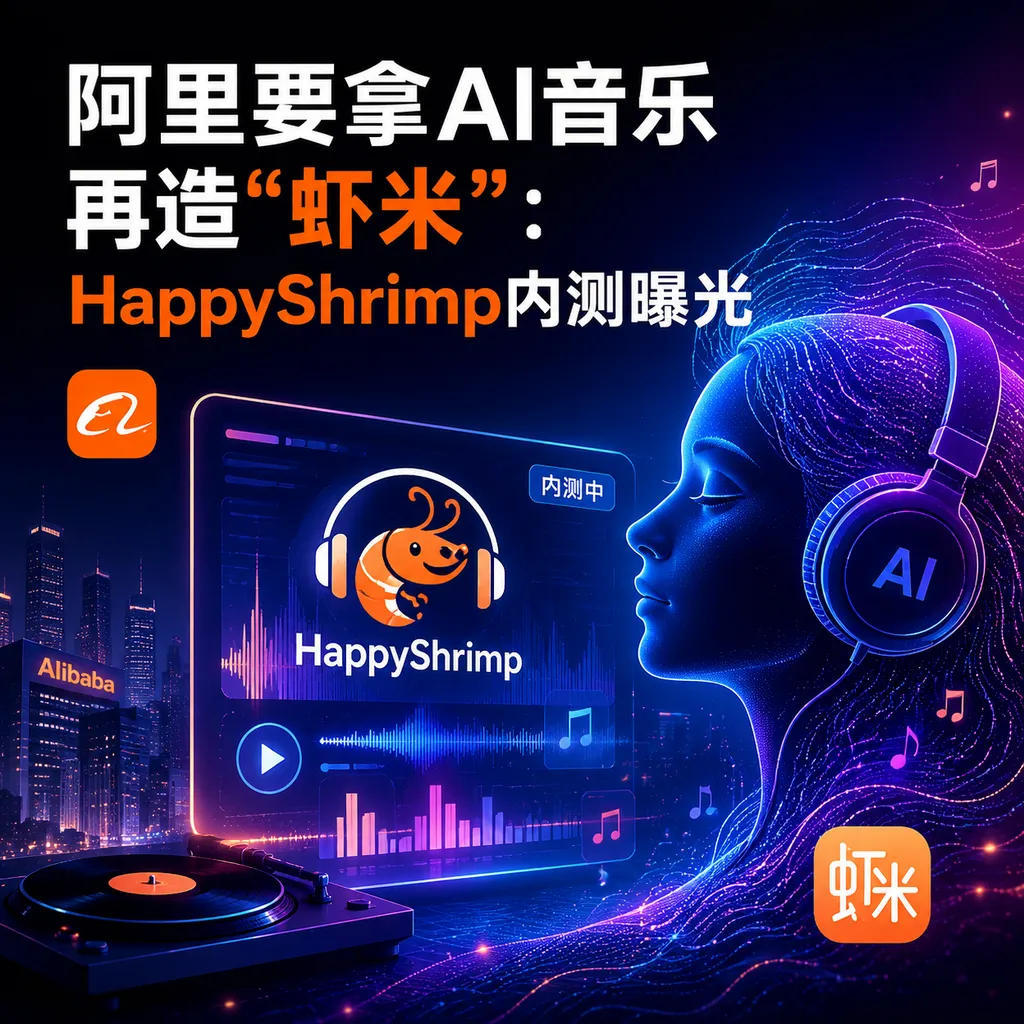
The Alibaba ATH Business Group is about to launch the AI music creation platform **HappyShrimp**, featuring one‑sentence personalized music generation. It supports multimodal creation capabilities such as text‑to‑music, lyric generation, and audio style transfer, and is regarded as Alibaba’s key move to re‑enter the music track five years after shutting down Xiami.
Alibaba Quietly Picks Up the Name "Xiami" Again
On July 17, DuJia revealed that Alibaba’s ATH Business Group is developing an AI music creation platform called HappyShrimp. IT Home followed up and confirmed the news, but as of today, the product page is still not public, and there’s no official PR statement.
For anyone familiar with the Chinese music community, the word “Xiami” needs no introduction. Alibaba acquired Xiami Music in 2013, merged it with TTpod in 2015 to form Alibaba Music, and officially shut Xiami down on February 5, 2021 — an event considered a landmark “cultural shutdown” in the Chinese internet scene. Users protested, music critics penned farewell essays, and the debate lasted for weeks.
Five years later, Alibaba has picked up Xiami’s English name and attached it to an AI music generation product. This naming choice alone sends a signal: it’s not just a technical engineering project — it’s aiming for an emotional + community-content approach.
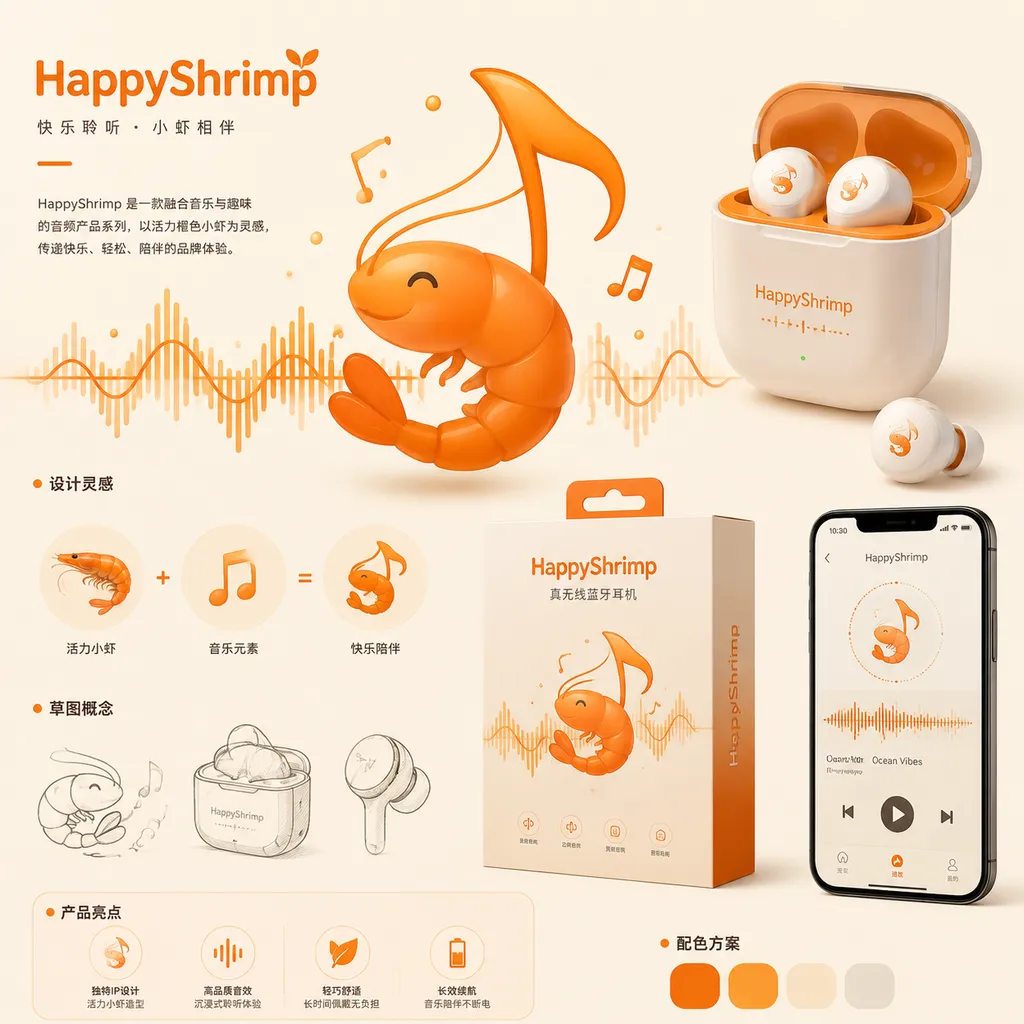
Product Positioning: More Than Just Another Suno
Based on the leaked information, HappyShrimp’s feature matrix covers a wide range:
- Text-to-music generation: Create complete tracks from a single line of text; positioned against Suno v4, MiniMax Music 2.5, and Kunlun Wanwei’s Mureka V8
- Text-to-lyrics generation: A dedicated lyric-writing module, usable with the composition module
- Reference-based audio generation: Input a reference audio clip to generate a stylistically similar piece
- Audio style transfer: Transform a song into another style (e.g., convert rock into city pop)
- Background music / sound effect customization: For film, short video, and gaming B2B use
- Digital music creation assistant: A vague phrase, likely referring to DAW integration features
Target users fall into three groups: professional musicians, content creators (in media and film), and, interestingly, “researchers.” Listing researchers as a target user implies that this platform will likely offer an API or some kind of research access; otherwise, there’s little reason for them to use it.
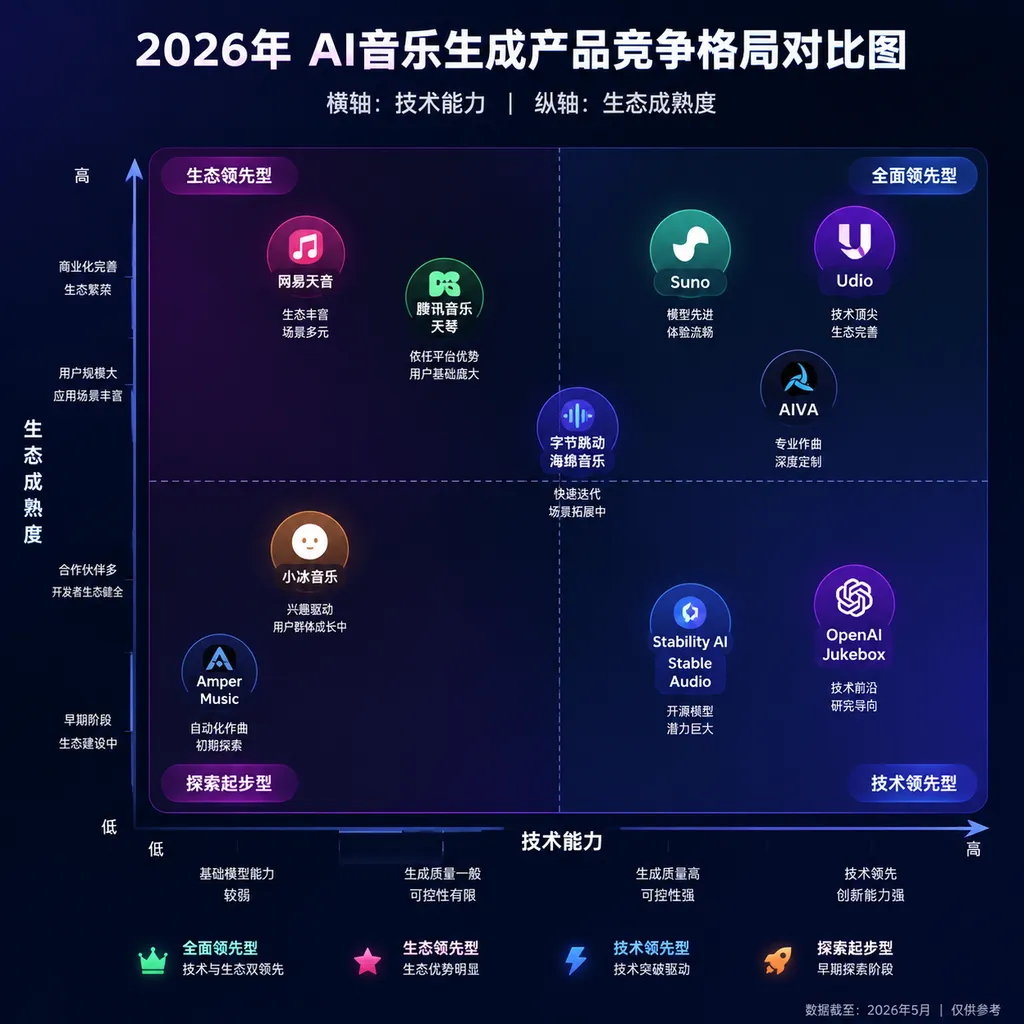
As for form, reports mention an app version and an international release. The overseas rollout is crucial — the domestic AI music space is already crowded (NetEase Cloud Music’s contests with million-yuan prizes, Tencent’s AI Music Zone, Mureka, MiniMax Music, and Tianpule Tunee). Without going abroad, Alibaba would struggle to differentiate itself.
Who Is the ATH Business Group
A side note: ATH appeared after Alibaba’s internal restructuring this year, mainly handling the company’s entertainment and content-related businesses. Letting ATH, rather than Tongyi (Alibaba’s model R&D team), lead this project indicates that Alibaba positions it as a content platform rather than a model capability showcase.
The technology foundation is probably based on Tongyi’s InspireMusic series—an open-source AI music generation model released by Alibaba Tongyi Lab in February 2025. It adopts an audio tokenizer + autoregressive Transformer architecture, supporting text and audio prompt inputs. The open-source version can generate 24kHz audio, while the commercial version is expected to reach 48kHz or higher.
In other words: the technology isn’t being built from scratch; the focus this time is on productization and scenario adaptation. That’s the opposite of Tongyi Qianwen a year ago—when Alibaba first showcased model capabilities before applications. HappyShrimp will likely do the reverse: hide the model details and focus on user experience.
Industry Perspective: Late, but Not Too Late
By the first half of 2026, the AI music field has moved past the “can it generate?” era and entered the stages of “how good is the generation?” and “how to build the ecosystem?”
Technically, a Carnegie Mellon University study in January showed that AI-generated music tends to have slower rhythm, fewer notes, and lower creativity scores than human pieces. That doesn’t mean AI is bad—it means the first generation of text-to-music models sound “averagely good” with little memorability. Major players’ updates in early 2026 focused on improving that:
- Mureka V8 (Jan 28) focused on vocal expression and overall sound quality
- MiniMax Music 2.5 (Jan 29) added emotion curves and pre-designed climaxes for more control
- Tunee took an Agent-driven conversational creation approach
If HappyShrimp is ready to roll out features now, it’s at least caught up with this wave of baseline capabilities. The real question is its style transfer capability—an area where Suno and Udio still struggle. Whether HappyShrimp can excel there remains to be seen.
Ecosystem-wise, since October 2025, the major Western labels (Warner, Universal, Sony) have successively signed licensing deals with Suno and Udio. Universal even signed a strategic agreement with NetEase Cloud Music in January 2026 that included AI terms. This means “training AI on copyrighted music” is shifting from a legal gray zone to a regulated business activity.
Alibaba still has Damai, Youku, and remnants of Alibaba Music, but its copyright library is far smaller than Tencent Music’s or NetEase Cloud’s. For HappyShrimp to complete the chain from generation → publishing → monetization, copyright licensing is a crucial obstacle. That may be another reason they’re starting overseas—where licensing dialogues are already underway.
From the user side, a joint Deezer-Ipsos study (Nov 2025) showed that 97% of listeners can’t tell if a song is AI-generated. Deezer’s platform now sees 50,000 fully AI-generated songs uploaded daily, making up 34% of total streams. Morgan Stanley reports that among U.S. listeners aged 18–44, 50–60% spend 2.5–3 hours per week listening to AI music.
In short: the market need is proven. The question is who can capture it.
On the Selling Point of “One Sentence for Your Own Song”
Reports mention that HappyShrimp “may highlight one-sentence personalized music generation.” That phrase needs unpacking.
“One-sentence generation” is no longer novel — Suno has pushed this since v3, and Mureka and Tunee can do it too. The term “personalized music” is vaguer. Literally it means “tailored for you,” but what it actually delivers depends on two factors:
- Granularity of personalization inputs: Can the system accept user-uploaded reference audio (e.g. humming a melody), reference images (e.g. generating BGM based on a landscape photo), or even emotion curves (e.g. “somber to explosive”)?
- Ownership of output: If only you can access the result and others can’t reproduce it, that’s true personalization.
From the feature list, point 1 seems covered (reference audio + text input + style transfer). Point 2 is unclear—awaiting official documentation.
I personally believe HappyShrimp will pursue the social currency route—enabling users to generate music with strong personal attributes, perfect for sharing on Xiaohongshu, Douyin, or WeChat Moments. That’s the easiest way to go viral in China’s UGC ecosystem—similar to the explosion of Meow Camera in 2023.
How Music Creators Might Use It
Talking to professional musicians about AI tools yields consistent feedback: AI-first + human refinement is the new normal. Humans still write lyrics, but composition and arrangement drafts increasingly come from AI before human curation and polishing.
For creators, the key questions about products like HappyShrimp are:
- Multitrack export: If it only provides a mixed track, pros can’t use it. It needs isolated vocals, drums, bass, harmonies for real rework potential.
- DAW compatibility: Integration with Ableton, Logic, or FL Studio is the threshold for pro use.
- Copyright ownership: Who owns generated content? Which training data copyrights are involved? Any compensation mechanism?
- Controllability: Can you lock a melody section, just change instruments? Insert modulation in a specific bar? Specify vocalist tone?
The third point is especially critical in China—since the 2025 AI-generated content labeling regulation requires all AI-generated media to carry identification tags, which affects streaming distribution. If HappyShrimp targets creators, it must clarify labeling, copyright, and monetization upfront.
A Less Optimistic Note: How Much Music DNA Alibaba Still Has
Xiami’s shutdown fundamentally reflected a decline in music’s strategic value within Alibaba. Over the past five years, Alibaba has been mostly inactive in music, with major talent loss—product managers and musical taste legacy both vanished.
HappyShrimp’s placement under ATH suggests a focus on entertainment consumption rather than tech-driven experimentation. This gives it the potential to become a consumer sensation—but also the risk of being yet another tech-filled business product—feature-rich, but soulless.
Music critic Erdi said in November 2024, “I’ve finally come to admit that AI can make very good music.” The subtext: AI’s technical threshold is rapidly dropping, leaving aesthetics and community as the ultimate differentiators. Xiami’s true treasure wasn’t its 20 million tracks—it was its users writing reviews and the algorithmic taste behind “Daily Recommendations.”
By reviving the Xiami name through HappyShrimp, whether Alibaba can inherit that aesthetic legacy matters more than whether it catches up technologically with Suno.
Some Unanswered Questions
With some time still before public release, several key points remain officially unanswered:
- Pricing model: Subscription-based? Per-generation charge? Free with watermark?
- Training data licensing: Any deals with Chinese labels like Taihe Music or Modern Sky?
- Initial overseas markets: Southeast Asia, Japan/Korea, or straight to North America?
- Model lineage: Is it a commercialized version of InspireMusic? How capable is it compared to the open-source version?
- API availability: Since “researchers” are listed as target users, an API is likely—but how open it will be is unknown.
Currently HappyShrimp access remains closed. Specific features and usability will depend on official announcements. IT Home reports the team hasn’t yet responded; we’ll continue following up.
For developers, if your application needs AI music generation capabilities, OpenAI Hub already aggregates APIs of major models (GPT, Claude, Gemini, DeepSeek, etc.)—one key covers them all, with direct domestic connectivity and OpenAI-compatible format. If HappyShrimp later opens its API, we’ll update on its integration status.
References
- A New “Xiami”? Reports Say Alibaba Will Launch AI Music Platform “HappyShrimp” - IT Home — Original report including product positioning, feature list, and target users