iFlytek unveils GuideX at WAIC: The next step for digital humans is the "Autonomous Agent"

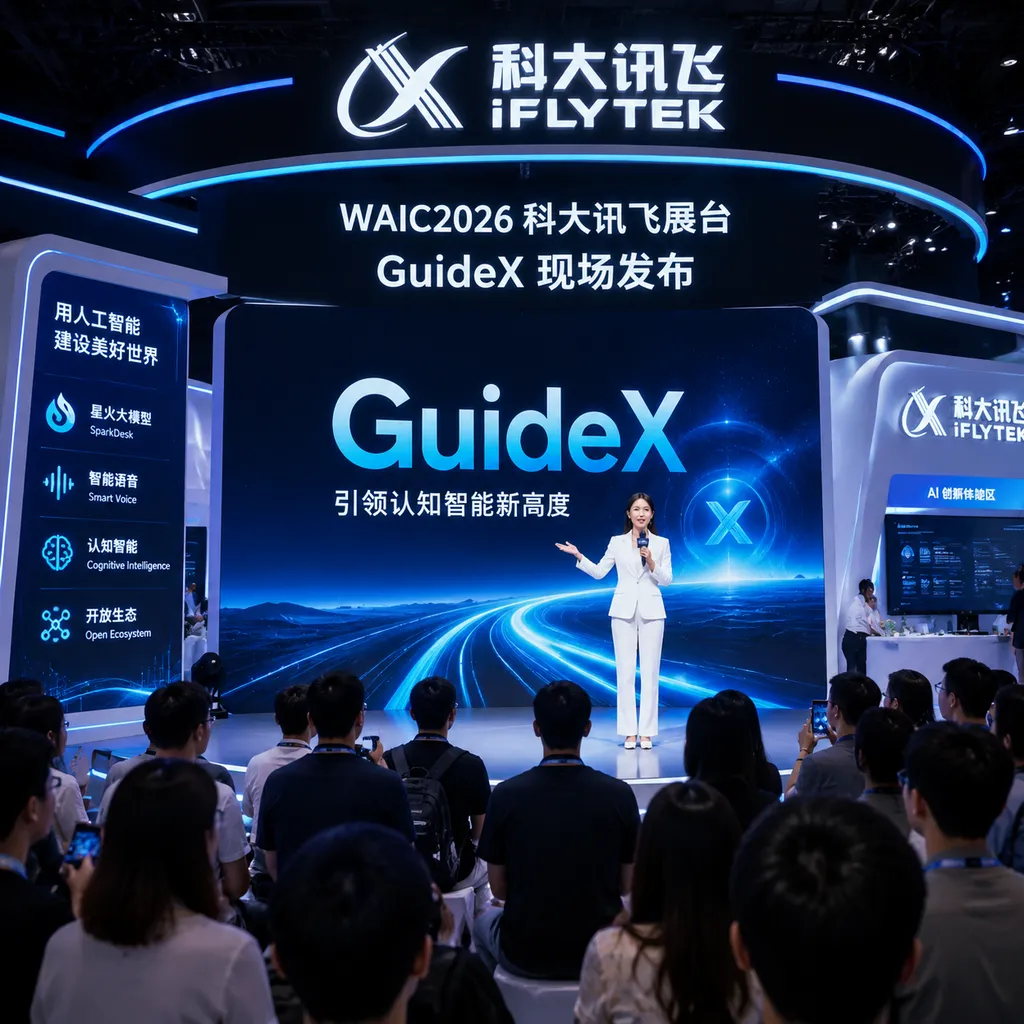
At the WAIC 2026 event on July 17, iFLYTEK launched its intelligent interaction service Agent **GuideX**, featuring full-modal perception, autonomous reasoning Agents, and the **SkillHub** skill hub—bringing "digital humans" from demonstration demos to truly capable service front desks.
iFlytek Rewrites the Digital Human: This Time, It Wants to Really Connect to Real Businesses
On July 17, the second day of WAIC 2026, iFlytek unveiled something called GuideX at its own special event. Officially, it positions the product as an “Intelligent Interaction Service Agent” — notably not a digital human, not a virtual avatar, not another script‑reading AI host. iFlytek clearly drew a line: GuideX aims to link together a complete service chain of “perception, understanding, execution, memory, and empathy.”
In plain terms: the digital humans that have popped up everywhere over the past three years are essentially just a “talking skin,” behind which is either a script library or a tightly wrapped large‑model API. Ask them something outside their script, and they start dodging; ask them to actually help with a task, and they just transfer you to a human. GuideX wants to solve precisely this barrier — the wall between that “skin” and the business system behind it.
The Bottom Line First: This Is Not Another Digital‑Human Upgrade
After watching the launch and reading official materials, my take is: GuideX feels more like iFlytek has packed the technology it’s accumulated from its Procurement‑Intelligence Platform, Star Agent Platform, and AIUI Interaction Framework into a new shell built for consumer/public‑service scenarios.
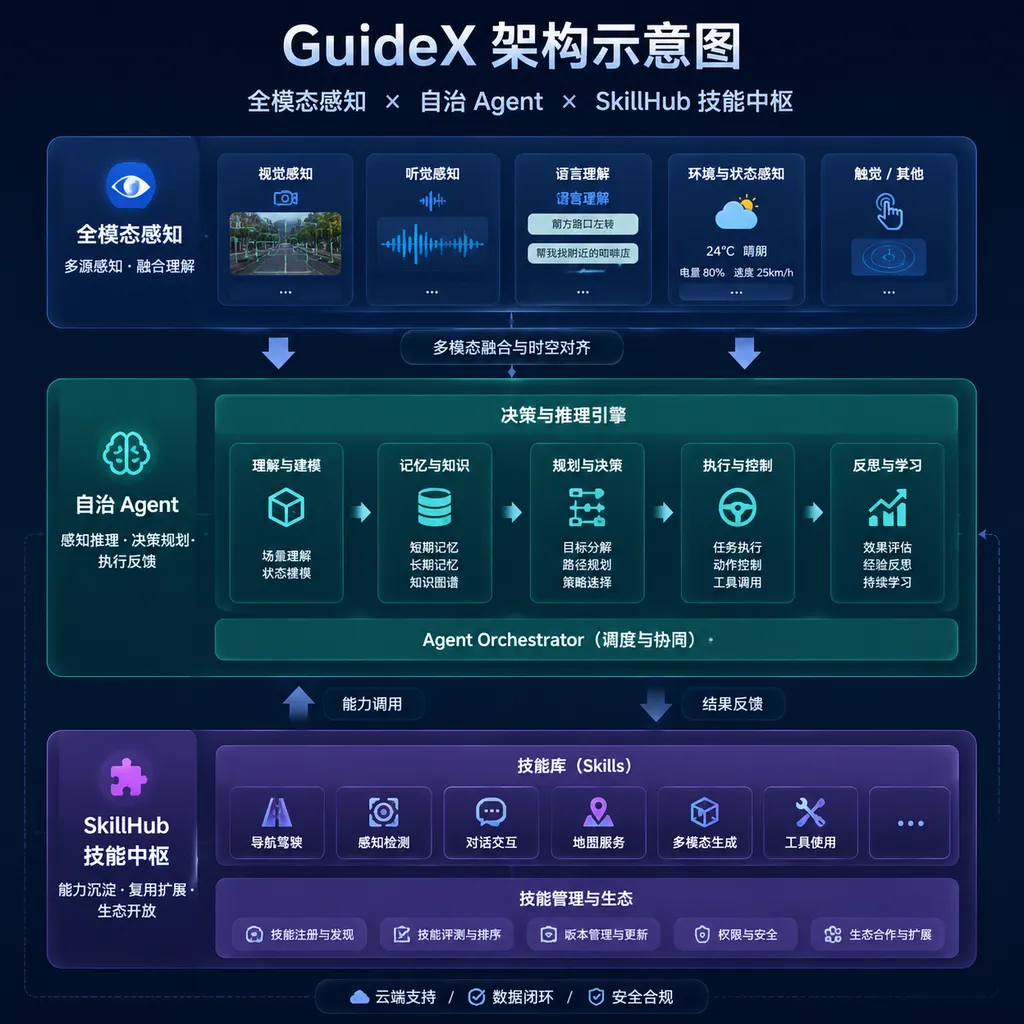
Three core capabilities were repeatedly emphasized:
- Full‑Modal Perception: It not only listens to what you say but also observes what you’re looking at, pointing to, your expressions, and your environment.
- Self‑Governing Agent: Able to plan tasks, call tools, self‑correct, and review autonomously.
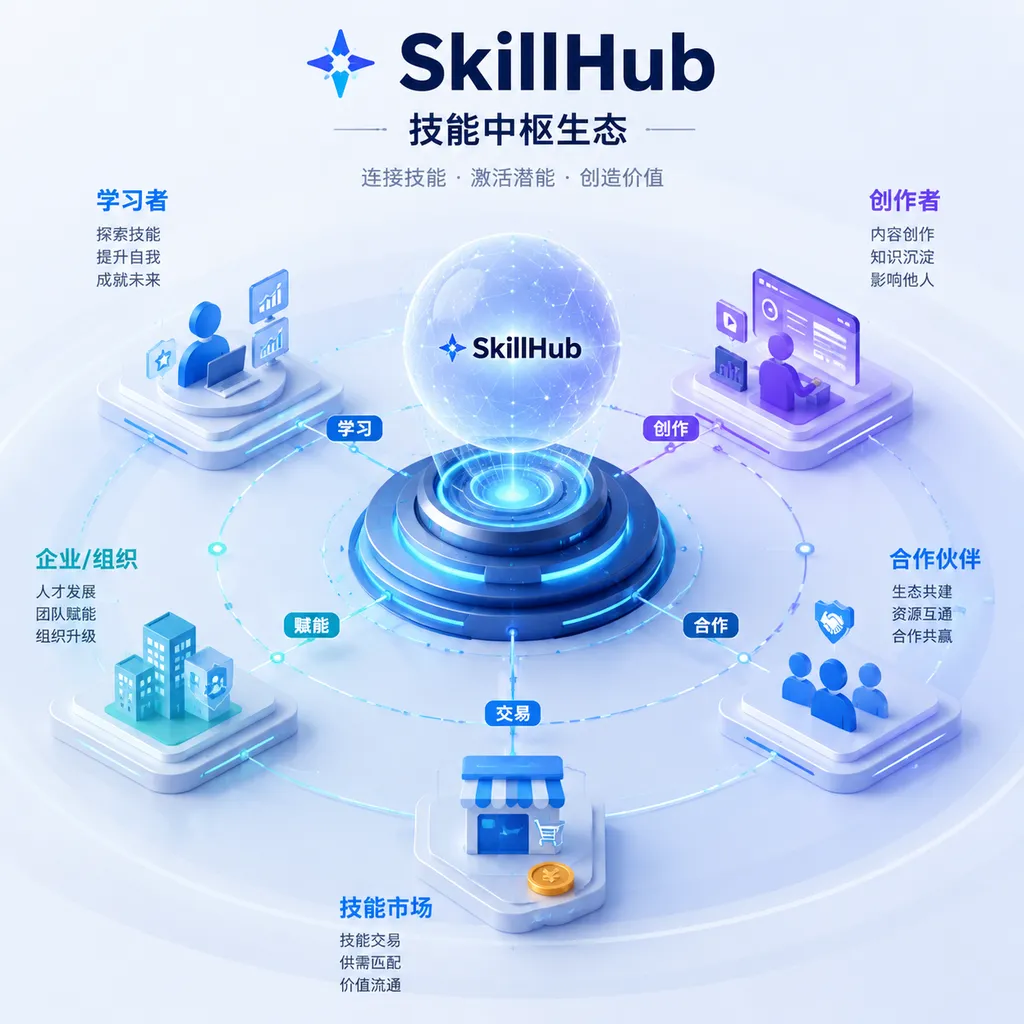
- SkillHub: A skill hub that connects specific business capabilities — like bank account opening, airport inquiries, or government services — as plug‑ins.
Individually, none of these are new. What’s noteworthy is how they combine to address one key challenge — to let an Agent replace the current mix of “guide staff + info desk + entry‑level clerk” in real service environments.
From “Digital Human 1.0” to “Service Agent”: Lessons iFlytek Has Learned
To understand why GuideX is designed this way, we need to look at two preparatory steps iFlytek took along the Agent roadmap.
Step One: June’s Procurement‑Intelligence Platform 2.0
On June 25, iFlytek launched its AI‑Driven Full‑Chain Procurement Platform 2.0 in Beijing. This platform targets the tendering process — a scenario with zero tolerance for “hallucinations.” If, during bid evaluation, an AI declares “there’s a cost anomaly on page 47,” but there’s actually nothing there, that’s not a joke — it’s a serious error.
That release highlighted two key technologies:
- A Self‑Organizing, Self‑Evolving Multi‑Agent Collaboration Framework — allows multiple Agents to work in roles like an expert review committee cross‑checking each other.
- Harness Trusted Execution Engine — enforces verifiable paths at critical points; officials describe it as ensuring “zero hallucinations at key stages.”
Deployment results: over 200 Agents online, with delivery speed up 300%. These numbers may sound like PR, but procurement is a strictly regulated field — the fact it runs at all shows the foundation isn’t a façade.
Step Two: AIUI as the Full‑Link Interaction Foundation
Go back further — in 2025, iFlytek upgraded AIUI into a full‑link interaction development platform centered on its Spark large model. The slogan then was “from tool‑type interface to human‑like collaborative partner.” It sounded abstract at the time, but in retrospect, AIUI was all about integrating voice recognition, semantic understanding, dialog management, and multimodal input into a unified interaction core.
So, GuideX = AIUI’s interaction base + the autonomy framework from the procurement platform + SkillHub’s business‑skill pool.
Put this way, it makes perfect sense. GuideX isn’t something completely new — it’s a convergence of iFlytek’s two product lines around real service scenarios.
What Makes “Full‑Modal Perception” Truly “Full”
In the launch demo, they showed an airport inquiry use case: a traveler dragging luggage stops at an information screen, looking toward “International Arrivals,” pointing, and asking, “Has my friend’s flight arrived?” GuideX must simultaneously handle:
- Voice: “Has my friend’s flight arrived?” — requires clarifying the specific flight.
- Gaze Tracking: traveler is looking at “International Arrivals,” narrowing the intent range.
- Gesture: pointing direction further confirms focus area.
- Environment: number of luggage pieces behind the traveler, time of day, whether overnight‑service guidance is needed.
Traditional digital humans process these channels separately and combine them at the business layer. GuideX instead fuses multimodal signals at the perception layer, generating a more complete intent context for the upper‑level Agent.
This approach aligns with the path of Google Astra or GPT‑4o’s real‑time multimodal interaction — except iFlytek applies it to concrete service‑front scenarios rather than general assistants. The key difference: a general assistant uses multimodality for conversational experience, while a service‑front system uses it to eliminate the frustration of “having to repeat yourself three times.”
“Self‑Governing Agent” — The Boldest Move in This Release
The most awkward part of the digital‑human industry over the past two years is that, although everyone claims to connect to large models, real‑world clients always ask one question: “Can we keep it under control?”
If the answer is no, they won’t deploy it. Imagine a government‑service kiosk pushing out nonsense — screenshots hitting social media would be disastrous.
By including “Self‑Governing,” iFlytek likely means at least three layers:
- Task‑Level Autonomy: the Agent breaks down tasks, calls tools, and checks completion by itself.
- Risk‑Level Autonomy: for transactions involving money, identity, or privacy, triggers Harness validation — similar to the procurement platform’s “zero‑hallucination” design.
- Knowledge‑Level Autonomy: recognizing what it doesn’t know, proactively switching to “human hand‑off” or “evidence‑based response” instead of making things up.
The third is by far the hardest. Most so‑called Agents fail precisely at “not knowing what they don’t know.” Bringing the proven trusted‑execution engine from procurement to this domain shows some discipline.
Of course, “zero hallucination at key stages” can be strictly enforced in procurement — rigid workflows allow it. Whether it holds up in open service settings depends on how deployments perform in the wild. I’ll be keeping an eye on that.
SkillHub: iFlytek’s Attempt at an Agent App Store
The name “SkillHub” says it all — it’s a central hub for skills. Since every industry (government, finance, transport, healthcare) has its own SOPs and knowledge bases, iFlytek can’t cover them all itself. Hence SkillHub takes a plug‑in approach:
- Platform Owner (iFlytek) provides the Agent runtime, perception, and dialog layers.
- Ecosystem Partners encapsulate their industry expertise as standardized Skills for integration.
- Clients compose these skills in GuideX to quickly build their own service Agents.
This model continues the logic of iFlytek’s Star Agent Platform — that one targets developers with an all‑in‑one Agent‑building platform; SkillHub is its skill marketplace for the “human‑machine service” vertical.
For comparison: ByteDance’s Button, Tencent’s Element, and Alibaba’s Bailian are all Agent platforms, but focused on “helping developers build Agents.” GuideX + SkillHub differs by anchoring itself from day one to real‑world terminals serving real users in multimodal interactions — bank branches, airport inquiry counters, government halls, hospital triage desks — all long‑standing iFlytek strongholds.
A Few Questions Worth Asking
After the praise, some caveats. Several unclear points in the current GuideX information merit further watching:
1. How open will it be?
The Star Agent Platform is already available to developers. Will GuideX follow a B2B customized route or also open for developers? If it remains project‑based, its ceiling is limited to a handful of enterprise clients; if it exposes SDKs/APIs, it could become a standard for interaction in the Agent era.
2. Latency in multimodal perception.
Full‑modal fusion sounds cool, but service scenarios are hypersensitive to response delay. If a user waits three seconds at a screen, the experience collapses. iFlytek has experience with on‑device models (the Spark Lite series). Whether GuideX uses edge‑cloud hybrid inference remains unclear.
3. Coupling with hardware.
GuideX is a “service Agent,” yet service scenes require physical terminals — standing screens, desktop robots, handheld devices. Will iFlytek supply reference hardware or provide CarPlay‑like standards so partners can build their own? This will determine ecosystem openness.
4. Head‑to‑head competition.
Tencent Cloud’s Digital Human 3.0 also emphasizes multimodality and Agent capabilities; SenseTime’s “Ruying” and Baidu’s “Xiling” are moving in the same direction. GuideX’s differentiation will hinge not on demos but on real project retention rates three months after launch.
In One Sentence
GuideX isn’t about making digital humans more “human‑like,” but making them more “useful.” iFlytek has distilled its two years of enterprise‑Agent experience — multi‑Agent collaboration, trusted execution, skill plug‑ins — into the service‑interaction path most likely to yield tangible results. The demo looked great, but real validation will depend on project data six months out.
For developers, two aspects deserve attention: SkillHub’s access specifications (determining whether your service can run on iFlytek terminals) and GuideX’s developer interfaces (determining whether you can build your own industry Agent on top of its core). If iFlytek keeps these sufficiently open, GuideX could become a de‑facto standard for service‑scene Agents; if it sticks to the traditional “big project customization” route, it’ll just be the same business in new Agent clothing.
As a side note, the OpenAI Hub now aggregates models including GPT‑5, Claude 4.5, Gemini 2.5, DeepSeek V3, and iFlytek Spark — unified key access, domestic direct connections, OpenAI‑compatible format — useful if you’re prototyping multi‑model Agents and want to avoid common key‑management and network hassles.
References
- iFlytek’s Latest Release! Building the Next‑Generation Intelligent Interaction Paradigm – Zhihu — Technical background and product evolution of iFlytek AIUI full‑link interaction development platform, a key reference for understanding the foundation of GuideX.