Alibaba launches Miaowu Team Edition: AI creation platform enters the enterprise collaboration track
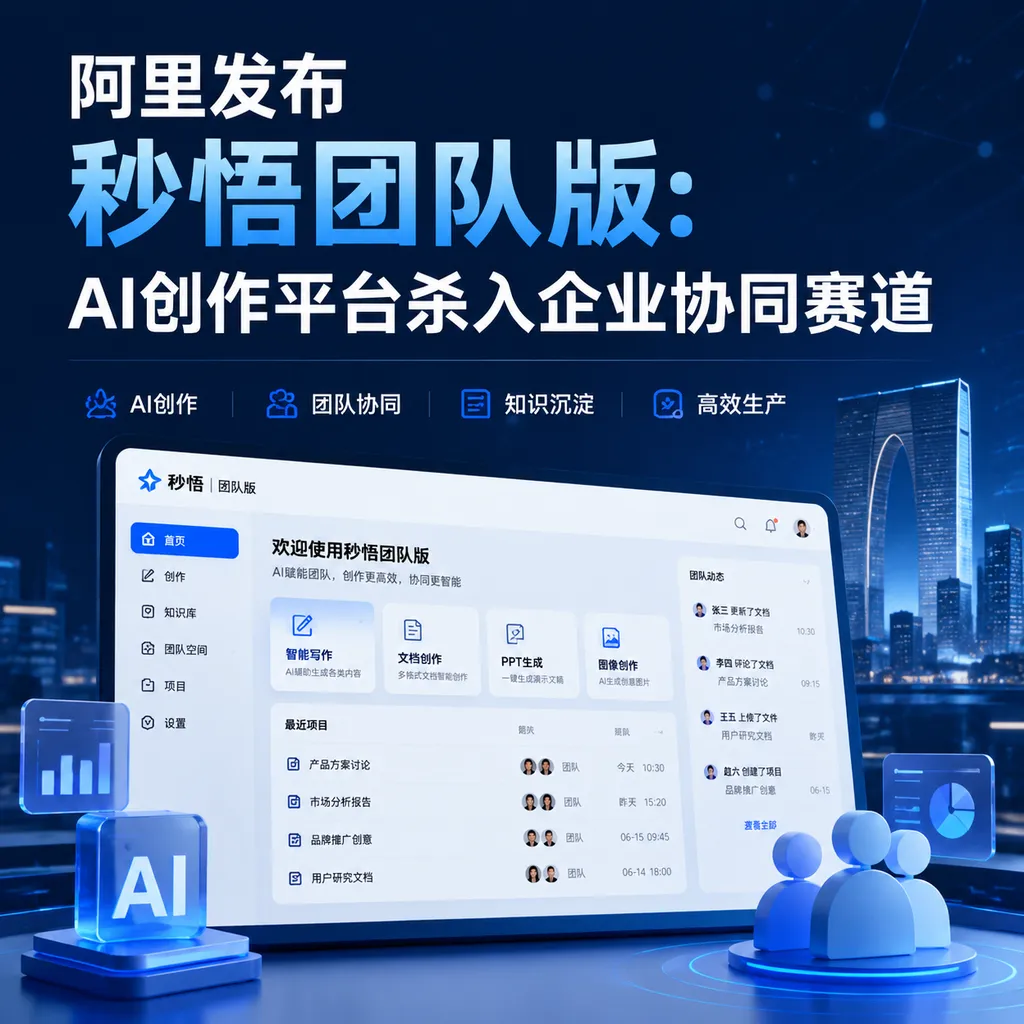
At the 2026 WAIC, Alibaba launched **Meoo Team**, an enterprise-level AI application creation platform focused on unified identity, quota management, permission allocation, and asset sharing, aiming to address the chaos of collaboration when deploying AI tools within enterprises. Within three months of launch, daily active users exceeded ten thousand, and the momentum of the personal version is now being brought into organizational collaboration scenarios.
Alibaba Launches Meoo Team Edition: AI Creation Platform Enters the Enterprise Collaboration Track
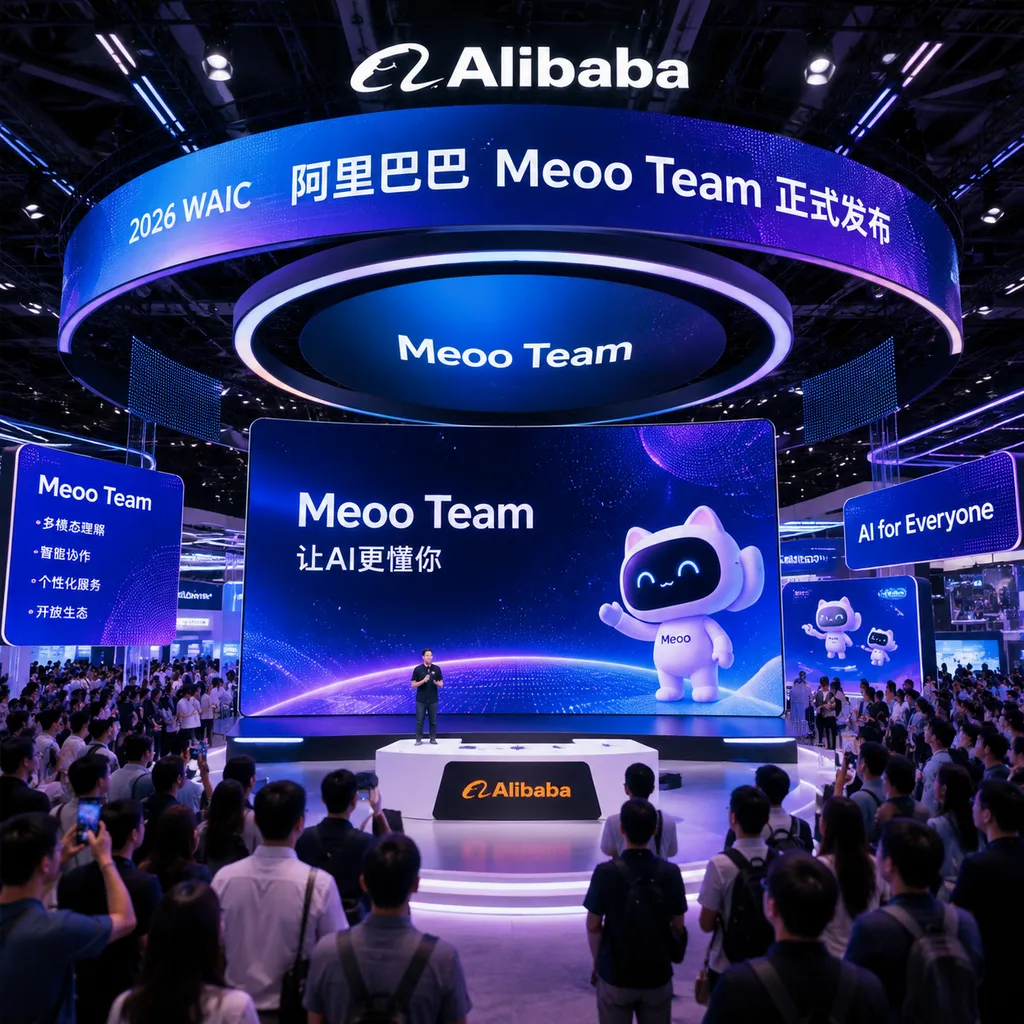
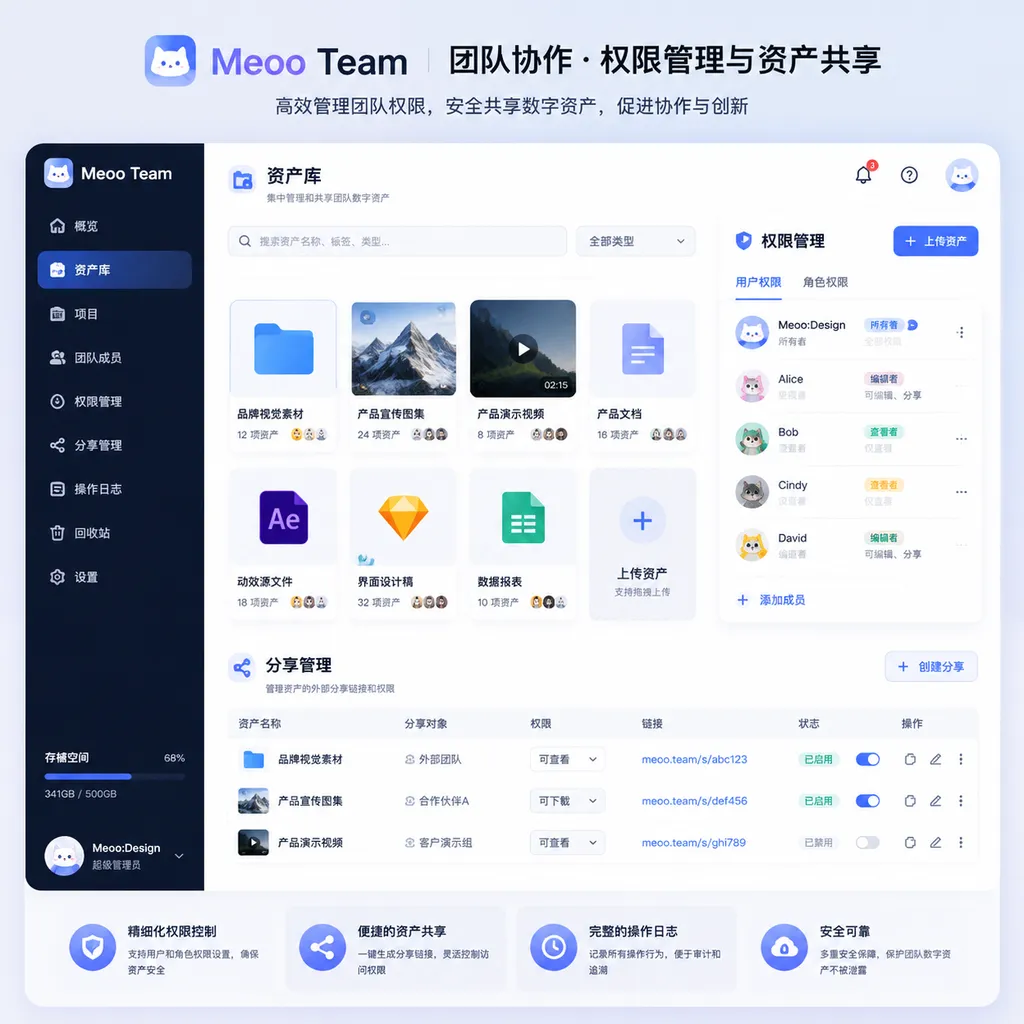
On July 18, the opening day of the 2026 World Artificial Intelligence Conference (WAIC), Alibaba officially unveiled the team edition of Meoo. The product is called Meoo Team, positioned clearly as — an enterprise-level AI application creation platform. Its core selling points come down to four things: unified identity management, unified procurement and quota control, fine-grained permission management, and team asset sharing.
It may sound like a pile of management jargon, but if you’ve ever tried rolling out AI tools in a company, you know how crucial these things are. Over the past year, practically every company has gone through the same chaos: the marketing team bought a bunch of Midjourney accounts, product managers recharged Claude out of pocket, designers registered Cursor with the team email, and finance struggled with dozens of overseas credit card statements — AI productivity tools have remained stuck in “solo mode” within enterprises. What Meoo Team aims to fix is precisely that mess.
From personal hit to team tool — Meoo’s three-month journey
Meoo’s personal edition only launched in April this year, focused on “creating applications, websites, and mini programs with natural language and deploying them all in one click,” following the path of Lovable, Bolt.new, and v0 — full-stack AI coding plus cloud deployment. According to Alibaba’s official figures, it surpassed ten thousand daily active users within three months.
That number isn’t bad among domestic peers. Keep in mind that the AI application generation space has been trending hot over the past year but struggling with user retention — most people try it once or twice and move on, because the generated output is always just short of “usable.” For Meoo to maintain over ten thousand DAU and sustain itself until launching a team version shows that the users actually stayed — not just newly recruited ones.
From personal to team edition, the product’s focus is shifting. The personal version competes on model capabilities and generation quality, while the team version competes on collaboration mechanisms. These two have completely different levels of engineering complexity.
The four core functions — what problems they actually solve
Breaking down the official terms from the launch, Meoo Team essentially targets four genuine pain points:
1. Unified Identity Management
The most common corporate scenario: one employee ends up with five accounts across five AI tools, and when they leave, no one knows which ones to deactivate. Meoo Team uses an SSO logic, integrating identity, org structure, and departmental permissions. It sounds basic, but this is the first gate every IT procurement must pass — if it doesn’t, procurement won’t even sign the deal.
2. Unified Procurement and Quota Control
This is what finance and management care about the most. Historically, team AI usage costs were like an open tap — no oversight. It’s common to find someone spending thousands a month on API fees. Meoo Team allows admins to allocate quotas by department, project, or role, and automatically block overages. This logic is borrowed from public cloud billing practices, a familiar concept to enterprises.
3. Fine-Grained Permission Management
Who can create apps, who can modify them, who can only view, and who can publish to production — this RBAC (role-based access control) model is standard in traditional SaaS, but rarely done well in AI creation products. That’s because AI-generated content changes rapidly — today it’s a web page, tomorrow it’s a mini program — making it hard to fit a static permission model. Whether Meoo Team can get this layer right is key to differentiating it from the personal version.
4. Team Asset Sharing
This is the most interesting part. Prompts, generated app templates, components, and data sources can all be accumulated and reused within the team — think of it as an internal “AI asset library.” The concept aligns with GitHub Organizations or Notion Team Workspaces — the essence of collaboration is asset reuse, not real-time interaction.
Target customers: Non-technical teams
Alibaba’s press release listed six types of teams: e-commerce, content creation, operations, marketing, finance, and education. Notice that not one of them is a technical team.
That’s a deliberate product choice. Tech teams have their own toolchains (GitHub Copilot, Cursor, Claude Code, etc.), leaving little room or need for Meoo Team to compete. Instead, it’s targeting teams with “creative needs but no coding capability” — the marketing team wants a campaign landing page, finance needs a small reimbursement tool, or the education team wants an interactive course web page. Previously, that meant waiting a month for IT, outsourcing for tens of thousands, or using low-code platforms (with steep learning curves).
AI app generation platforms compress that process to minutes. The team edition ensures those “minutes of output” can be retained, reused, and managed.
Competitive landscape: Lovable and v0 haven’t gone team yet
A quick comparison of today’s space:
- Lovable: Excellent personal experience; team collaboration features are still basic — limited to collaborator invites, lacking proper enterprise-grade permission systems.
- Vercel v0: Integrates with Vercel Team accounts but remains more of a prototyping tool, not full-cycle app creation.
- Bolt.new: From StackBlitz, focused on browser-based runtime; team features are equally thin.
- Domestic products like Jimeng or Kouzi Space: Lean more toward content and agent creation, not directly overlapping with Meoo’s app-generation focus.
Alibaba’s move to fill this “team edition” gap is well-timed. Enterprise procurement cycles are long — whoever nails compliance, auditing, and billing first will secure 12–24 months of contracts. It’s the same logic DingTalk, Feishu, and WeCom used when competing for enterprise IM dominance.
The strategic intent behind the product
Looking one level higher, Meoo Team is a key piece in Alibaba’s overall AI suite. Qwen (Tongyi Qianwen) covers the base model, Bailian provides model API services, Meoo handles application-level generation, and Meoo Team packages those capabilities into enterprise procurement workflows.
Put simply, Alibaba is translating “model capabilities” into “products enterprises can actually buy.” The bottleneck isn’t technical — it’s the procurement, legal, IT, and finance chain on the B2B side. Over the past year, every domestic cloud vendor has been doing the same math: the burn rate of large models can’t be recouped by API calls alone — the application layer is where monetization must happen.
That’s why Alibaba Cloud, Volcano Engine, Tencent Cloud, and Baidu AI Cloud are all climbing this same ladder — building application platforms that enterprises can use directly. Meoo Team represents one of the more aggressive moves — not providing “capabilities” to enterprises, but a ready-to-use collaboration space.
A few unanswered questions
The launch presentation was lively, but several key questions remain:
- Choice of underlying model: Is Meoo Team tied to the Qwen family, or can enterprises plug in their own models? If it’s the former, that’s a hurdle for companies already using GPT or Claude.
- Data compliance: Where are the enterprise-created apps and data stored, how are they encrypted, can they be privately deployed? These weren’t detailed in the release.
- Pricing strategy: Per-user, usage-based, or modular? Not yet announced, but directly determines whether it’ll make it into large enterprises’ procurement lists.
- Relationship with DingTalk and Tongyi Lingma: Alibaba’s internal AI tool ecosystem is already sizable. How Meoo Team integrates rather than competes internally is an organizational challenge.
The answers will likely emerge over the coming months. For developers and IT decision-makers, it’s worth shortlisting Meoo Team now and waiting for clarity on pricing and API openness before formal evaluation.
Final thoughts
In AI application generation, personal editions have been fiercely competitive for over a year, while team editions are just beginning. Whoever builds a product that enterprises are willing to pay for — and willing to bring their creative workflows into — will capture the next wave of B2B growth.
Alibaba’s pace isn’t slow. Transitioning from personal to team edition in three months shows strong internal commitment. Whether it truly succeeds remains to be seen — but as always, the real test for enterprise products isn’t the launch event, but the renewal six months later.
By the way, if your team uses multiple model APIs, OpenAI Hub lets you call GPT, Claude, Gemini, DeepSeek, and other mainstream models with a single key, fully OpenAI-compatible and directly accessible from China — handy when testing multi-model setups or integrating with platforms like Meoo Team.
References
Primary information on this event comes from on-site WAIC coverage and Alibaba’s official releases. Further technical discussions:
- Zhihu - “AI Application Creation Platforms” topic — domestic developer community discussions and reviews
- ITHome — ongoing tech media coverage of Alibaba’s WAIC 2026 announcements
- Juejin — developer-oriented comparisons and hands-on tests of Meoo, Lovable, v0, and similar platforms