Tencent ADP 4.0 Goes Global, Full-Stack Upgrade for Embodied Intelligence
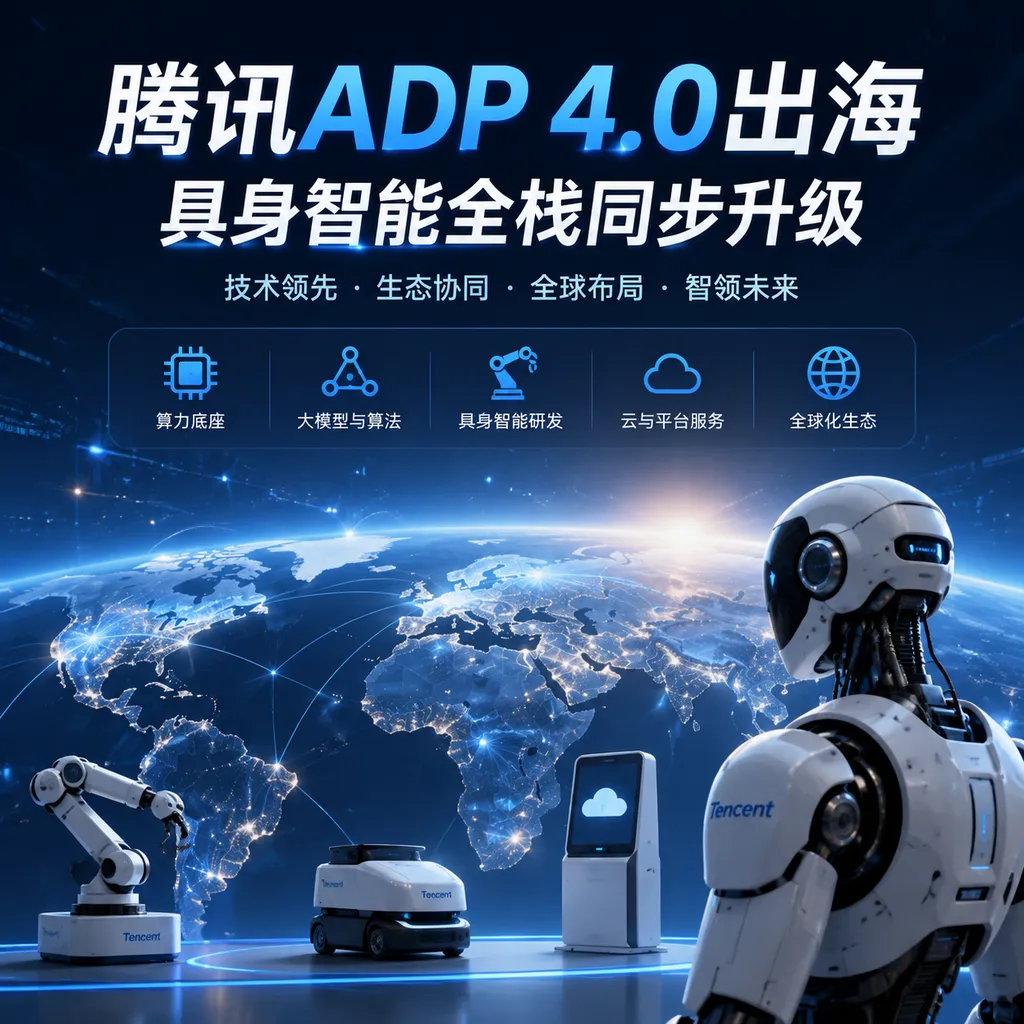
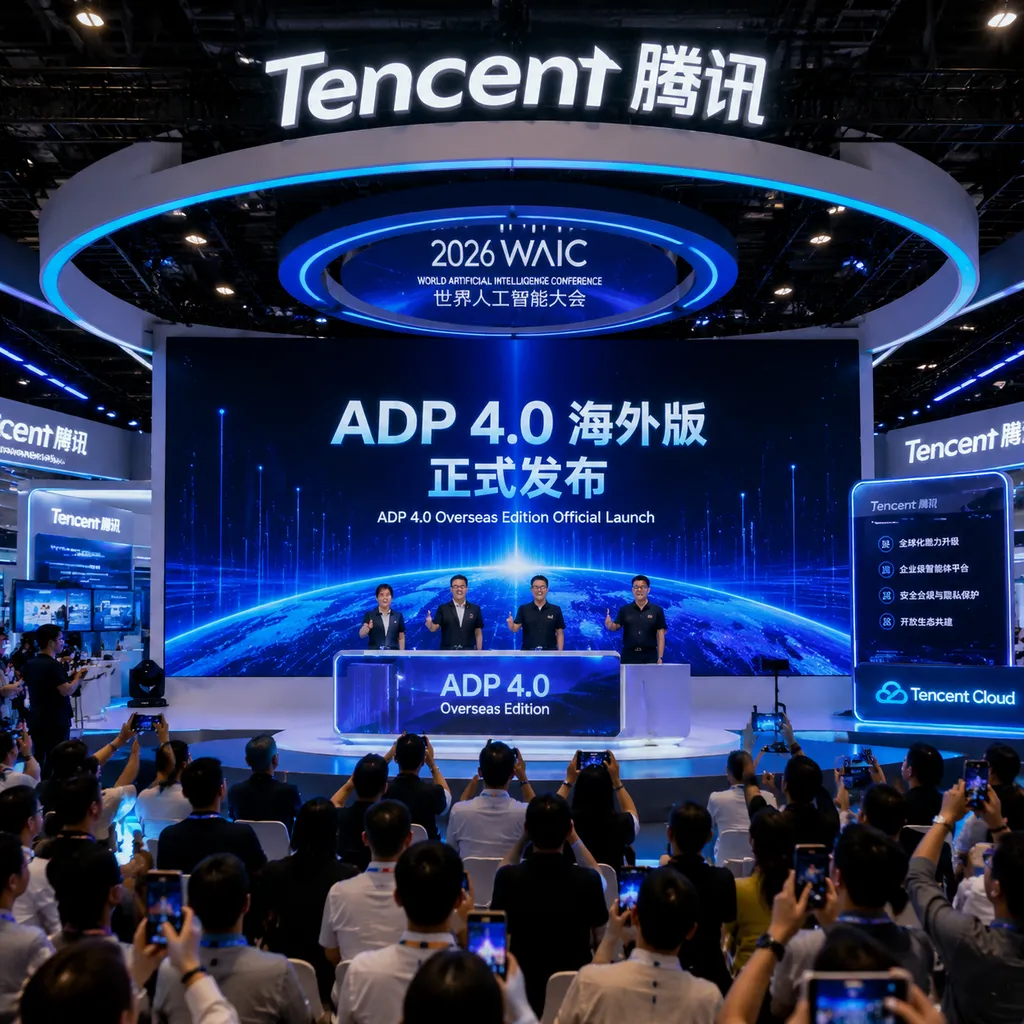
At the 2026 WAIC, Tencent Cloud’s enterprise-level intelligent agent platform ADP 4.0 Overseas Edition officially launched, along with a simultaneous upgrade to its full-stack embodied intelligence solution. The personal-oriented product WorkBuddy also debuted across three platforms. This time, Tencent has packaged and brought its domestic Agent experience overseas.
Tencent Takes ADP Overseas, Upgrades Its Full-Stack Embodied Intelligence Solution
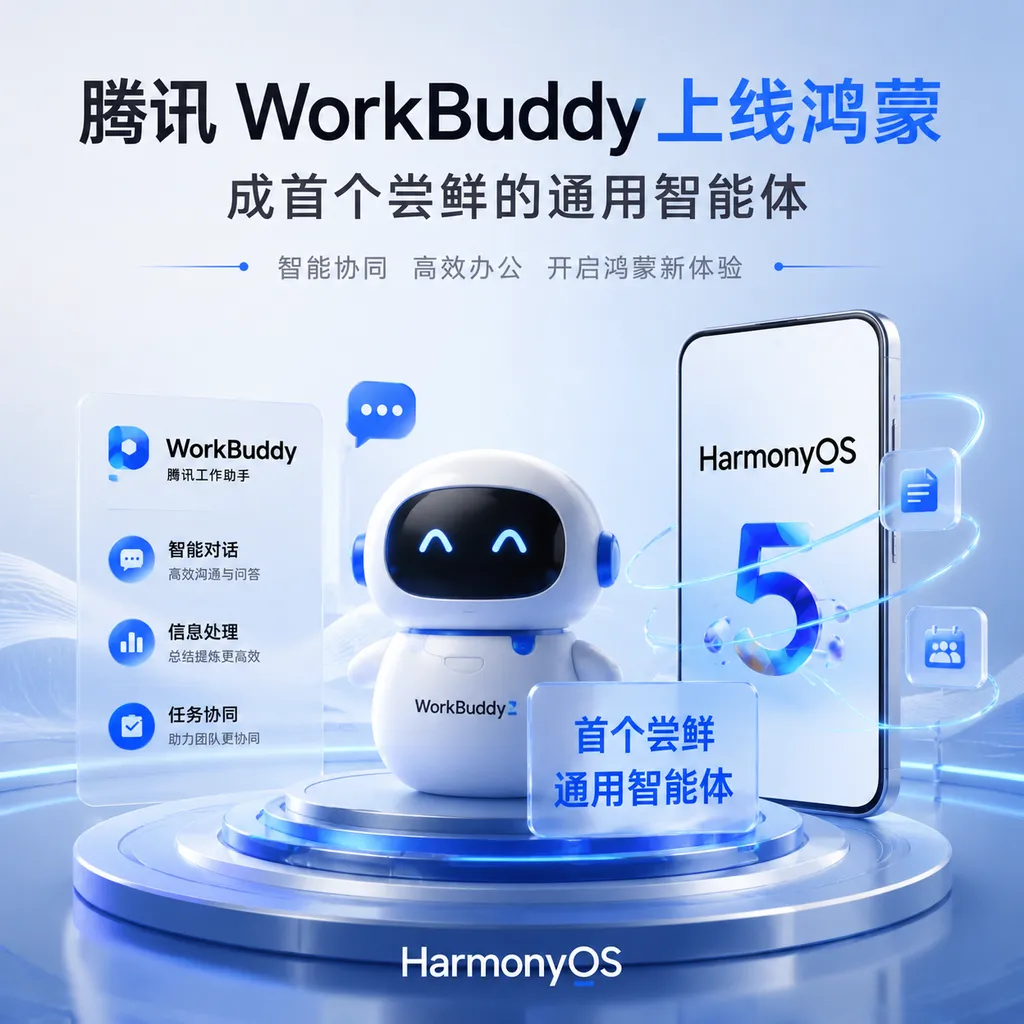
At the World Artificial Intelligence Conference (WAIC) on July 18, Tencent announced a trio of updates: a comprehensive upgrade to its full-stack embodied intelligence solution, the official launch of the enterprise-level intelligent agent development platform ADP 4.0 overseas edition, and the release of a standalone app for WorkBuddy, a product aimed at individual users, available on iOS, Android, and HarmonyOS simultaneously.
Though these three announcements seem disparate, they share a common thread — Tencent is systematically exporting its accumulated domestic experience in Agent engineering over the past year. It’s pushing downward into robotics hardware, outward into overseas markets, and upward into personal productivity tools.
ADP 4.0 Goes Global: More Than Just Translating the UI
Let’s start with the most telling announcement — the overseas launch of ADP.
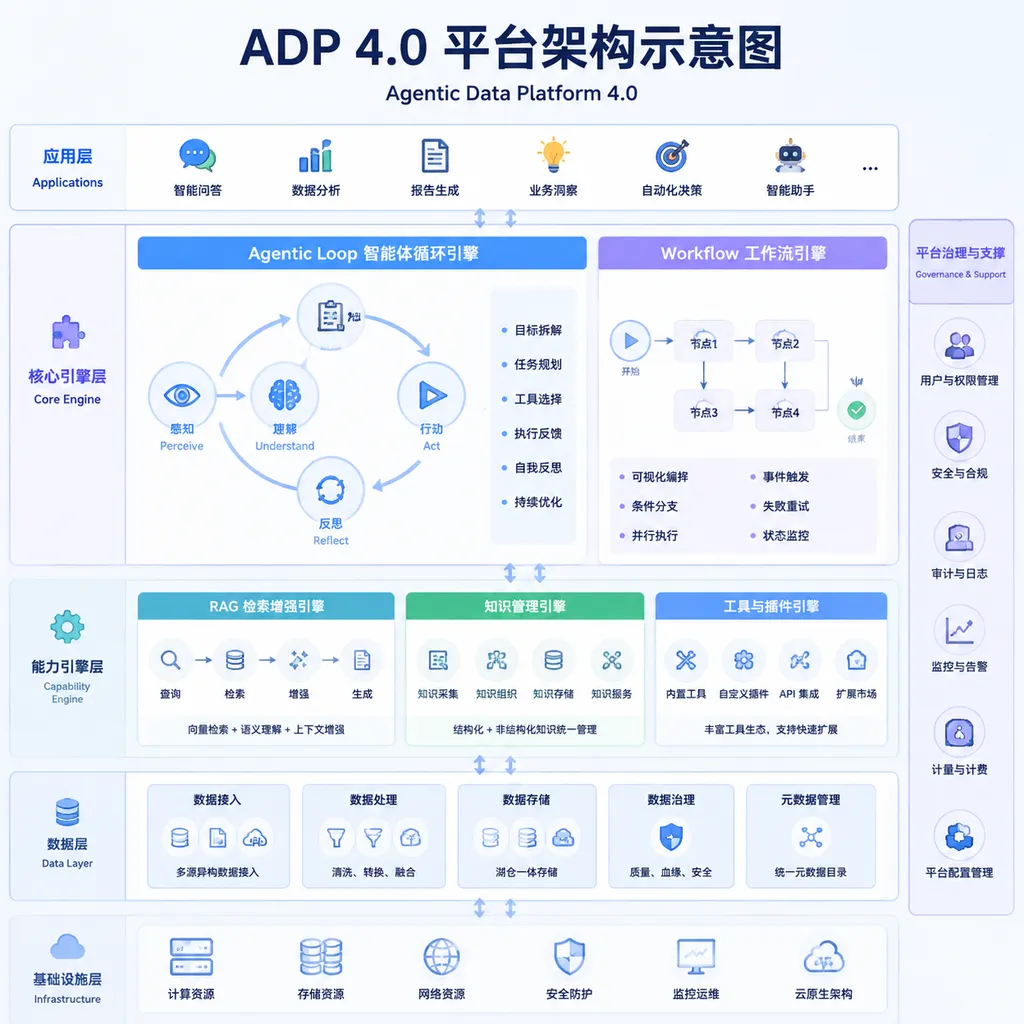
For developers familiar with Tencent Cloud’s Agent Development Platform (ADP), the product’s version 4.0 was actually first rolled out in early June at the Tencent Cloud AI Industry Application Conference. The key upgrade then was ADP’s evolution from a traditional agent-building platform into an enterprise-native intelligent agent platform centered on AgentOps. One-sentence agent generation, Claw-mode natural language construction, Agentic Loops, and a dynamic Agentic RAG retrieval engine — all these were already operational domestically since June.
So this "overseas launch" at WAIC in July essentially packages the already proven domestic product for international markets. The timing is deliberate: Tencent first runs ADP domestically for over a month to build client use cases, iron out stability issues, and refine the Skills ecosystem — before going international. It’s a measured, steady rhythm.
As for competition, the ADP overseas edition enters a crowded field — Microsoft Copilot Studio, Salesforce Agentforce, startups built on LangChain/LlamaIndex, and AWS Bedrock Agents or Google Vertex AI Agent Builder by hyperscalers. Tencent’s position in this market is nuanced: it lacks Microsoft’s or Salesforce’s SaaS entry point, and it doesn’t enjoy AWS/Google’s native cloud infrastructure advantage. But it does have a rare asset — real-world deployment experience across 30+ industries.
Publicly available clients in China already span insurance (Haigang Life), securities (SDIC Securities), logistics (DEPPON Express), medical devices (Mindray), hospitality (Atour Smart, Huazhu), FMCG (Yili), public fund governance (Handan), travel (Tongcheng), and automotive (FAW Toyota). One typical case: Huazhu Group — 38 workflows, 5-second average response to guest requests, 95% Q&A accuracy — actual production data, not demo figures.
Yili’s numbers are even starker: their shopping guide agent increased community click‑through rate by 15.7% and boosted orders by 26%; its smart ordering agent achieved 93% request recognition accuracy and 39% conversion uplift. These results show ADP has moved beyond the “can it run?” stage into the “can it deliver ROI?” phase.
“Ten Industries, 100 Scenarios”: A Different Kind of Tencent Ecosystem Play
Bundled with the overseas edition was an announcement of the “Ten Industries, 100 Scenarios Ecosystem Program.” The name sounds classically Chinese, but the core issue it tackles is universal in the Agent era: general-purpose platforms can’t penetrate vertical domains, while vertical solutions struggle to build general-purpose capabilities.
Tencent’s approach is to treat ADP as infrastructure, inviting ISVs, domain experts, and model providers to jointly go deep into industry-specific scenarios. Tencent Cloud has used similar strategies in its industrial internet initiatives, but this time, there’s a key distinction — Agent scenarios rely more heavily on content ecosystems than traditional SaaS. Whether a legal Agent works well, for example, depends half on platform capabilities and half on the richness of its underlying legal knowledge base, contract templates, and proofreading rules. So “building deep content” is a more pragmatic stance than merely “building a large ecosystem.”
From a capability perspective, ADP 4.0 already covers this well:
- Multi‑paradigm construction: Agentic Loop for handling open-ended intents; Workflow for defined business processes — both interoperable. This design is crucial: pure Agents risk runaway behaviors, pure Workflows lack flexibility. Two-way invocation offers the practical middle ground for enterprise settings.
- Dynamic Agentic RAG: A three-tiered retrieval reasoning mechanism — Fast / Plan / Plan+Reflect. For complex Q&A scenarios, vector search alone is insufficient; the Agent must plan its retrieval strategy and evaluate result quality.
- Agent Harness: Cloud sandbox for autonomous coding, enterprise-grade Skills invocation, and long-running task execution — critical for coding or research Agents requiring persistent operation.
- Four deployment modes: public cloud, dedicated cloud, private deployment, and hybrid cloud — with compliance and security certifications ready out of the box, essentials for government or financial clients.
Full‑Stack Embodied Intelligence: Connecting Cloud to Hardware
Now for the second pillar: embodied intelligence.
Tencent’s upgraded full-stack embodied intelligence solution is officially described as “spanning the cloud foundation, model layer, platform layer, and application layer.” In simpler terms, Tencent aims to provide robot and system developers with a turnkey stack — from compute to large models, from simulation training to application — without starting from scratch.
Its approach differs from Nvidia’s Isaac, Google’s Gemini Robotics, or Figure AI’s Helix. Tencent positions itself closer to a cloud-based embodied intelligence solution provider — it doesn’t build robot hardware, but it delivers the entire software stack around it.
Why does this make sense? Looking at the industry: hardware makers (Unitree, Zhiyuan, Figure, 1X, etc.) focus on hardware and motion control; embodied LLMs (RT‑X, π0, OpenVLA, GR series, etc.) are still rapidly evolving; the middle layer — simulation, data collection, task orchestration, and cloud compute — is expensive and slow for hardware vendors to build alone. Tencent fits neatly into that gap.
Technically, a full-stack embodied intelligence system must tackle several key challenges:
- Sim2Real transfer: The gap between simulation and real-world execution remains a major challenge; the cloud layer must support large-scale synthetic data generation.
- Multimodal model layer: VLA (Vision-Language-Action) models are the mainstream paradigm, requiring fine-tuning, distillation, and deployment tooling.
- Task orchestration: Embodied Agents differ from software-only Agents — they must manage physical-world states and handle error recovery.
- Edge-cloud collaboration: On-device compute is limited; complex decisions must run in the cloud, but latency must remain low.
Whether Tencent’s stack can address these effectively remains to be seen, as few client use cases have been publicly disclosed. This will be a key observation area in the latter half of the year.
WorkBuddy: A Product Worth Its Own Discussion
On the personal side, WorkBuddy deserves special mention.
Positioned as a general-purpose intelligent agent, it’s not a Copilot-style embedded assistant nor a purely conversational tool like ChatGPT. Instead, it’s an autonomous Agent capable of executing tasks. Two key signals this time: it launches as a standalone app, decoupled from previous integrations, and debuts simultaneously on iOS, Android, and HarmonyOS.
The HarmonyOS support is noteworthy. Currently, few large-model apps are fully adapted to Huawei’s system, apart from Huawei’s own "Xiaoyi" assistant. Tencent’s decision to prioritize HarmonyOS suggests both a strategic alignment with Huawei’s ecosystem and the elevation of WorkBuddy to a strategic AI entry product, not a mere auxiliary function.
The general-purpose Agent track is crowded — Anthropic’s Claude offers Computer Use, OpenAI has Operator and successors, and many domestic entrants followed after startups like Manus. For WorkBuddy to stand out, simultaneous multi-platform release alone isn’t enough — success depends on capability density: how complex autonomous tasks it can complete, how reliably it orchestrates across apps, and how coherent its contextual awareness remains. Only hands-on use over time will tell.
Key Takeaways
Overall, Tencent’s WAIC announcements signal several trends developers should note:
1. Chinese tech giants are exporting Agent toolchains.
Previously it was model APIs (Tongyi, DeepSeek, Hunyuan), now full AgentOps platforms are going overseas. The market does need mature AgentOps tooling — Microsoft and Salesforce are heavy and expensive, AWS and Google are too low-level. Mid-layer platforms like ADP, if priced right, have a theoretical opportunity.
2. AgentOps is becoming real.
ADP 4.0 defines AgentOps as encompassing the entire lifecycle — build, distribute, manage, and use — analogous to how DevOps abstracts CI/CD. As Agents move from PoC to production, observability, access control, versioning, and staged release become must-haves, not nice-to-haves.
3. The embodied intelligence software stack is still crystallizing.
Tencent’s full-stack solution looks like an early “staking of territory.” The real competition will be in the next 1–2 years — who secures deep partnerships with top robotics manufacturers. The window is still open.
One last note: the base models powering enterprise platforms like ADP 4.0 — GPT, Claude, Gemini, DeepSeek, etc. — can all be accessed via unified API aggregation services such as OpenAI Hub, compatible with OpenAI-style APIs, ideal for developers building and validating their own Agents.
References
- Tencent Cloud ADP 4.0 Release: One Sentence to Build an Agent, One Click to Integrate with Business Systems – IT Home — Detailed report on ADP 4.0’s technical features at its June domestic launch, comparable to the overseas release.