Alibaba Qwen3.8 Officially Open-Sourced: 2.4T Parameter Preview Version Now Online
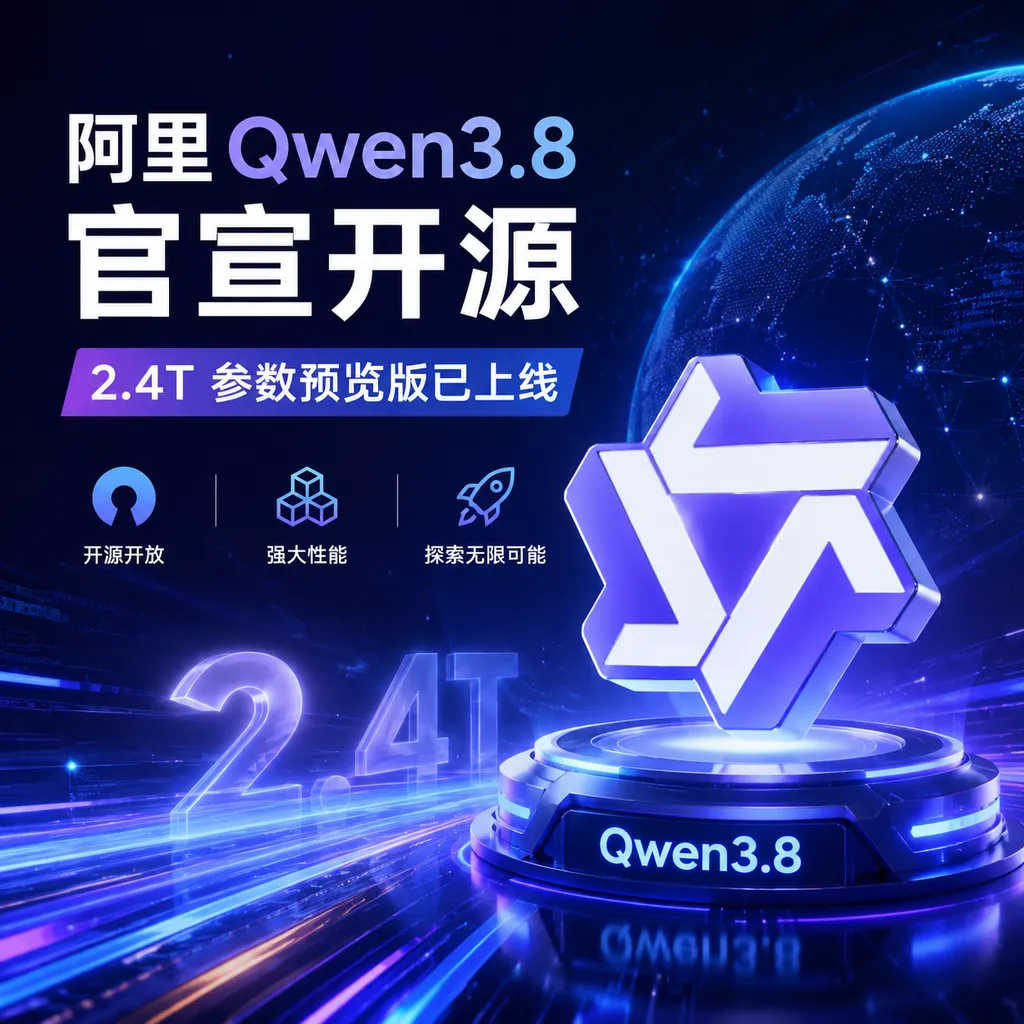
On July 19, the Alibaba Qwen team announced that Qwen3.8 is about to be released and open-sourced. The 2.4-trillion-parameter Max preview version has already been launched on platforms such as Token Plan and Qoder, with the official version and weights to be released in the coming days.
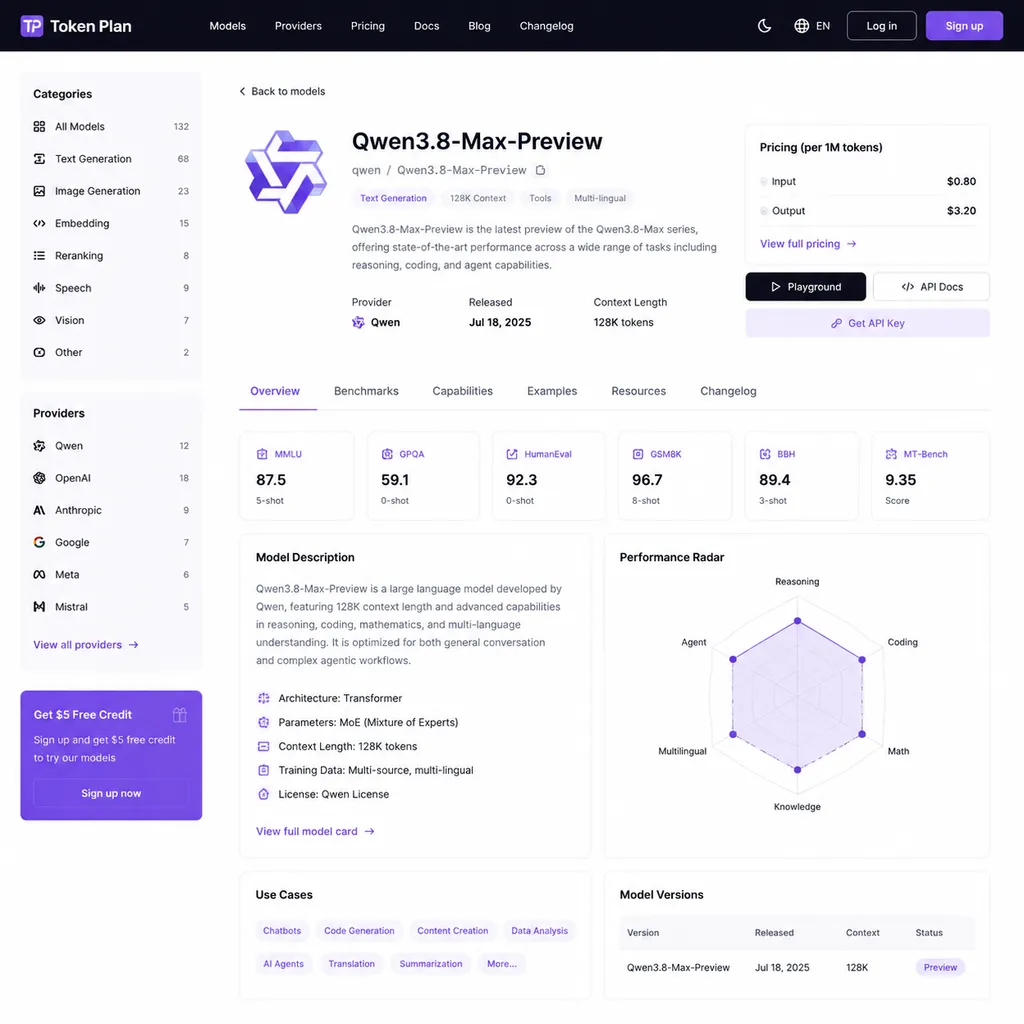
Early in the morning on July 19, Alibaba’s Qwen team announced on social media that Qwen3.8 is about to be released — with open-sourced weights. Meanwhile, the Qwen3.8-Max-Preview, a 2.4-trillion-parameter preview model, has been simultaneously launched through three channels: Alibaba Token Plan, Qoder, and QoderWork. Developers can start using it right now.
The official self-assessment carried a hint of firepower — “possibly the most powerful model other than Fable 5.” In translation: “We admit we’re not number one, but we own second place.” Half a year ago, few domestic models were willing to so openly place themselves on the same benchmark as top closed-source counterparts.
What 2.4 Trillion Parameters Mean
Let’s break down the numbers. Qwen3.8’s 2.4T parameters are six times greater than Qwen3.5-Plus (397 billion total parameters) released open source earlier this year, and significantly beyond the recent Qwen3.7-Max.
But don’t rush to treat parameter count as a power metric. One well-known industry fact: trillion-scale models are almost always based on sparse MoE architectures, meaning total parameters ≠ activated parameters. To use a rough analogy — 2.4T is the model’s “library size,” but in actual inference, only a tenth or less of those are “opened.” That’s why Alibaba can afford to open source such a big model rather than keep it closed for commercial use.
Alibaba hasn’t disclosed the number of activated parameters, but based on Qwen3’s consistent technical roadmap, a combination of MoE + dense mixture + controllable reasoning budget is pretty much a given. Referring to Qwen3.5-Plus’s statement that it “reduced deployment VRAM usage by 60%,” Qwen3.8 is likely even more sparse, allowing individual developers to run a quantized version on just two or three H100s.
Signals from the Preview Version
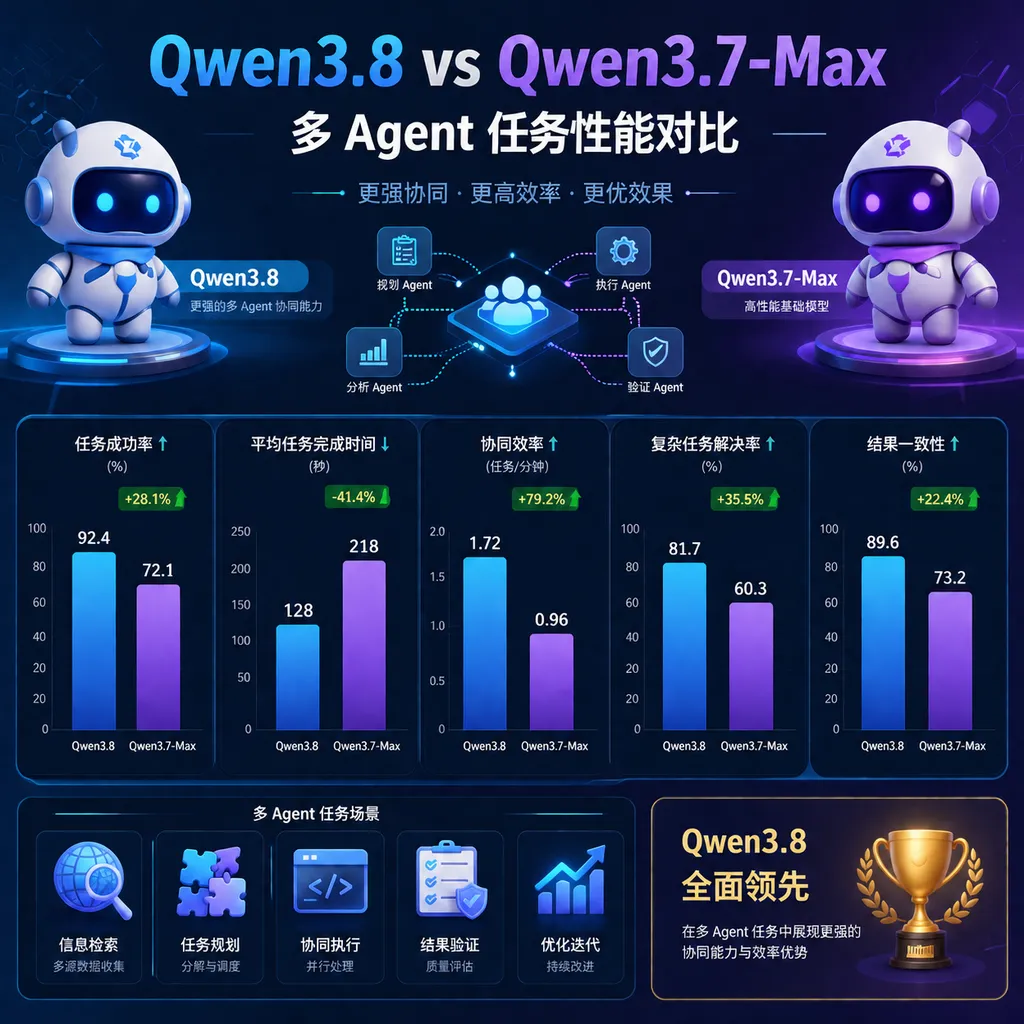
The official comparison baseline is the flagship Qwen3.7-Max, stating that 3.8-Max-Preview has “significant capability improvements.” Vague, yes — but internal test projects are quite specific:
- Full-stack development: end-to-end feature delivery, not just code completion
- Data analysis: multi-step pipelines with intermediate products
- Office workflow automation: cross-application task handling
- Multi-agent, long-horizon tasks: this one’s key
Taken together, these point to agentic capability. Alibaba has been betting on this track since the Qwen3.7 era — Qwen3.7-Max was officially positioned as a “general-purpose agentic model,” while Qwen3.7-Plus was the “multimodal agentic model.” With Qwen3.8, “agent intelligence” is basically the default attribute — no need to highlight it anymore.
As for the self-promotional line “rivals world-leading models,” take it with a grain of salt. What’s really interesting is how Alibaba chooses to prove itself. Instead of traditional benchmarks like MMLU or GSM8K, they highlight “multi-agent, long-horizon tasks,” which are much closer to real engineering deployments. That choice alone says a lot.
How to Read “Other Than Fable 5”
Positioning one’s new model as “second best,” while explicitly elevating a closed-source model as “first,” is a delicate public-relations move. It avoids overhyping yet subtly declares: we’re in the top league now.
Alibaba’s model release rhythm over recent years is quite clear:
- Qwen3-Max (Sept 2025): first trillion-scale preview model, focused on instruction following and tool use
- Qwen3.5-Plus (Feb 2026): 397B-param open-source MoE model, even got a like from Elon Musk on X
- Qwen3.7-Max/Plus: solidified agentic positioning
- Qwen3.8-Max (now): 2.4T parameters, about to be open sourced
Each generation’s interval is shrinking, parameter count rising — but the key constant is: the commitment to open source has never changed.
This is the fundamental difference between Alibaba and OpenAI or Anthropic. The GPT-5 and Claude series remain strictly closed-source; weights only run within their own or partner clouds. Alibaba, on the other hand, tosses trillion-scale models directly to the community and lets Hugging Face download counts speak for themselves.
Why Open-Sourcing a 2.4T Parameter Model Still Makes Business Sense
On the surface, releasing a model that costs hundreds of millions of dollars to train looks like “giving it away,” but that’s not how the math works.
First, community ecosystems are the best sales teams.
The Qwen family now forms a self-sustaining ecosystem across Hugging Face — derivative models, finetuned variants, quantized versions. Once a developer gets Qwen running locally, the next step is often migrating production workloads to Alibaba Cloud Bailian — familiar, API-compatible, convenient.
Second, open weights ≠ free service.
Running a 2.4T model is prohibitively expensive for individuals. Serious business users will still end up using APIs or private deployments — and Alibaba Cloud is the default choice. Open sourcing just widens the top of the user funnel; monetization happens at the bottom.
Third, it’s about standard-setting.
When Qwen becomes the de facto baseline for China’s open-source ecosystem, all subsequent tuning, tooling, and evaluations default to it. That position is far more valuable than short-term revenue.
What This Means for Developers
Here’s what you can do now:
- Go to Token Plan or Qoder to test the preview version, feed it real business cases — don’t rely solely on the official demos.
- Track the open-source repository on Hugging Face.
Once Qwen3.8’s final version is released, quantized versions (GGUF, AWQ, GPTQ, etc.) usually appear within a week. - Plan your Agent migration.
If your current multi-agent setup runs on Qwen3.7, upgrading to 3.8 will likely be seamless — though long-horizon task stability is worth re-testing.
For teams using multiple model providers, going through an aggregation layer can simplify things. Platforms like OpenAI Hub already support GPT, Claude, Gemini, DeepSeek, and Qwen models under a single OpenAI-compatible API format. Once Qwen3.8 is open sourced, integration should take only a day or so — switching models becomes a simple model parameter change, perfect for A/B testing.
A Few Unanswered Questions
Exciting as Alibaba’s announcement is, several details remain unknown:
- Activated parameter count not disclosed — inference cost for 2.4T can’t yet be estimated
- Context window not mentioned — Qwen3.7-Max supported 1M tokens; will 3.8 extend further?
- Multimodal support not discussed — likely the open-sourced version is text-only (Instruct); multimodal may take the Qwen3.8-VL or Omni route
- License unspecified — Qwen has historically used Apache 2.0 (a relatively permissive license), but a model this large may introduce new commercial-use clauses; waiting for the official version will clarify
Final Thoughts
From Qwen3-Max’s trillion-parameter breakthrough, to Qwen3.5-Plus lowering deployment cost by 60%, to today’s 2.4T Qwen3.8 approaching open release — Alibaba’s acceleration curve is visible to the naked eye.
In China’s open large-model poker game: DeepSeek plays on inference efficiency, Kimi plays long-context and agent ecosystems, while Alibaba bets across all three chips — scale + open source + agent deployment.
Who exactly Fable 5 is and when it officially drops remains uncertain. But one thing’s sure: by late 2026, there will only be a handful of players worldwide capable of truly open-sourcing trillion-scale weights — Alibaba is one of them.
The official release and weight drop are just days away. The community is already waiting.
References
- ITHome: Alibaba Qwen3.8 Preview Model Goes Live with 2.4T Parameters — Firsthand report covering Qwen3.8-Max-Preview’s parameter count, release platforms, and capability evaluation