Ali Qwen3.8-Max-Preview Early Release: 2.4T Parameters, 90% Off During the Day, 98% Off at Night
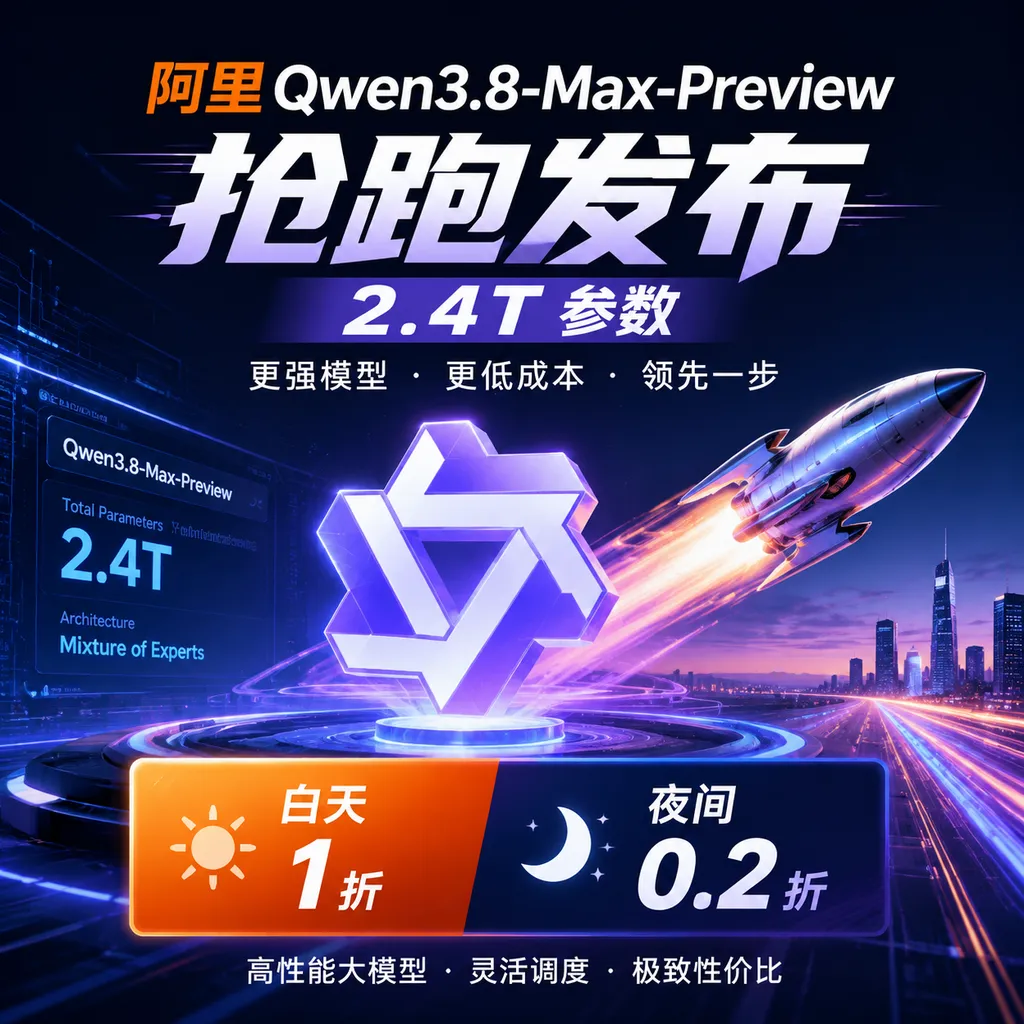
On July 19, Alibaba simultaneously launched **Qwen3.8-Max-Preview** on Token Plan, Qoder, and the Qianwen PC platform. With **2.4 trillion parameters**, it focuses on **full-stack development** and **multi-agent long-term tasks**. Combined with its aggressive pricing—**10% of the regular rate during the day and 2% at night**—it clearly aims to capture developers’ computing budgets.
Alibaba Sneaks Qwen3.8 Into the Preview Channel
On July 19, without a conference or roadshow, Alibaba simultaneously rolled out Qwen3.8-Max-Preview across its Qwen PC app, Token Plan, Qoder, and QoderWork platforms. It had been less than two months since the official release of Qwen3.7-Max, making the pace aggressive by domestic model standards—typically, Max-series iterations take three to four months; this one came in just over six weeks.
The official parameter count is 2.4T, one step up from Qwen3.7-Max. In an unusually bold statement, Alibaba wrote that it “may be the most powerful model outside of Fable 5.” The phrasing is subtle: it acknowledges that Anthropic’s Fable 5 remains the benchmark on most leaderboards, while implicitly placing local competitors (DeepSeek V4, GLM 5.2, Kimi, etc.) behind it. Such self-positioning is rare in Alibaba’s previous press releases.
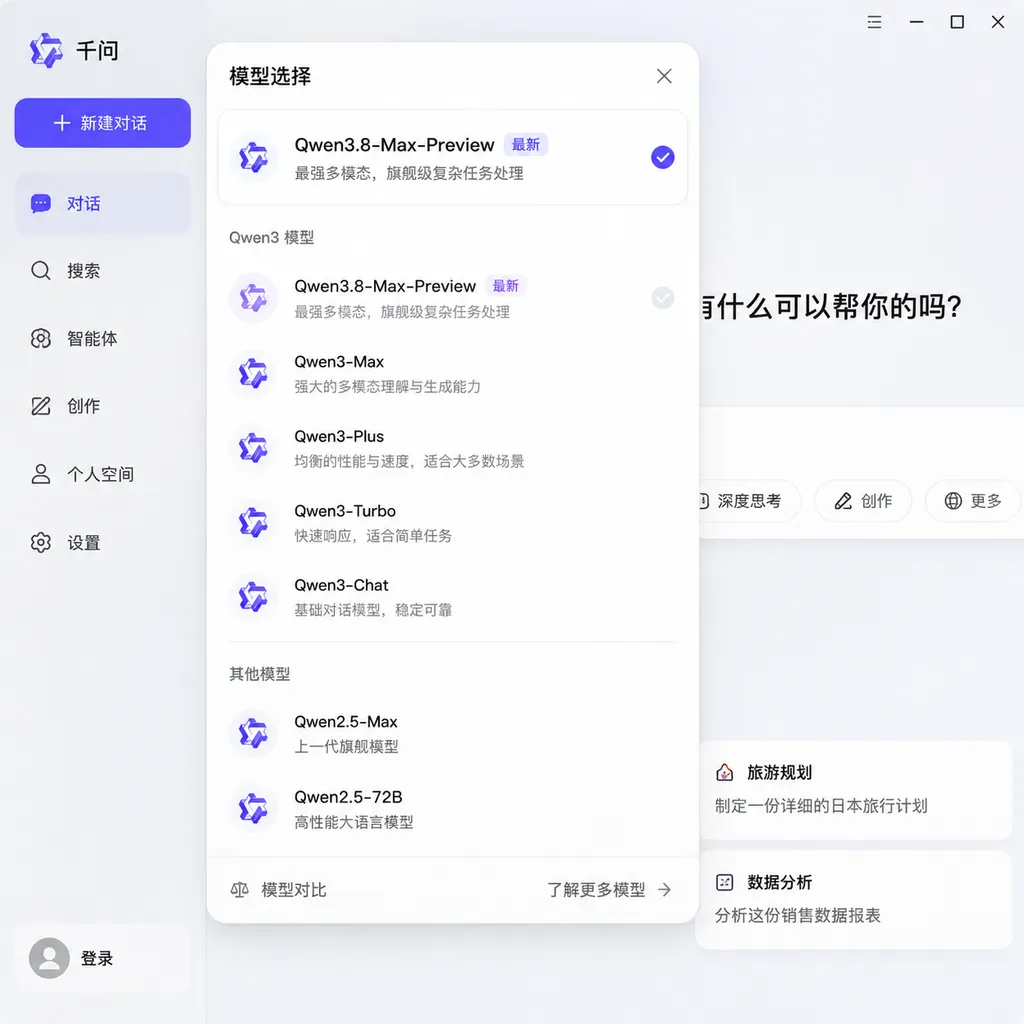
A notable line reads: “The official version will be released and open-sourced soon.”
If this 2.4T dense/MoE model truly releases weights, it would reset the compute-access threshold again after DeepSeek V4. Whether full weights or only inference weights will be opened—and under what license—has not been specified.
What 2.4T Parameters Really Mean
Let’s temper expectations: parameter count does not equal capability. GPT‑4 Turbo is rumored to be around 1.8T, Claude Opus 4.7’s scale is undisclosed, and Fable 5’s number is likewise avoided. So “2.4T” serves mostly as a market signal—Alibaba is doubling down on pretraining scale rather than chasing small‑model efficiency.
At the same time, the company emphasized “complex, multi‑agent, long‑range tasks,” specifically naming three scenarios:
- Full‑stack development: from requirements to code to deployment, requiring stable state across long contexts
- Data analysis: multi‑turn loops involving code interpreters, tool calls, and result interpretation
- Office workflows: cross‑application orchestration of documents, spreadsheets, and presentations
These are typical “Agent‑hungry” scenarios—consuming memory, tokens, and reasoning depth. Running them on LLMs means any misstep forces a full rerun, multiplying cost. Alibaba’s move to increase parameters here makes logical sense: for long‑range tasks, stability matters more than peak performance, and there’s still no better way to ensure stability than “scaling up model size and data.”
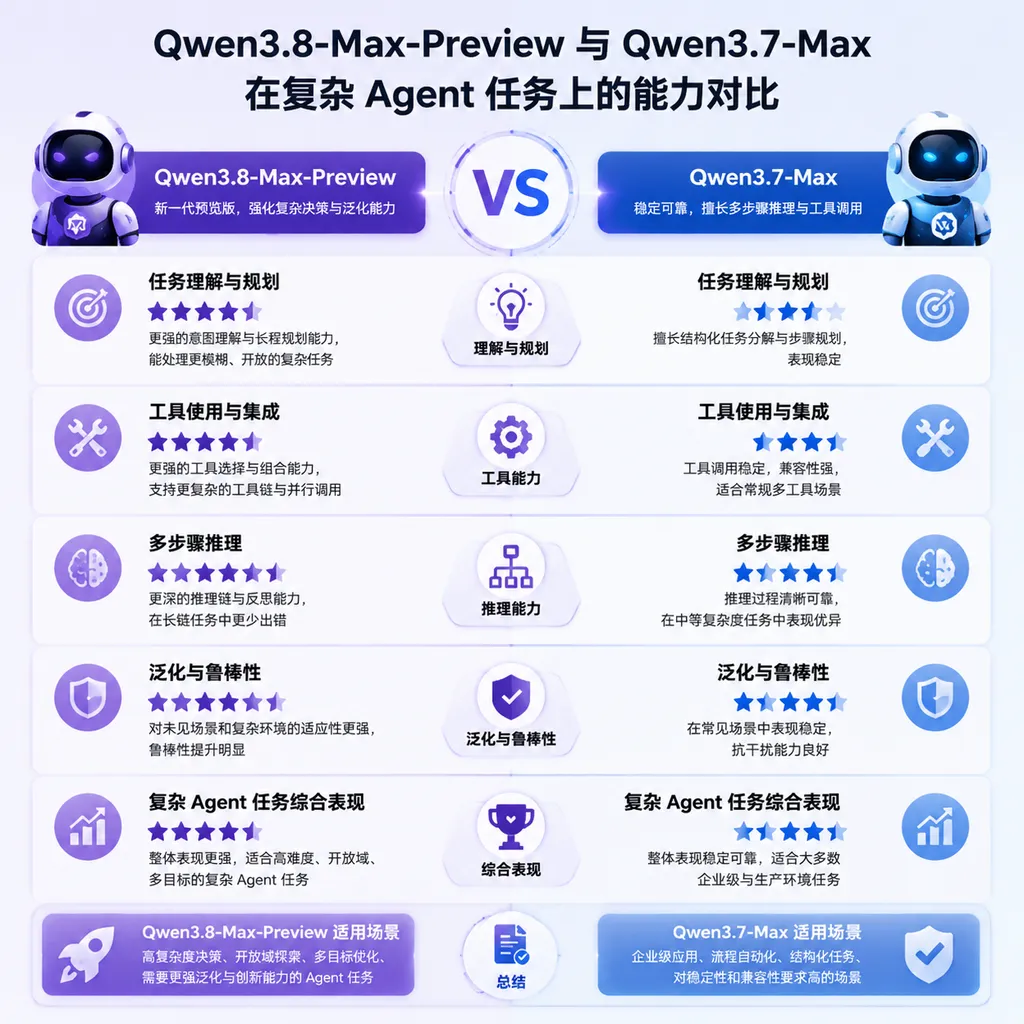
Qwen3.7‑Max was marketed as an “all‑purpose agentic model.” Qwen3.8‑Max‑Preview continues that line, showing Alibaba now regards “base models for Agents” as its main battlefield—much like Anthropic, whose Fable 5 also emphasizes long‑term reliability and tool use.
Pricing: Daytime 10% Rate, Nighttime 2% Rate — Real Discount or Smart Play?
What really stirred developers was the pricing strategy.
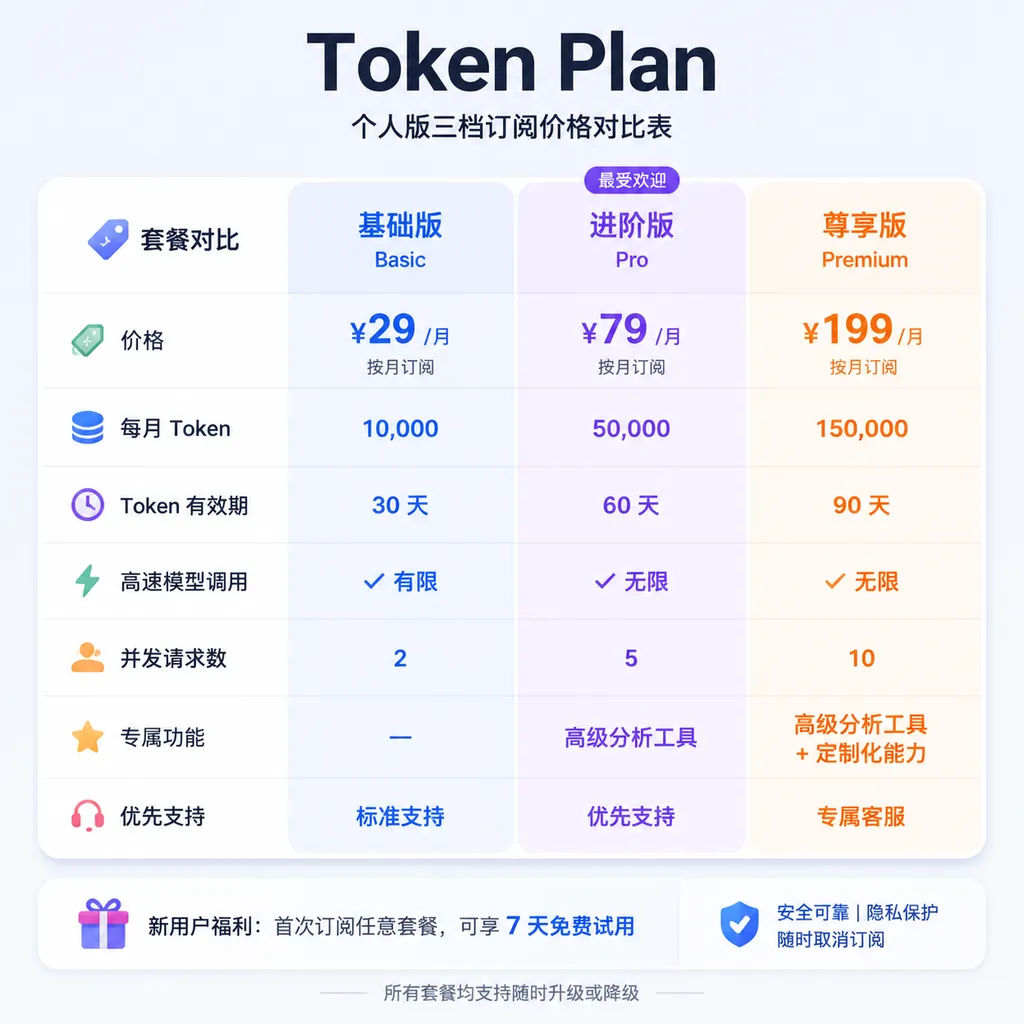
Token Plan (Individual) – three tiers:
| Tier | Monthly Fee | 7‑Day Quota | 5‑Hour Quota | Concurrent Agents | |------|--------------|--------------|---------------|-------------------| | Lite | ¥39 (was ¥60 – 35% off) | 2,500 Credits | 700 Credits | 1–2 | | Standard | ¥139 (was ¥180 – 23% off) | 10,000 Credits | 3,000 Credits | 3–4 | | Pro | ¥499 (was ¥600 – 17% off) | 40,000 Credits | 12,000 Credits | 6–8 |
At face value, the prices aren’t especially cheap—Pro (¥499) aligns with developer tools like Cursor Pro or Claude Code—but the twist comes from temporary discounts:
- Daytime calls to Qwen3.8‑Max‑Preview: Credits cost only 10%, effectively giving 10× usage.
- Nighttime (22:00–08:00): On top of the 90% discount comes a further 80% off—i.e. 2% of normal cost.
In other words, a call consuming 1 Credit by day costs just 0.2 Credit overnight. It mirrors “peak‑off‑peak electricity pricing”: daytime compute clusters are saturated; at night, idle capacity gets sold cheap. Domestic cloud providers have offered “night‑batch inference half‑price” before, but cutting to 20% of 20%—an effective 96% off—is unprecedented.
Hidden signal: Alibaba is betting developers will shift scheduling habits, offloading long or batch tasks to nighttime. For data cleaning, code refactoring, or bulk document processing, this gap is tempting. But for interactive coding (real‑time Copilot usage), the daytime 10% rate is already low.
Assessment: The aim isn’t just to save users money but to drive massive preview‑period traffic, collecting real‑world usage data for the final model. The more developers push Qwen3.8‑Max‑Preview, the richer Alibaba’s fine‑tuning feedback. So watch that “limited‑time” label—the official release will likely revert to normal pricing; early adopters are the real winners.
Qoder: Alibaba’s Move Against Cursor
The other highlight launched simultaneously is Qoder, an AI coding tool introduced earlier this year to compete directly with Cursor and Windsurf‑style IDEs. Previously, Qoder was paired with Qwen3.7‑Max and Claude models; now it ships first with Qwen3.8‑Max‑Preview and includes the 10%‑rate benefit.
Alibaba’s logic is clear: pair its strongest model with the lowest price to lure developers away from subscription tools like Cursor. Cursor Pro runs US $20/month plus pay‑as‑you‑go tokens; Qoder’s Token Plan uses a pooled‑credit subscription, and its ¥39 Lite tier offers a wider quota than Cursor’s free plan.
But holding users takes more than model power and pricing. Cursor hit US $500 M ARR in a year thanks to polish in features like tab completion, apply‑diff, and multi‑file context. In these, Qoder still trails. Alibaba’s bet: hook users now with Qwen3.8‑Max‑Preview’s capability + discount, and close the UX gap through rapid iteration.
The Unavoidable Question: When Will the Official Version Be Open‑Sourced?
Alibaba says “the official version will be released and open‑sourced soon.”
Historically, the Qwen line has been among the most open in the industry—releasing full weights from Qwen 1.5, 2, 2.5 to 3 across multiple sizes (0.5B → hundreds of B). But the Max series has so far offered only APIs, never weights.
If Qwen3.8‑Max (2.4T) truly opens entirely, the shock would surpass DeepSeek V4’s—V4 is 671B MoE, small enough to download; a 2.4T dense model would produce nearly 5 TB of weight files, out of reach for hobby clusters. So the realistic path: release weights mainly for cloud providers and research institutes, while individuals keep using APIs.
That also explains the preview push—once an open model lands, API commercial value must be reevaluated. Capturing the ecosystem now is the rational move.
Practical Advice for Developers
If you’re choosing tools now, a few quick pointers:
- Just testing model ability: use the Qwen PC client—free and quickest to validate Qwen3.8‑Max‑Preview in your own scenarios.
- Long‑term AI coding needs: Qoder + the 10% rate is the best cost‑performance combo. If you’ve used Claude family models, run the same tasks for side‑by‑side comparison.
- Building Agent apps or batch jobs: go for Token Plan Standard / Pro tiers; shift heavy jobs to night—the 2% window is worth exploiting before the official launch.
- Enterprise integration: wait for the official release and license details; the preview isn’t production‑grade.
For teams that call multiple models via unified gateways, aggregators like OpenAI Hub will likely add Qwen3.8‑Max’s open version immediately on release. You’ll then be able to use the OpenAI‑compatible interface—one key to switch among Qwen, Claude, GPT, Gemini, DeepSeek—for seamless A/B testing without per‑provider SDKs or accounts—ideal for evaluation phases.
Epilogue
In Qwen3.8‑Max‑Preview’s debut, the parameter count itself isn’t the headline. The real takeaways are:
(1) a sub‑seven‑week iteration, showing Alibaba’s Qwen team’s training + evaluation pipeline is now mature;
(2) the ultra‑aggressive “day 10% / night 2%” pricing—first among top domestic players;
(3) the promise of near‑term open‑sourcing, which, if fulfilled, could reshape the open‑model landscape of late 2026.
By declaring it “perhaps the most powerful model outside Fable 5,” Alibaba has effectively issued a public challenge to itself. The preview’s usage data will provide the first verdict; the openness of the official release will provide the second—both expected within weeks.
References
- Alibaba Token Plan Individual Edition Launch—Limited Offer from ¥39 per Month – ITHome – detailed pricing and promotion info
- Limited‑Time 10% Rate, Night 2%: Qoder Integrates Qwen3.8‑Max‑Preview – ITHome – Qoder integration and nighttime discount mechanism
- 2.4T Parameters: Qwen PC Integrates Qwen3.8‑Max‑Preview – ITHome – free PC/Web access and model specs