The Ministry of Industry and Information Technology is going to set rules for "AI + Software"
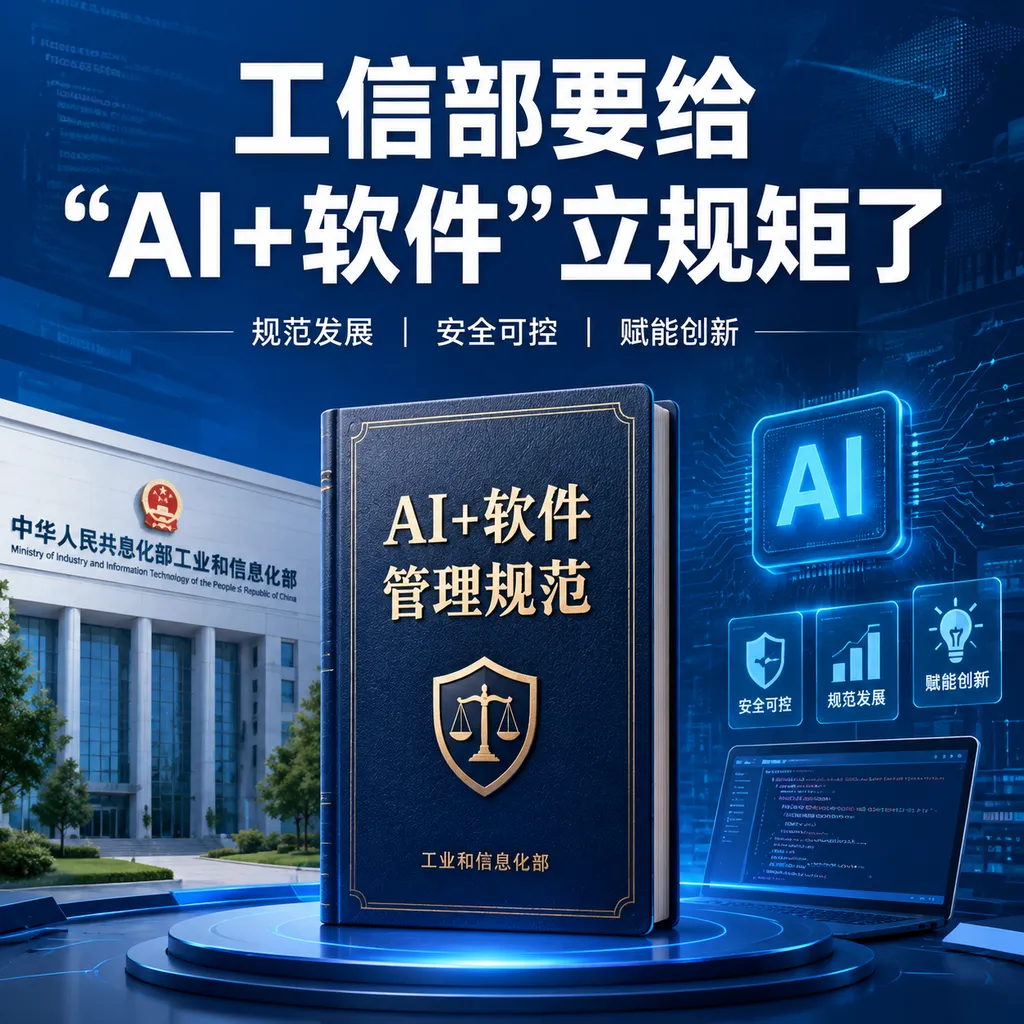
At the press conference held by the State Council Information Office on July 20, the Ministry of Industry and Information Technology announced that it will accelerate the introduction of the "Artificial Intelligence + Software" action plan, covering three main areas: the intelligent transformation of software development, the cultivation of new intelligent software industries, and the establishment of a national-level AI open-source community.
MIIT Is Setting Rules for "AI + Software"
At the State Council Information Office press conference on the morning of July 20, the Ministry of Industry and Information Technology (MIIT) highlighted the state of industrial and information development in the first half of 2026. The conference contained various announcements, but the one most relevant to developers was a statement by Tao Qing, MIIT spokesperson and head of the Bureau of Operation Monitoring and Coordination: accelerate the introduction of the “Artificial Intelligence + Software” Action Plan.
It sounds like just another policy document, but unpacking that statement reveals a concrete direction: software development must undergo intelligent transformation; software products and services must be upgraded with intelligent capabilities; intelligent-agent software should be cultivated as a new industrial category; and the positioning of national AI open-source communities will be upgraded. Together, these four threads form what is essentially an official roadmap for the shape of China’s software industry over the next two to three years.
Why Now
Rolling the timeline back a bit, we can see that “Artificial Intelligence +” has long been more than a slogan. It entered the Government Work Report in 2024, after which ministries successively followed up with supporting policies in manufacturing, healthcare, and education. The software sector, however, has been among the last to be implemented—and understandably so. Software is itself the carrier of AI; their relationship is so intertwined that it’s hard to separate the two.
But making this move in mid-2026 comes at just the right pace.
Over the past year, code generation tools have evolved from “assistive auto-completion” to “handling complete tasks.” Tools like Cursor, Windsurf, and Claude Code have reshaped development workflows, while Chinese counterparts such as Tongyi Lingma, CodeGeeX, and Doubao MarsCode have kept up closely. According to GitHub data released early this year, the adoption rate of Copilot-generated code among enterprise clients exceeded 55%, compared with under 20% two years ago. In other words, the industry has already advanced the “intelligent transformation of software development,” and policy now functions more as standardization and acceleration for an established reality.
Even subtler is the aspect of intelligent-agent software. Tao Qing’s phrasing—“cultivating a new form of industrial activity”—was cautious yet explicit. In the first half of this year, from Manus to several domestic firms developing universal agents, efforts have shifted toward turning large language models (LLMs) from “question-answering chatbots” into “software entities that can perform work.” The challenges are not merely technical—how to design permission models, where data is stored, and who is liable for failures are all regulatory gray zones that the existing software governance framework does not cover. By writing this into the action plan, MIIT effectively acknowledges intelligent agents as an independent category requiring dedicated policy tools.
What Does “Intelligent Transformation of Software Development” Really Mean?
This is the easiest of the four threads to misinterpret. Many might think it simply means programmers using AI to write code. However, MIIT’s wording indicates a far broader scope.
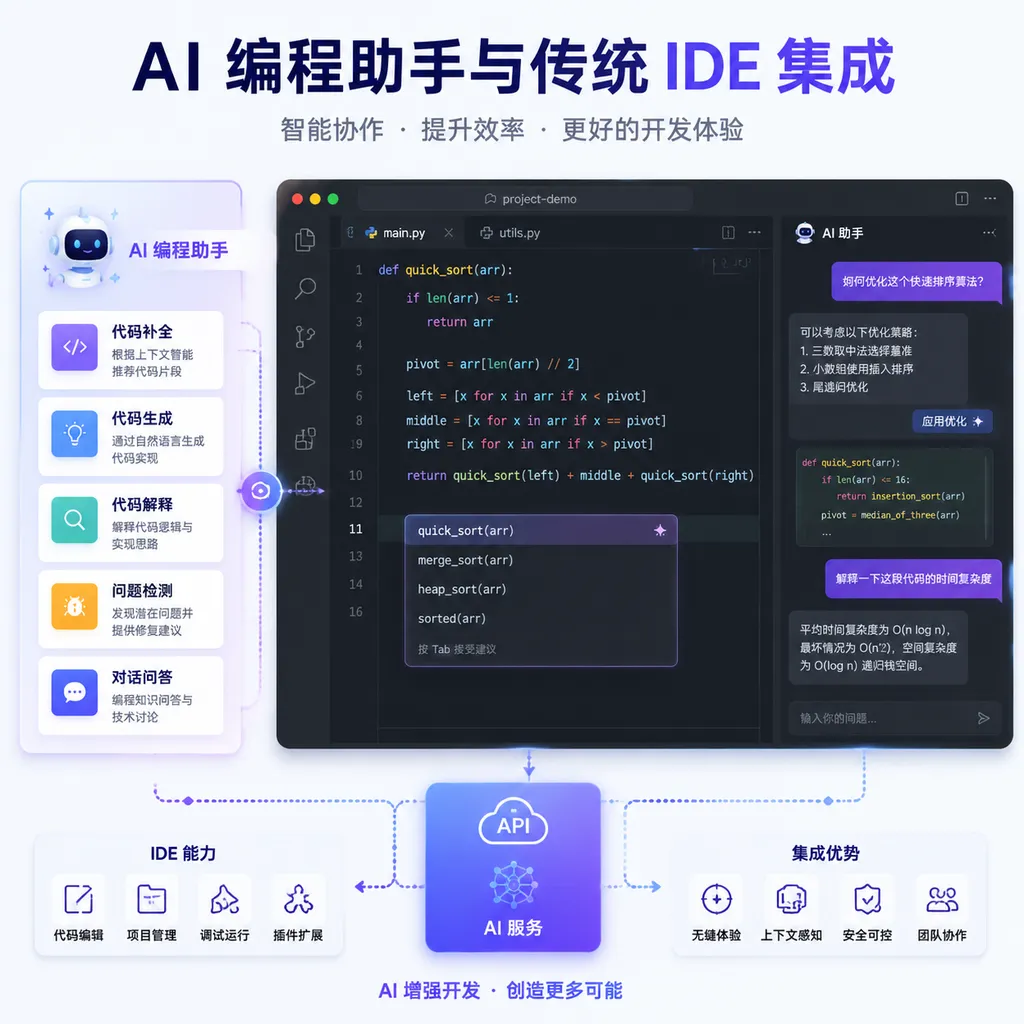
The full software development chain—requirement analysis, architecture design, coding, testing, deployment, operations, and security auditing—is being restructured by AI. The capabilities of domestic enterprises remain uneven across these stages:
- Coding stage: This is the most competitive segment; nearly every major company has launched its own coding assistant. Core benchmarks have shifted from “completion accuracy” to “multi-file refactoring success rate” and “repository-wide comprehension.”
- Testing stage: Toolchains for AI-generated unit tests and automated UI testing are maturing rapidly, but enterprise adoption remains low, limited by the challenge of assessing test-case trustworthiness.
- Operations stage: Although the AIOps concept has been around for years, tangible results are mostly concentrated in log analysis, anomaly detection, and root cause localization. Self-healing functionality is still nascent.
- Security auditing: AI-assisted code vulnerability scanning has started to appear in enterprise procurement lists, but integration with traditional SAST/DAST tools is not yet smooth.
If MIIT aims to “advance the intelligent transformation of software development,” concrete policies will likely include standards formulation (e.g., quality evaluation criteria for AI-generated code), pilot programs (picking several SOEs or industry leaders for demonstration), and evaluation systems (similar to model assessments by CAICT—China Academy of Information and Communications Technology—expanded into programming capabilities).
Intelligent-Agent Software: From Concept to Industry
The phrase “cultivating the intelligent-agent software industry” may sound formulaic, but it contains real substance when unpacked.
First, categorization. Defining an intelligent agent as “software” rather than an “AI service” or “AI application” is a crucial semantic choice. It implies that future agent products may fall under existing software-enterprise frameworks—accreditation, tax incentives, government procurement—rather than requiring a new category altogether. For startups, this is good news: the policy toolbox for software firms is already well established.
Second, industrial form. In MIIT’s terminology, “industrial form” refers to an independently recognized business model—like “cloud computing” or the “industrial internet.” Positioning intelligent-agent software at this level suggests future specialized statistical scopes, industrial size estimates, and possibly local-level support policies.
Technically, however, building intelligent-agent software is far more complex than marketing suggests. The more mature agent products on the market, general or vertical, are grappling with several common problems:
- Long-task stability. Running an agent that performs a multi-step task poses high risks—any LLM hallucination mid-process can derail the chain. The mainstream approach uses state machines plus human confirmation nodes, but this reduces automation.
- Reliability of tool invocation. The MCP protocol essentially became a de facto standard in the first half of this year, yet tools remain uneven in quality and permission boundaries lack unified rules.
- Multi-agent collaboration. The theory is elegant, but engineering is difficult. The most stable architecture so far is a “main agent + specialized subagent” hierarchy; decentralized multi-agent collaboration remains academic.
Can MIIT’s plan solve these technical challenges directly? Probably not. But it can do something more important: establish an evaluation and certification system. Drawing a parallel with autonomous driving’s L1–L5 levels, intelligent-agent software also needs graded capability standards, enabling enterprise buyers to understand exactly what they are purchasing. No market player is motivated to build this on its own—an official or industry body must take the lead.
The “Source of Innovation” Role of Open-Source Communities
Among the four threads, the one about open source may appear minor but could have the longest-term impact.
Tao Qing stated: “Continuously strengthen the capability of open-source infrastructure in areas such as project incubation, supply chain security governance, exploration of emerging scenarios, and international market expansion; accelerate the growth of a national-level AI open-source community into an innovation source and key deployment arena for emerging technologies and software-hardware products.”
The “national-level AI open-source community” here most likely refers to platforms such as openMind and Shizhi AI, led by official or semi-official organizations. Over the past two years, these communities have had limited visibility—mainly because high-quality projects rarely join them. Leading Chinese open-source models and tools almost always debut on Hugging Face or GitHub; the national communities mostly serve as mirrors or backups.
This time, MIIT used strong words—phrases like “source of innovation.” Achieving that requires more than preferential policies; several practical issues must also be addressed:
- Launch incentives: How do you encourage developers to debut new models or tools on domestic platforms rather than foreign ones?
- Developer ecosystem: The vitality of international open-source communities isn’t built through subsidies—it comes from long-cultivated contributor habits and collaboration culture.
- Supply chain security: This could be a differentiating advantage. In the past two years, international communities have seen frequent malicious-package incidents, making “trusted open source” a real necessity. If Chinese communities can establish authoritative standing here, they will have intrinsic value.
What It Means for Developers
Taken together, the four threads reveal clear signals from MIIT’s upcoming action plan:
First, AI coding tools will accelerate enterprise adoption.
Once the plan is released, state-owned and sector-leading enterprises will have policy guidance for adopting AI programming tools. Corporate clients currently on the fence will likely make decisions within one or two years. This is good news for domestic AI coding vendors and adds pressure on foreign players in the Chinese market.
Second, intelligent-agent software will gain formal industrial status.
Agent startups today often struggle to define themselves—are they software firms, AI companies, or service providers? With the plan in place, this identity issue will have an official answer, smoothing financing, qualification, and taxation processes.
Third, evaluation and standards will grow important.
When indicators like “AI-generated code ratio” or “agent task success rate” are written into national or industry standards, leading vendors will optimize to meet them—and third-party evaluation bodies will emerge. This will benefit the ecosystem and reduce hype.
Fourth, open-source ecosystems will see stronger state involvement.
This is a double-edged sword: on one hand, more resources and policy support; on the other, potential weakening of open-source self-governance. The final outcome will depend on how delicately execution is balanced.
A Few Judgments
The "Artificial Intelligence +" series of action plans has already been in motion for over a year in manufacturing, with results exceeding expectations—not because the documents were flawless, but because they provided local governments and SOEs with clear direction for transformation.
The software-oriented plan will likely have similar effects but also unique challenges. In manufacturing, “AI +” means injecting AI into traditional processes—the parties are clearly defined. In software, AI and software interpenetrate, potentially creating entirely new product categories that replace existing ones. Policymaking here must be more cautious—leaving room for innovation while preventing unchecked, chaotic growth.
Tao Qing did not disclose the exact release schedule, only that it will be “accelerated.” Based on the typical MIIT timeline, official publication follows 3–6 months after such statements. That means the full version could arrive as early as the fourth quarter of this year.
Before then, two side developments are worth watching: whether the national-level AI open-source community will release clear incentives for project-first launches, and which entity will lead the intelligent-agent evaluation framework. The progress on these two fronts will be more indicative of how strongly policy is actually being implemented.
For developers who need to test across multiple mainstream large models, the OpenAI Hub (openai-hub.com) provides a unified API key compatible with the OpenAI format to access GPT, Claude, Gemini, DeepSeek, and others directly within China—saving account and networking hassles in intelligent-agent development.
References
- Hugging Face China Mirror and Open-Source Model Hosting — one of the main platforms globally and domestically for releasing AI open-source projects, useful for comparing domestic ecosystem gaps.
- GitHub Copilot Official Repository and Discussion Area — the de facto industry benchmark for AI programming tools, tracking mainstream capability evolution.
- Zhihu Topic: Enterprise Adoption of AI Programming Tools — first-hand domestic developer discussions on enterprise-level AI programming implementation.
- Juejin: Intelligent-Agent Development Practices — a developer-community hub for technical articles on agent development and the MCP protocol.
- ITHome: MIIT Policy Coverage — continuous Chinese tech-media tracking of MIIT industrial policy developments.