MIIT Releases Data: Global Downloads of Open-Source AI Models Exceed 10 Billion, Manufacturing Penetration Surpasses 30%
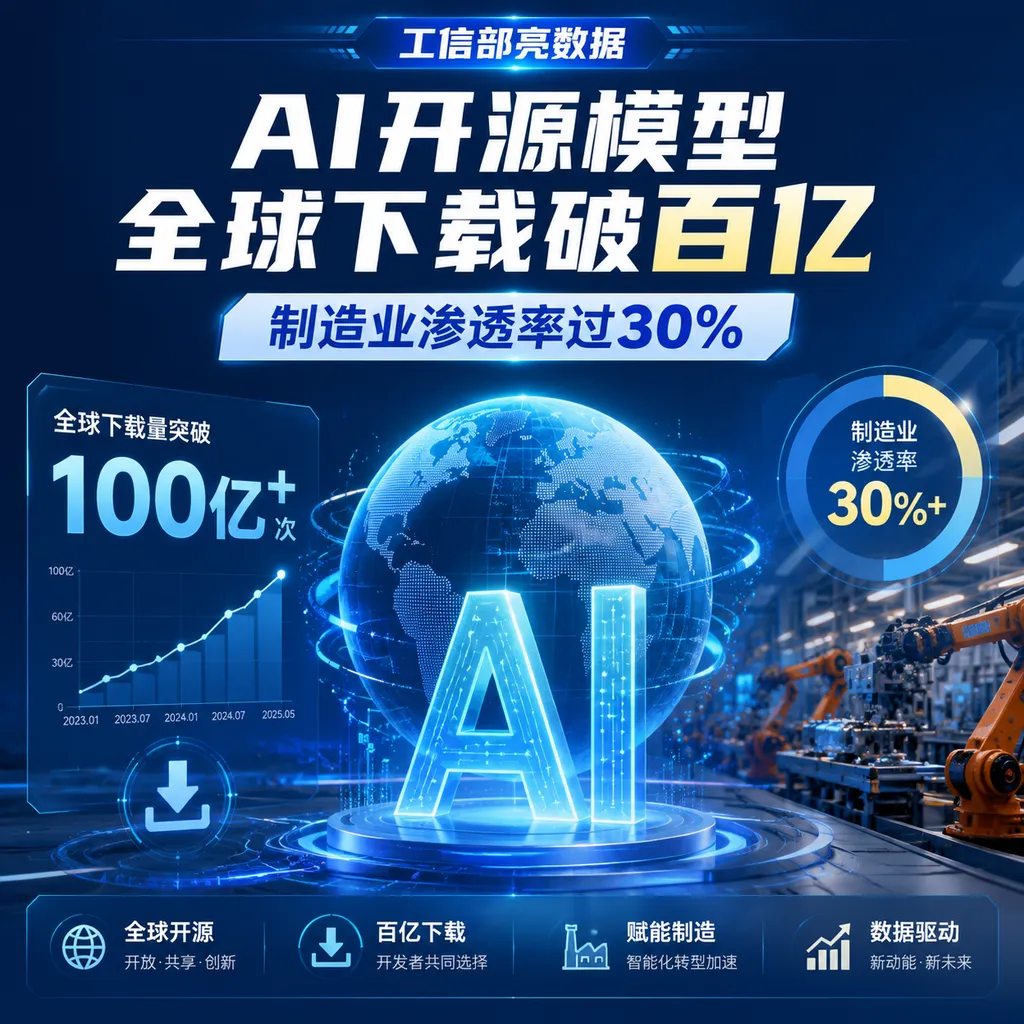
The Ministry of Industry and Information Technology released the performance report for the first half of 2026: Chinese open-source AI models have surpassed 10 billion cumulative downloads worldwide, the AI application adoption rate among large-scale manufacturing enterprises has exceeded 30%, and the national-level open-source AI community hosts more than 70,000 models.
MIIT Data Highlights: Global Downloads of China’s Open-Source AI Models Exceed 10 Billion; AI Penetration in Manufacturing Tops 30%
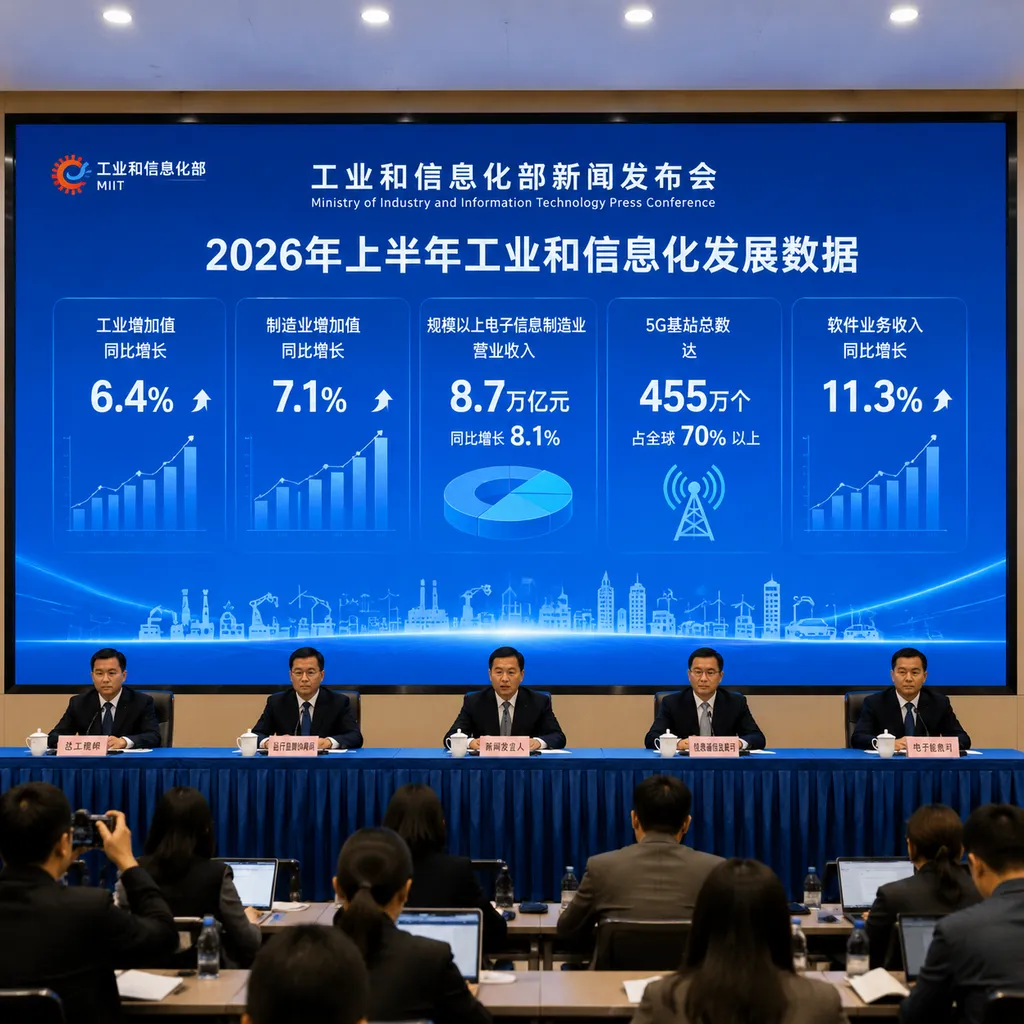
At 10 a.m. on July 20, the State Council Information Office held its usual Monday press conference. Wang Weiming, Chief Engineer of the Ministry of Industry and Information Technology (MIIT), read out a series of figures, of which two deserve special attention: China’s open‑source large AI models have been downloaded over 10 billion times worldwide, and the penetration rate of AI applications among designated‑scale manufacturing enterprises now exceeds 30%.
What does 10 billion mean? Since its founding in 2016, the Hugging Face platform’s cumulative total of model downloads is roughly the same magnitude. In other words, this cohort of Chinese open‑source models—DeepSeek, Qwen, GLM, Yi, MiniCPM, and InternLM (Shusheng Puyu), among others—has been pulled and run 10 billion times by developers around the world. The number isn’t domestic self‑congratulation: because Hugging Face access from inside China is not very smooth, a significant share of those “global” downloads must have come from overseas developers, research institutions, and startups putting their money where their mouth is.
10 Billion Downloads: Moving Beyond the “Follower” Narrative
Roll back to mid‑2023: discussion around Chinese open‑source models then centered on “benchmarking Llama” or “catching up with Meta.” When Llama 2 was just released, a batch of Chinese models followed with open‑weights; the community consensus was “usable, but not quite there.”
Two years later, the script has flipped. DeepSeek V3 and R1’s reasoning performance has directly pressured OpenAI to cut prices; the Qwen series consistently tops Hugging Face trend charts; GLM‑4.5 has become a default option for Chinese and agent tasks among Western developers. On last month’s LMSYS Chatbot Arena leaderboard, six or seven of the top 20 open models came from Chinese teams.
This is not a victory of numbers but a shift in discourse power. Previously, overseas developers choosing open‑source models defaulted to Llama and, if not, Mistral. Now that path is broken—Meta’s Llama 4 received lukewarm reviews, Mistral turned closed‑source and commercial, and Cohere was never aggressive about open source. Chinese teams filled that gap almost seamlessly.
MIIT also highlighted that the “national‑level open AI community has gathered over 11 million users and hosts more than 70,000 models.” This refers mainly to ModelScope and OpenI, China’s national‑grade open‑source AI platforms. What’s the level of 70 thousand? Hugging Face hosts roughly 1.5 million models, so 70 thousand looks small, but if we count only “active and downloaded” models, the gap narrows considerably. More importantly, many of these are vertical industry models—medical, legal, industrial inspection, code—not mere replications of general models.
30% in Manufacturing: The Number Needs Dissection
The other key figure—“AI technology adoption among above‑designated‑scale manufacturers exceeds 30%”—is easily misread and must be unpacked.
First, “above designated scale” in China’s industrial statistics refers to manufacturing enterprises with annual main‑business revenue above 20 million RMB, roughly 500,000 companies nationwide. Thirty percent means about 150,000 manufacturing firms have adopted AI in at least one link of production, R&D, operations, or supply chain.
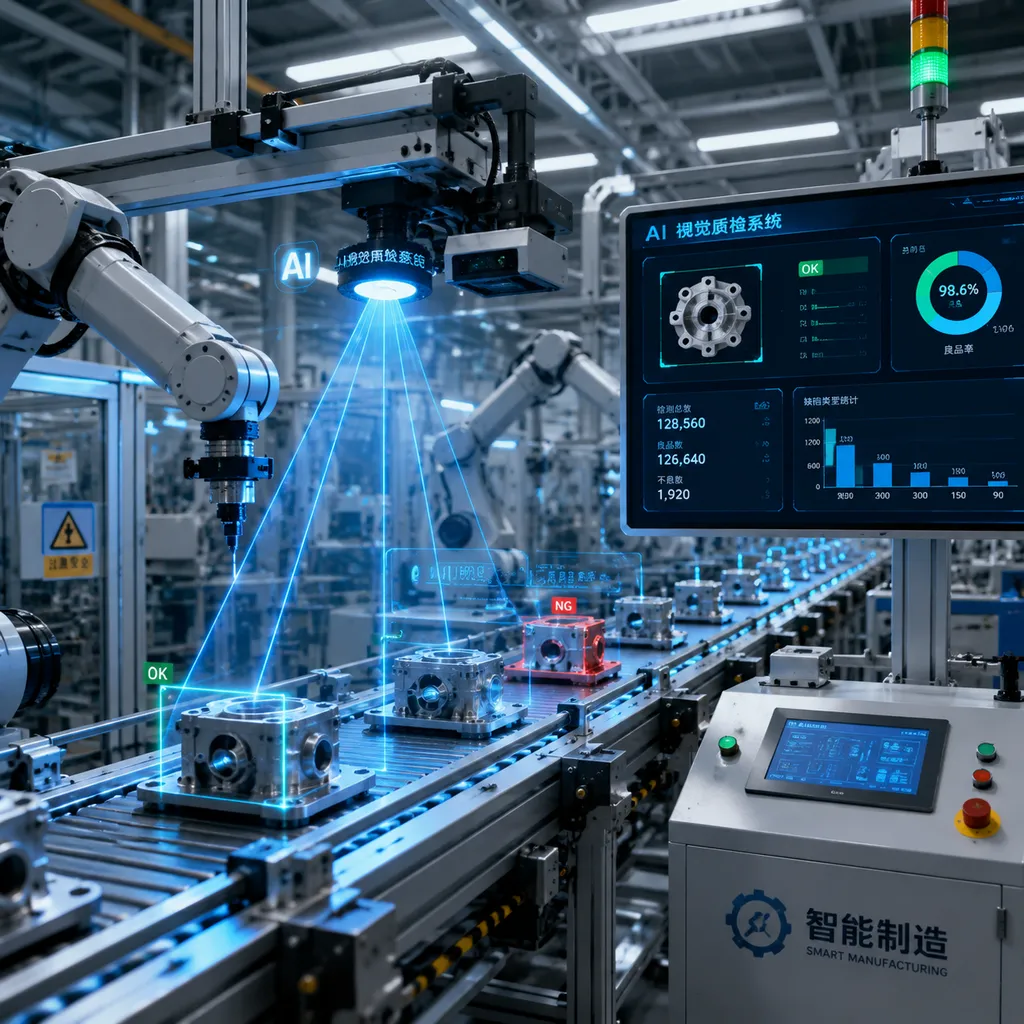
“AI application” here is a broad category. Narrowly, it means large‑model‑driven intelligent decision‑making or generative design; broadly, it includes traditional machine‑vision inspection, predictive maintenance, or demand‑forecasting models. MIIT’s figure aligns with the broader definition. Even so, it has doubled from around 15% two years ago—a significant leap.
Breaking it down, AI adoption in manufacturing falls into three layers:
- Perception layer: vision inspection, voice‑print detection, and equipment monitoring. This is the most mature. Plants at CATL, BYD, and Luxshare Precision all run vision inspection systems with defect‑detection rates above 99.5%, an order of magnitude better than the human eye.
- Decision layer: scheduling optimization, energy management, and supply‑chain prediction. Large models are beginning to permeate here—especially when connected to production data for anomaly attribution, far faster than traditional BI.
- Design layer: CAE simulation acceleration, reverse design, and materials screening. This layer is most influenced by generative AI, with domestic CAD/CAE vendors like Huawei and ZWSoft making visible progress.
A 30% penetration rate implies the perception layer is nearly universal, the decision layer is scaling up, and the design layer is still early stage—consistent with on‑the‑ground industrial observation.
1.35 Billion Open‑Harmony Devices: A Different Story
The press conference also cited another number: “More than 1.35 billion devices in the open‑source Harmony ecosystem, and over 100 industry distributions such as ‘PowerHarmony’ and ‘InstrumentHarmony’ built upon it.”
This needs separate discussion because it runs parallel to AI yet will intersect. Most of the 1.35 billion devices are Huawei consumer products, but such vertical editions as PowerHarmony (power industry) and InstrumentHarmony (instrumentation) are new. What open‑source Harmony is doing mirrors Linux years ago—extending from desktop to embedded, industrial, and in‑vehicle systems. Once these devices all run Harmony, carry compute power, and host on‑device models, the distribution channel for AI will be ready.
That’s why Huawei has been doubling down on device–cloud synergy for its Pangu models—the Harmony ecosystem is its natural delivery infrastructure.
“AI + Software” Action Plan: The Next Policy Signal
At the event, Tao Qing revealed a policy signal: the upcoming “AI + Software” Action Plan, aimed at “driving intelligent transformation of software development, intelligent upgrades of software products and services, and nurturing new forms of intelligent‑agent software.”
Three keywords:
- Intelligent software development — in plain terms, mass adoption of Copilot‑style tools, from code completion to end‑to‑end generation. Domestic offerings such as Tongyi Lingma, CodeGeeX, and Doubao MarsCode are already active; policy will soon boost them.
- Intelligent upgrading of software products — all software connects to large models. Most SaaS providers—Yonyou, Kingdee, Mingyuan, and others—have launched their own AI agents this year.
- New intelligent‑agent software sector — a newly introduced category in policy, signaling that future industrial support, standard‑setting, and pilot projects will align around it.
Together with background data—“software industry revenue in Jan–May exceeded 6.2 trillion RMB, up 10.3% year on year”—it shows growth momentum shifting from traditional SaaS/PaaS toward AI‑native software.
Developer Perspective: Selection Logic Is Changing
For hands‑on developers, the macro data mean one thing—it’s time to update your model‑selection logic.
Two years ago, default candidates were GPT‑4, Claude, and a domestic closed‑source backup. That framework no longer holds:
- General capabilities: DeepSeek V3 and Qwen3 series now cover 80% of scenarios at one‑tenth the cost of GPT‑4o.
- Coding tasks: Qwen3‑Coder and DeepSeek‑Coder V2 fit Chinese engineering contexts better than Claude.
- Long‑context: GLM‑4.5’s extended‑context skill now matches Gemini.
- Edge/on‑device: MiniCPM and Qwen3‑1.7B fit phones and IoT hardware.
The remaining 20% of ultra‑high‑end tasks still favor Claude Opus 4 or GPT‑5. But the mix has shifted from “closed‑source mainstream + open‑source backup” to “open‑source mainstream + closed‑source peak.” The budget impact is non‑trivial—given current price gaps, a medium‑size firm could save the annual cost of one senior engineer in API spending.
Key management, however, is a headache. For true multi‑model hybridity, aggregation platforms like OpenAI Hub prove valuable—one API key linking GPT, Claude, Gemini, DeepSeek, and Qwen using OpenAI‑compatible formats, model switching via a single parameter, avoiding separate registration, recharge, and SDK maintenance per vendor.
After 10 Billion Downloads: The Next Hurdles
Ten billion downloads is eye‑catching, but there’s a long road from download to deployment and commercial success.
First, inference cost. Open‑source models are free to download but not free to run—GPUs cost money. Supply of H100/H200 cards is limited; domestic chips (Huawei Ascend, Cambricon, Moore Threads) are still refining their software stacks. Efficiency optimizations over the last two years — vLLM, SGLang, TensorRT‑LLM — have cut costs by an order of magnitude, but further reduction is needed.
Second, model governance. With 70,000 models hosted on national platforms, how to curb low‑quality proliferation, ensure safety evaluation, build copyright and provenance mechanisms—these technical and institutional issues remain unresolved.
Third, vertical depth. Raising manufacturing AI adoption from 30% to 50% or 70% gets progressively harder because remaining scenarios lack data, clear ROI, or need deep domain customization. That’s not a model‑capability gap but an industry‑coordination one.
MIIT’s bundling of open‑source ecology, industry application, and policy supply is deliberate: use open source as the base, policy as the catalyst, and move AI from tech demos into production systems. The numbers are impressive, but whether those models and that 30% penetration translate into real productivity gains will be seen in half‑year financials and next year’s industry data.
References
- ITHome (Chinese): MIIT discloses China’s open‑source AI models surpass 10 billion downloads globally; open‑source Harmony devices exceed 1.35 billion — Full press‑conference summary and official MIIT data