Alibaba Cloud launches lightweight server-based AI agents: computing power and tokens sold as a package
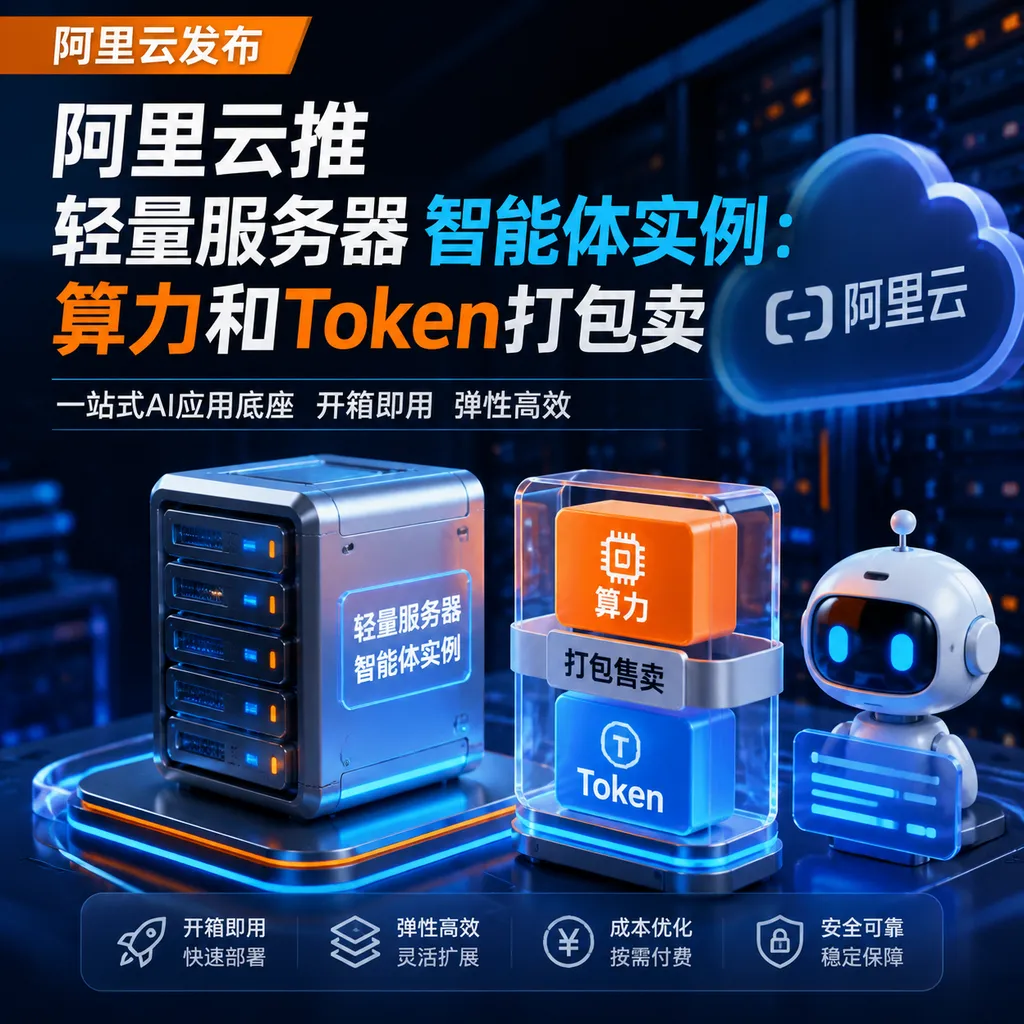
Alibaba Cloud has launched the "AI Agent Dedicated Instance" for its Lightweight Application Server. It bundles vCPU, memory, 200 Mbps bandwidth, and large-model tokens ranging from 100 million to 3.2 billion into a prepaid package, allowing users to purchase all the resources needed to run an AI Agent in one go. The first batch is available in 12 regions.
Today Alibaba Cloud combined the two things—“selling servers” and “selling tokens”—into one single order.
On July 20, Alibaba Cloud launched the Intelligent Agent Dedicated Instance for its Simple Application Server (SWAS). It bundles vCPU, memory, cloud disk, 200 Mbps peak bandwidth (no traffic charges), and large-model tokens into a prepaid package sold in one go. Token quotas range from 100 million to 3.2 billion, covering 12 regions including Beijing, Shanghai, and Guangzhou, with plans to expand to more domestic and overseas nodes.
It’s not a particularly complex product, but it hits a very real pain point—previously, developers wanting to run an AI agent had to toggle between two billing pages: one for ECS or lightweight servers billed monthly, and another for Bailian, DashScope, or other LLM APIs billed by token. Alibaba Cloud’s new approach says: since you need both anyway, we’ll bundle them—and even waive outbound traffic fees while we’re at it.
What’s actually in this package
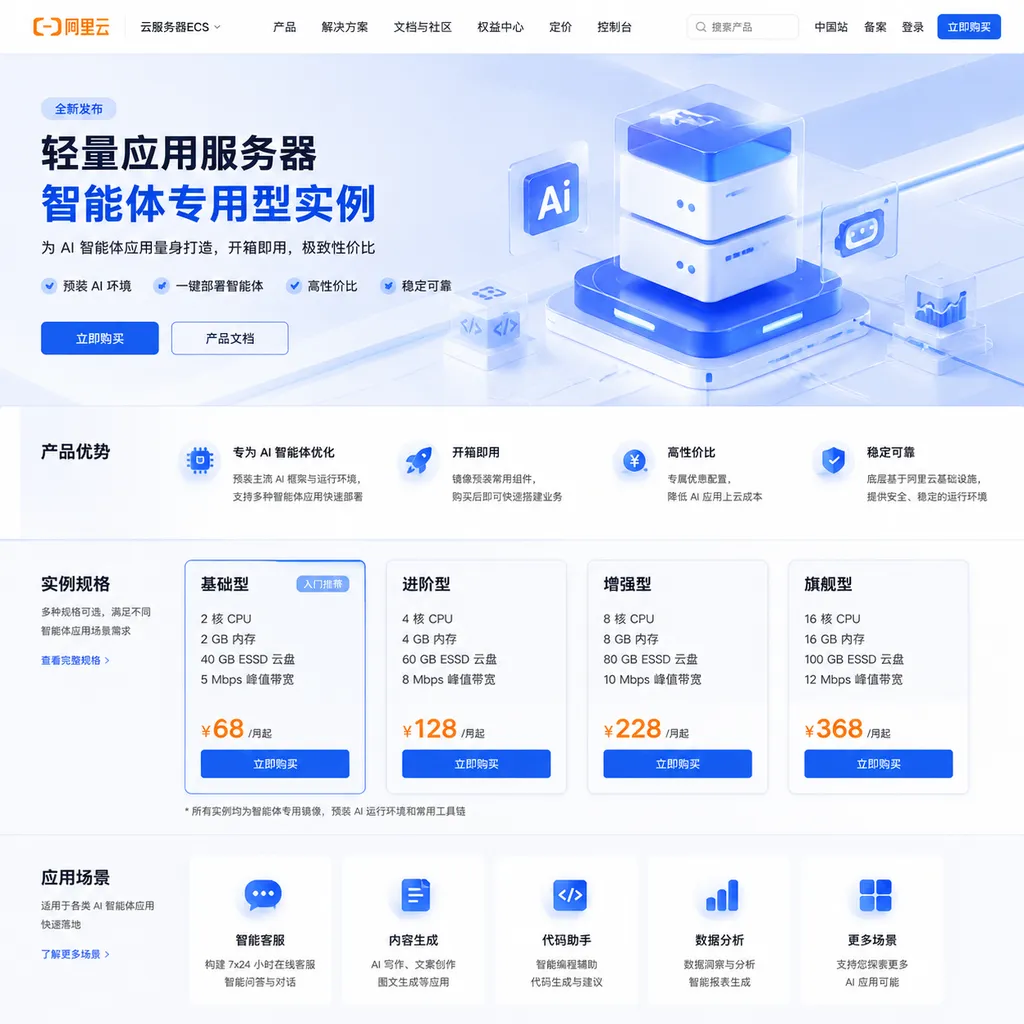
Breaking it down, the Intelligent Agent Dedicated Instance consists of three parts:
- Compute resources: standard combos of vCPU, memory, and system disk, with specs covering workloads from entry-level to mid-sized agents
- Network resources: 200 Mbps peak bandwidth with no data charges—this one matters more than it looks; more below
- Model resources: preset quotas of 100 million up to 3.2 billion large-model tokens that can directly call models on Alibaba Cloud’s Bailian platform
Prepaid means you pay upfront for one period and don’t pay again until tokens run out. For individual developers and small teams, this means predictable billing—no surprise five-digit API bills from an accidental infinite loop at 3 a.m.
The first 12 regions cover the main nodes in North, East, and South China. Overseas regions are promised “in the future,” with no timeline yet. Teams building outbound agent apps will need to wait on this part.
Why bundle tokens with a server package
If you’re just running a demo locally, buying servers and model APIs separately is fine. But once your agent needs to run 24/7, maintain sessions, and make frequent tool calls, things get complicated.
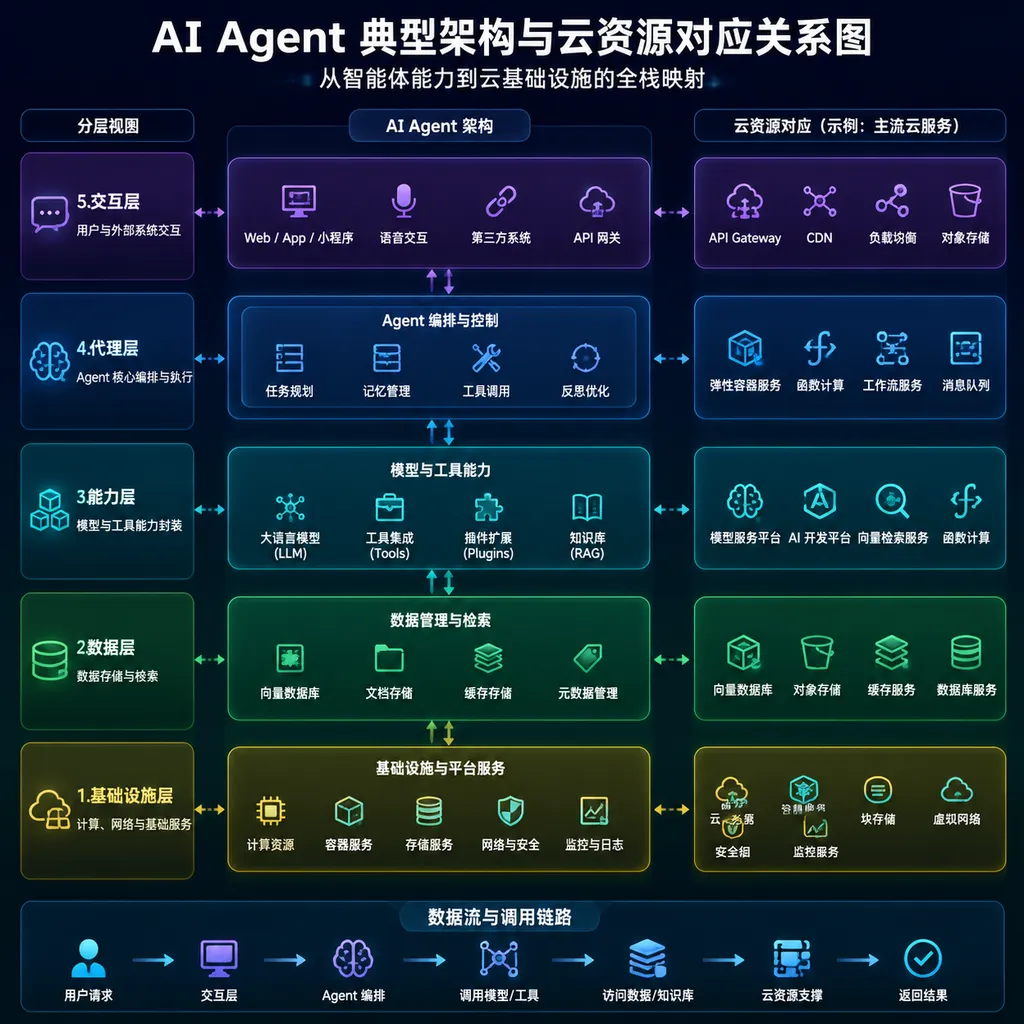
A typical agent app’s cost structure usually looks like this:
- Model inference: the biggest share—especially if using flagship models like GPT‑4 or Qwen‑Max
- Server hosting: where the agent logic, tool functions, vector DB, and task queue run
- Outbound traffic: frequent external API calls, webpage fetching, and data transfers eat up a large chunk of the budget
These three components have traditionally been three product lines within Alibaba Cloud: lightweight servers for hosting, Bailian for models, and traffic fees under the ECS billing model. Three invoices, three metrics, three renewal cycles—often more trouble to manage than the budget itself.
Packaging them into one SKU is really about lowering the mental overhead. You no longer have to puzzle over “what server spec and how many tokens should I get”; Alibaba Cloud pre-optimized choices for common agent workloads. This logic echoes the original goal of the Simple Application Server—following DigitalOcean/Vultr’s “one-click WordPress” idea—by packaging typical scenarios into ready-to-use bundles.
The underrated part: free traffic
Many skim over the “200 Mbps peak bandwidth with no data charges” line, but for agent scenarios this design is quite important.
In the traditional ECS billing model, outbound traffic is charged by GB—roughly ¥0.8/GB. That’s fine for a normal website, but agent workloads behave differently:
- A research-heavy agent might visit dozens or hundreds of pages per task, each several hundred KB.
- A multimodal agent frequently downloads images, videos, and PDFs.
- A cross-integration agent constantly calls SaaS APIs, exchanging huge request and response payloads.
A moderately active agent can easily burn tens of GB in a day. Under traditional metering, that monthly traffic cost alone could equal half your server bill. Switching to peak bandwidth pricing (200 Mbps is already generous upstream capacity) means as long as you don’t max out the bandwidth, any amount of traffic is free.
This tweak is extremely friendly to cost-sensitive indie developers and early-stage projects.
What 100 million–3.2 billion tokens really mean
100 million tokens sounds like a lot, but let’s put that into the context of agent workloads.
Using a mid-tier model like Qwen‑Plus, a single agent call (including system prompt, tool descriptions, conversation history, current user input, and output) typically costs 3 k–8 k tokens. Multi-step tool-calling loops for complex jobs can easily hit 50 k–100 k per task.
Rough math for 100 million tokens:
- Light dialogue-type agent: tens of thousands of interactions—enough for a personal project for half a year
- Tool-heavy agent (e.g., code generator, data crawler): a few thousand full tasks
- Multi-agent collaboration systems: might burn through it in a month
The 3.2 billion‑token tier targets small to mid-sized commercial projects, enough to run a few hundred daily active users for a month.
A subtle detail: which models the bundled tokens can actually access. According to Bailian’s current pricing, Qwen‑Turbo, Qwen‑Plus, and Qwen‑Max differ severalfold per 1 k tokens. If the package tokens are “general credits,” consumption speed varies by model. Users will need to check this rule before purchase—Alibaba Cloud hasn’t clarified it yet.
Who will actually buy this
In my view:
Best‑fit scenarios:
- Indie developers running a personal agent (calendar assistant, note organizer, code‑review bot) with limited budget but need predictable costs
- Startups in Agent‑SaaS PMF stage—small user base but need a continuously running production environment
- Education, competitions, hackathons—when you need a full environment quickly
- Internal tool‑type agents, e.g., corporate knowledge‑base Q&A bots
Less suitable scenarios:
- Projects already at scale—token consumption and compute needs exceed prepaid quotas; pay‑as‑you‑go ECS remains more flexible
- Multi‑model setups—if you also call GPT‑4, Claude, Gemini, etc., Bailian‑bound tokens won’t help; an aggregation platform like OpenAI Hub may be more convenient
- Use cases with strict inference‑latency requirements—lightweight servers aren’t ideal for heavy vector search or local model workloads
Competitive comparison
Different domestic clouds take very different approaches to AI‑agent deployment:
- Tencent Cloud HAI: GPU instances + preloaded model images—focuses on running local models
- Volcengine (Bytedance): sells its Ark model platform and cloud hosts separately—no deep bundling
- Huawei Cloud ModelArts: oriented toward full MLOps, high entry barrier for individuals
- Cloudflare Workers AI and Vercel AI SDK overseas: fully serverless, charged per call
Alibaba Cloud’s move resembles early DigitalOcean—bundle products to win mindshare. It’s not chasing ultimate flexibility or power but simplicity: “just buy this one, no need to compare.”
For its target users (indie developers and early‑stage agent teams), this is an efficient sell.
What deploying an agent here likely feels like
While no official how‑to yet, the process likely looks like:
- Purchase and activate an Intelligent Agent Dedicated Instance, selecting region and package
- Log in—it probably comes with Python, Docker, and common SDKs preinstalled
- Pull your agent code or start from official templates (LangChain, AutoGen, Alibaba’s AgentScope, etc.)
- Configure model calls—the built‑in token quota should authorize automatically, no need to issue API keys
- Expose the service—publish HTTP/WebSocket endpoints through the 200 Mbps channel
Most convenient: model‑call authentication is likely built‑in—your instance is bound to your token budget by default. No key management in code, just call. A big plus for newcomers.
Open questions
Based on public info, developers still need to confirm:
- Token conversion rules: does each model consume credits at the same rate? Is Qwen‑Max the same as Qwen‑Turbo?
- Overage behavior: after tokens run out, auto‑suspend or switch to pay‑as‑you‑go? Data‑retention after expiry?
- Upgradability: can you seamlessly upgrade tiers? Add credits or repurchase?
- Overseas schedule: still only “coming soon”; no concrete ETA for cross‑border users.
Given Alibaba Cloud’s usual product cycle, these will likely be clarified later in docs.
A broader signal
Viewed in context, this release reflects cloud vendors’ faith in AI‑agent commercialization—a growing conviction that agents will drive the next wave of scalable consumption, warranting dedicated product lines instead of DIY assembly from generic cloud parts.
Between late 2025 and early 2026, we’ve already seen signs:
- Anthropic’s Claude Code and OpenAI’s Codex pushing AI‑coding agents mainstream
- Vendors launching full “Agent Frameworks”
- Cloud providers shifting focus from selling tokens to selling whole agent‑execution environments
Alibaba Cloud’s launch is a pragmatic step along that trend. The product itself isn’t revolutionary, but it’s sharply targeted and clearly priced. For indie developers and small teams, one less thing to worry about means more time to build what matters—the actual problem your agent solves.
If your agent uses domestic models, deploys domestically, and serves domestic users, this bundle is worth a look. For more complex, multi‑model, multi‑cloud scenarios, retaining modular flexibility is still the better choice.
References
- Developer discussions on Alibaba Cloud Simple Application Server – community articles with deployment details
- AI Agent framework discussions – comparisons and best‑practice debates
- LangChain / AgentScope source repositories – mainstream agent frameworks for quick‑start projects
- Open‑source agent project collections – ready‑to‑deploy agents for the dedicated instance