Kimi K3 tops the Arena frontend rankings, Silicon Valley is in an uproar.
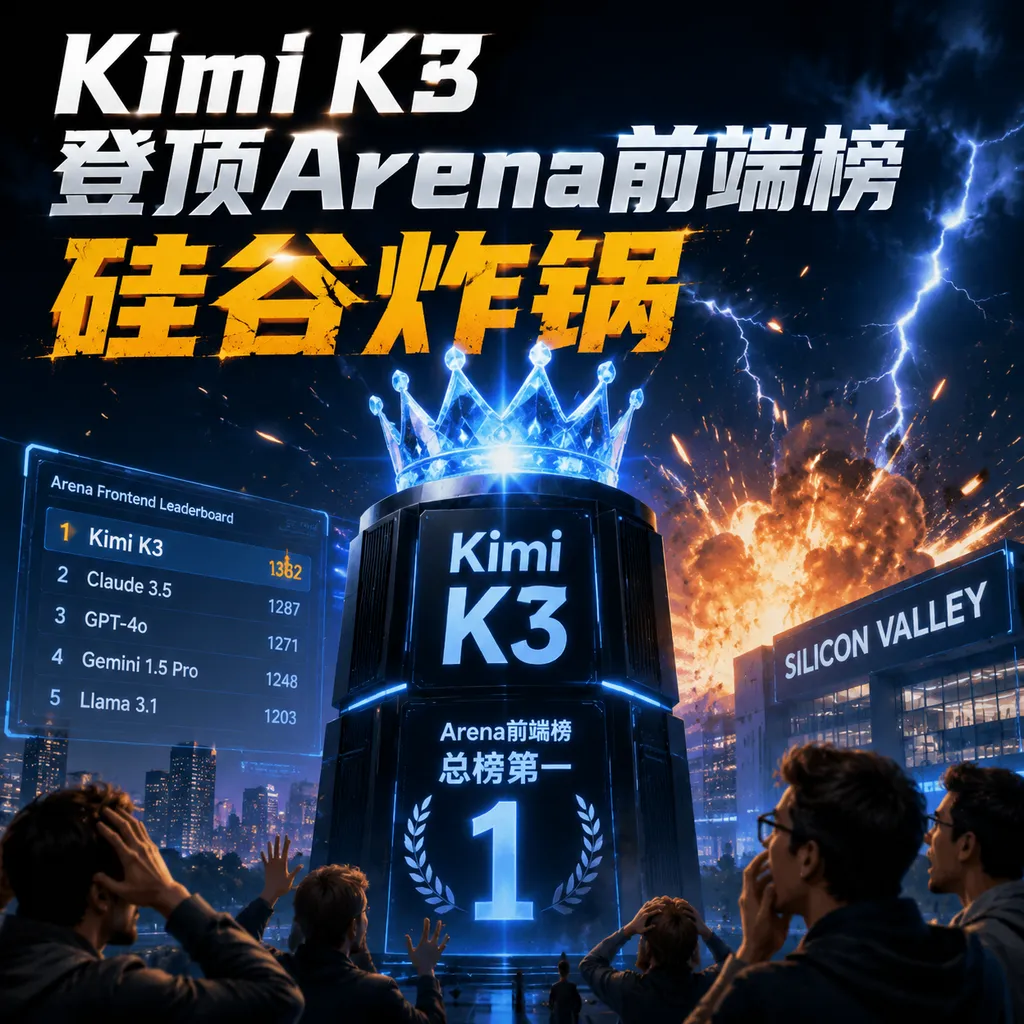
Last week, Moonshot AI released the open-source **Kimi K3** model with **2.8 trillion parameters**, which reached the top of the *Arena Front-End Development* leaderboard and entered the *Overall Top 10*. Executives at OpenAI publicly called for using regulation to generate FUD as a countermeasure, causing division within Silicon Valley.
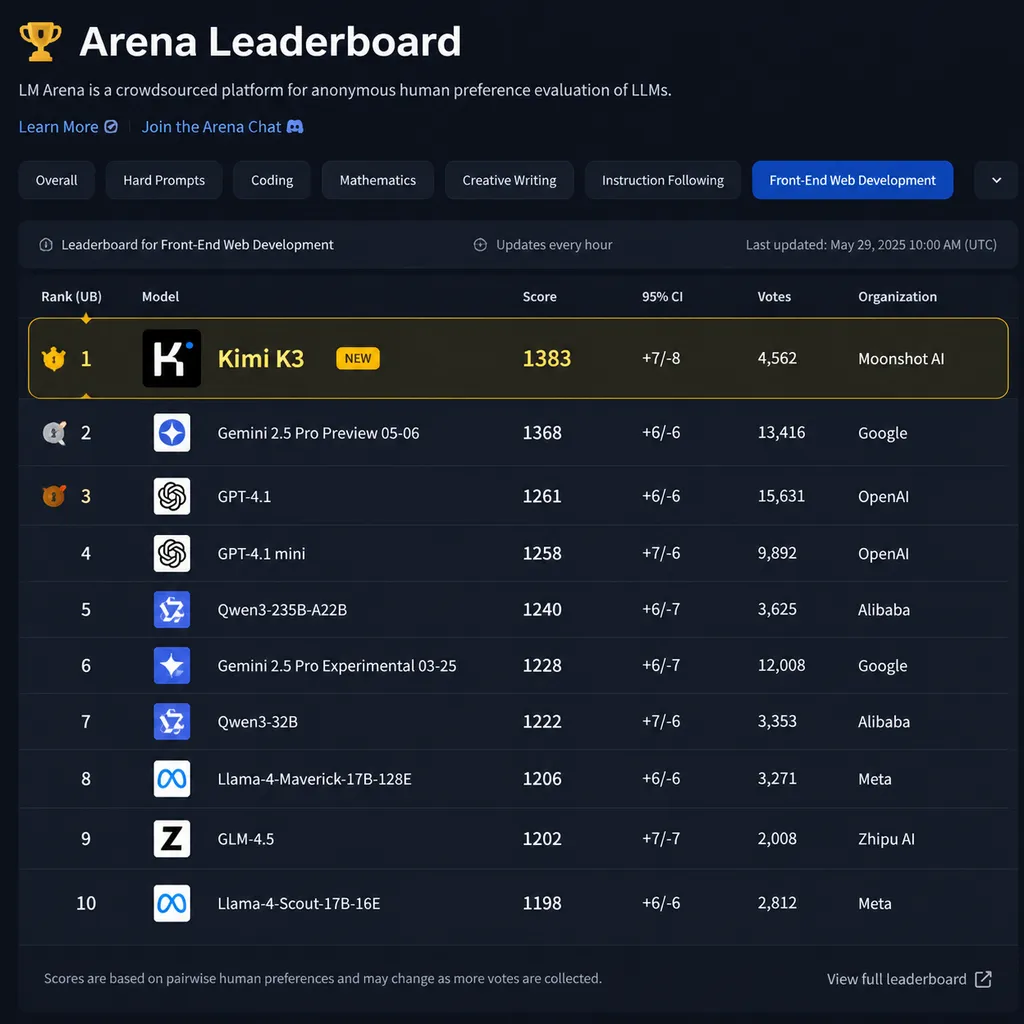
Last Friday, Moonshot AI dropped Kimi K3—a 2.8‑trillion‑parameter model with open‑source weights. Within a few hours of release, it shot to the top of Arena’s Front‑End Programming Leaderboard—the first time a Chinese model had reached #1 there. By this week’s update (2026‑29 issue), K3 had squeezed into 9th place on the overall board with an ELO of 1486, tied with Gemini 3 Pro and GPT‑5.6 Sol‑xHigh—right on the edge of the top tier.
Then Silicon Valley exploded.
I. What Exactly Is K3
Let’s lay out the tech basics first. Kimi K3 is currently the world’s largest open‑weight model, with 2.8 trillion parameters—leaving DeepSeek‑V4‑Pro’s 1.6 trillion far behind. Its architecture uses Moonshot’s self‑developed KDA hybrid linear attention mechanism plus attention residuals. It natively supports visual understanding, has a 1‑million‑token context window, and is officially positioned for long‑range programming, knowledge work, deep research, and multimodal reasoning.
Pricing is the most delicate part. K3 costs about $12 per million tokens—not the usual “dirt‑cheap” path Chinese models used to take (like DeepSeek’s rock‑bottom approach). Instead, it clearly targets Anthropic’s mid‑range products. In short, Moonshot isn’t playing modest anymore: K3 isn’t a “cheap alternative”; it wants a seat at the main table alongside Fable 5 and GPT‑5.6.
Judging from the leaderboard, that confidence is justified. On the Arena Front‑End Programming board, K3 outperformed Anthropic Fable 5 and GPT‑5.6 Sol; on the overall text board, it beat Anthropic Opus 4.8 Standard and tied GPT‑5.6 Sol. Just weeks ago, Opus 4.8 was still considered cutting‑edge—the replacement pace is astounding.
The overall stance of Chinese models on Arena is worth noting:
- Moonshot kimi‑k3: Overall #9, ELO 1486, +1 week‑on‑week
- Alibaba qwen3.7‑max‑preview: #18, ELO 1475, no change
- Zhipu glm‑5.1: #27, ELO 1471, ‑2 week‑on‑week
- Zhipu glm‑5.2 (max): #30, ELO 1468, no change
The ladder now looks complete—not a lone breakout model but a whole product matrix spanning mid‑range to high‑end, general‑purpose to specialized use cases.
II. What Really Makes Silicon Valley Nervous Isn’t the Score
In raw numbers, K3 is still 21 ELO points below Fable 5’s 1507, so talk of “world dominance” is premature. What truly unsettles Silicon Valley is something else: it’s open‑source and cheaper than its American counterparts.
Arena’s head, Anastasios Angelopoulos, put it bluntly on the TITV podcast: K3 might trigger a “reckoning” in capital markets because it forces investors to question how long OpenAI and Anthropic’s closed‑source, high‑price, data‑sharing‑required business models can last. For enterprise clients, one option offers on‑prem deployment, customization, and full data control; the other requires sending data to a closed‑source API. When the performance gap shrinks to under 20 ELO points, that choice isn’t hard.
VC Gavin Baker was even more direct: K3 is bad news for Anthropic and OpenAI, good news for nearly everyone else.
It may sound harsh, but it’s logical: stronger performance, lower price, and freer deployment all lower AI adoption barriers. The fat margins at OpenAI and Anthropic ultimately rely on a sense of scarcity—“the strongest model exists only here.” Once open‑sourcing removes that scarcity, the business model must be rebuilt.
III. OpenAI Executive’s “FUD Advice”
What pushed the story to the headlines was a post on X by OpenAI’s new head of strategy, Dean Ball. He’s no lightweight—formerly Trump’s senior AI advisor, now running strategy at OpenAI.
First, he expressed “surprise” that China’s government allowed such a powerful model to go open‑source, given the potential risks. Then came the incendiary line:
“My guess is that the Trump administration will eventually realize that the best strategy in this domain is to create significant regulatory risk around the use of China’s open‑weight models.”
Translation: manufacture FUD — Fear, Uncertainty, and Doubt — through regulatory processes so U.S. firms avoid Chinese open‑source models out of compliance fears. He later added that this was a “prediction,” not a “policy recommendation,” claiming personally to support open source—until AI reaches a certain danger threshold.
That clarification was weak. Critics quickly called it textbook “regulatory capture”: crafting rules that protect domestic closed‑source giants. You don’t need to ban Kimi outright—just make CIOs and legal teams believe it might invite scrutiny, and procurement naturally tilts toward OpenAI and Anthropic.
Curiously, White House AI advisor David Sacks took the opposite side. He said K3 proves U.S. leadership is under threat and blamed America itself—for blocking data‑center builds, piling on state‑level regs, and pushing federal model pre‑review. Sacks and Ball are on the same political spectrum yet diametrically opposed—proof that Washington’s AI‑policy battle is already white‑hot.
IV. Open‑Source vs. Closed‑Source: Decision Time
Zooming out, this K3 debate revives the question from the “DeepSeek moment” of early 2025—only sharper this time.
- DeepSeek moment: Can China build a near‑frontier model cheaply? Yes.
- Kimi K3 moment: Can China open‑source a frontier model for global developers? Also yes.
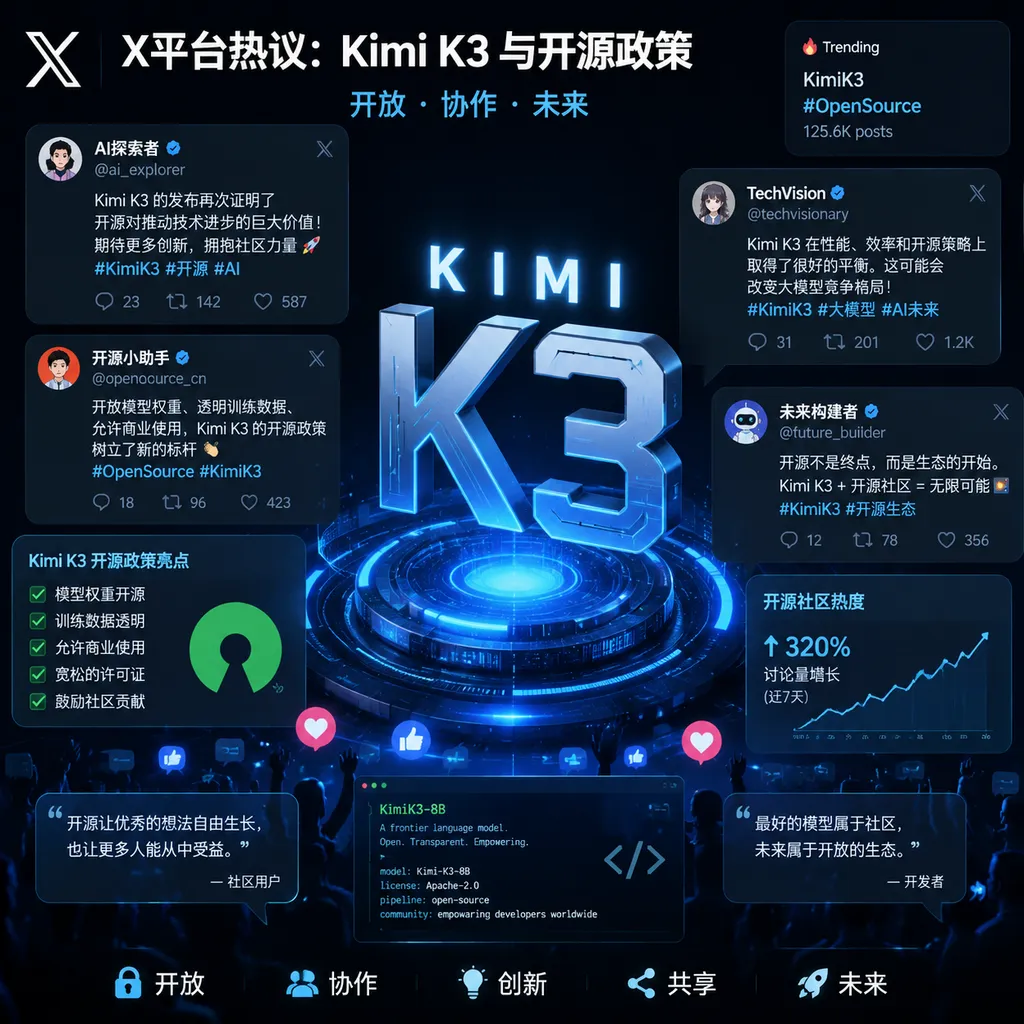
The difference: DeepSeek disrupted pricing; K3 targets ecosystem penetration. Open source means weights can be downloaded and run on‑prem — no U.S. infrastructure involved. That’s a regulatory nightmare for the U.S.: how do you oversee weights already running on hundreds of thousands of servers?
Data backs it up: China now accounts for around 41% of global open‑model downloads. DeepSeek, Qwen, GLM, and Kimi form a full pricing ladder from low to high end. In the U.S., only Meta’s Llama series is still defending open source, while OpenAI and Anthropic cling to closed models.
Ball’s “decelerationist” remark is telling—he claims open source will suppress AI capital spending. Read backwards, it means closed‑source giants need “model scarcity” to justify trillions in infra investment; once scarcity breaks, their returns must be recalculated. From OpenAI’s vantage point, his seat shapes his logic.
V. What It Means for Developers
Setting geopolitics aside—should engineers use Kimi K3? A few points:
- Front‑End Programming: #1 on Arena; in tests it outperforms Fable 5 and GPT‑5.6 Sol for UI design, component generation, and code tasks. Squarely in the first tier.
- Long Context: 1 million‑token window—great for full‑repo code analysis and long‑document handling without splitting.
- Cost: $12 per million tokens—far cheaper than Claude Opus’s $5 + $25 pricing, and below GPT‑5.6’s high‑end range.
- Deployment Freedom: Open weights mean on‑prem runs, private instances, fine‑tuning. For financial, medical, or government use cases with data‑compliance requirements, that’s decisive.
That said, K3 isn’t flawless. 9th place overall means it’s still 21 ELO points behind Claude Fable 5 on general reasoning and complex task chains—a non‑trivial gap. For deep research and complex agent flows, Claude remains steadier for now.
For developers wanting direct comparisons, OpenAI Hub has added Kimi K3—so a single key can call GPT, Claude, Gemini, DeepSeek, and Kimi in OpenAI‑compatible format with domestic connectivity, making cross‑platform benchmarking easier.
VI. What Happens Next
Short‑term signals to watch:
- Will the Trump administration adopt Ball’s “FUD strategy”? If the Commerce Department or BIS issues compliance guidance targeting Chinese open models, U.S. corporate adoption costs will spike.
- Will OpenAI rethink open source? Sam Altman had hinted at releasing a small model; after K3, that timeline may accelerate.
- Anthropic’s pricing pressure: If open models keep approaching Claude‑level capability, can it sustain $5 input / $25 output rates?
- Next wave of Chinese entrants: DeepSeek V5, Qwen 3.8, GLM 6 are coming—K3 is just the opening shot.
When DeepSeek wiped hundreds of billions off U.S. markets in early 2025, many thought it was a fluke. By July 2026, that’s harder to say—Chinese models are climbing the leaderboards every few months, each time closing the gap. Ball’s proposal to use regulation as FUD is, in effect, an admission: technical lead alone can no longer hold the line; policy barriers are the fallback.
Whether this is good or bad for the global AI ecosystem depends on your stance. But for developers, having one more top‑tier open‑source option is never a bad thing.
References
- OpenAI executive criticizes Kimi K3’s open‑sourcing; Silicon Valley voices push back – ITHome: Dean Ball’s FUD remarks and industry reactions
- AI Model Weekly: China’s Kimi K3 Enters Overall Top 10, Tops Front‑End List – ITHome: Arena 2026‑29 issue data details