Shentingji SWAN Architecture: Putting Embodied Intelligence into Outdoor Robots
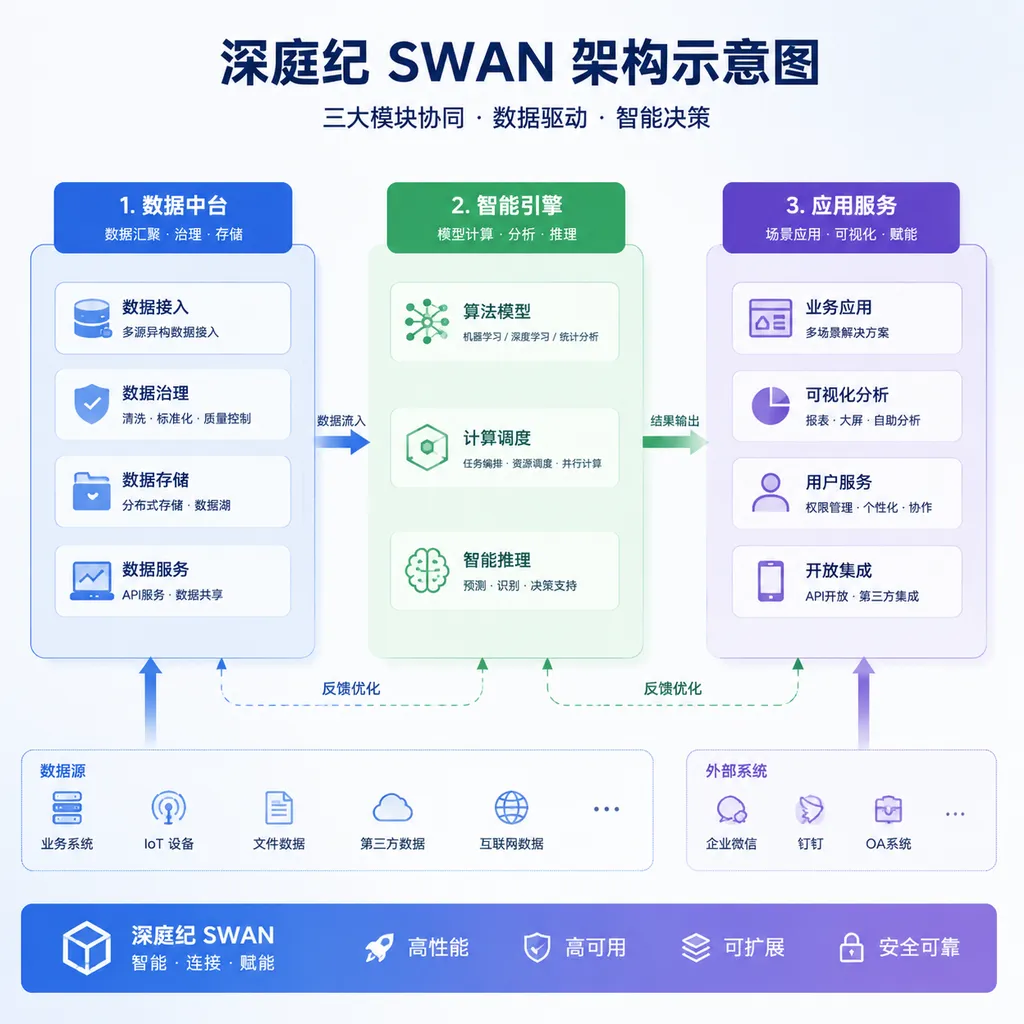
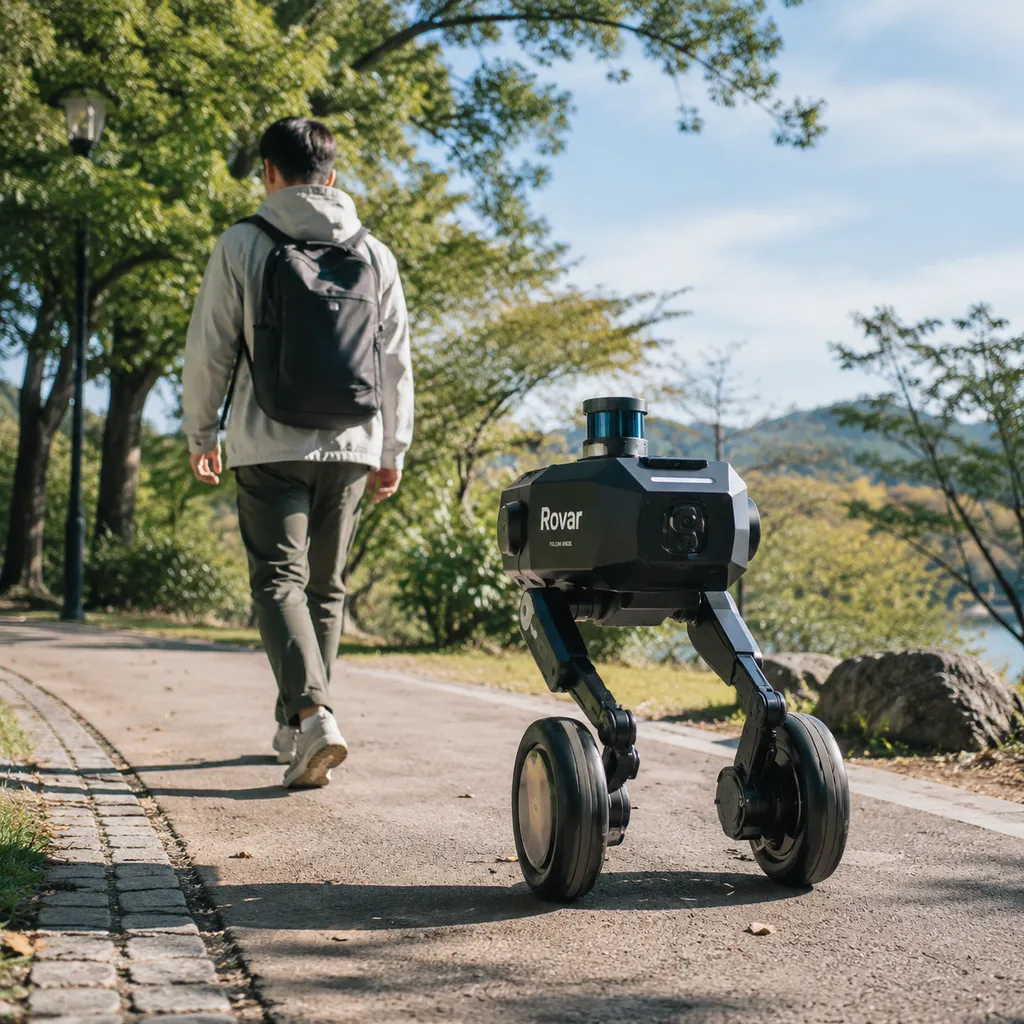
Shentingji has released the outdoor embodied intelligence architecture **SWAN**, featuring real-time on-device operation and a closed loop of three modules. It will first be deployed in the dual-wheeled, bipedal companion robot **Rovar**, which is set to launch at the end of the year. This may be the first truly embodied decision-making system in China to run on an outdoor robot.
The embodied intelligence boom has been lively for more than a year, but there are still few solutions that truly work outdoors or are actually packaged into consumer-grade hardware. This week, Shentingji has put its answer on the table.
The company, focused on outdoor companion robots, released an embodied intelligence architecture called SWAN, emphasizing one key thing: real-time edge execution. It doesn’t rely on cloud inference to issue commands, nor does it record a video and send it back for batch processing—it lets the robot make decisions by itself in outdoor environments. The first product to carry SWAN is the two-wheeled companion robot Rovar, scheduled for release by the end of the year. The company also officially announced the completion of its Pre‑A round of financing.
Why Outdoor Embodiment Is Hard
Let’s first clarify the difference between outdoor and indoor environments—this is key to understanding SWAN’s design trade‑offs.
Indoor robots operate in relatively clean worlds: controlled lighting, flat floors, limited obstacles, and clear semantic boundaries—“this is a table,” “that is a sofa”—and all a vacuum robot has to do is avoid them. Data sets are abundant, and SLAM mapping converges after a few runs.
Outdoors are another story. Lighting ranges from harsh noon glare to dim twilight; terrain changes from asphalt to grass, gravel, and steps; semantic boundaries blur—a parked electric scooter by the curb is both an obstacle and a reference point to walk alongside, while a person squatting to tie shoelaces isn’t an obstacle but the owner. What’s trickier is that the owner walks, turns, stops suddenly to chat with strangers, and the robot must decide whether to keep following or pause.
In such scenarios, relying on cloud-based decisions hits two dead ends. First, latency—outdoor 4G/5G coverage is uneven, and parks, mountain paths, or underpasses can drop out at any moment, causing the robot to lose track if the owner turns a corner. Second, privacy—real-time cloud uploads of outdoor camera video basically can’t pass compliance. So real-time, on-device execution is a hard prerequisite for outdoor embodied intelligence, not an optional feature.
The Three Pieces of SWAN
According to Shentingji, SWAN consists of three modules: a model inference main chain, a hybrid memory identity database, and a secure data flywheel system. Together they correspond to three questions—how to decide now, what to remember from the past, and how to get smarter in the future.
Model Inference Main Chain
This module handles real-time decision-making—the part the robot runs every second outdoors. The inference chain is quite long: visual signals from multiple cameras, proprioception from the IMU and wheel–leg encoders, and audio commands from microphone arrays must all fuse within a window of tens of milliseconds into a single action decision—whether to accelerate, sidestep, stop, or look up at the owner.
Compressing all that onto the edge device tests the coordination between model architecture and chip performance. The standard industry route is a two‑tier system: multimodal large models for slow reasoning and small models or rules for fast control. Although Shentingji hasn’t disclosed specific model sizes or chip choices, its emphasis on “real-time operation” suggests some variation on this theme.
Hybrid Memory Identity Database
This module sounds abstract, but it solves a very concrete issue: the outdoor companion robot must remember “who you are.”
A vacuum robot doesn’t need to recognize its owner; it only needs to recognize the home. But an outdoor companion robot is the opposite—the environments change daily (parks, streets, malls, trails) while the owner is constant. The robot must remember the owner’s appearance, gait, voice, habitual gestures, recall whether it turned left or right at this intersection last week, and even remember that the owner dislikes walking too close to parked scooters.
The term “hybrid memory” deserves attention. The usual industry practice is short-term memory via attention windows, long-term memory via vector database retrieval, and identity via face/voiceprint models. SWAN merges these layers into a unified “hybrid memory identity database,” implying that recognition of person, scene, and behavior habits all share one index. If successfully implemented, this should yield much higher consistency than separated designs.
Secure Data Flywheel System
This third module is the most interesting and arguably the most “embodied.”
A data flywheel means the robot collects real-world outdoor corner cases—lamp posts it almost hit, passersby it mistook for the owner, a dog that jumped out suddenly—and safely channels this data back into training to improve future models. Tesla’s FSD “shadow mode” follows the same logic, and so do robots.
The keyword here is “secure.” Outdoor data inevitably contains faces, license plates, addresses—so it must pass compliance when sent back. By including “secure” in the module name, Shentingji signals this is a built-in design, not a retrofit. Whether the approach uses differential privacy, federated learning, or on-edge anonymization wasn’t specified, but the direction is sound.
Rovar: SWAN’s First Testing Ground
Architecture without a product is just a PowerPoint. SWAN’s practical embodiment is Rovar, Shentingji’s first consumer-grade robot—a two-wheeled design set for release at year-end.
The two-wheel–leg design is a deliberate choice. Four-legged types like Spot or Unitree Go offer superior off-road ability but are costly, noisy, and less friendly in appearance. Wheeled bases are cheap and reliable but struggle on steps or grass. Two-wheel–leg hybrids strike a balance—rolling on flat ground and stepping over small obstacles—cheaper than quadrupeds yet far more capable than plain wheels. XPeng’s earlier Iron used a similar bipedal concept, but full upright bipedal motion differs vastly in cost and stability.
For an outdoor companion robot, two-wheel–leg design is almost the only reasonable option: it can match a brisk walking or jogging pace, climb small park steps, cross grass or gravel, and recover from falls more safely than bipeds.
Why It Matters
Here’s my view.
No domestic product has yet succeeded in the outdoor companion robot category. Companies like Unitree or Yunshen focus on industrial or government quadrupeds, rarely touching consumer segments. Robot vacuum makers who want to “go outdoors” find their tech stacks incompatible—vision systems, decision pipelines, and mechanical designs all need rebuilding. Abroad, products like Unitree Go2 lean toward enthusiasts’ toys rather than true “companions.”
By betting on an outdoor embodied architecture, Shentingji is essentially building capabilities first, products second. SWAN is the capability base; Rovar is the first product. Logically, a second and third should follow—perhaps in different forms but on the same architecture. This mirrors early strategies by Roborock and Dreame in the vacuum field—perfect the navigation algorithm first, then iterate product designs.
Choosing an on-device real-time route is the right call. Cloud-based embodiment sounds easy, but outdoor conditions simply don’t guarantee stable connectivity—it will inevitably move to the edge. The current limiting factors are whether edge compute is enough and whether models can be sufficiently optimized. With Qualcomm, Horizon Robotics, and Nvidia’s Orin series rapidly advancing in robot SoCs—20–40 TOPS of performance now runs decent multimodal models—the timing for SWAN aligns perfectly with the hardware window just opening.
Of course, plenty of question marks remain. The three-module structure sounds complete, but outdoor embodiment usually fails in the details—what happens to cameras in extreme weather, how to tell owner and passerby apart if they wear similar clothes, how to localize in GPS-dead parking garages, and whether a two-hour battery suffices for a walk. These engineering challenges won’t appear in a white paper; we’ll see how Rovar performs after launch.
Pricing is another unknown. Two-wheel–legs plus multimodal sensing and high-performance chips mean BOM costs could prevent consumer pricing—where “consumer” means under roughly ¥10,000. Shentingji hasn’t shared pricing or Pre‑A funding size yet.
One Observation
From 2024 to 2025, many embodied-intelligence startups have raised capital, but most focus on humanoids and industrial scenarios. Few are exploring consumer-grade outdoor use. Shentingji is betting on a narrower yet more relatable use case—not replacing workers or serving tables, simply walking beside you outdoors.
That’s an intriguing positioning. If Rovar can truly “keep up, recognize people, stay in line, and stay safe,” it could become the first embodied-intelligence device ordinary consumers can actually own. Vacuum cleaners cover indoor life; Rovar aims for the outdoors.
We’ll see at year-end.
References
- Zhihu – Embodied Intelligence Topic: discussions on outdoor embodiment, multimodal decision architectures, and two-wheel–leg robotics
- ITHome – Robotics Channel: news on consumer robotics and financing trends
- Hugging Face – Embodied AI Models: open-source embodied intelligence and multimodal model resources for comparison with SWAN’s technical choices