Google Gemini 3.6 Flash Triple Release: Major Upgrade + Cybersecurity Specialization + Extreme Lightweight
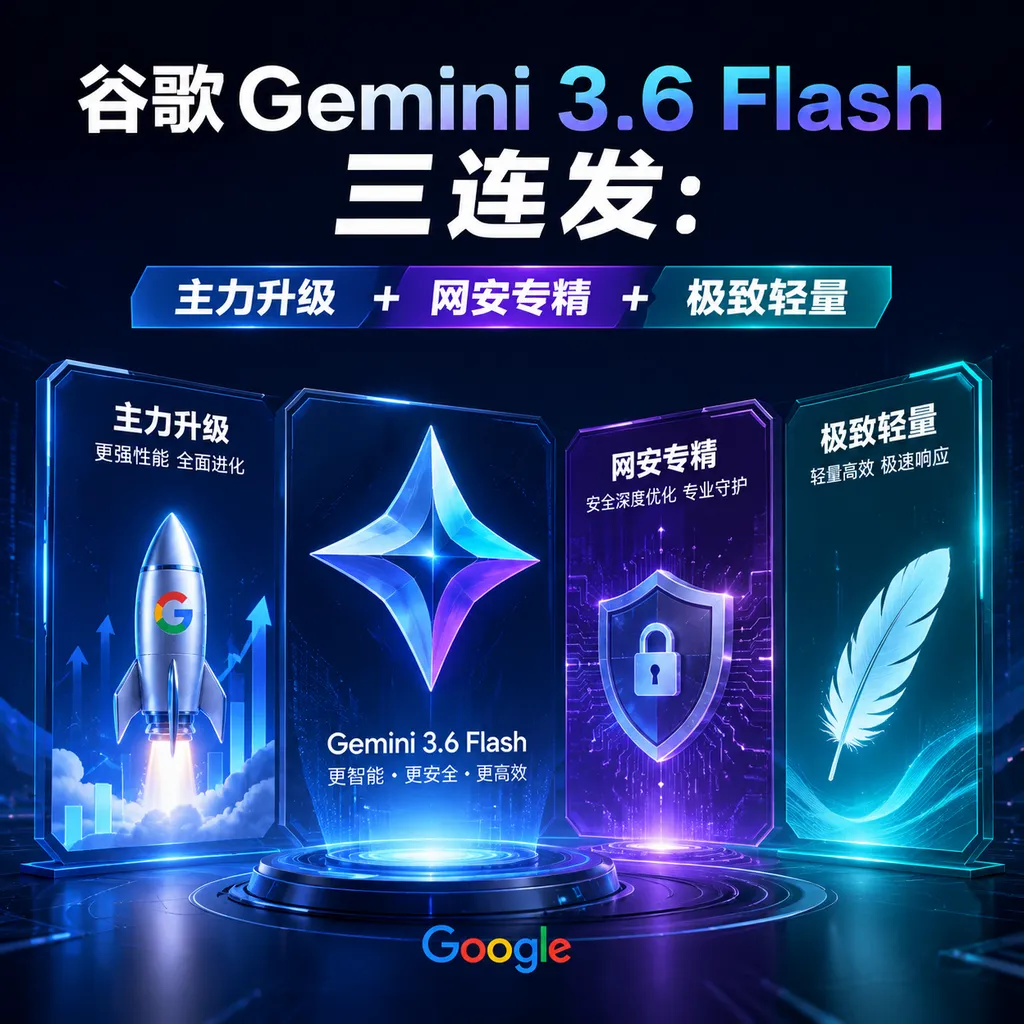
Google has simultaneously launched three models — Gemini 3.6 Flash, 3.5 Flash-Lite, and 3.5 Flash Cyber — focusing on a renewed balance between efficiency and performance. Among them, Flash Cyber directly targets Anthropic’s cybersecurity model, Mythos.
Google Gemini 3.6 Flash Triple Release: Core Upgrade + Cybersecurity Specialization + Ultra-Lightweight
On July 21, Google dropped updates for the entire Flash family and a specialized model all at once—Gemini 3.6 Flash, Gemini 3.5 Flash-Lite, and Gemini 3.5 Flash Cyber, which is clearly positioned to compete with Anthropic.
No big flagship headline this round. Back in May, the plan was for Gemini 3.5 Pro to launch in June, but it’s still in testing. This time, Google is using the Flash family update to steady the ship—Meta’s new models last month pushed Gemini out of several top-three chart positions, and Chinese competitors like Moonshot are rapidly closing the gap in Chinese-language performance. Clearly, Google is not waiting for Pro to save the day.
A Three-Pronged Update for Different Traffic Structures
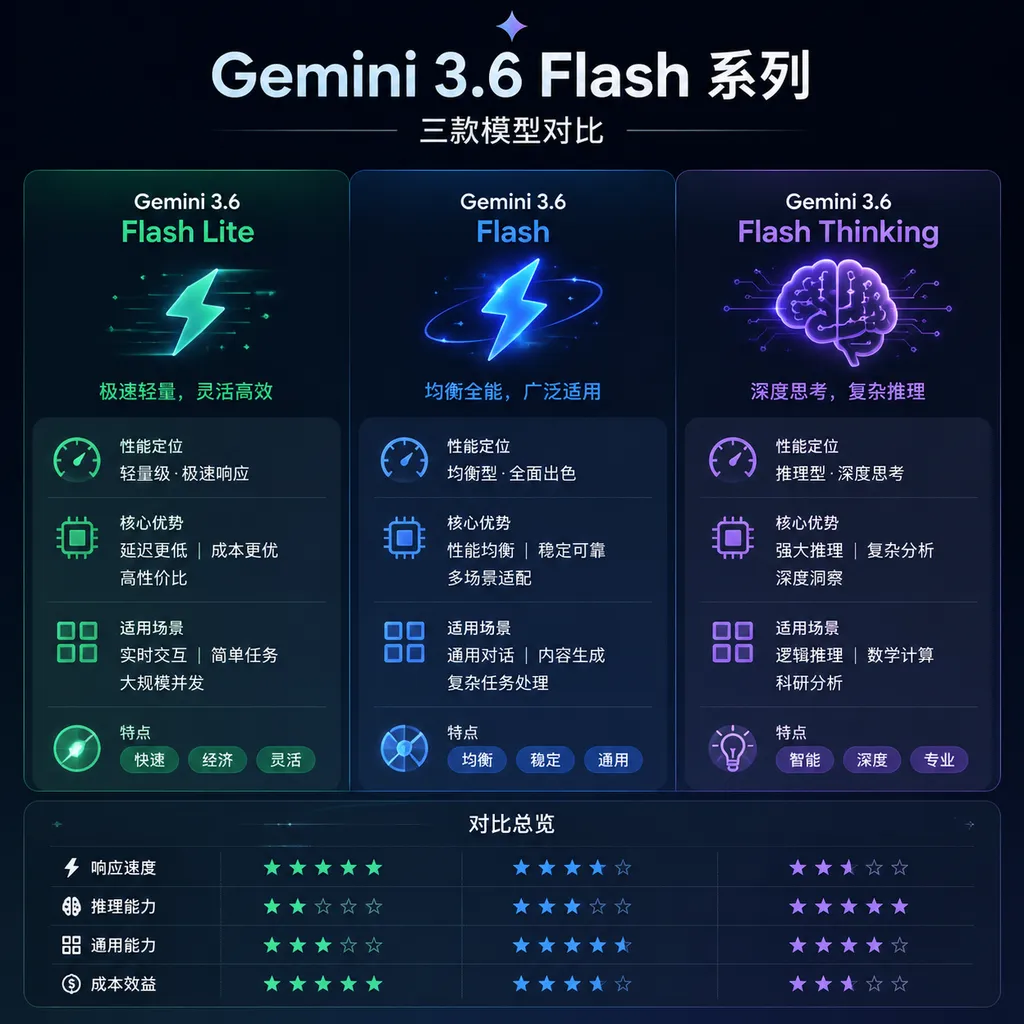
First, let’s clarify how these three models are positioned—a key to understanding this release. It’s not a simple iteration of one model; rather, it splits the Flash line into three drawers:
- Gemini 3.6 Flash: the mainline model, offering performance comparable to parts of the previous generation Pro, while staying in the Flash price tier.
- Gemini 3.5 Flash-Lite: ultra-lightweight, built for high-frequency Agent calls and low-latency scenarios—the kind of workloads that run millions of LLM calls per day.
- Gemini 3.5 Flash Cyber: a specialized model focused on cybersecurity tasks, such as vulnerability detection and patching.
Tulsee Doshi, Senior Director of Product Management for Gemini, said the goal is to “find the optimal balance between efficiency and performance.” In other words: the Flash price range has become too competitive for one model to cover every use case—Google now needs tiered offerings for different business needs.
This mirrors what OpenAI has done with GPT mini/nano and Anthropic with Claude Haiku/Sonnet. The twist here is that Google added a vertical specialization line in cybersecurity, an area most competitors haven’t yet addressed.
Gemini 3.6 Flash: Core Upgrade Focused on Cost
According to Google, Gemini 3.6 Flash delivers “enhanced capabilities at lower cost” compared to Gemini 3.5 Flash.
It sounds generic, but looking back—3.5 Flash already outperformed many models in its price range on programming and finance benchmarks—so the 3.6 upgrade isn’t about pushing the performance ceiling; it’s about improving stability and cost efficiency for real-world deployments.
In other words, it’s for teams already running Flash in production. If you’ve been making millions of 3.5 Flash calls daily for tasks like ticket classification, log summarization, or code diff reviews, 3.6 Flash means you can either do more with the same budget—or spend less for the same workload.
Compared to Claude Haiku 4.5 and the GPT-mini series, Gemini Flash’s differentiator has always been native multimodal integration—images and audio inputs through the same endpoint. That’s valuable for RAG-over-PDF, video summarization, and mixed text-image tasks. 3.6 continues improving long-context multimodal consistency.
OpenAI Hub already supports Gemini 3.6 Flash through its unified API. If your project already uses OpenAI-compatible APIs, switching only requires a model name change:
from openai import OpenAI

client = OpenAI(
    api_key="your-openai-hub-key",
    base_url="https://api.openai-hub.com/v1"
)

response = client.chat.completions.create(
    model="gemini-3.6-flash",
    messages=[
        {"role": "system", "content": "You are an assistant specializing in code review."},
        {"role": "user", "content": "Help me review the boundary condition handling in this Python code."}
    ],
    temperature=0.3,
    max_tokens=2048
)

print(response.choices[0].message.content)
Multimodal input follows the OpenAI vision format:
response = client.chat.completions.create(
    model="gemini-3.6-flash",
    messages=[
        {
            "role": "user",
            "content": [
                {"type": "text", "text": "What potential single points of failure exist in this architecture diagram?"},
                {
                    "type": "image_url",
                    "image_url": {"url": "https://example.com/arch.png"}
                }
            ]
        }
    ]
)
Gemini 3.5 Flash Cyber: Direct Competition with Anthropic Mythos
Among the three models, Flash Cyber is the most intriguing.
Google describes it as a low-cost, high-capability alternative to expensive AI security systems like Anthropic’s Mythos—essentially calling out its competitor by name. That’s rare for Google, especially in an official announcement highlighting price competitiveness.
Here’s the background: In April, Anthropic launched Mythos, designed for automated vulnerability discovery. It quickly became popular among red teams and was integrated into several security products. OpenAI is testing similar models. Google was falling behind in this area, and Flash Cyber is its catching-up move.
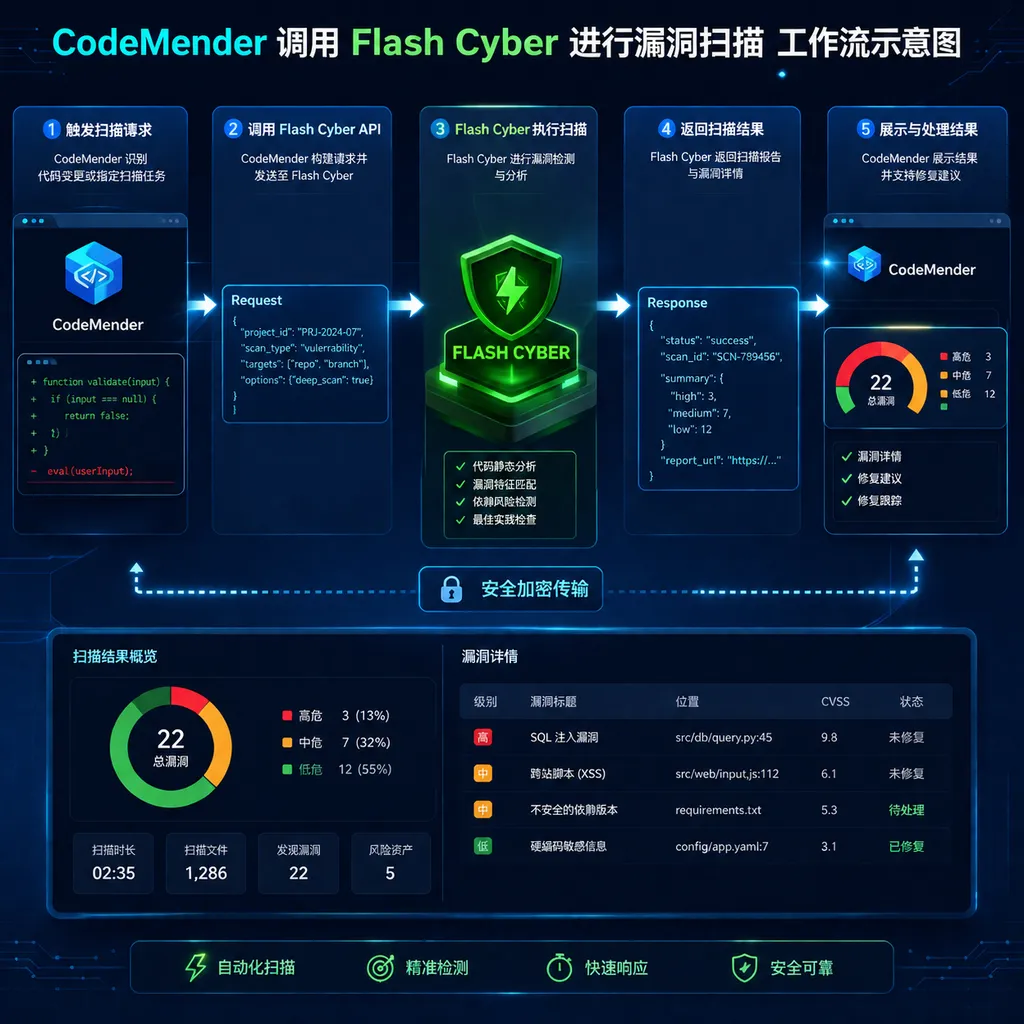
Flash Cyber is fine-tuned from Gemini 3.5 Flash. The first release is limited to governments and “trusted partners” via Google’s internal security coding Agent, CodeMender. Google explicitly notes that CodeMender can “make high-speed, low-cost repeated calls to 3.5 Flash Cyber”—a clear signal that it’s designed for high-frequency Agent loops, not single interactive sessions.
Conceptually, this decouples the execution segment—“detect → locate → patch → verify”—into a specialized model. Running this full pipeline on a general-purpose LLM is expensive, slow, and prone to irrelevant reasoning. Flash Cyber acts like a “skilled worker” embedded in the security automation chain, letting higher-level orchestration do more within a fixed budget.
There’s controversy here: any model that finds vulnerabilities can also exploit them. Google’s blog skirts the dual-use issue, saying only that access will be limited. Anthropic, by contrast, discussed red-teaming and abuse prevention at length when launching Mythos. Google’s approach is more tool-centric—deliver to customers first, manage misuse through partnerships.
Gemini 3.5 Flash-Lite: Built for the Agent Ecosystem
Flash-Lite may seem minor but could be the most practically useful for developers.
Its core scenario: high-frequency Agent calls—the workflows that invoke a model dozens or hundreds of times per task. Use cases include digital assistants, ticket routing, multi-round tool calls, and large-scale content extraction.
For these models, cost and latency are everything. If your Agent runs 30 LLM calls per task, the cost difference between Flash-Lite and regular Flash can be multiple orders of magnitude. For production-scale operations processing hundreds of thousands of tasks daily, that’s the difference between viable and unviable economics.
That’s why every major vendor has been aggressively iterating Lite/Mini-tier models lately. In the Agent era, inference cost is dominated not by individual call price but call volume. Whoever drives per-call cost and latency down farthest will make complex Agent orchestration economically viable.
Looking across Google’s lineup, Flash-Lite and Flash Cyber share a philosophy:
Flash-Lite cuts horizontally (low-cost general use), Flash Cyber drills vertically (high-value specialization). The middle—3.6 Flash—anchors the mainstream layer.
Is Google Falling Behind? Depends How You Measure It
Timing-wise, this release is interesting.
Looking backward: Anthropic’s Claude 5 and OpenAI’s GPT-5 series have raised the bar for reasoning and Agent tasks. Meta’s models recently knocked Gemini out of some benchmark top threes. Chinese rivals like Moonshot now rival Gemini in native Chinese use cases.
Looking forward: the delayed 3.5 Pro puts Google under pressure in a market where rivals now refresh monthly.
But if you only consider the Flash tier, things look solid. Flash has always been Google’s strongest value line—offering multimodality at near budget pricing, something OpenAI and Anthropic haven’t fully matched. Version 3.6 cuts costs further, Flash-Lite goes lower still, and Flash Cyber plants a flag in the emerging security-Agent space.
In short: Google may be defensive in the flagship race, but it’s on offense with Flash. And its offensive focus—native multimodality + high-frequency Agent calls + vertical specialization—happens to align with the most commercially valuable frontiers for the next two years.
What This Means for Developers
Three immediate takeaways:
- If you’re running production workloads on Flash, switching to 3.6 Flash will almost certainly save money. Google didn’t specify the price cut, but “lower cost” likely means no increase.
- If you’re building Agent systems, test Flash-Lite in A/B trials—especially in multi-stage pipelines where the Executor role doesn’t need top-tier reasoning.
- If you work in security, Flash Cyber isn’t open yet. It’s currently limited to governments and partners, with no public release date. You can monitor the open-source CodeMender project in the meantime.
And one broader takeaway: this launch confirms a trend—models like Flash/Mini/Haiku are becoming the real battleground of the Agent era. Flagship models win benchmarks and demos; production workloads live or die on mid-tier models that are cheap, fast, and “good enough.”
Whoever dominates this tier will capture the next wave of Agent-driven traffic. Google’s triple release is essentially staking out that ground.
Open Questions
- When will Gemini 3.5 Pro actually launch? Google says “as soon as it’s ready,” but after delays from May through July, there may be internal issues.
- Will Flash Cyber ever open to general developers? If it remains limited to governments and large enterprises, its community impact will be small.
- What’s the exact pricing for the three Flash models? Google only mentioned “lower cost.” Concrete numbers will appear once Vertex AI and AI Studio pages update.
OpenAI Hub already supports Gemini 3.6 Flash, and Flash-Lite and Flash Cyber will follow once Google enables public access. If your project already calls OpenAI-compatible endpoints, migration cost is nearly zero.
References
- ITHome: Google launches three new AI models, including Gemini 3.6 Flash and 3.5 Flash Cyber — The first Chinese report including public statements from Google executives on positioning.