AMD and Anthropic Connect at the Engineering Level: Claude Directly Participates in GPU Optimization
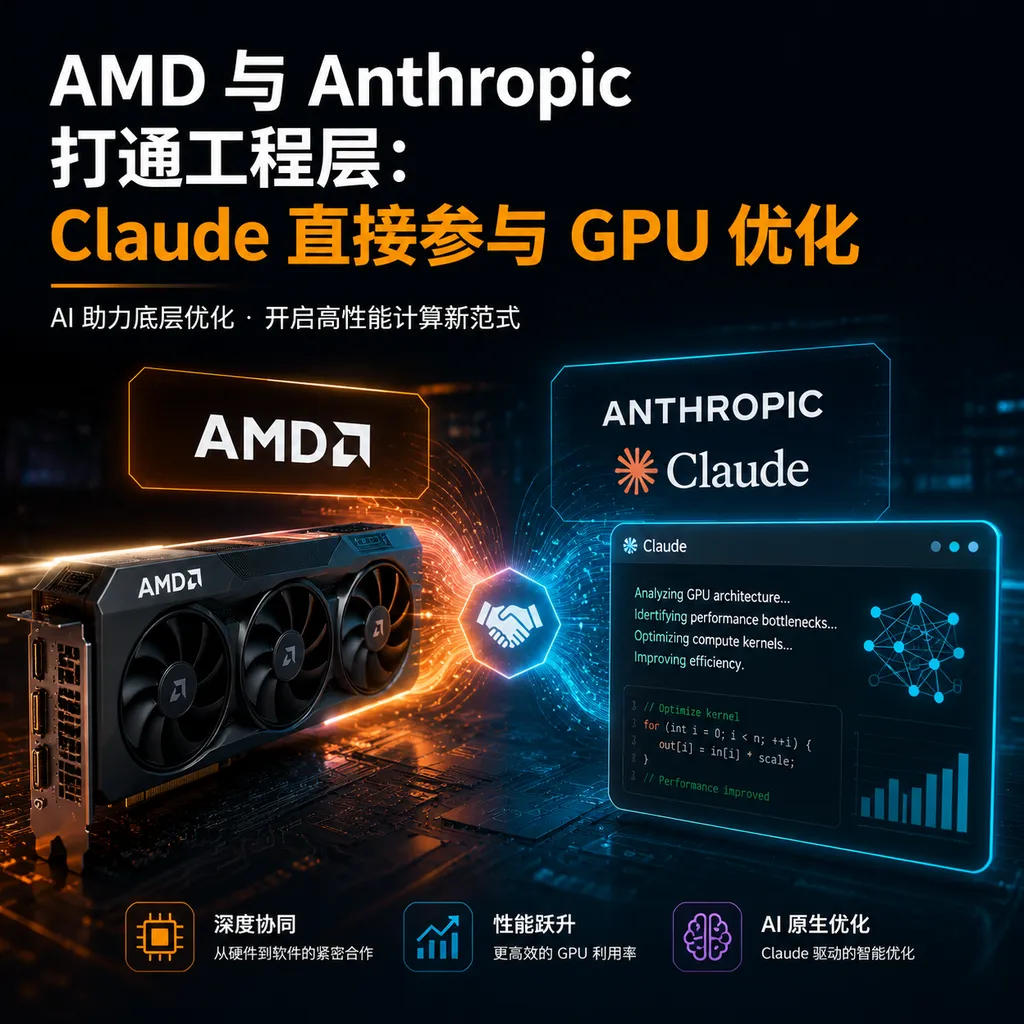
AMD and Anthropic announced a multi‑level strategic partnership yesterday. In addition to a 2 GW GPU deployment and a 5 billion USD investment, what’s even more noteworthy is the deep engineering integration: Claude will be directly used to optimize AMD Instinct GPU workloads and accelerate ROCm development.
AMD and Anthropic Align at the Engineering Level: Claude Directly Involved in GPU Optimization
AMD and Anthropic announced their partnership yesterday (July 22). On the surface, it looks like another compute deal paired with an investment commitment, but the truly interesting part lies at the engineering level. The collaboration is not just about “you buy my cards,” but about having Claude directly participate in optimizing AMD’s GPU software stack. Using AI models within the chip development process is still rare among top-tier companies.
Not Just Selling Cards — Claude Will Help AMD Write Code
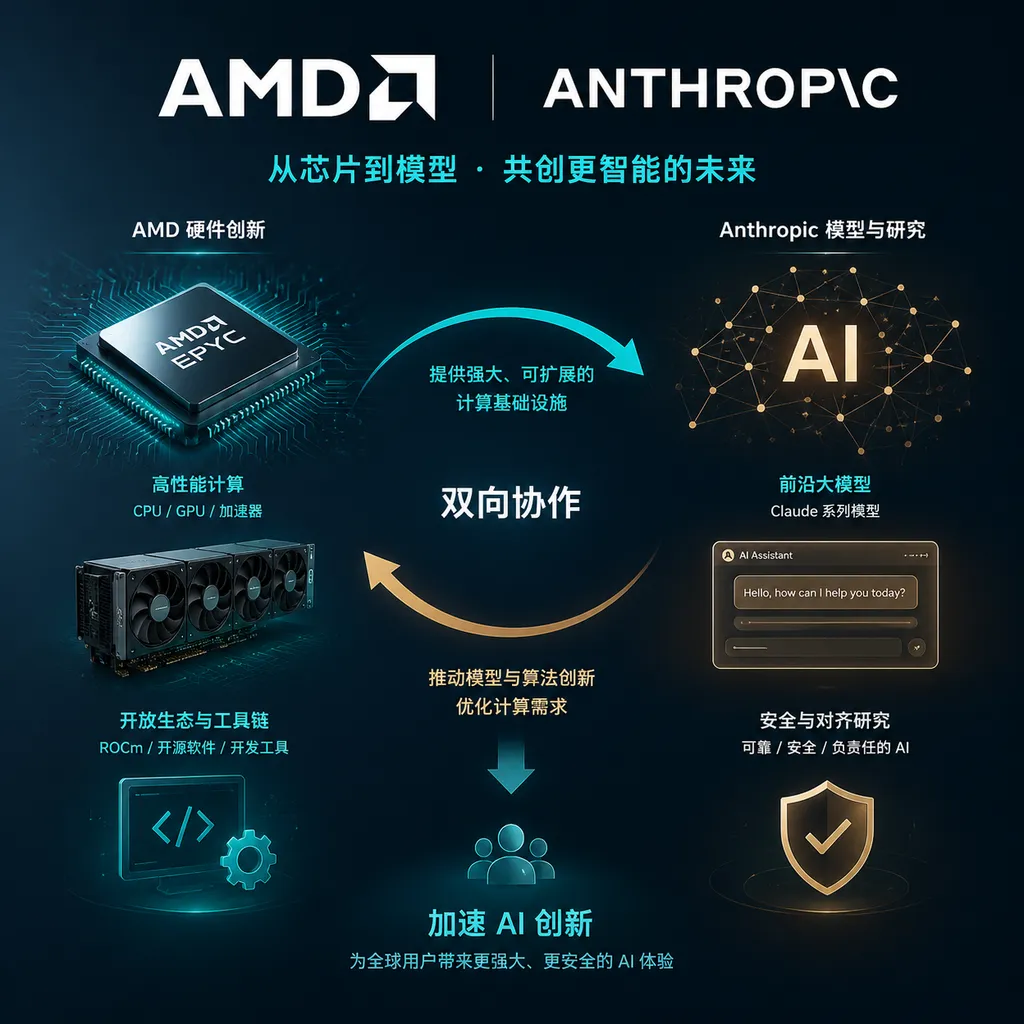
According to the announcement, this partnership has three layers:
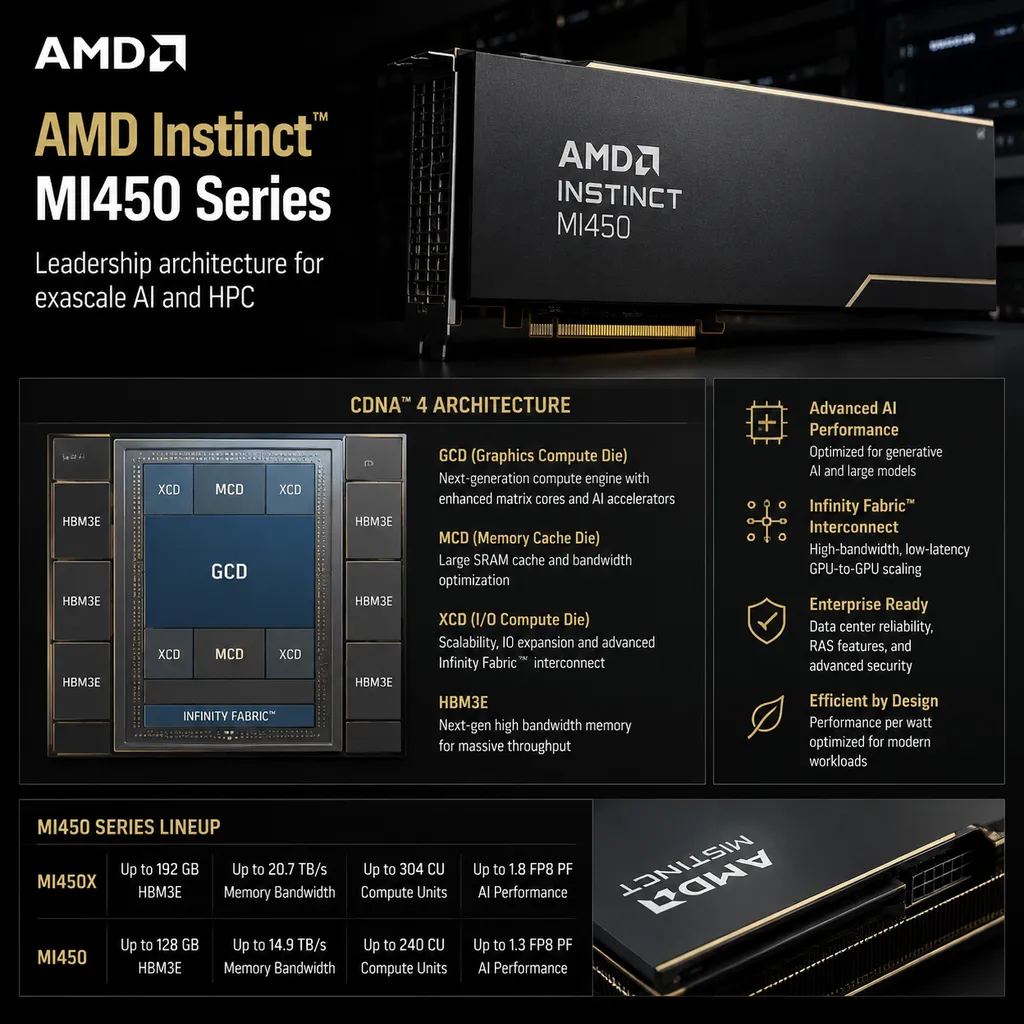
- Hardware layer: Anthropic will deploy 2GW worth of AMD Instinct MI450 series GPUs, gradually coming online starting in 2027
- Capital layer: AMD commits to invest up to $5 billion in Anthropic, in multiple stages
- Engineering layer: The two companies are launching a multi-year engineering partnership, enabling Claude to optimize AMD Instinct GPU workloads and accelerate ROCm software development. AMD’s internal engineering and product teams will also make broad use of Claude.
The first two points are common in big tech partnerships, but the third is the key. AMD is embedding Claude into its development process, allowing the model to directly participate in GPU workload tuning and ROCm ecosystem building. ROCm is AMD’s open‑source software stack that competes with NVIDIA’s CUDA and has long been AMD’s weak spot in the AI market. Now Anthropic’s model will help patch that weakness—effectively turning a “user” into a “co‑developer.”
Why Now? Diversified Compute Power Has Become a Must‑Have for AI Companies
Anthropic’s move becomes clearer on a broader timeline. Since the start of this year, top AI companies have been systematically reducing their dependency on any single compute supplier:
- OpenAI uses both NVIDIA GPUs and its own internal chip efforts
- Google DeepMind primarily uses its in‑house TPUs but also buys NVIDIA H100s
- Meta has stated publicly that it will dynamically distribute workloads across NVIDIA, AMD, and its own chips
- Anthropic previously used Google TPUs and Samsung solutions—now it’s adding AMD
The logic is straightforward: as model sizes grow, training and inference costs have become astronomical. A single supplier means limited bargaining power, supply chain concentration risk, and potential lock‑in to one technical path. Anthropic co‑founder and chief compute officer Tom Brown put it plainly: “Running on a variety of hardware allows us to map the right workloads to the right hardware.”
That’s not diplomatic fluff. Different chip architectures vary markedly in efficiency and cost for different tasks. During large‑model training, memory bandwidth and interconnect speed are the bottlenecks; for inference, single‑card throughput and energy efficiency matter more. Multiple suppliers mean choosing the most suitable hardware per task and spending money where it counts.
What Does AMD Gain? More Than Just Orders — a Reference Customer
For AMD, the value of Anthropic as a customer goes far beyond the order volume.
First, a market signal. Anthropic, the company behind Claude, has received investments from Google and Amazon, and its models are among the best in the industry. A top AI lab choosing AMD is itself an endorsement of the MI450 series’ capabilities. In enterprise procurement, “Anthropic uses it” carries more weight than any benchmark score.
Second, ecosystem co‑development. AMD’s biggest gap in the AI market isn’t hardware performance but software ecosystem maturity. NVIDIA’s CUDA has over a decade of accumulated tooling, model support, and tuning experience. AMD’s open‑source ROCm still lags in documentation, examples, and community strength. Now Anthropic’s engineering team, using Claude, will help optimize ROCm—essentially a top‑tier user filling holes, writing docs, and running benchmarks for you.
Third, technical iteration. AMD chair and CEO Lisa Su mentioned “AMD Helios,” an end‑to‑end AI infrastructure solution covering GPUs, interconnects, storage, and power management. Anthropic’s ultra‑large‑scale deployment will reveal system‑level bottlenecks, and that feedback will directly inform AMD’s next‑gen product design. Such a closed feedback loop is highly valuable in the chip industry.
Claude in Chip Development — How Far Can This Model Go?
AMD inviting Claude into its engineering workflow is interesting in itself.
AI‑assisted chip design is not new. Back in 2020, Google used reinforcement learning for TPU floorplanning, compressing weeks of manual work into hours. NVIDIA and Intel also use AI for EDA (electronic design automation) optimization, but those efforts focus on design‑stage tasks using purpose‑trained models.
AMD, by contrast, aims to use a general‑purpose large model for software‑stack development. Claude isn’t trained for chip design, but it can read, write, and review code. ROCm is a complex software stack spanning compilers, runtimes, drivers, schedulers, and profiling tools. In principle, Claude could participate in development, testing, and tuning:
- Code generation: generate driver code or test cases from requirement docs
- Code review: check submissions for standard compliance or hidden bugs
- Performance analysis: read profiling data and offer optimization advice
- Documentation: auto‑generate API docs, user guides, and migration tutorials
These don’t require the model to “understand” chip‑level physics—just to grasp high‑level abstractions and code logic. Claude 3.5 Sonnet’s coding ability now rivals or surpasses GPT‑4, making such use technically feasible.
The real outcome, however, depends on implementation details. The pain points for large‑model applications in vertical domains lie in the “last mile”:
- Accuracy: Can the generated code run? Does it introduce subtle bugs?
- Context understanding: Can the model comprehend large‑scale codebase architectures and dependencies?
- Domain knowledge: Can it learn GPU‑specific optimization tricks?
- Workflow integration: How do you embed the model into existing CI/CD pipelines?
AMD and Anthropic call this a “multi‑year partnership,” meaning they know it won’t be fully realized overnight. But the direction is right: collaboration between chipmakers and AI companies is evolving from “I buy your compute” to “we co‑build the technology stack.”
Market Impact: Not Enough Pressure Yet for NVIDIA
How much of a threat is this to NVIDIA? Honestly, not much in the short term.
NVIDIA still holds over 80% of the AI‑chip market, and its CUDA ecosystem’s moat won’t be filled in a few years. Although Anthropic is adding AMD, it’s unlikely to switch over entirely—more likely a “NVIDIA‑first, AMD‑as‑supplement” setup. Think of it like cloud computing: enterprises diversify vendors to reduce risk, but most core workloads run on the most mature platform.
That said, AMD’s move is strategically solid. The AI‑chip market is shifting from “NVIDIA‑dominant” to “multi‑vendor coexistence,” driven by three forces:
- Demand side – AI firms are too large to risk dependence on one supplier
- Supply side – AMD, Intel, Google, and Amazon all have their own AI‑chip lines
- Technology side – Model architectures and training methods keep evolving, changing hardware needs
AMD’s task now is to secure a foothold during this transition. Landing a flagship client like Anthropic and building a reputation for “usable, reliable, well‑supported” solutions will naturally attract more customers.
Worth noting, AMD’s strategy differs from NVIDIA’s. NVIDIA’s path is “full‑stack in‑house, tightly integrated,” from chips to networks to software—a highly cohesive black box. AMD’s is “open ecosystem, co‑optimization”: ROCm is open source, and it engages customers deeply in adaptation work.
Which approach wins? Too early to tell. But clearly, the AI‑chip market has entered the ‘system‑capability competition’ stage. Raw FLOPs or memory bandwidth alone no longer matter; customers want full solutions that deploy fast, run stably, and improve continuously. At its core, AMD and Anthropic are co‑building that kind of solution.
$5 Billion Investment: More Chipmakers Will Take Equity in AI Companies
AMD’s promise to invest up to $5 billion in Anthropic is significant. For comparison:
- Google invested about $3 billion in Anthropic
- Amazon, $4 billion
- Microsoft, over $13 billion in OpenAI
AMD’s investment will be phased and tied to deployment progress. In other words, it’s a strategic investment bundled with hardware sales and technical collaboration, not a pure financial play.
Chipmakers directly investing in AI companies will likely continue. The logic is clear:
- For chipmakers: secure anchor customers, gain firsthand feedback, influence next‑gen tech definitions
- For AI companies: get funding, compute resources, technical support, and lower procurement costs
It’s a win‑win. Expect to see more “chipmaker + AI company” deep partnerships, even joint‑design projects. Meta and Intel previously co‑developed an AI‑specific chip—never widely commercialized, but directionally similar.
Why Announce Now if Deployment Starts Only in 2027?
An interesting detail: the MI450 series won’t be deployed at scale until 2027—still more than half a year away. So why announce so early?
It’s about managing market confidence. AMD has long faced skepticism in the AI‑chip space—lots of announcements, but deployments far smaller than NVIDIA’s. Announcing the Anthropic deal now signals to the market: “We do have tier‑one clients lining up.”
For Anthropic, early disclosure also helps. Showcasing compute reserves is a vital lever for AI‑company fundraising and competitiveness. Saying “we have Google TPUs, AMD GPUs, and our own optimization pipeline” sounds stronger than simply “we use NVIDIA.”
Additionally, the early announcement puts pressure on AMD’s engineers. Having a 2027 delivery date publicly committed means MI450 development and ROCm adaptation must stay on schedule—a built‑in accountability mechanism.
Final Thoughts: The Compute War Enters Its Second Half
The AMD–Anthropic partnership marks a new phase in the AI‑compute arms race.
The first half was the “GPU‑scramble era”: AI companies raced to buy GPUs, NVIDIA cards were scarce, and lead times stretched for months. The core problem then was insufficient supply.
The second half is the “ecosystem war”: as supply catches up, customers now care about value, supply‑chain security, technical compatibility, and long‑term support. The new bottleneck is ecosystem maturity.
NVIDIA dominated the first half, but the second promises more variables. AMD, Intel, Google, and Amazon are all pushing hard, while AI companies diversify suppliers. Over the next few years, the AI‑chip market will shift from ‘single‑dominant’ to ‘multi‑strong coexistence,’ with outcomes depending on who can fastest build a complete “hardware + software + ecosystem” loop.
This AMD‑Anthropic deal is a pivotal play. If successfully executed—ROCm ecosystem strengthened, MI450s stably running Claude‑scale workloads—AMD will be firmly established in AI.
But if it falters—with delayed delivery, poor performance, or adaptation issues—the repercussions will extend beyond losing one client, eroding overall market confidence in AMD’s AI chips.
We’ll know by 2027.
References
- More than chip deals and investment promises: AMD to adopt Anthropic Claude internally — ITHome’s detailed report on the AMD–Anthropic partnership, including executive statements