The country’s first national standard for agent interconnection released: AI will now get its own ID card
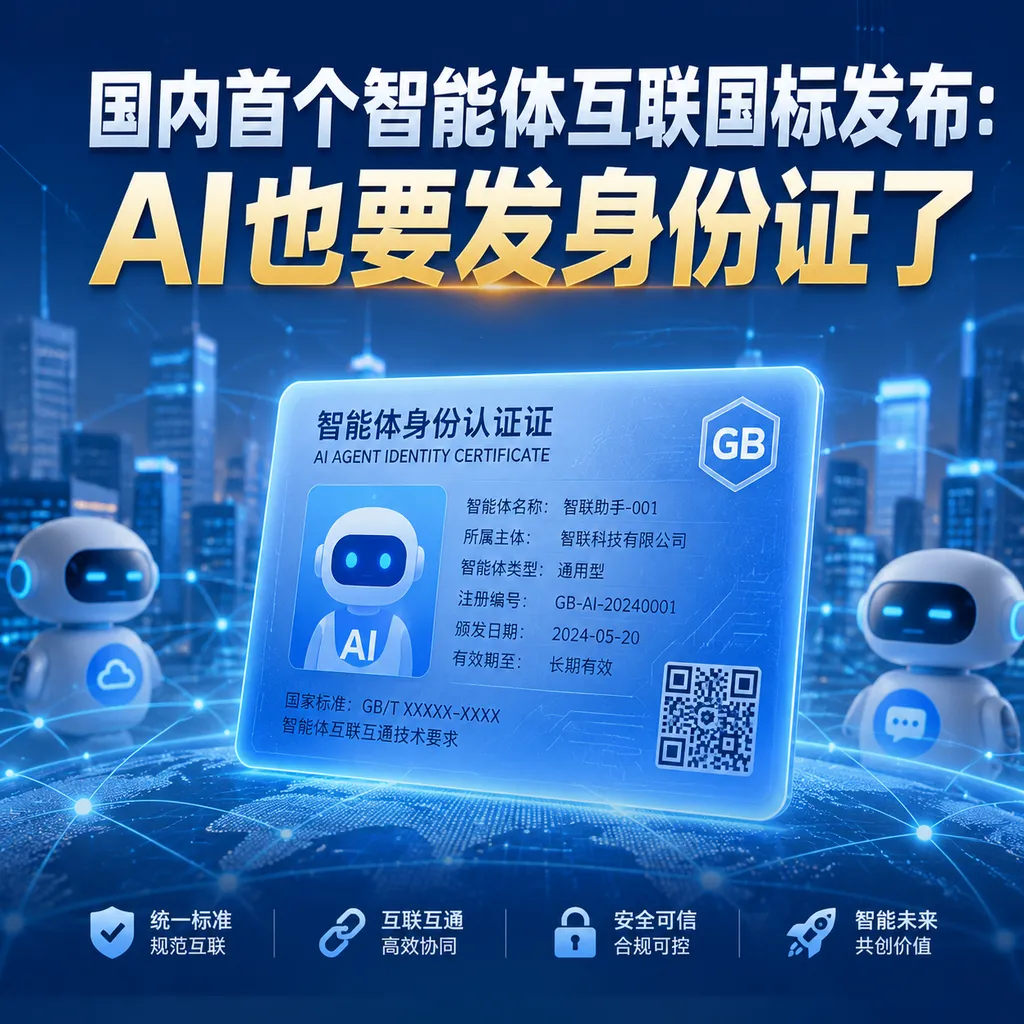
On July 23, the application promotion plan for seven national standards under **GB/Z185-2026 Intelligent Agent Interconnection** was officially released in Beijing. The first batch of more than 2,000 industry intelligent agents received their “digital IDs,” addressing long-standing industry challenges such as cross-vendor incompatibility and difficulties in identity traceability.
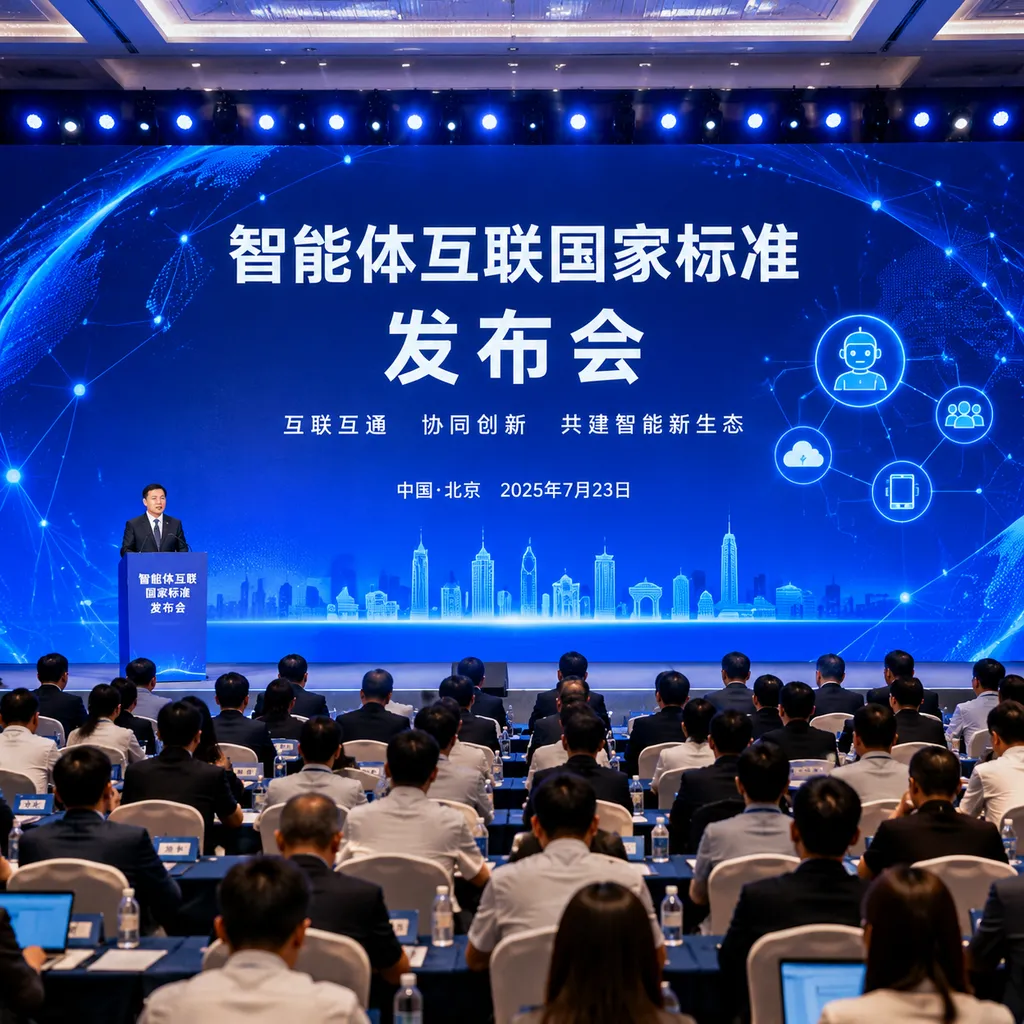
On July 23, the Special Conference on Promoting the Application of the National Standards Series on “Artificial Intelligence – Agent Interconnection” was held at the Zhongguancun Exhibition Center in Beijing. Seven guiding national standards, GB/Z185‑2026, officially entered the implementation stage. This is China’s first standardized system covering the entire lifecycle of intelligent agents, and currently the world’s first systematic set of national standards for agent interconnection.
A move with even greater symbolic meaning took place on the same day: the first batch of agent identity codes was issued on‑site, giving over 2,000 key‑industry agents their own “digital ID cards.” In other words—from today onward, for an agent to operate cross‑platform within the country, it must first possess a traceable identity.
From “Able to Talk” to “Good at Doing”: Where’s the Bottleneck?
The main storyline in the AI field over the past two years has been the shift of model capability from conversation to execution. In the ChatGPT era, the competition was about who could answer better. In the Agent era, it’s about who can actually book a ticket, dispatch a work order, or commit code.
But once you get to execution, the problems appear. Suppose your Agent built with one platform wants to call another Agent from a different platform — several walls stand between them: communication protocols differ, there are no unified rules for identity verification, each vendor uses its own schema to describe capabilities, and even the return formats from tool calls are inconsistent. The result: every vendor’s agents live in isolated “gardens”—lively within, but clueless once they step outside.
The industry calls this phenomenon the “intelligent island.” It’s a bit like instant messaging around the year 2000, when QQ, MSN, and Yahoo Messenger each ran their own ecosystems, forcing users to juggle three clients. Agents today face a more awkward situation because their core value lies in acting across systems—islandization directly halves that value.
That’s exactly what this set of national standards aims to solve.
Seven Standards Covering the Entire Agent Lifecycle
The GB/Z185‑2026 series consists of seven parts, standardizing every link from an agent’s creation to its operation:
- Overall Architecture: defines the layered structure and roles of the entire interconnection system
- Agent Identity Code: assigns each agent a unique, traceable ID
- Identity Management: full‑process rules for registration, authentication, authorization, and deregistration
- Capability Description: a unified format for declaring what an agent can do
- Cross‑Domain Discovery: how an agent on Platform A finds one on Platform B
- Collaborative Interaction: how multiple agents communicate and pass parameters
- Tool Invocation: norms for calling external tools (APIs, functions, MCP servers, etc.)
Developers familiar with the field will recognize the parallels—this system aligns with Anthropic’s MCP and Google’s A2A, with an added identity‑authentication layer. The difference: MCP and A2A are vendor‑driven open protocols adopted voluntarily by the community; the national standard is top‑down and mandatory—the State Administration for Market Regulation has already stated that the identity‑code standard will later become a mandatory national standard.
Fan Kefeng, Deputy Director of the China Electronics Standardization Institute, summarized the work in three shifts: turning “islands into networks,” “proprietary into open,” and “disorder into order.” The first two concern technology; the last one hints at governance—setting boundaries in advance for agents’ deeper involvement in physical scenarios such as industrial control and government services.
The Identity Code: The Firmest Nail in the System
Among the seven standards, the Agent Identity Code is the key carrier. It functions like an ID number in the agent world—globally unique, traceable, and bound to a responsible entity.
This design will have a far‑reaching industrial impact. Currently, many agents are anonymous—when you use an automation assistant within some SaaS, it’s hard to trace which model, vendor, or version caused an issue. The identity code effectively pulls agents out of the “shadow labor force” into a “real‑name labor force,” enabling accountability, compliance auditing, and cross‑entity collaboration.
Over 2,000 codes have already been issued across key sectors including finance, government services, and manufacturing. The number may not sound large, but almost all major vendors in these industries are involved. China Mobile Internet—a core participant—has applied its self‑developed IDaaS agent‑security interconnection solution across products like 139 Mail and Mobile Cloud Drive; Volcengine, Xiaomi, Kuaishou, Lenovo, and others were also deeply engaged in drafting.
Notably, China Mobile’s approach ties SIM‑card resources to agent identity authentication. Telecom carriers' existing real‑name systems serve as trusted infrastructure, giving agent “real‑name registration” a physical foundation—something with no clear equivalent overseas.
Comparing the Chinese Approach with MCP and A2A
Developers might ask: will this system conflict with MCP or A2A? Will it replace them or coexist?
For now, it appears to be complementary coexistence. MCP focuses on interfaces between agents and tools; A2A focuses on communication between agents. Neither deals much with identity or governance. The national standard packages identity, discovery, collaboration, and tool invocation into one—coarser‑grained but more holistic.
From a technical perspective, here’s the likely scenario:
- For domestic government‑enterprise markets, the national standard will be a hard requirement—especially once the identity code becomes mandatory; without it, agents likely won’t enter sectors like government, finance, or energy.
- For overseas or open‑source ecosystems, MCP and A2A remain mainstream—they iterate quickly and have active communities, with no immediate substitutes.
- Teams serving both markets will need an adaptation layer—mapping the national standard’s identity and capability‑description specs to MCP/A2A fields, which will be a foundational infrastructure task in the next year.
In short, the implementation won’t instantly change how code is written, but it will change which agents can access which markets.
Moves Toward Globalization
The English version of these standards was unveiled at the 2026 World Artificial Intelligence Conference’s International Forum on AI Standardization. Russian and Arabic versions are also planned, with further coordination among ASEAN and other regions.
The intent is clear: in AI governance, standards equal discourse power. In the U.S., companies craft protocols with government backstopping; the EU follows the strict‑regulation path under the AI Act; China, by entering through technical standards, aims to set the rules in the still‑open field of agent interconnection before global giants monopolize it.
For developers, the most immediate effect is that if you’re building agent products for domestic B‑end clients, you’ll need to add an “identity‑code access” step to your evaluation process. Toolchains across platforms will likely release supporting SDKs in the second half of the year.
A Few Assessments
The most significant aspect of this national standard isn’t the technical details (many align with MCP, OAuth, or OpenAPI) but the policy signal: it elevates “agents should be governed” from an industry consensus to a national rule. The 2,000 identity codes are just the beginning; the true watershed is the day the standard becomes mandatory—after that, agents in China will no longer be purely technical artifacts but digital entities with household registration.
For infrastructure teams, this opens a window of opportunity: identity‑code issuance, cross‑platform agent gateways, capability‑description converters, audit and traceability tools—all likely to see new entrants over the next 12 months.
For application teams, now is the time to abstract your agents’ “capability descriptions” and “identities” into detachable layers instead of locking logic into a single platform’s API. With new standards coming, the more decoupled your architecture, the smoother your adaptation.
References
- ITHome: Issuing ID Cards for AI — Release of China’s First Agent Interconnection Standard System — Core coverage of the application‑promotion conference, including details of the seven standards and identity code issuance.