
Kimi k2.6 Code Preview is live, with the unified name Kimi-for-Code.
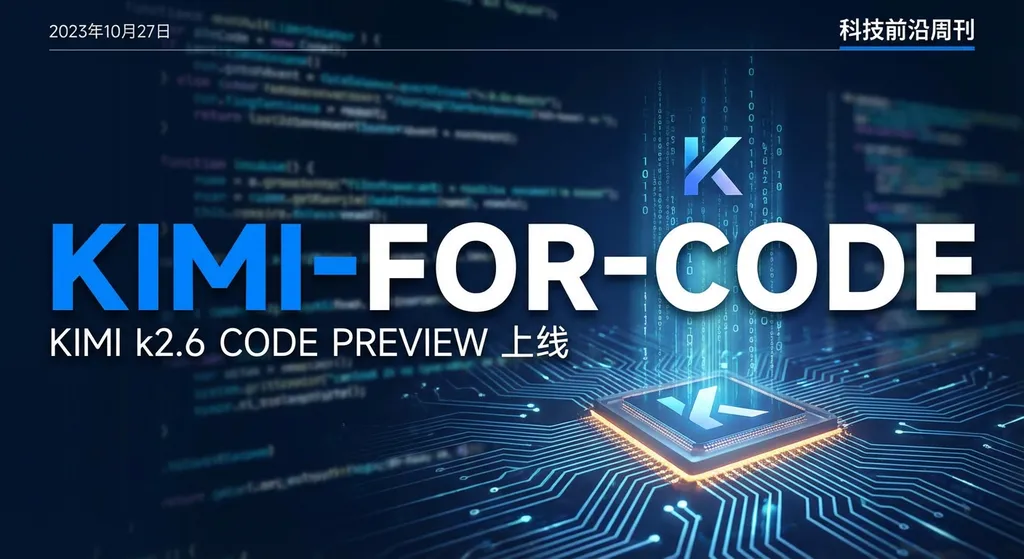
The Dark Side of the Moon today released **Kimi k2.6 Code Preview**, and simultaneously unified all its code models under the name **"Kimi for Code"**. The CLI tool has also been upgraded to **version 1.33.0**, marking the integration of the Kimi code capability product line toward brand consistency and a unified user experience.
The Dark Side of the Moon quietly launched Kimi k2.6 Code Preview today (April 13), along with something that seemed minor but is actually quite meaningful—it unified all of its code-related models under one name: “Kimi for Code.”
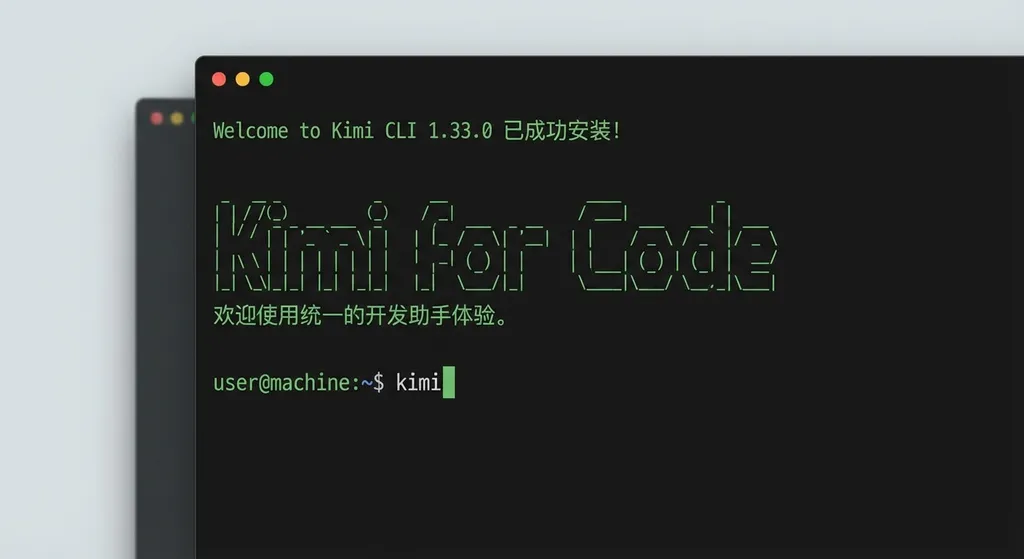
Subscribers can log in to the Kimi dashboard to see that the new model is already in place. The kimi-cli tool also pushed out version 1.33.0 on the same day. The changelog has only one line, but it speaks volumes:
Shell: Unify managed model display as "Kimi for Code" and drop hardcoded kimi-k2.5 version references from the welcome screen and /login tip
In other words: the hardcoded kimi-k2.5 labels on the welcome screen and login tip have been removed and replaced with the unified “Kimi for Code” branding. Some community users noticed that in the VS Code plugin, the cc-switch dropdown still shows the old kimi-for-coding entry, but that’s most likely just a frontend synchronization lag.
This isn’t just a simple renaming.
From Version-Driven to Product-Line-Driven
Over the past year, the Kimi code models have gone through three major releases: K2, K2.5, and now K2.6. Each upgrade required developers to check the new model ID, modify the model field in config files, and confirm whether the API endpoint had changed. Anyone who used OpenAI’s early APIs knows this “chasing model names” experience—from gpt-4-0613 to gpt-4-turbo-preview to gpt-4o, just remembering the names was painful.
Now Kimi is taking another path: using a product name rather than a version number as the primary user-facing identifier. You’re calling “Kimi for Code,” and whether it’s running k2.6 or a future k3 under the hood becomes an implementation detail invisible to developers.
The idea is similar to how Anthropic guided Claude’s model naming from claude-3-opus-20240229 to claude-sonnet-4-0, but Kimi’s change is more radical—it removes version numbers from public visibility entirely. The benefit is clear: developers no longer need to worry about “should I use k2.5 or k2.6.” The drawback is loss of explicit control over model versioning, which could be an issue for reproducibility-critical scenarios.
However, based on community feedback, most developers welcome this change. For daily coding assistance, “use the latest and best” is almost always the right answer.
What’s New in k2.6
The Dark Side of the Moon hasn’t published an official technical report or changelog this time—hence the “Preview” label. But based on user feedback and changes in the Kimi Code documentation, we can piece together some clues.
First, the reasoning mode behavior has changed. According to Kimi Code for VS Code docs, the mode switching now has three states: hidden when unsupported, manually toggled by the user, or always-on (as with the k2-thinking model). The k2.6 Code Preview likely inherits the Visual Agentic Intelligence capabilities introduced in K2.5, with additional optimizations in the reasoning chain for code generation and understanding.
From Kimi’s technical evolution, K2.5’s key breakthrough was the “Agent Cluster”—multiple AI Agents working together on complex tasks instead of a single one acting alone. The K2.5 technical report noted it was further pretrained on about 15 trillion mixed visual and text tokens, achieving state-of-the-art coding and visual intelligence. As an iteration, k2.6 probably refines this foundation specifically for code-related tasks.
Developers have noticed clear improvements in k2.6:
- Stronger context retention during multi-file refactoring—less “forgetting” previous intentions
- More accurate type inference for strongly typed languages like TypeScript and Rust
- Shell command generation aligns better with actual environments, reducing manual fixes
These are subjective impressions, not benchmarked data, so we’ll need to wait for the official release for verified evaluations.
The Kimi Code Product Matrix
Behind the unified naming lies a full-fledged product lineup:
- Kimi Code CLI: A command-line coding assistant—install with
curl -L code.kimi.com/install.sh | bash. Supports file I/O, shell command execution, code search, web scraping, and even spawning child agents for parallel task handling. - Kimi Code for VS Code: An IDE plugin integrated in the sidebar, supporting reasoning mode toggles.
- Kimi API Open Platform: Offers endpoints such as
kimi-k2-turbo-preview,kimi-k2-thinking, andkimi-k2-thinking-turbo, all OpenAI SDK-compatible. - Agent Cluster (Beta): Live on the Kimi website under “Agent Swarm,” the productization of multi-Agent collaboration introduced in K2.5.
This layout reveals an ambitious vision: Kimi aims not just to be a code completion tool, but to cover the entire developer workflow—from terminal to IDE to API to automation.
For comparison, Anthropic’s Claude Code currently focuses mostly on CLI and API; VS Code integration is provided by third parties (e.g., Continue, Cline). Cursor is IDE-first, with weaker CLI capabilities. Kimi wants both—a challenging resource strategy.
What It Means for API Developers
If you’re using the Kimi code model through its API, here’s what to note:
- The unified naming suggests future API calls may migrate to a single model identifier. Currently, the platform still lists versioned names (
kimi-k2-turbo-preview,kimi-k2-thinking-turbo), but judging from CLI updates, a unified entry likekimi-for-codeis probably coming. - Kimi’s API is OpenAI SDK-compatible, meaning low switching cost—just change the
base_urlandapi_key.
Here’s an example using OpenAI Hub to call a Kimi code model:
from openai import OpenAI

client = OpenAI(
    api_key="Your OpenAI Hub API Key",
    base_url="https://api.openai-hub.net/v1"
)

# Use Kimi code model for code generation
response = client.chat.completions.create(
    model="kimi-k2-turbo-preview",
    messages=[
        {
            "role": "system",
            "content": "You are a professional programming assistant skilled in code generation, refactoring, and debugging."
        },
        {
            "role": "user",
            "content": "Implement a concurrent, thread-safe LRU Cache in Rust with generic support and TTL expiration."
        }
    ],
    temperature=0.6,
    max_tokens=32000
)

print(response.choices[0].message.content)
Streaming calls are supported too, great for CLI tools or IDE “typewriter” displays:
stream = client.chat.completions.create(
    model="kimi-k2-turbo-preview",
    messages=[
        {
            "role": "system",
            "content": "You are a professional programming assistant."
        },
        {
            "role": "user",
            "content": "Explain the memory safety issues in this code and provide a fix."
        }
    ],
    temperature=0.6,
    stream=True
)

for chunk in stream:
    delta = chunk.choices[0].delta
    if delta.content:
        print(delta.content, end="", flush=True)
Using an API aggregator like OpenAI Hub lets you switch between Kimi, Claude, GPT, and DeepSeek with one key—perfect for side-by-side comparisons without managing multiple platform accounts.
The Dark Side of the Moon’s Ambitions in the Coding Space
Seen in broader context, this update is fascinating.
In early 2026, the Dark Side of the Moon told investors that its overseas revenue had surpassed domestic. After K2.5 was released, global paid users grew fourfold. As of November 2025, revenue hit $240 million with monthly paid user growth at over 170%. A 36Kr report captured its aim precisely: the Dark Side of the Moon wants to be “Anthropic + Manus.”
That framing makes sense: Anthropic represents top-tier foundation model capability, while Manus represents agent-oriented automation. The coding domain is the ideal intersection of the two—you need strong coding comprehension and generation (Anthropic’s side) plus autonomous file-system and toolchain operation (Manus’s side).
Starting from K2, Kimi has kept agentic capabilities at its core—unlike most models that focus on chat first, then add tool calling. K2.5’s Agent Cluster tech pushed that vision further, enabling collaboration among multiple agents. The k2.6 Code Preview and unified “Kimi for Code” branding can be seen as the consolidation of this technical route: from scattered versions and tools into a coherent branded product stack.
Will this work? Business data says it might. The Dark Side of the Moon values API calls from independent developers—not enterprises. This group has lower average spend but very high stickiness. Once an AI coding tool integrates into their workflow, switching costs skyrocket. Unified branding and experience reduce cognitive and decision costs, making “coding with Kimi” a default choice that requires no thought.
Open Questions Worth Watching
There are still unresolved issues:
Version transparency. With unified naming, how can developers know which model version they’re actually using? If behavior changes (style preferences shift, edge-case handling differs), how to roll back? OpenAI keeps dated model snapshots (gpt-4o-2024-08-06)—will Kimi do the same? Unknown.
Preview-to-GA timeline. k2.6 is still in Preview, meaning API behavior may change, making it unsuitable for production use yet. Based on past cycles, previews at Kimi typically don’t last long.
Pricing strategy. Will unified naming also mean unified pricing? Model pricing currently varies widely; the “thinking” series costs more due to longer reasoning chains. If the unified entry routes requests automatically to optimal models, billing logic may need redesign.
Relation to the main Kimi product. The Kimi website features general assistant, deep research, document, presentation, and spreadsheet tools—Code is just one entry. As the Code line gets independent branding, will it become a separate paid product (like GitHub Copilot to GitHub) or remain part of Kimi subscriptions? That will shape Kimi’s commercial rhythm.
Final Thoughts
The AI coding space is entering an interesting phase. Cursor proved an IDE-native path works. Claude Code showed a CLI-first path can succeed. GitHub Copilot is redefining itself via agent modes. Everyone’s finding their unique angle.
The Dark Side of the Moon opted for “all of the above”—CLI, IDE plugin, API, and Agent Cluster—none left behind. That requires strong engineering execution and product integration. The unified “Kimi for Code” name marks a key milestone in that effort. The message is clear: we’re not making scattered AI coding tools, we’re building a complete product.
Whether that product can carve a niche amid Cursor, Claude Code, and Copilot remains unclear. But one thing’s certain—for Chinese developers, a domestically hosted, lower-latency, better-Chinese-understanding code AI option is inherently valuable.
If you’d like to try k2.6 Code Preview, subscribers can find it in the dashboard. CLI users just need to update to 1.33.0:
curl -L code.kimi.com/install.sh | bash
References
- Kimi k2.6 Code Preview Available, Models Unified as Kimi-for-Code - Linux.do — Community launch thread with CLI changelog and user feedback
- Kimi’s Overseas Revenue Surpasses Domestic, Aiming to Become “Anthropic + Manus” - 36Kr — 36Kr exclusive on commercialization progress
- AGI-Next Summit Full Recap - Zhihu — Discussion featuring Kimi, Qwen, Zhipu, and others on 2026 AI paradigms
- Know One AI Lab a Day: The Dark Side of the Moon - Zhihu — Analysis of Kimi’s product matrix and business model


