
Anthropic launches identity verification, new hurdle for Claude users in China

Anthropic has implemented an identity verification mechanism on the Claude platform, requiring users to provide government-issued identification and a selfie to complete KYC. This move aims to prevent abuse, but for domestic developers, it means an additional barrier to access. Combined with the earlier controversy over banning third-party tool usage, Anthropic’s compliance strategy is reshaping the usage ecosystem of Claude.
Anthropic Introduces Identity Verification, New Hurdles for Claude Users in China
Anthropic is gradually implementing an identity verification system on the Claude platform. When users access certain features or trigger platform integrity checks, the system requires completing KYC verification through the third-party partner Persona Identities—by providing a valid government-issued ID (passport, driver’s license, or national ID card) and taking a live selfie.
This isn’t the first time Anthropic has tightened access policies. In January, the company suddenly blocked third-party tools such as Cursor and OpenCode from using Claude, drawing strong backlash from developers. The new identity verification mechanism essentially raises another compliance barrier. For users in China, this means that an already unstable access path now has another checkpoint to overcome.
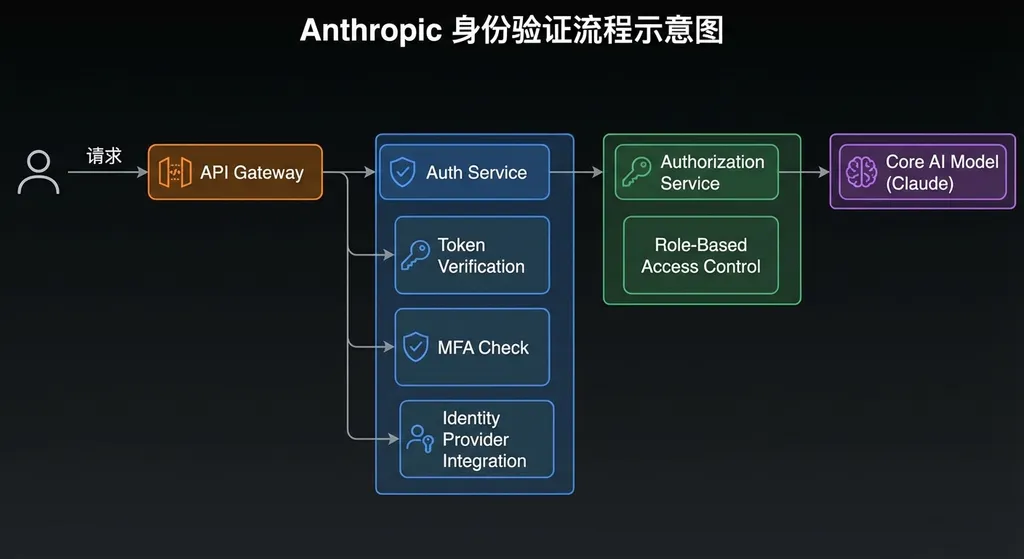
Verification Process: 5-Minute KYC, But Not Everyone Will Pass
According to Anthropic’s official documentation, identity verification typically takes about 5 minutes. Users need to:
- Upload a valid government-issued ID (passport, driver’s license, or national ID card)
- Take a live selfie for face matching
- Wait for Persona Identities to complete verification
Anthropic emphasizes that the verification data will be used only for identity confirmation and compliance purposes—it won’t be used for model training nor shared with third parties for marketing. Persona hosts the ID and selfie images; Anthropic will access records only when necessary and does not store the images within its own systems.
However, here’s the key issue: even after passing verification, accounts can still be suspended. If the system detects repeated policy violations, access from unsupported regions, or underage users, the account may still be banned. In other words, identity verification is only the first step—regional restrictions remain the real red line.
What does this mean for users in China? Even if you hold a passport and complete verification, if your IP address or payment information indicates that you’re in an unsupported region, your account may still be suspended at any time. This isn’t a technical issue—it’s a policy issue.
Why Introduce Identity Verification Now? Compliance Pressure or Business Strategy
Anthropic explains the move as a means to “prevent abuse, enforce usage policies, and meet legal obligations.” That’s true, but not the whole story.
Looking at the timeline, the rollout of identity verification closely coincides with Anthropic’s blocking of third-party tools back in January. At that time, Anthropic enhanced protections against Claude Code socket spoofing, which effectively broke integrations with tools like Cursor and OpenCode. The official explanation described it as “collateral damage,” but the developer community widely believed it was intentional—Anthropic wanted to lock users into its official Claude Code CLI environment.
This stems from a conflict between cost and pricing. The Claude Pro/Max subscription, which can be as high as $200 per month, is priced based on “human interaction rates.” However, third-party tools can bypass rate limits by simulating the official client, making high-frequency API calls. In heavy-use scenarios, the token consumption through Claude Code could easily exceed $1,000 monthly if billed directly via the API.
In other words, Claude Code is essentially a “special-priced official channel.” Anthropic wants users to stay within its official CLI under that subscription rather than “detouring” through third-party tools. The new identity verification system further reinforces this control—only verified users can access specific features, and third-party tools will find it much harder to bypass such checks.
Developers’ Reaction: From Frustration to Resignation
In communities like Linux.do, developers’ reactions were blunt: “Does this mean it’s going to be even harder for Chinese users to use it?”
Some believe Anthropic aims to “eliminate all illegal use completely.” But more users are focused on the practical impact: if you’re in China, even if you manage to complete verification, your account may still get suspended due to regional restrictions. This makes Claude’s accessibility highly unstable.
Compared with OpenAI and Google, Anthropic’s strategy appears more conservative. OpenAI also enforces regional restrictions, but at least its API remains relatively open—developers can still make stable calls through third-party aggregators like OpenAI Hub. Google’s Gemini, meanwhile, directly supports access from China; while its features may lag behind, users don’t need to worry about sudden account bans.
Anthropic’s dilemma lies in its attempt to achieve both compliance and growth—goals that are hard to balance at this stage. The identity verification system satisfies compliance requirements but risks losing a segment of users—especially those without valid IDs or located in unsupported regions.
Claude Code’s Ecosystem Lock-In Strategy
Identity verification is just the surface—the real core lies in Anthropic’s ecosystem lock-in strategy centered around Claude Code.
The programming market is one of the few areas in AI with truly high profit potential. Companies are willing to pay for AI services that boost productivity, and individual developers are happy to spend money to reduce workload. Against this backdrop, simply selling a standalone subscription without ecosystem binding was never Anthropic’s plan.
The Claude Code subscription itself may not be profitable yet—it looks more like a “loss-leader acquisition product.” The real purpose is to immerse users deeply in the Claude Code ecosystem over the long term—from CLI tools to IDE integrations, from code completion to multi-file editing—all operating within Anthropic’s controlled environment.
The problem, however, is that this strategy doesn’t align with developers’ actual needs. Developers want flexible integration that seamlessly fits into their existing workflows. Anthropic, by contrast, offers a closed official environment that forces users to adapt to its workflow.
Back in January, when third-party tools were blocked, community reactions made this clear. Many subscribers dropped their plans mid-project, for a simple reason: paying $200 per month but being restricted to Anthropic’s terminal-only Claude Code tool, instead of the IDE environments they truly want to use.
The Real-World Impact on Chinese Developers
So, the most practical question: can developers in China still use Claude?
The answer: yes—but it’s getting harder.
First, identity verification itself isn’t an insurmountable barrier. If you have a passport or other internationally recognized ID, completing verification is straightforward. The real challenge is the regional checking—once the system determines you’re in an unsupported area, your account remains at risk of suspension.
Second, the ban on third-party tools makes stable access even more difficult. Previously, users could indirectly access Claude through tools like Cursor or OpenCode, but these channels are now essentially blocked. While some technical workarounds still exist, costs and risks are rising.
Finally, even if you can access Claude stably, the cost-effectiveness is decreasing. At $200 per month, plus uncertainties like account bans, restricted features, and unstable access, many developers will ultimately switch to other platforms.
At this point, API aggregation platforms are becoming more valuable. Services like OpenAI Hub let you use one API key to call mainstream models—GPT, Claude, Gemini, DeepSeek, and more—with direct China connectivity and OpenAI-style compatibility. For developers, this means freedom from management headaches over individual platforms’ policy shifts or access configurations.
Here’s an example of calling Claude through OpenAI Hub:
import openai

# Configure OpenAI Hub
openai.api_base = "https://openai-hub.com/v1"
openai.api_key = "your-openai-hub-key"

# Call the Claude model
response = openai.ChatCompletion.create(
    model="claude-3-opus-20240229",
    messages=[
        {"role": "user", "content": "Explain Anthropic’s identity verification mechanism"}
    ]
)

print(response.choices[0].message.content)
The benefit of this approach is that even if Anthropic tightens policies further, you can seamlessly switch to other models without disrupting your workflow.
Will Anthropic Regret It?
Some developers believe Anthropic will regret this policy update, arguing that overly strict restrictions will drive away many users—especially those willing to pay but unable to meet compliance requirements.
However, from Anthropic’s perspective, this may be a necessary tradeoff. As a company that emphasizes AI safety, compliance and risk management are part of its core values. Relaxing controls merely for growth could harm its brand image.
More importantly, Anthropic’s target customers may never have been users seeking to “bypass restrictions.” Its real focus is on enterprises and individuals willing to pay within the official ecosystem and abide by compliance rules. For these users, identity verification might actually be seen as a positive—it signals a safer and more reliable platform.
The short-term issue, though, is potential user loss. In the Chinese market especially, restrictive regional policies already pose major challenges; adding identity verification only discourages more potential users.
In the long run, Anthropic’s success will depend on how well it can balance compliance and user experience. If verification becomes too strict and causes too many false positives, it could backfire dramatically.
Final Thoughts
Anthropic’s rollout of identity verification is essentially a choice between compliance obligations and business strategy. For developers in China, it raises the access barrier even higher and makes Claude’s availability increasingly uncertain.
That said, it’s not all bad news. The market has no shortage of alternatives—OpenAI, Google, and DeepSeek are rapidly iterating, with performance gaps narrowing. More importantly, the rise of API aggregation platforms means developers no longer have to rely on any single model and can switch flexibly according to their needs.
Anthropic has the right to pursue its compliance strategy, and developers have the right to choose tools that suit them best. The market will ultimately decide the outcome.
References
- Anthropic to Start Implementing Identity Verification - Linux.do – Community discussion on the new verification system
- Claude Is Shutting Down All Unauthorized Use - Linux.do – Developer reactions to Anthropic’s tightened policies
- Anthropic Suddenly Blocks Third-Party Access to Claude - Zhihu – Detailed analysis of the January third-party ban event


