
OpenAI suspected to be internally testing GPT-5.5; multiple testers reveal API activity
Several OpenAI beta testers have recently revealed signs of GPT‑5.5 interface activity. A tester who has accurately predicted multiple model releases disclosed that testing of a new version is underway, while paid users are simultaneously complaining about insufficient quota.
OpenAI Suspected to Be Testing GPT-5.5 Internally; Multiple Testers Reveal API Activity
Several OpenAI internal testers have recently revealed signs of potential GPT-5.5 API activity in developer communities. One tester—known for accurately predicting previous model release schedules—disclosed that he is participating in internal testing of a new version, which has sharply increased developers' expectations for the release of GPT-5.5.
Credible Internal Tester Speaks Out
The key source of this leak is a tester with a strong reputation in the developer community. According to discussion records, this individual had access to early testing phases of several OpenAI models before, and consistently shared reliable information ahead of official launches. His past experience includes testing versions such as GPT-4 Turbo and GPT-4o, giving him considerable credibility based on proven accuracy.
His recent short message on the Linux.do forum was enough to draw widespread attention. Though he did not share any technical details or performance metrics, he confirmed the existence of the new version testing. This cautious statement actually made the information more convincing—real internal testers typically comply strictly with NDAs and avoid leaking specifics.
Usage Anxiety Among Paid Users
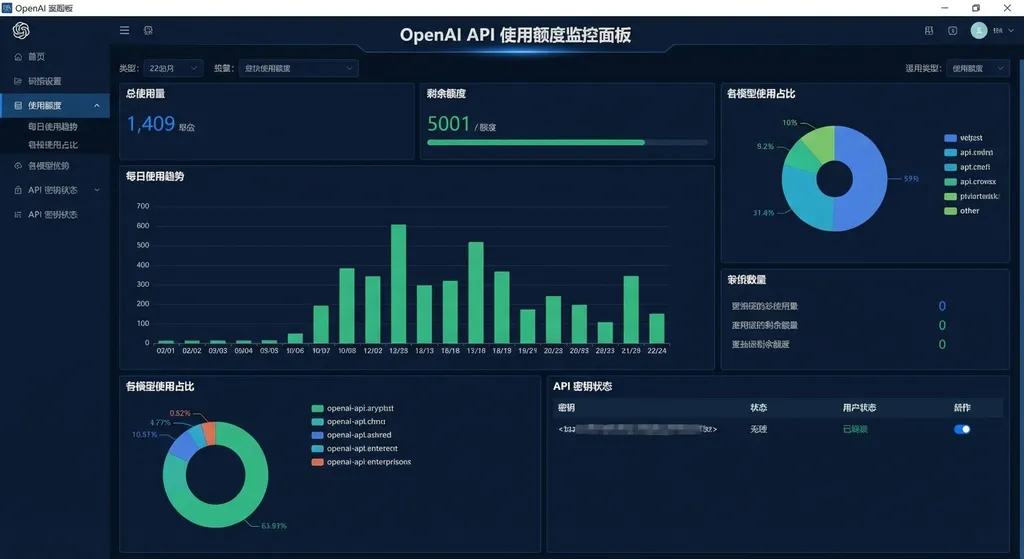
Another noteworthy signal comes from the paid user community. One participant in the same discussion thread wrote: “Hurry up—can we get higher usage limits? Paid users really don’t have enough.”
This complaint, though casual, reveals two key insights:
-
High utilization of existing models — When paid users find their quotas insufficient, it shows that the GPT-4 series has proven highly practical and that developers’ reliance on AI capabilities is growing continuously.
-
Strong anticipation for new models — With limited quotas, users hope the new model brings better cost-performance and higher capability, maximizing what the quota can deliver.
OpenAI’s pricing has long been a point of interest among developers. The GPT-4 series is powerful yet relatively costly. If GPT-5.5 can preserve or surpass existing capabilities while optimizing operational costs, it would significantly impact the entire AI application ecosystem.
Possible Positioning of GPT-5.5
The “GPT-5.5” designation stands out. Historically, OpenAI’s versioning follows two main patterns:
- Major version updates (e.g., GPT-3 → GPT-4): involve architectural upgrades, data scaling, and major leaps in reasoning capability
- Minor version optimizations (e.g., GPT-4 Turbo, GPT-4o): refine performance, reduce cost, or enhance specific features within the same architectural framework
GPT-5.5 sits midway between these, possibly indicating:
-
An enhanced GPT-5 — If GPT-5 already exists (and remains unreleased), 5.5 could be a rapid iteration based on it—similar to the relationship between GPT-4 and GPT-4 Turbo.
-
A transitional release — OpenAI might introduce a mid-step between GPT-4 and GPT-5 to test market reactions and gather feedback before the full rollout.
-
A scenario-optimized version — Focused enhancements for specific applications such as code generation, long-text processing, or multimodal comprehension.
From a technical evolution standpoint, GPT-5.5 is most likely an extensively optimized extension of the GPT-4 architecture—not yet a full reconstruction at GPT-5’s scale. This strategy balances quick market response with additional development time for the next major version.
Competitive Landscape
By 2026, the AI large-model market has entered fierce competition. OpenAI faces pressure from multiple directions:
Anthropic’s Claude series continues improving in reasoning and safety. Claude Opus 4.6 can rival the GPT-4 line in complex reasoning tasks, showing strong results in code generation and long-text understanding.
Google’s Gemini series holds unique advantages in multimodal processing—especially image and video comprehension. Its deep integration within Google’s ecosystem boosts enterprise adoption.
Domestic models such as DeepSeek offer price-performance competitiveness. DeepSeek-V3’s inference cost is far lower than GPT-4’s, and though it lags in certain complex tasks, it is sufficient for daily operational scenarios.
Amid this environment, OpenAI must sustain technological leadership. The timing of GPT-5.5’s release is crucial—launching in Q2 2026 would strategically help OpenAI reclaim mid-year market attention.
Key Developer Concerns
New model releases prompt developers to reassess their technical stacks. Primary areas of concern include:
1. API Compatibility
OpenAI generally maintains backward compatibility, but new models may add parameters or features. Developers should check:
- Whether existing code requires updates
- What optional parameters have been added
- Any optimization recommendations
When using platforms such as OpenAI Hub, modifications are usually minimal. For example, in Python:
import openai

# Configure OpenAI Hub API
openai.api_base = "https://api.openai-hub.net/v1"
openai.api_key = "your-openai-hub-key"

# Once GPT-5.5 is available, simply change the model parameter
response = openai.ChatCompletion.create(
    model="gpt-5.5",  # New model name
    messages=[
        {"role": "system", "content": "You are a helpful assistant."},
        {"role": "user", "content": "Explain quantum entanglement."}
    ],
    temperature=0.7,
    max_tokens=2000
)

print(response.choices[0].message.content)
2. Pricing Strategy
The GPT-4 series has been expensive. For instance, GPT-4 Turbo costs $0.01/1K input tokens and $0.03/1K output tokens, which accumulates rapidly for text-intensive applications.
GPT-5.5’s pricing will directly affect adoption. If OpenAI lowers costs without cutting capability, the entire industry will benefit. Considering GPT-4o’s pricing (about 50% cheaper than GPT-4 Turbo), GPT-5.5 might follow a similar approach.
3. Performance Metrics
Key performance indicators include:
- Inference speed: first-token latency and overall throughput
- Context length: maximum input size
- Accuracy: benchmark performance
- Multimodal ability: handling non-text input like images or audio
GPT-4o improved inference speed significantly—cutting first-token latency by around 50%. If GPT-5.5 further optimizes this, user experience will improve dramatically.
4. Domain-Specific Capabilities
Different use cases demand different strengths:
- Code generation: accurate understanding, compilable output, managing dependencies
- Mathematical reasoning: rigorous logic and error-free computation
- Long-text comprehension: maintaining coherence and fidelity across extended context
- Multilingual support: strong performance beyond English
Recently, GPT-5.2 Pro reportedly achieved a breakthrough in mathematical reasoning, verified by Terence Tao after solving an Erdős problem. This suggests significant OpenAI investment in specific-domain capability—likely setting the stage for broader breakthroughs with GPT-5.5.
Impact on the AI Application Ecosystem
A new model is not merely a technical improvement—it triggers systemic effects across the ecosystem.
Changes at the Application Level
Stronger capabilities enable new use cases that were previously infeasible, such as:
- Complex code refactoring: understanding full project structures and performing large-scale changes
- Highly accurate domain-specific applications: enhancing reliability in fields like healthcare or law
- More natural multi-turn conversations: maintaining coherent dialogue in customer service or education contexts
Optimized Cost Structure
If GPT-5.5 delivers improved performance at lower cost, smaller teams and startups could sustain advanced features economically. Many currently compromise functionality or shift to open-source alternatives due to high API costs. Improved cost-performance lowers entry barriers across the board.
Advancing Developer Tools
OpenAI’s recently launched Frontier platform focuses on incubating AI agents—indicating a shift toward persistent interactions rather than single calls. Enhanced agent-level functionality in GPT-5.5 would accelerate this evolution.
Developers must monitor both model and tooling progress. For instance, Vercel’s open-source Agent Skills project standardizes skill modules for AI coding assistants, directly boosting productivity.
From Internal Testing to Public Release
Historically, OpenAI requires roughly 2–4 weeks from internal testing to public launch, allowing time for:
- Collecting feedback: identifying edge cases
- Performance adjustment: fine-tuning parameters
- Infrastructure preparation: ensuring server capacity for mass usage
- Documentation and samples: helping developers onboard quickly
If internal testing is already underway, a May release seems plausible—strategically well-timed before the end of H1 2026 and beneficial for mid-year financial reporting.
That said, OpenAI’s timelines are flexible. GPT-4’s release was delayed several months; major issues found during testing could push GPT-5.5’s launch back.
How Developers Can Prepare
For developers currently using the OpenAI API, now is the time to anticipate updates.
1. Assess Upgrade Needs
Review whether stronger model abilities will measurably benefit your application. If your solution is constrained by reasoning accuracy or complexity handling, upgrading could offer substantial improvements.
2. Optimize Prompt Engineering
New models often interpret prompts differently. Prepare test cases in advance so you can evaluate performance quickly after release—good prompt engineering maximizes early gains.
3. Monitor Cost Adjustments
Pricing changes necessitate economic reevaluation. Aggregated platforms like OpenAI Hub help balance cost and performance dynamically across model versions.
4. Track API Changes
Though OpenAI tends to maintain backward compatibility, new models may introduce new parameters or options. Subscribe to OpenAI’s developer mailing list for timely updates.
5. Prepare A/B Testing
Perform rigorous A/B tests before full production migration. Compare old and new models under real workloads, mitigating risks of unexpected behavior.
Industry Insight: Model Release Cadence
On a broader level, the pace of AI model releases continues to accelerate. Since GPT-4’s 2023 debut, the entire industry has entered rapid iteration:
- Anthropic rolls out new Claude versions almost quarterly
- Google’s Gemini updates are ongoing
- Chinese models such as DeepSeek and Qwen update even more frequently
This rapid cycle offers opportunities—access to superior capabilities sooner—but also challenges: constant adaptation and relearning.
OpenAI’s cadence shapes overall market expectations. If GPT-5.5 indeed launches in Q2 2026, competitors may feel compelled to expedite their own iterations.
Technical Debt from Frequent Upgrades
Each upgrade introduces technical overhead requiring:
- Re-testing application functionality
- Adjusting prompts to new model behaviors
- Reassessing cost impacts and business strategies
- Updating documentation and user guides
For large-scale products, the effort is nontrivial, prompting some teams to wait for community feedback before upgrading. This is partly why API aggregation platforms are growing popular—they offer unified interfaces to different models, making switching and testing easier and safer.
Conclusion
Although OpenAI has not officially confirmed GPT-5.5, multiple internal tester reports significantly boost confidence in its existence. Given OpenAI’s competitive pressures in 2026 and users’ demand for greater power and better cost-efficiency, releasing GPT-5.5 would be a logical strategic move.
For developers, this is an ideal moment to evaluate how their projects could benefit and to prepare accordingly. Regardless of its final form or release date, rapid iteration of large models has become the norm. Staying informed and adaptive remains crucial to maintaining competitiveness in this fast-evolving domain.
We will continue tracking developments around GPT-5.5 and update coverage as soon as official announcements or new internal information emerge.
References
- Linux.do community discussion: gpt-5.5? – Original thread revealing internal tester reports of GPT-5.5 API activity


