
Opus 4.7 Launches Vertex: A Bug-Fix–Style Generation Upgrade

Anthropic has launched Claude Opus 4.7 on Google Vertex AI. The community generally believes it’s the “fully powered version of 4.6” with patched permission vulnerabilities, rather than a completely new architectural iteration. Behind this update lies a hidden battle over model security and distillation defenses.
Opus 4.7 Lands on Vertex: A “Bug Fix” Generation Upgrade
The story is simple: Claude Opus 4.7 is now available on Google Vertex AI.
But the discussion around this update is far more complex than a mere version number bump. The developer community (especially the linux.do forum) is buzzing over a logically consistent yet somewhat conspiratorial theory — Opus 4.7 may actually be the “full version” of 4.6, and the 4.6 we’ve been using for the past few weeks was deliberately nerfed.
If this theory holds water, this isn’t a regular model upgrade — it’s Anthropic’s emergency damage control.
What Actually Happened
Let’s rewind the timeline.
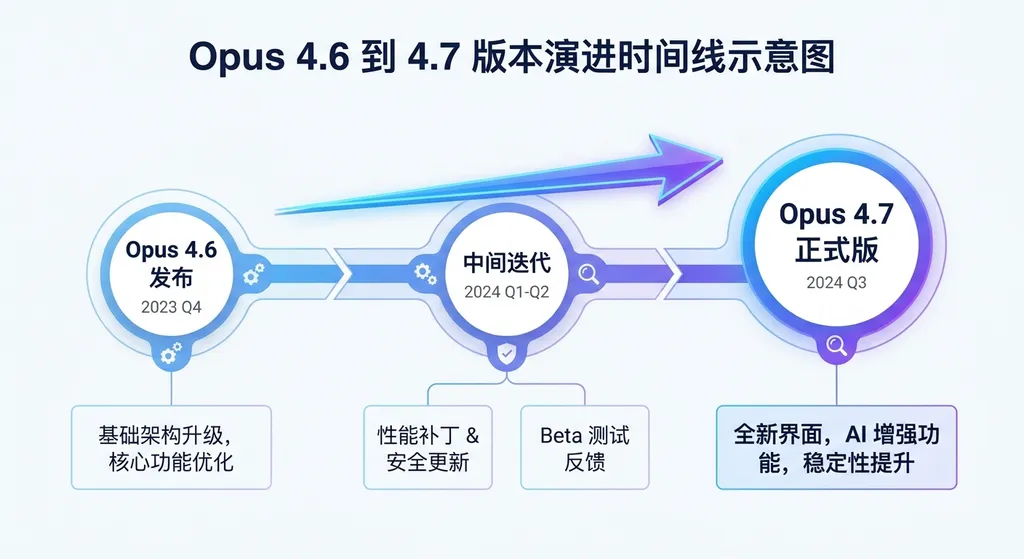
On March 14, 2026, Anthropic announced that Claude Opus/Sonnet 4.6 would open up its full 1-million-token context window for all users, with no price increase, plus a 6× boost in image processing — a very generous update that was well received. Opus 4.6 performed impressively in multiple benchmarks—scoring 68.8% on Humanity’s Last Exam, far ahead of GPT-5.2’s 52.9%.
Then things got strange.
Some developers noticed noticeable fluctuations in 4.6’s performance in certain scenarios — not the usual randomness inherent to LLMs, but a systematic dip, as if someone had turned down a knob. Around the same time, a rumor began circulating: Opus 4.6 had a permissions bug — unverified users could access the top-tier model.
What does that mean? It means anyone — including competitors — could cheaply and massively access Anthropic’s best model, then use its outputs to distill-train their own.
Distillation: The AI Industry’s “Home Invasion”
For those not familiar with the concept, “distillation” (Knowledge Distillation) means using the outputs of a large “teacher” model to train a smaller “student” model, so the student can approximate the teacher’s abilities at a lower cost. It’s a legitimate technique in itself — unless you’re using a competitor’s commercial model as the teacher.
This isn’t a theoretical risk. Over the past two years, model distillation has caused endless debate across the industry. OpenAI’s Terms of Service explicitly forbid using its API outputs to train competing models, and Google and Anthropic have similar clauses. But policy is one thing — technical enforcement is another.
If 4.6 really allowed unverified users to access the full model, that’s like hanging a “Help Yourself” sign on Anthropic’s vault door. For a company renowned for its focus on safety, that’s deeply ironic.
As one community user put it:
Unverified users could use the full model, competitors distilled it and “robbed the house,” and now Anthropic realized the losses and responded by nerfing 4.6, releasing 4.7 to fix the bug — solving the problem at its root.
“Solving the problem at its root” — a darkly humorous phrase, considering the “solution” wasn’t to patch the permissions system, but to dumb down the old version and re-release the full version under a new name. Crude, but effective.
4.7 vs. 4.6: Any Real Improvement?
This is what developers care about most.
From initial testing on Vertex AI, Opus 4.7 does seem stronger than the current 4.6 — but is it stronger than the nerfed 4.6 or the original 4.6?
If the community’s speculation is correct, 4.7 is simply what 4.6 was always meant to be. You didn’t get a better model — you just got back what was yours in the first place.
Of course, this remains community speculation; Anthropic hasn’t confirmed it. Officially, 4.7 will likely be framed as a standard iteration. Regardless of what happened internally, the user experience is what ultimately matters.
On Vertex AI, Opus 4.7 can already be accessed through Google Cloud’s standard API. If you’re already using Claude models on Vertex, switching to 4.7 is simply a matter of changing the model ID.
Calling Opus 4.7 via OpenAI Hub
For developers in mainland China, direct access to Vertex AI may be difficult. API aggregation platforms like OpenAI Hub usually add support for new models quickly; you can call 4.7 using the OpenAI-compatible format, saving the hassle of setting up Google Cloud authentication.
Here’s an example using the OpenAI-compatible API:
import openai

client = openai.OpenAI(
    api_key="your-openai-hub-key",
    base_url="https://api.openai-hub.net/v1"
)

response = client.chat.completions.create(
    model="claude-opus-4-7-20260416",
    max_tokens=4096,
    messages=[
        {
            "role": "system",
            "content": "You are a helpful assistant."
        },
        {
            "role": "user",
            "content": "Analyze the computational complexity of Multi-Head Attention in the Transformer architecture and discuss mainstream optimization methods."
        }
    ]
)

print(response.choices[0].message.content)
// Node.js example
import OpenAI from 'openai';

const client = new OpenAI({
  apiKey: 'your-openai-hub-key',
  baseURL: 'https://api.openai-hub.net/v1',
});

const response = await client.chat.completions.create({
  model: 'claude-opus-4-7-20260416',
  max_tokens: 4096,
  messages: [
    { role: 'system', content: 'You are a helpful assistant.' },
    { role: 'user', content: 'Write a Redis distributed lock implementation that supports reentrancy and automatic renewal.' },
  ],
});

console.log(response.choices[0].message.content);
Note: The actual model ID may vary depending on platform rollout; availability may lag slightly.
Claude Code vs. Claude API: Don’t Mix Them Up
One common point of confusion in community discussions: some users mix up Claude Code (cc) with the Claude API. In fact, Claude Code is a terminal-based AI programming assistant, similar to OpenCode or Aider, where you plug in your own API key. It’s a client tool, not a model.
In other words: Claude Code’s performance depends on which model it calls. If it calls Opus 4.7, you get 4.7’s capabilities; if it still calls 4.6, you’ll see 4.6-level performance.
That distinction matters, because many developers debating whether “Claude got smarter or dumber” are actually conflating the client tool with the underlying model. Think Claude Code has been dumber lately? Check which model version it’s calling first.
The Bigger Picture: The Security Arms Race
Zooming out, the whole Opus 4.6/4.7 incident reflects a structural challenge facing the entire AI industry: model security.
AI vendors want to make their models easily accessible — meaning open APIs and simple integration. But they must also prevent competitors from misusing outputs for distillation. These two goals fundamentally conflict.
Current defensive techniques include:
- Terms of Service restrictions (legal but hard to enforce)
- Rate limits and usage monitoring (increase distillation cost but don’t stop it)
- Real-name verification and KYC (traceable accountability but hurts UX)
- Output watermarking (embedding invisible tags to trace origin)
- Model fingerprinting (detecting systematic capability extraction by specific input patterns)
If Opus 4.6’s issue was indeed a KYC flaw, that means Anthropic failed at the third layer of defense. Their chosen fix — nerf the old model, then release the full version as new — effectively turns a security issue into a product decision. Not elegant.
What This Means for Developers
Now, what does all this mean in practice?
-
If you’re using Opus 4.6 in production, test 4.7 as soon as possible. If the community’s theory is correct, 4.7 will outperform the current 4.6 in all aspects. Switching costs are minimal — just update the model ID.
-
If 4.6 seemed inconsistent previously, this may explain it. It might not be your prompt’s fault — the model itself could have been altered.
-
Watch for Anthropic’s official statements. If the distillation vulnerability rumor is true, the company will likely tighten verification and access controls — which could impact use cases relying on low-friction access.
-
For those using third-party aggregators like OpenAI Hub, watch their 4.7 rollout timeline. The advantage of such hubs is you don’t have to manage multiple authentications (Google Cloud, AWS Bedrock, etc.), and can switch models quickly — ideal for following new releases closely.
A Snapshot of Industry Competition
Finally, the competitive landscape.
By 2026, the AI model market has entered an intriguing phase. According to the latest benchmark data:
- Claude Opus 4.6 scored 68.8% on Humanity’s Last Exam
- GPT-5.2 scored 52.9%
- Gemini 3.1 Pro excelled in MathArena Apex, improving math reasoning from 0.5% to 23.4%
- Domestic models like Doubao 2.0 are catching up fast
The major players now follow distinct paths: Google bets on native multimodality and ultra-long context; Anthropic emphasizes safety and reasoning depth; OpenAI invests in generality and ecosystem growth.
Against this backdrop, the distillation threat is real for every company. If the community’s suspicions about Anthropic hold true, this episode could spur the entire industry to invest more heavily in access control and anti-distillation R&D.
Ultimately, the release of Opus 4.7 isn’t groundbreaking in itself. What matters is the potential security issue behind it — and Anthropic’s strategy of masking a “security fix” as a “product update.” In the AI world, a version bump doesn’t always signify progress — sometimes it marks the end of a battle you never saw.
That’s why some in the community joke about Anthropic’s tagline:
“I’m about to release the most powerful XXX ever.”
Every time it’s “the most powerful yet” — but you can never be sure if the last “most powerful” was quietly nerfed.
References
- OPUS 4.7 now live on Vertex – linux.do — Community discussion on the Vertex AI launch of Opus 4.7, with testing feedback from multiple developers
- Opus 4.7 may just be the full version of 4.6 – linux.do — Analysis of the 4.6 permissions bug and its connection to the 4.7 release


