ByteDance Adds Copyright Guardrails to Seedance
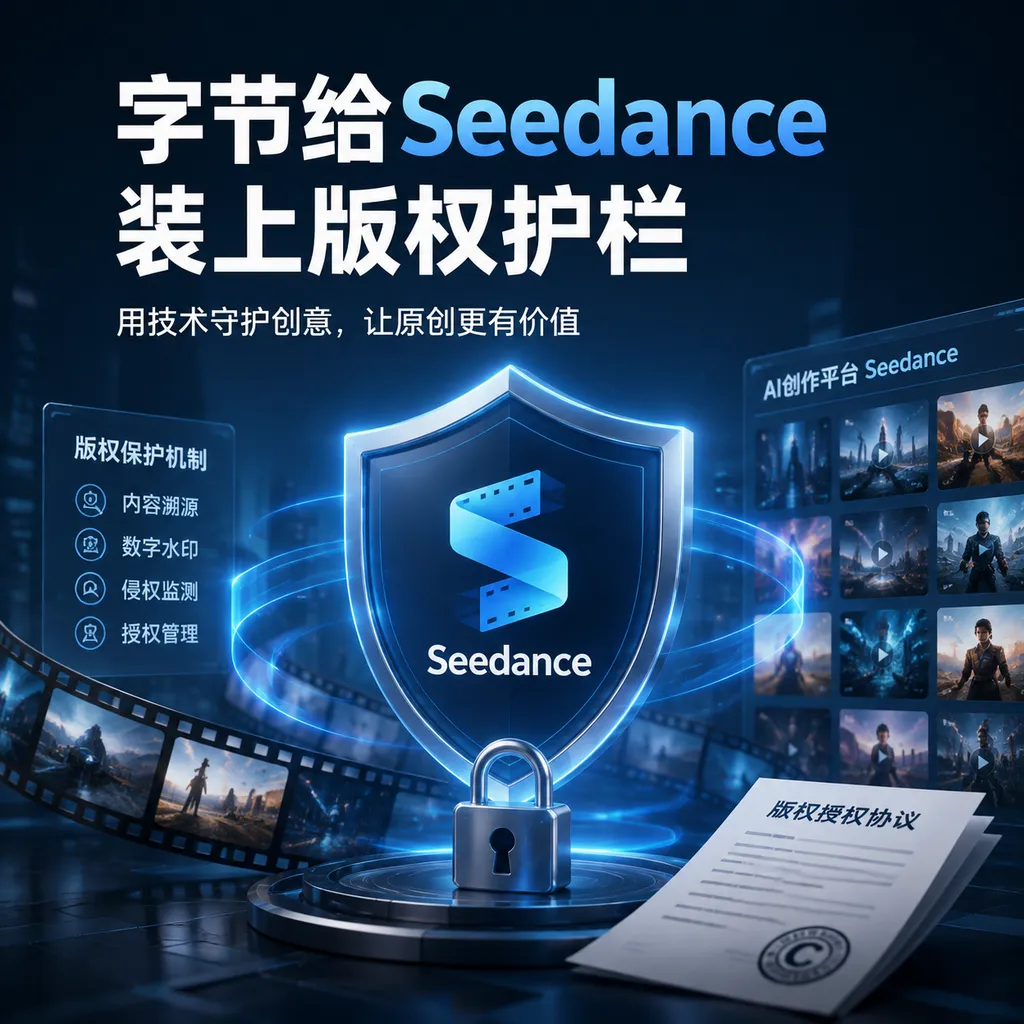
ByteDance has signed an agreement with the Motion Picture Association to implement stronger intellectual property protections for Seedance and Seedream. For developers, this is not a routine security update, but a necessary ticket for these models to enter film and television production and overseas markets.
ByteDance and Hollywood Begin Building Copyright Guardrails Together
On August 17, Reuters reported that ByteDance had signed an agreement with the Motion Picture Association (MPA) to strengthen copyright protection for AI-generated content. The agreement covers ByteDance’s Seedance video generation model and Seedream image generation model, whose capabilities are currently available to users through products including TikTok, CapCut, and Dreamina.
ByteDance confirmed that the new versions of Seedance and Seedream have incorporated stronger intellectual property protection mechanisms. The two parties also said they would continue improving copyright safeguards as AI technology evolves.
At first glance, this may seem like a routine compliance update. But viewed in the context of Seedance’s product development over the past six months, it looks more like a belated but essential ticket to the industry: the model can already understand characters, actions, shots, audio, and reference materials. The more closely it mirrors the workflows of the film and television industry, the more likely it is to collide with that industry’s most sensitive assets—characters, actors’ likenesses, voices, iconic shots, and complete audiovisual styles.
Notably, the two parties have not published the full agreement or explained which specific blocking rules have been adopted, whether the agreement covers licensing for training data, or whether a complaint channel has been established for copyright holders. Nor have they disclosed whether works owned by MPA members will be added to a licensed content library. What can be confirmed is that this partnership will “strengthen safeguards.” It should not be interpreted as meaning that ByteDance has obtained licenses for Hollywood content, much less that potential disputes over training data have been resolved.
The More Seedance Resembles a Director, the Harder Copyright Issues Become to Avoid
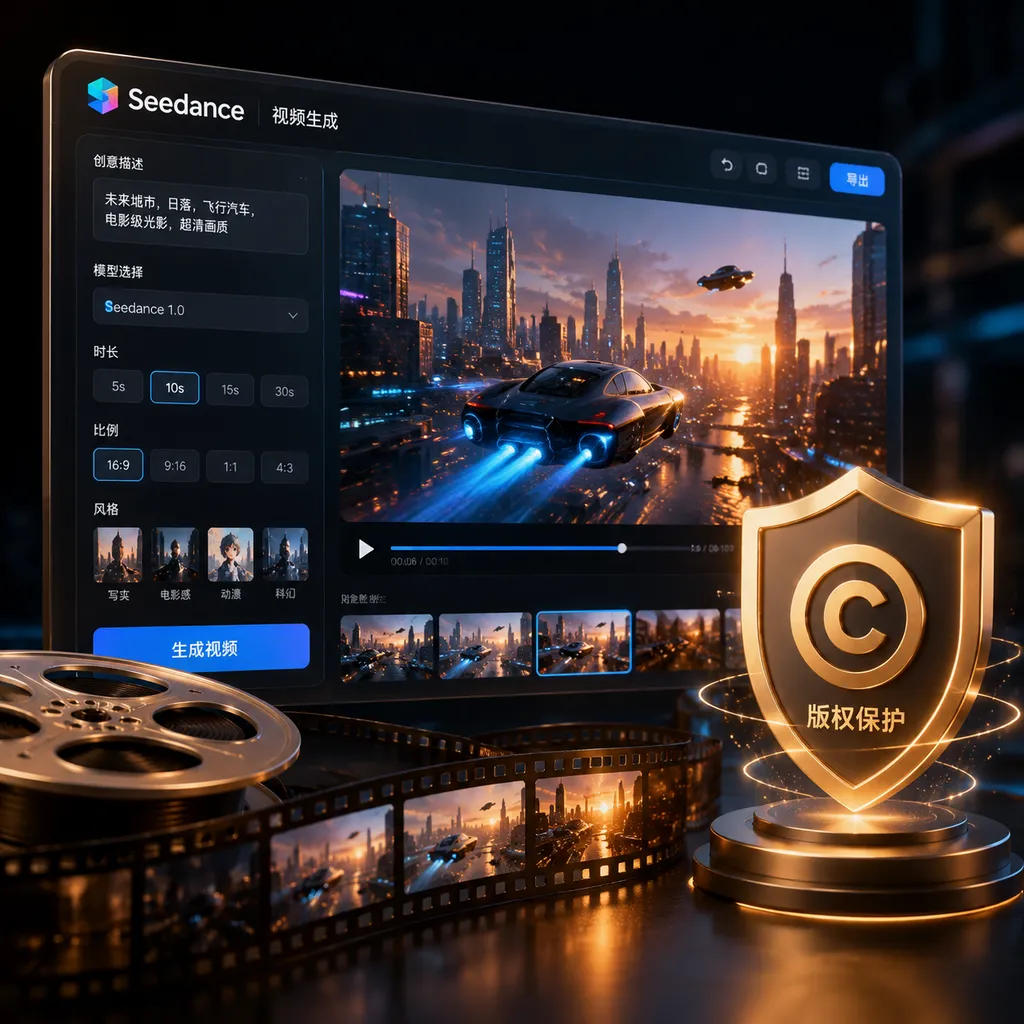
The core selling point of Seedance 2.0 is that it advances video generation from basic text-to-video into unified multimodal audiovisual generation. It can accept text, images, audio, and video as inputs, and perform reference-based generation, video editing, clip continuation, and native audio-video synchronization.
For creators, this means prompts are no longer limited to something as simple as “generate a panda doing boxing.” Users can specify character appearances, shot composition, pacing of movements, dialogue, ambient sound, and camera movement. They can also upload reference images or videos and have the model preserve subject characteristics and audiovisual expression.
The more capable the model becomes, the more specific the copyright risks become as well.
With earlier text-to-image products, a common source of controversy was requests to “create an image in the style of a particular animation studio.” In the era of multimodal video, users can simultaneously provide an actor’s photo, a film clip, a character’s dialogue, and a soundtrack, then ask the model to continue the story. The final output may not merely have an abstractly “similar style,” but may closely reproduce a specific character, performance, voice, or even combination of shots.
It is like compressing a prop warehouse, recording studio, soundstage, and post-production workstation into a single input box. Production efficiency undoubtedly improves, but the rights that were once distributed across separate stages of production are also compressed into the same model request:
- Uploaded images may implicate personality rights, copyright in photographic works, and rights in character depictions;
- Reference videos may contain protected shots, sets, costume designs, and performances;
- Audio may implicate actors’ voices, sound recordings, musical works, and dialogue scripts;
- Outputs may be substantially similar to existing film or television works;
- If the content is used in advertising, short-form dramas, or game promotion, the risk may escalate from personal creation to commercial infringement.
Seedream faces the same type of problem. Once an image generation model gains stronger subject consistency, more sophisticated instruction comprehension, and localized editing capabilities, users are no longer merely generating a new image. They may also deconstruct, rearrange, or replace characters and elements from existing works. As the capability shifts from “drawing images” to “controllable editing,” the platform’s responsibility for the provenance of input materials and the intended use of outputs also increases.
What Might Have Changed Under the Stronger Protection Mechanisms
ByteDance has not disclosed the technical details of this upgrade, so the following should not be treated as a list of features that have already launched. However, judging by the governance practices of today’s leading generative AI platforms, stronger intellectual property protection generally does not rely on a keyword blacklist alone. Instead, it typically consists of four layers: input screening, generation controls, output screening, and accountability.
1. Identifying Protected Materials at the Input Stage
The system can extract features from uploaded images, videos, and audio, then compare them against fingerprint databases provided by copyright holders. A video does not have to be identical frame by frame to trigger restrictions; sufficient similarity in key visuals, audio tracks, or character features may be enough.
This is more important than text filtering. A user’s failure to mention a film’s title does not mean the request is risk-free. The user can simply upload a clip from the film and instruct the model to “preserve the characters and setting, and generate the next 30 seconds.” For multimodal models, the truly sensitive information is often contained in the reference material rather than the prompt.
2. Identifying Characters and Imitative Intent at the Request Stage
The filtering system needs to understand whether the user is describing generic elements or asking to replicate a specific IP.
“Generate a hero wearing a red cape” is a broad description. “Have a particular film character use the original actor’s voice to say new lines” simultaneously implicates the character, likeness, and voice. The two requests may share a great deal of visual vocabulary, but their risk levels are entirely different.
A more mature system would assess the prompt, uploaded materials, account history, and intended use of the output together, rather than mechanically rejecting any request that mentions a character’s name. Otherwise, the protection mechanism could easily block legitimate film criticism, education, licensed marketing, and transformative works.
3. Conducting Similarity Detection at the Output Stage
Even if the input does not directly contain protected content, the model may still inadvertently generate a highly similar character, image, or logo. Platforms therefore also need to screen results before delivering them.
Video is much more difficult to assess than images. Individual frames may not look similar, but that does not mean the combination of continuous movement, dialogue, music, and shots does not replicate the original work. Truly effective video copyright detection requires cross-frame understanding of character consistency, scene sequence, and audiovisual relationships. Both its computational cost and false-positive rate will be significantly higher than those of static-image detection.
4. Adding Provenance Information and Traceable Markers
Another layer of protection involves adding invisible watermarks, content credentials, or platform-side generation records to generated content. When a dispute arises, the platform can determine which model, model version, and account generated the content, as well as which inputs were used.
Such mechanisms cannot prevent infringement, but they can reduce the cost of collecting evidence. They also offer practical value to enterprise customers: advertisers and production companies need to demonstrate where materials originated, whether they were manually modified, which model version was used, and whether the licensed materials cover the final use.
5. Establishing Complaint and Expedited Takedown Channels for Copyright Holders
Model filtering cannot eliminate all errors, nor can copyright holders list every protected element before a product launches. A more realistic approach is to combine technical blocking with operational governance: allow rights holders to register materials, submit complaints, request restrictions on specific forms of generation, and impose stricter measures on accounts that repeatedly violate the rules.
This is where the MPA’s involvement matters. It represents not a single studio, but an established system of film copyright interests. By working with the MPA, ByteDance may be able to integrate studios’ rights lists, content fingerprints, and enforcement requirements more directly into its model governance processes.
This Does Not “Solve Copyright”—It Marks the Beginning of Acknowledging the Issue’s Complexity
The agreement is worthy of recognition, but it should not be presented as if the copyright problem has already been solved.
First, output filtering and training-data compliance are two different issues. A model’s refusal to generate a particular film character does not mean the relevant works were not used during training. Conversely, even if all training data is properly licensed, that does not mean users can reproduce characters, actors, or film clips without restriction. The former concerns how the model learns; the latter concerns how the product is used.
The information currently available to the public confirms only that stronger intellectual property protections have been added to the new models. It does not indicate whether the agreement covers training-data audits, license procurement, or revenue sharing. This distinction must be made clear.
Second, the MPA agreement primarily addresses the demands of film and television copyright holders, but Seedance and Seedream face a far broader range of rights issues. Game characters, independent illustrations, photographs, music, influencers’ likenesses, and videos uploaded by ordinary users could all be used as reference inputs. Major studios have the resources to provide comprehensive fingerprint databases and legal interfaces, but small and midsize creators may not have access to the same resources.
If the protection mechanisms are effective only for large copyright databases, they will address the platform’s most expensive litigation risks rather than the most widespread imbalance of rights within the generative ecosystem.
Third, excessive blocking can also undermine model usability. What developers fear most is not that a platform has rules, but that those rules are opaque: the same inputs may work today and suddenly be rejected tomorrow; production workflows may fail in bulk after a model upgrade; and enterprises may hold valid licenses but have no appeal process or allowlist access.
A genuinely usable copyright system should not provide only a vague message stating that a “request violates policy.” At a minimum, it should return a reasonably clear risk category and provide enterprises with capabilities for license verification, review, and auditing.
Developers Will Feel the Impact First in Success Rates, Not Image Quality
If developers use Seedance or Seedream to build products for ad generation, short-drama previsualization, game assets, or social media content, the most noticeable change may not be a difference in visual quality, but a change in the acceptance rate for certain requests.
The following workflows, in particular, will need to be retested:
- Celebrity or real-person reference generation: Uploading facial photos, interview videos, or voice samples and having a character deliver new lines;
- Continuing film or television clips: Using existing footage as the opening or closing frame, or as a video reference, to generate subsequent shots;
- Character-consistent production: Generating posters, short videos, and marketing materials in bulk around well-known characters;
- Style transfer: Directly specifying the style of a living artist, director, cinematographer, or particular work;
- Redrawing and local replacement of assets: Deconstructing and editing existing posters, production stills, or game concept art;
- Audiovisual generation involving copyrighted music: Uploading songs, film scores, or recordings and asking the model to match them with new visuals.
Development teams should not conduct only a one-time API availability test. They should treat copyright policy as part of every model version change. At a minimum, they should retain request IDs, the provenance of input materials, user authorization declarations, model versions, and hashes of output files to ensure that the generation process can be reconstructed if a dispute arises.
Enterprise-facing products should also incorporate a declaration that “the user holds the rights to use the materials” into the upload process and establish different permission levels. For example, internal concept previsualization and public commercial distribution could be subject to different review standards. Registered and licensed brand characters should also be handled separately from ordinary public requests.
More importantly, developers should not attempt to bypass restrictions through prompt variations. For individual experimentation, doing so may merely create account-related risks. For SaaS developers, however, circumventing safeguards transfers the platform’s risks to the developer and its customers. Once content is used in advertising campaigns, film distribution, or game stores, the cost of infringement is far greater than the cost of a failed generation request.
What ByteDance Really Needs Is “Licensed Generation,” Not Blanket Refusals
From the perspective of product competition, if copyright protection ultimately manifests only as more refusals, it will weaken Seedance’s most important advantages—multimodal references and highly controllable generation.
A more sensible direction would be to transform “cannot generate” into “can generate once authorization is obtained.” For example, copyright holders could make specific characters, settings, costumes, and voice assets available, while developers pay based on API calls, views, or commercial revenue. The platform would be responsible for permission verification, content tracking, and revenue sharing.
This would be similar to how music platforms evolved from taking down pirated content in their early days to establishing licensed music catalogs. Blocking alone can only reduce risk; a licensing market can create new revenue. For studios, AI generation does not necessarily have to be merely a threat. It could also become a low-cost channel for interactive marketing, derivative content, and fan creation—provided that rights boundaries and revenue distribution are sufficiently clear.
Seedance has already advanced video generation toward stronger shot control and native audiovisual synchronization, while Seedream is moving closer to becoming a sophisticated editing and production tool. For either to enter the formal production pipelines of film, advertising, and gaming companies, image quality is only the first hurdle. Licensing, auditing, stability, and allocation of responsibility are what procurement departments truly care about.
The agreement with the MPA therefore does not mean ByteDance is applying the brakes. On the contrary, it is laying the groundwork for its models to continue expanding into professional production scenarios.
A Clear Assessment
ByteDance’s update is necessary, and it has not come particularly early.
AI video companies previously competed on leaderboards by offering longer durations, higher resolutions, and stronger consistency. By 2026, however, model competition has begun shifting from “who can generate better” to “who can make enterprises feel safe using their product.” Copyright protection is not an optional feature. Like stability, latency, and pricing, it will become a core model capability.
At present, however, there is still too little public information. ByteDance needs to further explain which requests will be restricted, how enterprise licenses will be verified, how false positives can be appealed, how generated content can be traced, and whether the agreement covers training data and licensed materials. Without these details, “stronger protection” remains merely the right direction. It is still one step away from becoming a verifiable, integrable product capability.
For developers, the most practical conclusion is this: do not treat this upgrade as legal news that has nothing to do with you. As long as a product allows users to upload people, films, music, or images as references, copyright mechanisms will directly affect API success rates, product interactions, and commercial delivery. What needs to be improved now is not only prompts, but also asset records, licensing workflows, and failure-handling contingencies.
References
- ITHome: ByteDance Signs Agreement With the Motion Picture Association to Strengthen Copyright Protection for AI Models — Reports that ByteDance signed an agreement with the MPA and confirms that stronger intellectual property protection mechanisms have been added to the new versions of Seedance and Seedream.