Eagle Sequence 2.0: Time-Series Models Enter the Deep Waters of Finance
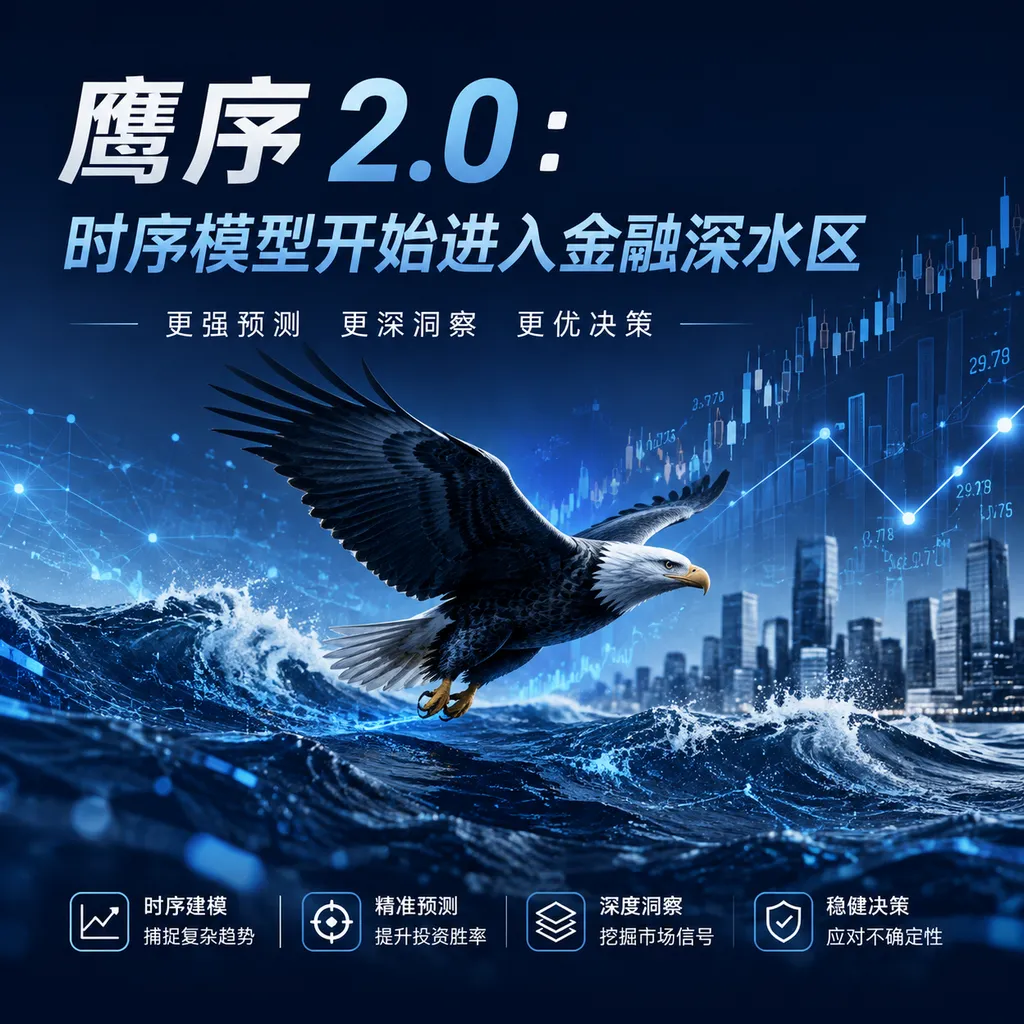
Ant International recently released Falcon TST 2.0, which achieved SOTA on global time-series forecasting benchmarks, reducing MASE to 0.666. It has already been adopted by several international banks for cash-flow forecasting and foreign-exchange management. Its significance lies not only in its leaderboard performance, but also in the fact that time-series foundation models are beginning to move from general-purpose forecasting into high-stakes financial applications.
Falcon TST 2.0: Time-Series Models Enter the Deep End of Finance
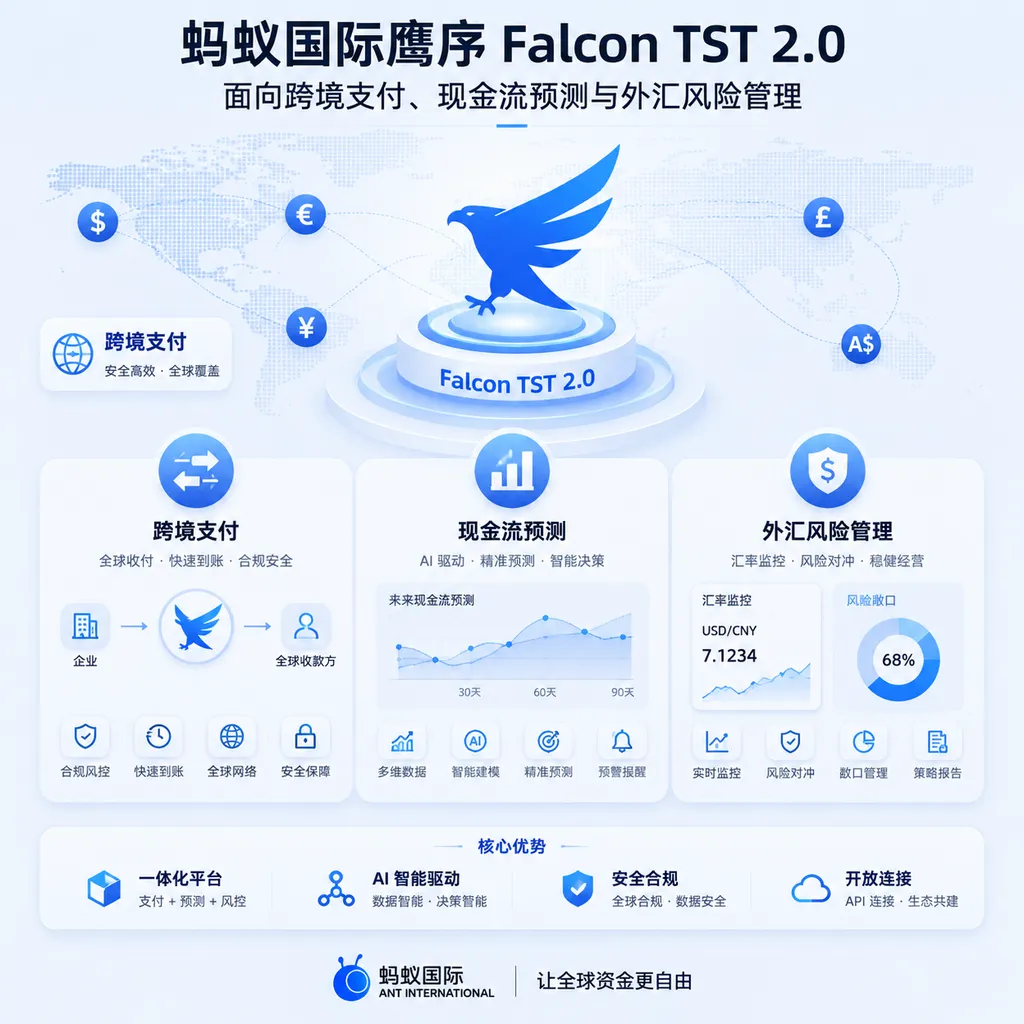
On August 20, Ant International released Falcon TST 2.0, its self-developed foundation model for time-series forecasting. According to the company, the model achieved the best results on globally recognized time-series forecasting benchmarks, reducing its mean absolute scaled error (MASE) to 0.666. Financial institutions including Barclays, Citibank, Deutsche Bank, and Standard Chartered are already using it for cash flow forecasting and foreign exchange management.
What is truly noteworthy about this upgrade is not the arrival of yet another model claiming “forecast accuracy above 90%.” Rather, it marks the expansion of time-series foundation models from relatively general forecasting tasks—such as weather, traffic, and sales—into financial scenarios such as foreign exchange exposure, liquidity risk, and cross-border treasury management, where stability, interpretability, and the cost of errors matter far more.
From Topping the Leaderboard to Managing Money
Time-series forecasting is not as simple as feeding a sequence of numbers into a model and asking it to guess the next one.
Businesses typically deal with multiple interdependent time series every day: payments and collections in different currencies, customer settlement cycles, holidays, exchange-rate fluctuations, business growth, seasonal promotions, and unexpected macroeconomic events. A model must do more than forecast a value at a future point in time. It must also answer more practical questions: How soon will a funding shortfall emerge? Which currency exposures are expanding? Should the company exchange currencies in advance or use financial instruments to hedge the risk?
In cross-border payments, forecasting errors translate directly into costs. If a company converts currencies too early, it may reduce the efficiency of its capital utilization. If it converts too late, it may be exposed to exchange-rate volatility. For a cross-border platform with a large transaction volume, reducing forecasting errors by even a few percentage points can affect actual profits and cash flow security.
The significance of reducing MASE to 0.666 must therefore be understood in the context of specific tasks. MASE measures a model’s error relative to a baseline method, with lower values generally indicating better performance. A score of 0.666 means that the model’s average error is approximately two-thirds that of the baseline. This demonstrates that Falcon TST 2.0 has strong forecasting capabilities on public test datasets, but it does not mean that every company will achieve the same benefits after adopting it. The distribution of financial data changes over time, and the model still requires continuous monitoring and recalibration when faced with policy changes, severe market volatility, or shifts in business structure.
In other words, state-of-the-art performance is the starting point for model capabilities—not the finish line for putting financial systems on autopilot.
The Key Change in 2.0: From General Forecasting to Business Adaptation
Falcon TST’s technical approach continues two major trends in time-series foundation models in recent years: patching and mixture-of-experts architectures.
Patching can be understood as dividing a long time series into local windows and then allowing the model to learn both the patterns within each window and the relationships between different windows. Processing hourly, daily, or even weekly data point by point often incurs high computational costs and can be easily disrupted by short-term noise. Once the data is segmented, the model can more readily capture local trends, cyclical changes, and sudden turning points.
This is somewhat similar to how vision models divide images into small patches. For time-series data, however, the key is not merely to “look locally,” but also to understand the chronological relationships between those local segments. For example, several consecutive days of increasing cash inflows may indicate a growth trend. But if the increase occurs only around a holiday, the model must recognize that it is more likely to be a cyclical fluctuation than permanent business growth.
A mixture-of-experts architecture represents another trade-off. Rather than involving all parameters in every computation, it selects the most appropriate expert modules based on the characteristics of the input data. Different experts can separately learn short-term fluctuations, long-term trends, seasonal changes, or data patterns specific to particular industries, expanding model capacity while keeping inference costs under control.
Publicly available information indicates that the first version of Falcon TST already used patching and MoE, had more than 2.5 billion parameters, and was announced as open source in 2025. Version 2.0 focuses more heavily on adaptation to financial services and real-world deployment. Its forecasting granularity covers hourly, daily, and weekly intervals, with an emphasis on cash flow and foreign exchange risk management in cross-border payments. The model is also expected to expand into scenarios such as supply chains and airline operations.
For developers, this type of upgrade is more practical than simply increasing the parameter count. What enterprises truly need is not a model that performs impressively only on public datasets, but a system capable of handling missing values, outliers, multivariate relationships, and different forecasting horizons. It must also integrate with existing data warehouses, risk-control systems, and treasury management platforms while providing stable batch and rolling forecasting capabilities.
Why Financial Forecasting Is Harder Than Sales Forecasting
E-commerce sales forecasting can typically be validated through a closed loop involving inventory and replenishment: forecast sales, arrange inventory, observe the results, and then adjust the model. Financial forecasting also has feedback, but that feedback is more complex.
First, financial data exhibits more pronounced non-stationarity. Correlations that remained valid over the past several months may quickly break down after changes in interest rates, foreign exchange policies, or the trade environment. What the model learns may not be an enduring pattern, but merely a coincidental relationship specific to a certain period.
Second, the costs of errors are asymmetric. Underestimating funding needs may create liquidity pressure, while overestimating them may leave capital idle. A single incorrect exchange-rate forecast may also wipe out the gains produced by high average accuracy over the long term.
Third, financial institutions care not only about point forecasts, but also about risk ranges and actionability. A model predicting that a certain currency will appreciate over the next three days is not enough to support a trading decision. The business also needs to know the forecast confidence interval, the worst-case scenario, whether different data sources are consistent, and how the model performed during historical periods of extreme market conditions.
These are also the barriers Falcon TST 2.0 must overcome as it moves from general forecasting into financial applications. Model accuracy is only the first layer. Data governance, evaluation systems, access controls, audit trails, and human review determine whether it can truly enter production environments.
Adoption by Multiple International Banks Matters More as a Signal Than as a Number
Ant International has disclosed that institutions including Barclays, Citibank, Deutsche Bank, and Standard Chartered are already using Falcon TST 2.0 for cash flow forecasting and foreign exchange management. Public information remains limited regarding the scale of these deployments, the scope of the model’s responsibilities at each institution, and the associated cost-benefit data. It would therefore be inappropriate to interpret this announcement as evidence that major banks have adopted the model across the board.
Nevertheless, it remains an important signal: competition among time-series foundation models is expanding beyond research papers and leaderboards into enterprises’ core operations.
In the past, financial institutions often preferred to develop a separate forecasting model for each line of business. The advantage was that each model could be tailored to local requirements. The disadvantages were substantial duplication of effort, insufficient historical data for new businesses, and high model maintenance costs. Time-series foundation models offer another approach: first learn general patterns from large-scale, multi-domain time-series data, and then adapt the model using a small amount of business-specific data.
This is similar to how language models first acquire general language capabilities and are then fine-tuned for coding, legal, or medical tasks. The difference is that time series depend more heavily than text on the underlying data-generation process. Business definitions, sampling frequencies, and anomaly-handling methods can vary completely between companies. So-called “general capabilities” must therefore undergo data adaptation before they can be converted into business value.
If Falcon TST 2.0 can operate reliably across multiple financial institutions, its value will extend beyond replacing several conventional forecasting models. It could become the foundational forecasting layer in treasury management systems, ingesting transaction, settlement, and macroeconomic data upstream and supplying inputs for liquidity management, currency-conversion decisions, and risk alerts downstream.
Open Source Is Both an Advantage and a Challenge
Falcon TST was announced as open source in 2025 and made available through platforms including GitHub and Hugging Face. For research institutions and developers, open source lowers the barrier to experimentation and allows the model to be applied to non-financial scenarios such as weather, transportation, energy, supply chains, and consumer demand.
However, once a time-series model is open-sourced, the real barrier to use lies in more than just obtaining the model weights. Developers must also address data cleaning, temporal alignment, missing-value imputation, feature engineering, forecasting-window design, and evaluation-metric selection. The most common mistakes in time-series modeling are temporal leakage between the training and test sets or artificially inflated results caused by randomly splitting the data.
A more reliable evaluation process should include at least the following:
- Split the training, validation, and test sets chronologically to prevent future information leakage;
- Evaluate both short-term and long-term forecasting instead of focusing on a single forecast horizon;
- Calculate errors separately for special periods such as holidays, promotions, and extreme market conditions;
- Compare simple baselines, conventional statistical models, and foundation models rather than reporting only the model’s own score;
- Record model versions, input-data versions, and forecast results to ensure that anomalies can be traced retrospectively.
In financial scenarios, stress testing should also be included. For example, teams can simulate a sudden, sharp exchange-rate movement, a short-term doubling of settlement volume, or a delay or outage affecting a data source, and then observe whether the model generates unreasonable forecasts. A model that is highly accurate under normal market conditions but loses control completely during abnormal conditions is not suitable for direct participation in treasury decisions.
Will It Replace Conventional Financial Models?
Not in the near term—and it does not need to.
Conventional methods such as ARIMA, exponential smoothing, state-space models, and rule-based risk systems remain valuable in scenarios where data is limited, business patterns are clearly defined, or strong interpretability is required. The primary advantages of foundation models lie in cross-task transfer, multivariate data processing, and lower costs for training from scratch—not in being categorically superior to conventional methods on every dataset.
A more practical combination would be to use Falcon TST 2.0 to generate forecasts and risk signals, while conventional models, rules engines, and human workflows jointly complete the decision-making process. Rolling forecasts can be used for rapidly changing, high-frequency data. For lower-frequency but high-impact funding plans, model outputs can serve as a reference for budgeting and hedging strategies.
From this perspective, the release of Falcon TST 2.0 is more like an upgrade to financial AI infrastructure than the arrival of a “financial foundation model” capable of independently making trading decisions. It addresses the forecasting layer but cannot replace risk appetite, compliance requirements, or business judgment.
OpenAI Hub Perspective
For development teams that need to experiment rapidly with multiple forecasting models, the value of time-series foundation models lies in transforming the process from “training a separate model for each business” into “starting with a general-purpose model and then adapting it to the data.” However, time-series forecasting differs from text generation in both interfaces and evaluation methods. Before deployment, enterprises must still independently handle data permissions, metric monitoring, and backtesting validation.
OpenAI Hub currently aggregates mainstream models such as GPT, Claude, Gemini, and DeepSeek. It is compatible with the OpenAI API format and is well suited to centrally managing calls to general-purpose foundation models. For specialized time-series models such as Falcon TST 2.0, the more important consideration is whether their open-source weights, inference frameworks, and deployment methods are compatible with existing data platforms. For teams in China, direct connectivity can reduce the cost of integrating general-purpose models, but it cannot replace financial data compliance or model risk management.
Conclusion: The Next Test for Time-Series Foundation Models Is Production
The release of Falcon TST 2.0 shows that time-series foundation models are undergoing an important shift: from asking “Can they forecast more accurately on public benchmarks?” to asking “Can they continuously deliver usable forecasts in real-world business environments?”
A MASE score of 0.666 and state-of-the-art results demonstrate the model’s capabilities, but adoption by banks and cross-border payment platforms provides a more practical test of its engineering maturity. Over the coming months, three developments will be especially worth watching: whether more real-world business metrics are disclosed, whether the model remains stable under extreme market conditions, and whether its success in finance can be replicated in industries such as supply chains, aviation, and energy.
If these questions are answered positively, time-series foundation models will no longer be merely a new category of forecasting algorithms. They may become general-purpose components within enterprise data systems. For developers, the real opportunity lies not in adding a model name to their code, but in building around data quality, backtesting frameworks, risk constraints, and closed-loop business processes to turn forecasts into executable actions.