Robot Games Releases 2,500 Hours of Real-Robot Data
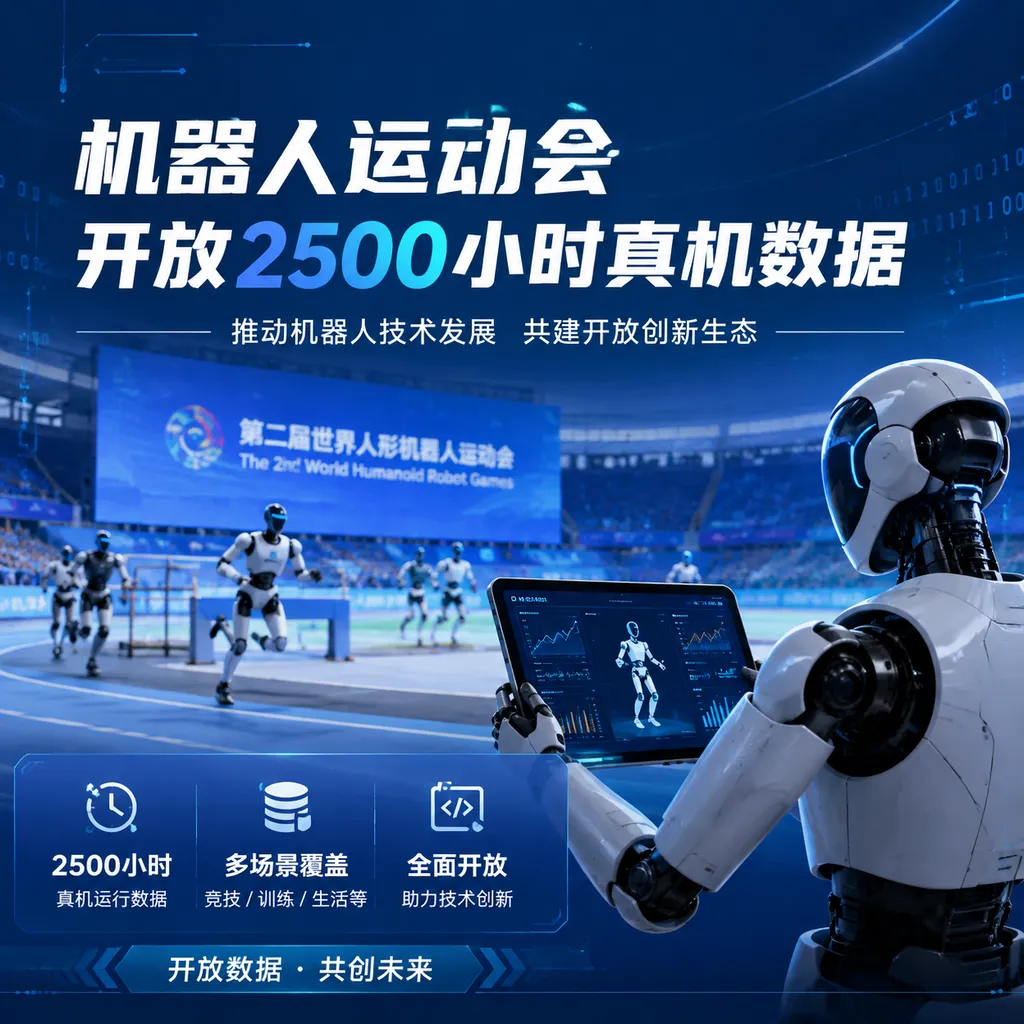
The second World Humanoid Robot Games have concluded, with more than 2,500 hours of real-world training and competition data released for free. More noteworthy than the medals is that this dataset, which includes failure cases and edge conditions, could lower the barrier to obtaining real-robot data for embodied AI teams.
Robot Games Opens 2,500 Hours of Real-Robot Data
On the evening of August 26, the second World Humanoid Robot Games concluded at Beijing's National Speed Skating Oval, known as the "Ice Ribbon." Compared with the 100-meter race record, which was lowered to 8.64 seconds, the event may have left the embodied intelligence industry with a more enduring achievement: a dataset unveiled at the closing ceremony.
The organizing committee announced that the full dataset from this year's Games would be made available to the public free of charge. The data comes from real-world robot operations conducted by multiple institutions during pre-competition training and the official events, totaling more than 2,500 hours. It covers 12 application scenarios, including industry, supermarkets, food service, offices, homes, and firefighting and rescue, and encompasses 44 operations, more than 100 skills, and tens of thousands of fine-grained tasks. More importantly, it includes not only successful demonstrations but also failure cases and boundary conditions.
This is not merely a collection of videos for reviewing competition results. For teams training vision-language-action (VLA) models, imitation learning policies, or general-purpose robot foundation models, continuous trajectories of real robots operating across different embodiments, tasks, and environments are among the scarcest and most expensive resources available today.
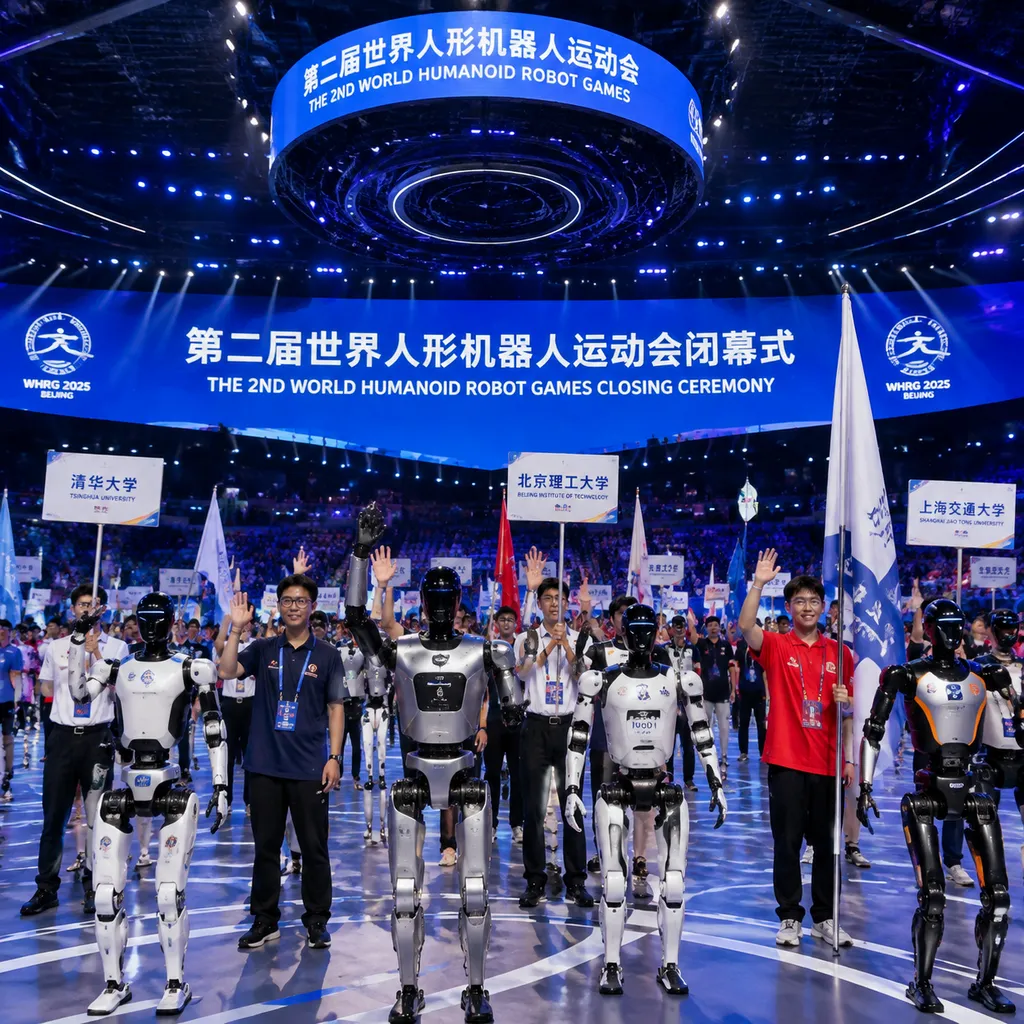
2,500 Hours: The Value Lies in More Than Just the Number
The data challenge in embodied intelligence differs from that of large language models.
Language models can be trained on vast amounts of text from public websites, books, and code repositories. Training robots, however, requires physically placing them in environments where they can observe, make decisions, and move, while recording multimodal information such as camera footage, joint states, end-effector poses, and action commands. Data collection also involves costs related to equipment depreciation, battery life, site setup, safety personnel, and manual annotation.
In other words, the internet naturally generates text, but it does not naturally generate training trajectories showing "how a robotic arm picks up a slippery cup" or "how a humanoid robot regains its balance after tripping over an obstacle."
Therefore, 2,500 hours of robot data cannot simply be equated with 2,500 hours of online video. Its actual value depends on whether it includes raw observations and action data synchronized with robot control. High-quality embodied intelligence data generally includes at least the following:
- Images and depth information captured by first-person or environmental cameras;
- Robot joint angles, joint velocities, torques, and end-effector states;
- Control commands, action timestamps, and synchronization relationships among different sensors;
- Task descriptions, stage labels, success criteria, and reasons for failure;
- Robot embodiment parameters, scene configurations, and safety constraints.
The organizing committee has disclosed the size of the dataset and the range of scenarios it covers, but publicly available information has yet to fully specify the download portal, file formats, sensor fields, sampling rates, data license, or terms of commercial use. These details will directly determine whether the dataset is merely a "media library" for research demonstrations or engineering-grade data that can be integrated into training pipelines.
If the released content consists mainly of edited video, it will be more useful for visual pretraining, action recognition, and task understanding. Only if it contains rigorously aligned observation-action trajectories, robot states, and embodiment description files can it directly support behavior cloning, policy fine-tuning, and cross-embodiment transfer.
In other words, making the data freely available is only the first step. Making it trainable is the next.
Failure Data May Be More Useful Than Footage of Winning Performances
The most noteworthy aspect of this dataset's design is its explicit inclusion of failure cases and boundary conditions.
Robot demonstration videos tend to preserve only successful attempts: the grasp is accurate, the gait is stable, and the task is completed smoothly. Yet the most difficult situations in actual deployment occur precisely outside standard workflows. An object may slip, the grasp position may shift, the tabletop may create glare, the target may be occluded, or an actuator may overheat. A robot may also move outside its task distribution while continuing to execute incorrect actions with high confidence.
With only successful trajectories, a model may learn what the correct answer looks like without necessarily knowing when it has already made a mistake. Failure trajectories can be used to train failure detection, action correction, policy fallback, and risk prediction. They can also help researchers identify the states in which a policy is most likely to break down.
The logic is similar to that of autonomous driving data. Large volumes of ordinary straight-line driving are certainly important, but the system's ultimate capabilities are often determined by long-tail scenarios such as construction detours, sudden pedestrian crossings, and extreme weather. Embodied intelligence likewise needs such "hard examples." A cup that was not grasped securely or an incorrect force direction when opening a door may contain more decision-making information than ten standard successful actions.
Boundary conditions are also valuable because they allow evaluation to move beyond whether a task was completed and toward questions that more closely reflect deployment: Did the robot issue a warning before failing? Could it recover afterward? Did the recovery action introduce new risks? Did the same policy remain stable when transferred to another robot embodiment?
The Games Are Shifting From Showcasing Actions to Building Infrastructure
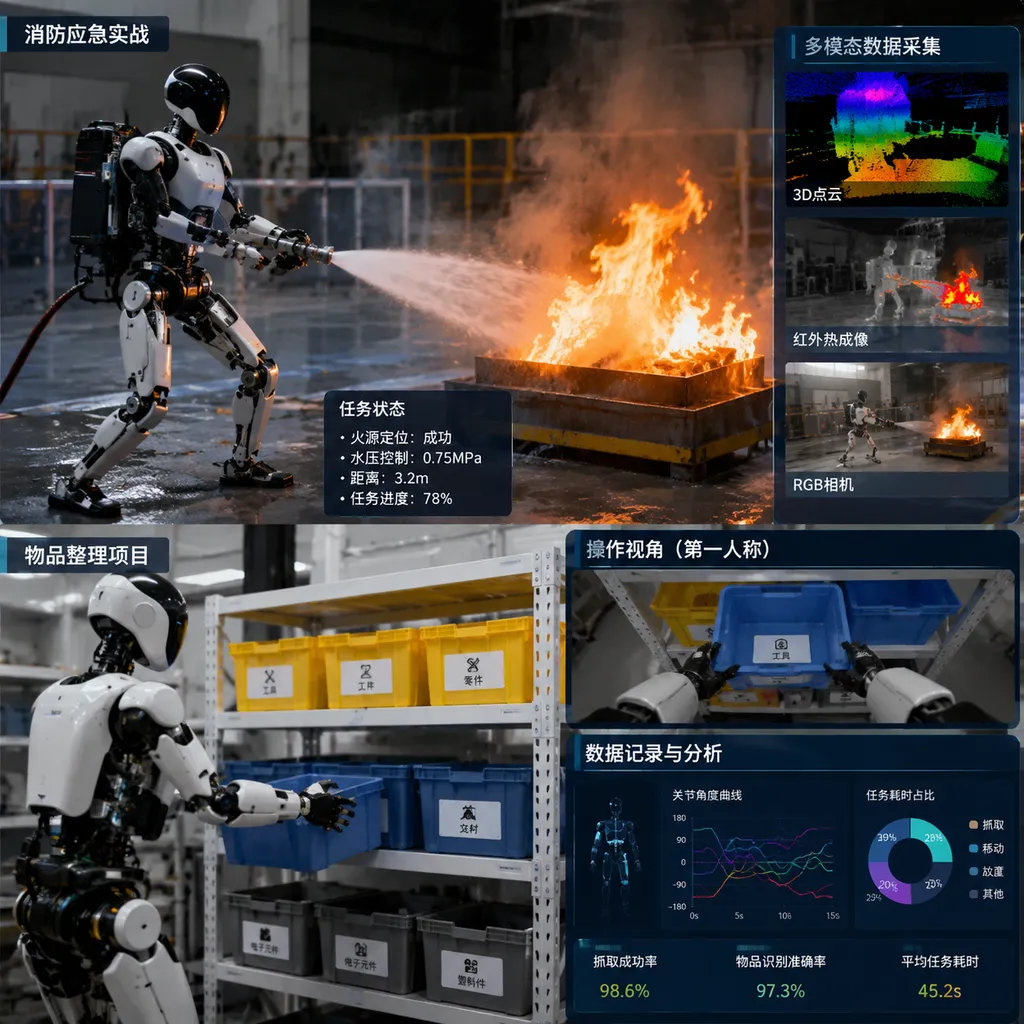
This year's event lasted five days and featured 666 teams and 2,056 robots from 16 countries competing in 51 events. At one end were highly visible athletic events such as the 100-meter race, high jump, and boxing. At the other were tasks closer to real-world industrial deployment, including firefighting and emergency response, book organization, supermarket operations, and service work.
Performance improved substantially. In the large-robot category, the winning time in the 400 meters fell from 1 minute 28.03 seconds at the previous Games to 38.15 seconds, while the winning 1,500-meter time improved from 6 minutes 34.40 seconds to 2 minutes 21.64 seconds. The standing high jump record rose from 0.956 meters to 3.40 meters. In the large-robot 100-meter final, Team Tianjiao recorded a time of 8.64 seconds, breaking the event record once again after posting 9.39 seconds at the opening ceremony and 8.85 seconds in the semifinals.
These figures show that robot hardware performance, motion control, and overall system reliability are improving rapidly. However, athletic performance does not directly equate to general-purpose capability.
The objective function in a 100-meter race is clear: reach the finish line along a prescribed route as quickly as possible. The objectives in real factories, restaurants, and homes are far more complex. Robots must understand natural-language instructions, respond to environmental changes, and balance safety, energy consumption, success rates, and continuous operating time. A robot that runs quickly may not be able to stock shelves reliably. A dexterous hand that completes a single difficult maneuver may not maintain a low failure rate over an eight-hour shift.
The real value of the Games lies in repeatedly operating different robot embodiments and algorithms across different tasks in an observable environment. Competitions naturally generate successes, failures, collisions, recoveries, and extreme states. If these processes are recorded in standardized formats and made available, the event becomes more than a showcase: it becomes infrastructure for data production and benchmark evaluation.
This is also why the dataset release deserves more industry attention than any individual record. A record may soon be broken by the next generation of machines, while a reproducible dataset with clear formats and licensing can be reused by more teams, leading to further models, toolchains, and evaluation methods.
AgiBot Tops the Rankings, but Competing With Mass-Produced Robots Matters More Than Medals
In the medal standings, first-time participant AgiBot won 18 gold, 16 silver, and 12 bronze medals, ranking first in both gold medals and total medals. Its dexterous hands won seven gold medals across eight specialized events, while its operational robots won six gold medals and its athletic robots won five.
AgiBot fielded models including the Genie G2, Lingxi X2, and Expedition A3 in events such as firefighting and emergency response, book organization, obstacle racing, boxing, and table tennis. More significant than the total medal count is the fact that all the competing units were mass-produced models.
Laboratory prototypes can be extensively customized for a single event and produce impressive demonstrations under tightly controlled conditions. Mass-produced platforms, by contrast, must account for component consistency, maintenance costs, interface stability, and large-scale deployment. Running the same product family across multiple events amounts to an intensive public stress test. It may not prove that the robots are ready to deliver mature commercial returns, but it can at least expose issues in the hardware and software stack during multi-task switching.
However, the medal table should not be treated as a comprehensive ranking of robotics companies. Results are influenced by the events selected, the number of devices deployed, the degree of adaptation to competition rules, and the level of on-site engineering support. For buyers and developers, continuous operating time, mean time between failures, secondary development interfaces, task success rates, and after-sales costs are more relevant decision criteria than total medal counts.
The Open Dataset Still Needs to Answer Three Questions
From an industry perspective, the dataset must now answer three critical questions.
1. Can Data From Different Robots Be Unified?
A total of 2,056 robots means a wide variety of joint structures, sensor configurations, and control frequencies. Data diversity is valuable, but excessive heterogeneity can also significantly increase the cost of using the dataset. Without a unified data dictionary, embodiment descriptions, and coordinate-system standards, research teams may need to spend substantial time cleaning and adapting the data before they can begin training.
Cross-embodiment data cannot simply be concatenated. The same "pick up an object" action may involve entirely different degrees of freedom, action spaces, and control constraints for a dual-arm robot and a full-size humanoid. The dataset must provide enough metadata for developers to determine which trajectories can be used for joint training and which are specific to particular devices.
2. Is the Data License Open Enough?
"Free" does not necessarily mean the data can be freely used for training and commercial applications. The license terms must clarify whether the data can be used for commercial models, whether it can be redistributed, whether derivative models are subject to restrictions, and how participating teams' algorithm and equipment information will be anonymized. For companies, an unclear license is generally equivalent to an unusable one because subsequent productization would introduce compliance risks.
3. Are There Reproducible Evaluation Baselines?
A dataset can become a true industry benchmark only if it includes standardized training, validation, and test splits, along with unified metrics for success rates and safety. Otherwise, different teams may select their own data, tasks, and metrics, producing results that cannot be compared directly.
Ideally, the organizing committee should also provide foundation models or baseline policies, data-loading tools, task definitions, and evaluation scripts. Open data addresses the raw-material problem; standardized tools determine whether developers can put that data to use quickly.
One Competition Is Beginning to Produce Reusable Public Assets
Embodied intelligence does not currently lack attention-grabbing one-off demonstrations. What it lacks are public resources that can be validated, reproduced, and continuously improved. More than 2,500 hours of data is not an unlimited amount in the context of the entire robotics industry, but it could still significantly lower the barrier to entry for universities, small laboratories, and startups that cannot build their own real-robot data collection facilities.
In particular, bringing 12 categories of scenarios, including industry, supermarkets, food service, offices, homes, and firefighting and rescue, into a unified data system gives researchers an opportunity to observe how the same skill transfers across environments: what constraints grasping encounters on a retail shelf, at a dining table, and at a fire scene; how locomotion and manipulation are coordinated; and how different robot embodiments accomplish similar tasks.
What must be avoided is treating "2,500 hours" itself as a guarantee of capability. The quality of robot data depends heavily on task coverage, sensor completeness, action annotations, time synchronization, and the proportion of failure examples. Scale determines how much a model can see; data structure and distribution determine what it can learn.
The organizing committee also launched a "Robots on Campus" program. Beijing Robot Rental Company will donate 100 robots, some of which will be allocated to competition and training centers for teaching and practice, while the remainder will be distributed to relevant schools under the coordination of education authorities. Introducing hardware and data into educational settings at the same time could allow students to experience the complete robot development workflow rather than merely watch finished demonstrations.
The third World Humanoid Robot Games have been confirmed for August 2027 in Beijing. By the next Games, the metrics worth examining may extend beyond a new 100-meter record to include how many times this open dataset has been downloaded, which reproducible models have been trained on it, and how many competition capabilities have actually made their way into factories, stores, and homes.
This is the dividing line between humanoid robots that "can perform" and those that "can work": speed and medals demonstrate that machines can accomplish something, while data, standards, and engineering systems determine whether they can accomplish it repeatedly in more places.
References
- ITHome: Second World Humanoid Robot Games Concludes, With More Than 2,500 Hours of Real-World Data Made Available for Free — Includes the scale of the event, competition records, AgiBot's medal results, the scope of the open dataset, and arrangements for the next Games.