Honor Bundles Token into Mobile Phone Plans
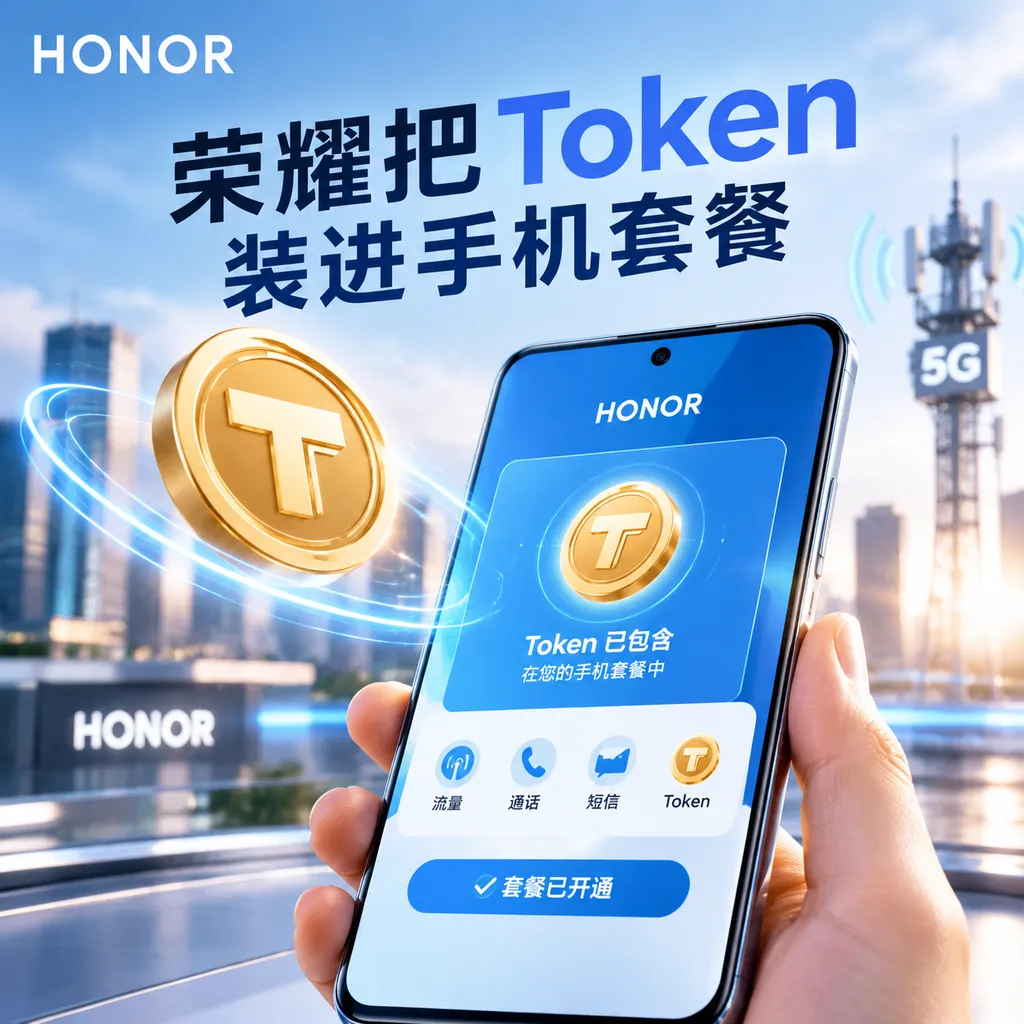
On September 28, Honor and China Mobile jointly launched a Token plan starting at RMB 169 per month. The entry-level tier includes 50 million China Mobile Tokens and supports payment through mobile phone billing. The plan will be piloted in six cities, but the specific Token conversion rules and the range of supported models have yet to be clarified.
Honor and China Mobile Begin Selling Plans by Token
Honor is turning AI computing power from a phone feature into part of a telecommunications plan.
On September 28, at the Honor Magic Celebration and Honor Magic9 Series launch event, Honor CEO Li Jian announced that Honor and China Mobile would jointly launch a Token plan, officially named the MobileAI Expert Program. The plan starts at RMB 169 per month. The entry-level tier includes 50 million mobile Tokens, along with telecommunications and smart services, and users can pay directly through their mobile phone bills.
This is not simply a membership promotion. It is more like an attempt by an operator to redefine what a service plan contains: in the past, plans sold voice calls, text messages, and data; going forward, they may also include AI application usage quotas.
According to information presented at the event, the plan has three tiers and offers multiple add-on packages that users can purchase as needed. It will initially be piloted in six cities: Hangzhou, Zhengzhou, Changsha, Shenzhen, Chengdu, and Wenzhou.
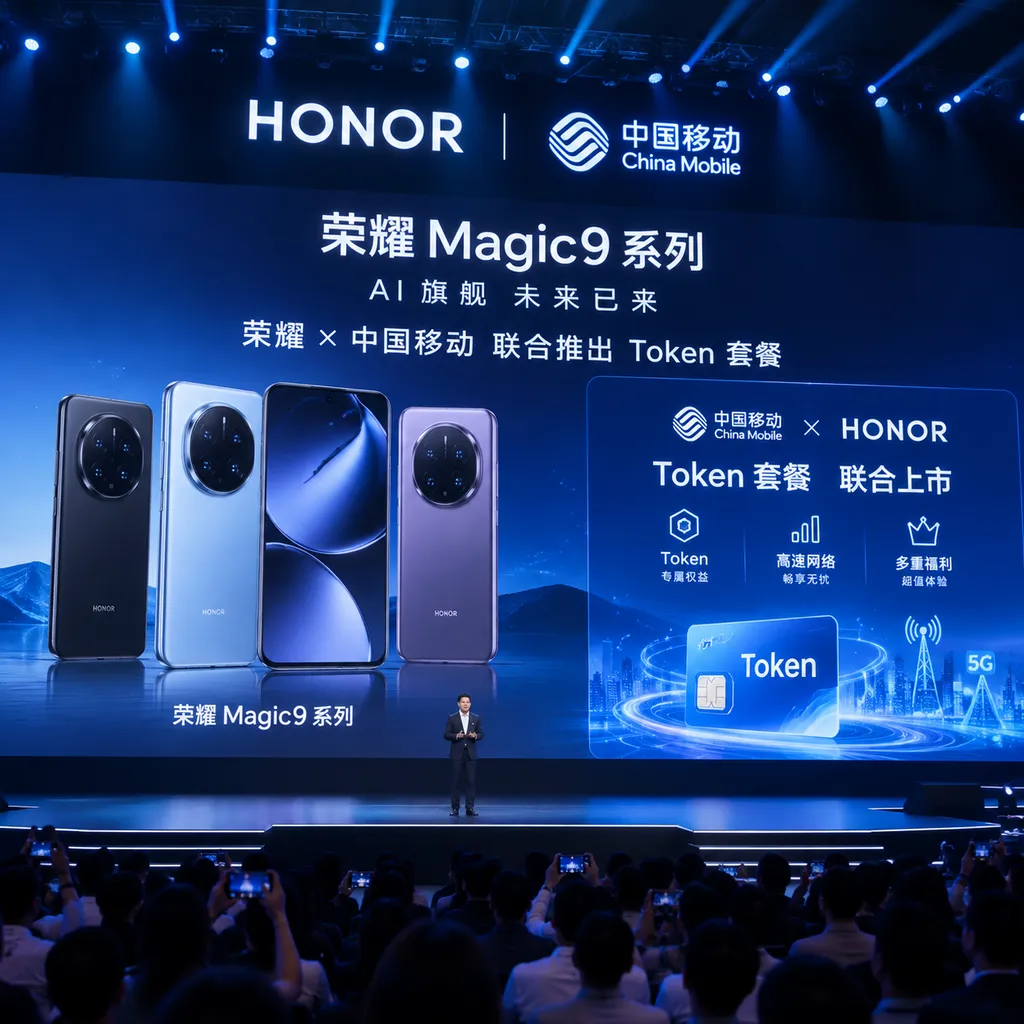
What RMB 169 Buys You Is More Than 50 Million Tokens
Based on the publicly available information, the plan consists of two parts: telecommunications services and smart services. In other words, the RMB 169 fee is not simply the price of a set amount of AI usage credits. Instead, it bundles a communications plan, AI application benefits, and potentially device discounts.
The key figure provided by the company is 50 million mobile Tokens. To ordinary users, that number may sound enormous. To developers, however, Tokens have never been a pricing unit that can be compared directly without considering the context.
Tokens are generally the units used by models to process text. A piece of Chinese, English, or code is broken down by the model into a varying number of Tokens; input and output are often billed separately as well. Different models also use different tokenization methods, context lengths, and pricing standards. The same 1 million Tokens might handle a large number of everyday conversations on a lightweight model, but could be consumed quickly by a high-performance reasoning model.
Therefore, the actual value of 50 million mobile Tokens depends on at least the following factors:
- Which models can be called: Does the plan cover only lightweight models, or does it also include more powerful reasoning, image, and video models?
- How input and output are calculated: Are they deducted separately, or calculated using a unified Token metric?
- Whether different applications follow the same rules: Office assistants, image generation, video creation, and search-based Q&A consume resources in different ways;
- Whether Tokens can be used across applications: If they can only be used within designated applications, their practical flexibility will be significantly reduced;
- Whether the quota resets every month: This directly affects the actual value for low-frequency users;
- Whether there are concurrency, rate, or feature restrictions: Having sufficient quota does not necessarily mean users can reliably access advanced capabilities during peak periods.
Honor and China Mobile have not yet disclosed the complete pricing for the three tiers, the specific model list, the Token conversion rules, or the detailed specifications of the add-on packages. For developers and heavy AI users, this information is more important than the figure of 50 million itself.
In other words, the Token plan currently looks more like a billing framework than a fully transparent price list.
Why Operators Are Entering the Token Market
The logic behind operators offering AI plans is not complicated: mobile data is becoming increasingly difficult to turn into a high-growth business, while AI provides a new entry point for value-added services.
Over the past few years, users purchasing AI services have typically had to complete several steps: download an application, register an account, link a bank card or third-party payment method, and then purchase memberships separately on different platforms. For many nontechnical users, this process remains relatively cumbersome. China Mobile’s advantage lies in its mature billing system and massive mobile subscriber base. Users do not need to set up a new payment channel and can pay directly through their phone bills.
Honor provides the entry point on the other side. The Magic9 Series phones serve as AI terminals, while system-level assistants, imaging creation, text processing, and multiple third-party AI applications can all become scenarios in which Tokens are consumed. The partnership is essentially an attempt to connect three layers of capabilities:
- China Mobile handles the user relationship and billing;
- Honor handles the mobile-side entry point and system-level experience;
- AI applications and model service providers provide the specific capabilities.
If this system works, AI will no longer be merely a feature demonstrated for a few minutes at a phone launch event. Like mobile data, it could become a service for which users pay continuously.
This is also what distinguishes it from traditional mobile AI memberships. The latter generally involve manufacturers building their own set of benefits, which users can access after purchasing a membership. A Token plan, by contrast, attempts to place different AI applications into a shared quota pool, theoretically allowing users to allocate resources as needed.
The Real Challenge Is Cross-Application Interoperability
At the launch event, Honor said that the plan supports freely combining leading AI services and allows multiple AI applications to be combined as needed, emphasizing that Tokens can be purchased and used universally. This direction is appealing to users because it addresses the fragmentation of AI services.
From a product implementation perspective, however, cross-application interoperability is also the most difficult part.
Different AI providers use different APIs, models, context windows, and security policies. One application may charge by request, another by image resolution, while a third may calculate usage based on input and output Tokens or generation duration. If an operator wants to unify these services under a single plan, it must handle benefit mapping, metering, settlement, and risk control in the backend.
For users, a truly useful universal plan should offer at least three things:
- A single page showing the remaining quota and specific usage;
- A clear indication of which model was used for each call and how much quota was deducted;
- The freedom to switch between applications instead of being confined by multiple independent membership rules hidden across different services.
If users can only see a vague total quota and cannot determine how much image generation consumes or whether calling a more powerful model requires an additional payment, then “universal” Token access may ultimately amount to nothing more than bundling multiple memberships together.
This is also an area developers need to watch closely. Whether the plan provides standard APIs, supports third-party application integration, and allows application developers to receive clear usage data will determine whether it becomes a genuine AI service infrastructure or merely a closed benefits package for consumers.
Is It More Cost-Effective Than Buying AI Memberships Directly?
It is too early to draw a simple conclusion.
If users already need a communications plan and frequently use AI assistants, text-to-image tools, document summarization, or mobile creation features, the bundled plan starting at RMB 169 per month may be somewhat appealing. In particular, payment through the phone bill lowers the barrier to activation. Families and people unwilling to link multiple payment accounts may find this format easier to accept.
However, if users already have stable access to a particular model through an independent subscription, the Token plan may not be more cost-effective. One reason is that the telecommunications component accounts for part of the price, while the real value of the AI quota cannot be calculated until the company publishes its conversion rules. For developers who use only one particular model, purchasing the corresponding platform’s API or subscription directly is often more transparent and makes budget control easier.
In addition, 50 million Tokens can mean very different things to different users:
- For users who mainly use AI for chat, summarization, and translation, the quota may last a considerable amount of time;
- For users who frequently generate images or videos or call advanced reasoning models, the quota may be consumed much more quickly;
- For developers, if the quota cannot be used through an API and can only be consumed in mobile applications, it will be difficult for it to replace their existing development budgets.
Therefore, this product currently looks more like a comprehensive AI package for consumers than a model API resource package for developers. It addresses payment and access, not the engineering challenges of model invocation.
The First Six Pilot Cities: Scaling Will Depend on Three Metrics
Honor and China Mobile’s decision to pilot the plan in Hangzhou, Zhengzhou, Changsha, Shenzhen, Chengdu, and Wenzhou suggests that the two companies are still validating actual demand and operating models, rather than rolling it out nationwide from the outset.
Whether the plan can be expanded will depend on at least three metrics.
The first is user activation rate. Selling a plan does not mean users will actually use AI. If users activate it only because of a device discount or telecommunications benefits and then leave their Tokens unused for long periods, it will be difficult for the operator to demonstrate that this is a high-value value-added service.
The second is retention of AI services. Whether users continue using the services after trying them during the first month will depend on application quality, quota transparency, and model stability. A common problem with AI products is that the novelty is strong during the first month, but users churn later because response quality is unstable or the quota rules are too complicated.
The third is the actual cost and gross margin per Token. The operator will need to redistribute revenue among model providers, application developers, and users. If users consume large amounts of high-cost models, the plan’s pricing may come under pressure; if there are too many restrictions, users may feel that the benefits are not valuable.
These three metrics will ultimately say more about whether the product works than the plan tiers announced at the launch event.
AI Plans Are Moving From Memberships Toward Resource Pools
From an industry perspective, Honor and China Mobile’s attempt is not occurring in isolation. AI service pricing is gradually moving away from a single membership model toward a combination of memberships, usage counts, and Token quotas.
The advantage of memberships is simplicity: users pay a monthly fee. The disadvantage is that usage varies greatly from one user to another. Heavy users may find the quota insufficient, while light users may waste much of it. A Token resource pool attempts to link pricing with usage, allowing users to allocate their quota across multiple AI functions.
The prerequisite for a resource pool, however, is transparent metering. Developer-oriented API platforms work because models, prices, rate limits, and usage logs are relatively clear. Consumer-facing Token plans will need to achieve a similar level of transparency if they are to build long-term trust.
At present, AI API aggregation platforms such as OpenAI Hub already place models including GPT, Claude, Gemini, and DeepSeek behind a single access point by supporting OpenAI-compatible formats. Their primary focus is enabling developers to switch between models and integrate them through a unified interface. Honor and China Mobile’s Token plan approaches the issue from the perspective of consumer plans and mobile access. The two products target different user groups, but both are addressing the same question: as the number of models continues to grow, how should users purchase and use AI capabilities?
What deserves attention about Honor’s new product is not the starting price of RMB 169, nor simply the large figure of 50 million Tokens. The key question is whether operators can make AI, like mobile data, into a basic service that is understandable, measurable, and suitable for sustained consumption.
At this stage, it has completed the first step: putting Tokens into a telecommunications plan. Whether this represents a genuinely valuable product innovation will have to wait until the complete price list, model coverage, quota rules, and feedback from pilot users are made public.
Currently Known Information
- Product: The Token plan jointly launched by Honor and China Mobile, namely the MobileAI Expert Program;
- Price: Starting at RMB 169/month;
- Plan contents: Telecommunications services + smart services;
- Quota: The entry-level tier includes at least 50 million mobile Tokens;
- Plan structure: Three tiers in total, along with multiple add-on packages;
- Payment method: Payment through the mobile phone bill is supported;
- Pilot cities: Hangzhou, Zhengzhou, Changsha, Shenzhen, Chengdu, and Wenzhou;
- Information yet to be announced: Complete pricing for each tier, model and application lists, Token conversion method, validity period, whether unused quota resets, and API availability.
Sources
- ITHome: Honor and China Mobile Jointly Launch Token Plan: Starting at RMB 169/Month, Payable Through Phone Bills — Introduces the plan pricing, quota, payment method, and initial pilot cities announced at the launch event.