Microsoft Voice Live Integration with LG Home Voice Assistant
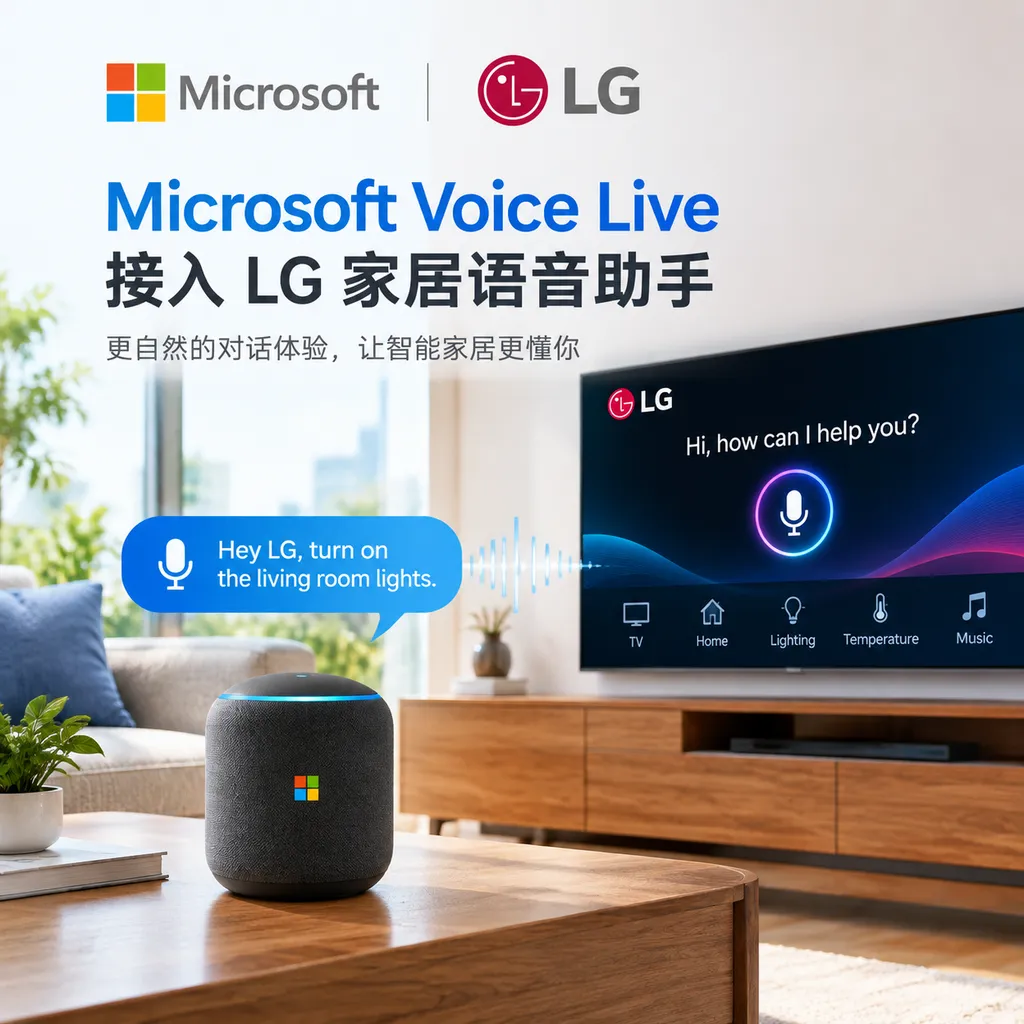
LG demonstrated a smart home voice assistant co-developed with Microsoft on the ThinQ ON. Powered by Voice Live, it enables real-time voice conversations and allows users to interrupt and switch topics. The product is scheduled to launch later this year and will also be rolled out to existing devices. While it improves the voice interaction experience, its real-world performance remains to be validated.
LG Brings Voice Live to the Smart Home
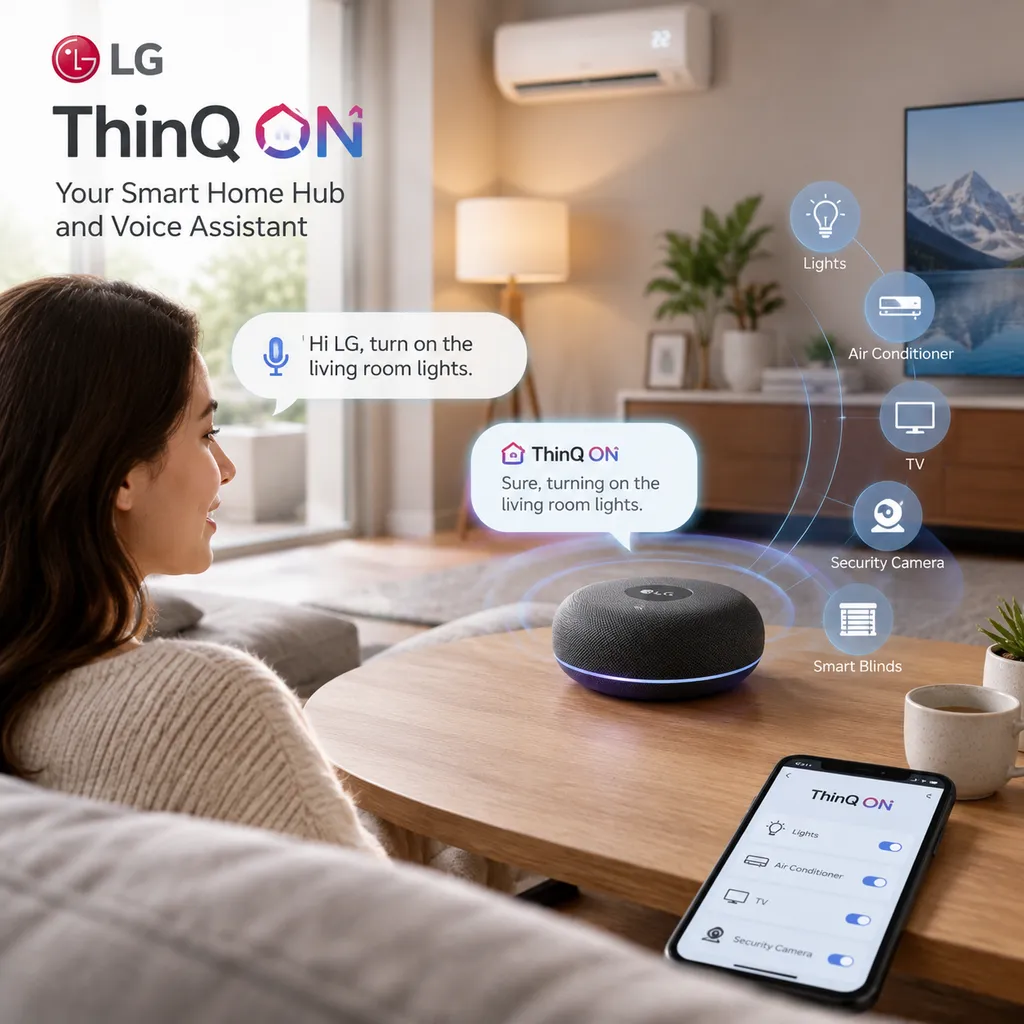
At a Microsoft industry summit held in Seoul today (September 30), LG Electronics demonstrated a smart home AI voice assistant developed in collaboration with Microsoft. It will run on LG’s smart home hub, ThinQ ON, with real-time voice interaction powered by Microsoft Voice Live at its core.
The focus of this demonstration was not simply enabling a speaker to “understand more commands,” but making conversations feel more natural: users do not have to wait for the assistant to finish speaking. They can interrupt, add requirements, or switch to another question while it is responding. The system will stop its current response, understand the new intent, and continue the conversation.
LG plans to launch ThinQ ON with Voice Live later this year and will also make the relevant features available to existing ThinQ ON users through an update. LG also noted that the assistant’s use cases will not be limited to homes, but could extend to commercial spaces such as hotels, offices, and retail stores.
Interruptions Change More Than the Pace of Conversation
Traditional voice assistants usually follow a turn-taking pattern of “you say something, it responds.” The device first determines that the user has finished speaking, then recognizes the speech, generates a response, synthesizes it, and plays it back. This process is relatively easy to implement, but the interaction feels noticeably like a walkie-talkie: once users want to change what they said, they can only wait, or wake the device again, interrupt playback, and describe everything from the beginning.
Voice Live is designed for more real-time voice-to-voice interaction. Microsoft integrates speech recognition, generative AI, and speech synthesis into a unified interface, so developers do not need to orchestrate each stage separately. In the ThinQ ON use case, the key experience is that while the assistant is speaking, it continues monitoring whether the user has started talking. Once it detects speech, it stops the response currently being played and processes the new input.
This sounds like a small feature, but in practice it involves an entire interaction chain. The system must determine whether the user is speaking to the device or whether a television, family member, or background noise triggered voice detection. It must also stop the old audio quickly enough to prevent the old and new content from overlapping. It then needs to connect the interruption back to the existing context and determine whether it is a correction to the previous command or an entirely new request.
For example, a user might say, “Dim the living room lights a little.” While the assistant is preparing its response, the user adds, “Only down to 30 percent.” A useful experience would not treat the two sentences as unrelated commands. Instead, it would promptly cancel the response that is no longer applicable and interpret the second sentence as a constraint on the previous operation. If the user changes the subject and asks, “Will it rain tomorrow?” the system should switch topics rather than insist on finishing its explanation of the lighting command.
Voice Live Addresses the Engineering Assembly Problem
The challenge of building a voice agent is not limited to whether the model is sufficiently intelligent. Development teams also have to connect microphone input, voice activity detection, recognition, model inference, speech synthesis, and audio playback, while handling edge cases involving latency, echo, noise, dropped connections, and user interruptions. Every additional component introduces another layer of state management and failure-handling logic.
Microsoft’s product approach with Voice Live is to bring this entire voice pipeline into a unified service interface. Developers still need to design the agent’s behavior, select an appropriate generative model, and integrate it into a specific product, but they do not have to manage every voice-processing component from scratch. The models listed in Microsoft’s documentation include GPT-Realtime, GPT-5, GPT-4.1, and Phi, among others. The trade-offs between different models in response speed, capability, and cost also mean that product teams still need to make choices based on the use case.
Real-time voice interaction typically relies on a continuous two-way connection rather than submitting a complete request only after the user has finished speaking. Microsoft’s integration materials demonstrate session-based configuration and event handling, including detecting when input speech begins, receiving output audio segments, and detecting when response audio ends. For engineering teams, the events themselves are not the product experience. Their value lies in enabling the client to respond promptly to state changes, such as stopping playback immediately when the user starts speaking.
However, a “unified interface” does not mean that all complexity disappears. The device’s microphone array, speaker echo cancellation, network fluctuations, and household noise can all affect the perceived response speed and recognition accuracy. The model may also misinterpret an interruption, miss a brief addition, or lose conversational context after a switch. In a smart home, errors in voice interpretation can directly trigger incorrect device operations, so confirmation before execution, permission boundaries, and reversibility remain important.
Useful for Smart Homes, but Not Yet a “Home Butler”
Voice assistants have previously faced an awkward problem: during demonstrations, manufacturers can show them understanding complex commands, but in daily use they often stumble over device names, room names, and ambiguous phrasing. Adding real-time interruptions does not automatically solve these problems. It mainly improves the interaction process, making it easier for users to correct, supplement, and redirect the assistant, rather than guaranteeing that the model has an accurate and complete understanding of the home environment.
That is still a practical improvement. Household commands naturally depend on context, and people often think while speaking. A user might first say, “Turn on the air conditioner,” and only afterward remember to specify the bedroom. They might ask the assistant to play music and immediately request a different song after hearing the result. Being able to make corrections mid-conversation reduces the cost of repeated wake-ups and restating requests, and makes voice control better suited to continuous tasks.
But “natural conversation” cannot be measured solely by whether interruptions are allowed. What truly affects daily retention is whether device control is reliable, whether response latency is low enough, whether the voices of different household members can be distinguished, and whether the assistant knows when it should remain silent. This is especially important in B2B spaces such as hotels and retail stores, where environments are noisier and users may not be familiar with the device’s capabilities. Privacy notices, guest permissions, and recovery mechanisms for incorrect operations all become more important.
Product Deployment Matters More Than the Demonstration
LG’s decision to integrate Voice Live into ThinQ ON, rather than offer the voice feature only through a mobile app, suggests that it wants to turn the smart home hub into an entry point for ongoing conversations. The proposed expansion into hotels, offices, and stores also indicates that the same capabilities could be used for room controls, conference room operations, or in-store services. At this stage, however, the publicly available information remains focused mainly on the technology and its application areas. It has not yet provided a complete launch schedule, pricing, supported language coverage, network requirements, or a specific device compatibility list.
The more measured conclusion for now is that this is a targeted interaction upgrade, not a comprehensive leap in smart home capabilities. Voice Live lowers the orchestration barrier for building real-time voice agents, while LG provides an entry point for deployment in homes and commercial spaces. Whether the two can produce a convincing product experience will depend on the entire chain on real devices, from the user’s interruption to the assistant stopping playback, understanding the new intent, and carrying out the operation, rather than simply on whether the model’s generated speech sounds fluent.
Three areas are worth watching next:
- Launch schedule and update scope: Whether LG launches the new device as planned within the year, and when existing ThinQ ON users will receive the update.
- Voice experience metrics: Interruption-to-stop latency, intent-switching accuracy, recognition performance in noisy environments, and supported languages and accents.
- Device-control reliability: How the system handles ambiguous commands, permission restrictions, and execution failures for operations such as adjusting lights and air conditioners.
If these areas perform consistently, the change brought by Voice Live will be more than making the assistant sound more conversational. It will allow voice control to adapt to the interruptions, corrections, and sudden changes of mind that are common in human speech. Conversely, if interruption detection is unreliable or device operations fail, a smooth voice interface will do little to conceal the breaks in the overall experience.
Sources
- IT Home: LG and Microsoft Collaborate on a Smart Home AI Voice Assistant —— Reports on the summit demonstration, ThinQ ON plans, and application scenarios.
- Microsoft Voice Live API Overview —— Introduces real-time voice-to-voice capabilities, model selection, and the unified interface approach. This is Microsoft’s official documentation; due to source restrictions, it was not included among the accessible reference links.