
Codex quota resets three times a week—what is OpenAI planning?

Recently, a large number of users have reported that their Codex quotas are being reset unusually often—up to two or three times within two days—suggesting that the billing logic may be undergoing backend adjustments. Combined with user milestone events and downtime compensations, OpenAI’s quota mechanism is becoming increasingly unpredictable.
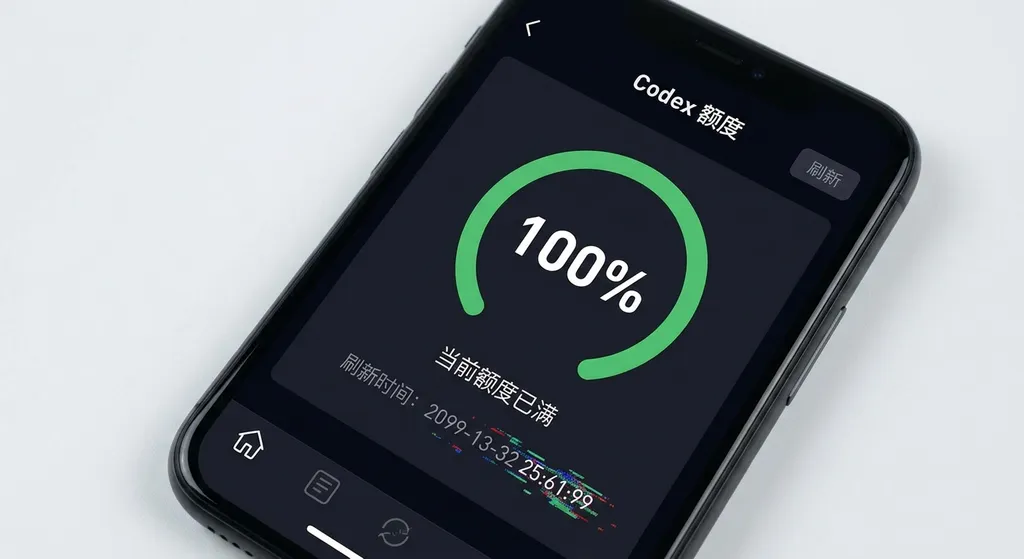
In the past two days, developers opening Codex have likely experienced the same confusion: the quota bar suddenly jumps back to 100%. It wasn’t topped up manually, nor was it the usual cycle — it just… mysteriously refilled.
Then, a few hours later, it refilled again.
This isn’t an isolated case. From the Linux.do community to the Reddit r/codex forum, posts about “quota resets” spiked between April 19 and 21. Multiple users confirmed that their quotas had refreshed two to three times within just 48 hours. One user put it bluntly: “Bro, it reset twice in two days??? I just refreshed, and boom, 100% again. Not sure if I should be happy or annoyed.”
Whether to be happy or annoyed is indeed a good question.
What’s Actually Going On
Codex’s quota mechanism is simple: each subscription tier (Free / Plus / Pro) gets a weekly quota, which resets every seven days. Once you run out, you wait until the next week. This system had worked reliably since launch — developers were used to the rhythm of “burning through the week’s quota over the weekend, sleeping soundly, then waiting for next week.”
But that rhythm broke down starting April 19.
Cross-verifying multiple community reports, at least three triggers were involved in this wave of abnormal resets:
- Outage compensation: On the night of April 19, Codex suffered a service outage. OpenAI subsequently reset quotas as compensation for affected users. That was the first reset.
- User milestone event: When Codex user count surpassed 4 million, the company triggered another full quota reset as a “celebration.” That was the second reset, less than 24 hours after the first.
- Suspected backend adjustments: Some users reported additional resets beyond those two. They noticed that the in-app “quota refresh time” kept updating dynamically — suggesting that the billing system itself was undergoing deeper modifications.
As one user succinctly described it: “Another million new users, another reset. It literally just reset yesterday, and now again today.”
Not Everyone’s Celebrating
On the surface, repeated resets seem like a free bonus. In reality, the experience isn’t that simple.
First, there’s the collapse of expectation management. Some users planned to stay up all night finishing their Plus-tier quota, only for the quota to refill midway — “Now I’m stuck in an endless loop.” For developers with clear project timelines tied to their quotas, this unexpected surplus completely threw off their rhythm.
Then there’s the subtler issue of fairness. One user highlighted a logical inconsistency many overlooked: if a full reset happens before the usual seven-day cycle, users who’d already used up their quota effectively get a free batch, while those who still had plenty left lose out — since unused quota doesn’t carry over, an early reset vaporizes what’s left.
It’s like paying for a monthly gym pass, and halfway through the month being told, “Congrats, your pass is restarting today!” Sounds great — except you just lost the remaining weeks you already paid for.
Practical concerns also emerged around opaque quota usage. One user reported writing 4,000 lines of code with no quota reduction, while another Free user noticed they’d only used 3% after two requests — “Free suddenly lasts longer.” But after about an hour, their quota consumption returned to normal.
This suggests that during these reset windows, the billing system itself might be unstable — it’s not that the quota actually increased, but that usage tracking temporarily broke down.
What Might Be Changing Behind the Scenes
If this were just about outage compensation and milestone celebrations, it would be straightforward. But several clues suggest OpenAI might be making deeper adjustments to Codex’s billing model.
The first clue: dynamically changing reset times. Normally, the Codex app should display a fixed future reset time (like “7 days remaining”). But users observed that the countdown “kept updating,” which isn’t consistent with a one-time reset — it looks more like backend parameters for quota cycles are being repeatedly tweaked.
The second clue: differences across subscription tiers. Pro users reported spontaneous resets, Plus users saw multiple explicit resets, and Free users felt “more durable.” If it were a blanket reset, experiences would be uniform. The differing behaviors hint that OpenAI may be testing varied quota strategies across tiers.
The third clue came from Reddit. One user reported that when using GPT 5.4 in “Low Reasoning Mode,” their post-reset quota “drained instantly” — five messages and it was empty. This implies that quota consumption weights across models or inference modes are being recalibrated.
Taken together, a reasonable hypothesis emerges: OpenAI might be transitioning from a fixed “time-based” quota system to a more dynamic “usage-based” system — or at least testing the approach.
This wouldn’t be unprecedented. Claude’s API already uses token-based dynamic billing, and Google’s Gemini API also employs complex rate-limiting across free and paid tiers. For a code-generation product like Codex, where resource use varies wildly — from generating a simple function to refactoring an entire module — a fixed “number of requests per week” model is inherently imprecise.
What This Means for Developers
If you’re a regular Codex user, there are a few takeaways in the short term.
Don’t count on regular resets. Until these backend changes stabilize, the “max out over the weekend and reset next week” routine may no longer hold. Quotas may reset anytime — or silently recalibrate. Use your quota strategically for important tasks rather than saving it for last-minute bursts.
Track consumption rate, not percentage. Many users noticed that identical operations drained different amounts of quota at different times. If the system feels “more efficient” for a while, it’s probably not your productivity — it’s the billing weight fluctuating. Conversely, if it suddenly seems to burn faster, it might just be the system updating.
Pro users seem to benefit the most right now. Feedback suggests that Pro subscriptions have received the most “bonus” resets during this anomaly. If you’ve considered upgrading from Plus, now’s a good time to watch — see where Pro’s usable quota stabilizes afterward.
Watch for official statements. As of now, OpenAI hasn’t publicly commented on these resets. But given how widespread the issue is (discussed across Reddit, Threads, Linux.do, and more), an official response is likely forthcoming.
The Bigger Picture
Zooming out, Codex’s quota hiccups reflect a broader tension in the AI coding-tools race: user growth is far outpacing infrastructure capacity.
Codex’s leap from 3 million to 4 million users happened in no time, and every new user means real GPU compute cost. Unlike social apps where growth mainly consumes bandwidth and storage, every AI inference request burns GPU time. Once scale explodes, the choices are: raise prices, throttle access, or revamp billing — and OpenAI seems to have picked the third, at least for now.
This is also why more developers are adopting multi-model strategies rather than relying on a single tool. When your main platform becomes unpredictable due to quota volatility, a fallback stops being a luxury and becomes a necessity. Aggregator platforms like OpenAI Hub, which let you switch between models, now shine in these moments — when Codex runs out, switch to Claude or Gemini without breaking your workflow.
Of course, the quota issue will eventually be resolved. Either OpenAI will optimize inference efficiency to cut costs, or a new pricing model will stabilize expectations. But until then, developers must adapt to a reality where the reliability of your AI tool is itself a moving target.
That might just be the most surreal part of being a developer in 2026 — your tools are less stable than your code.
References
- Codex Quota Reset Again - Linux.do — Users report repeated automatic resets on Pro subscriptions
- Codex Resetting Again? - Linux.do — Users discuss multiple resets within two days
- Codex Wrote 4K Lines with No Quota Drop? - Linux.do — Users report anomalies in quota usage, suggesting billing fluctuations


