
Mythos has suffered unauthorized access — Anthropic’s most powerful model has been “breached.”
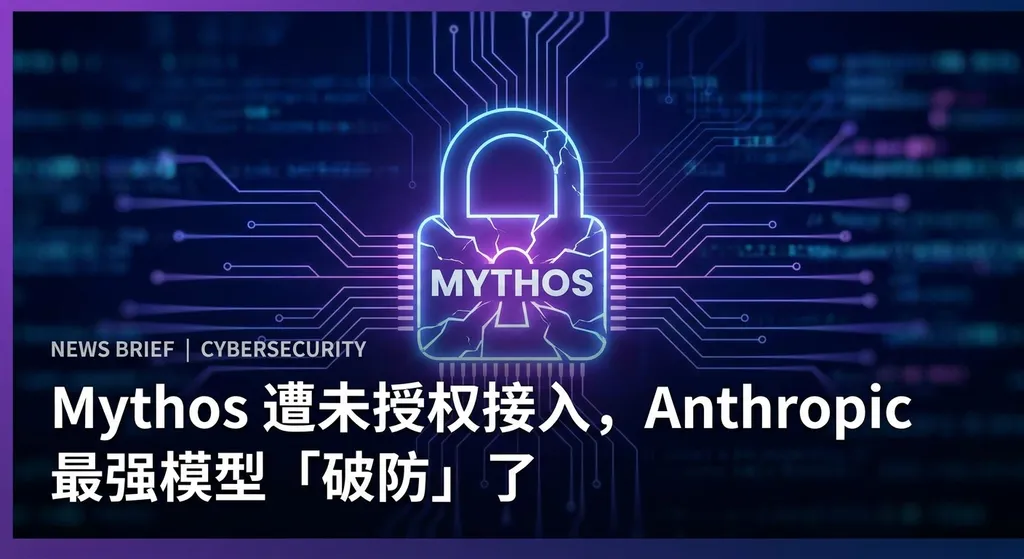
Anthropic’s **Mythos** model, known for its top-tier vulnerability exploitation capabilities, is suspected to have been accessed by unauthorized users. This “cybersecurity nuclear weapon,” which was supposed to be available only to a handful of core enterprises, has ironically encountered a security issue of its own.
A Model That Finds Vulnerabilities for Others Got Breached First
Just as Anthropic’s Mythos model was keeping the entire global security community awake at night, something darkly humorous happened — the so-called supermodel capable of discovering zero-day vulnerabilities in nearly every operating system and browser was itself accessed by unauthorized users.
The news first exploded in the developer community forum Linux.do. A user posted that several unauthorized individuals had successfully connected to Anthropic’s Mythos model. The post title was blunt: “Who did this? Step forward and explain yourself!” The tone was half-joking, half-shocked, and the comment section quickly flooded with discussions.
To understand why this incident is noteworthy, we must first understand what Mythos actually is.
Mythos Is No Ordinary Model — It’s a “Cybersecurity Nuke”
Over the past two weeks, Mythos has been the hottest name in the global tech world — bar none.
This isn’t another leaderboard-hogging chatbot. When Anthropic released the preview version of Mythos in early April, its positioning was explicit: it’s a cutting-edge model specialized for cybersecurity, capable of autonomously discovering vulnerabilities and generating exploit code across nearly all mainstream operating systems, browsers, and software products.
A few key data points can help you get a sense of scale:
- Mozilla officially confirmed that Mythos discovered 271 zero-day vulnerabilities in Firefox 150, with Mozilla’s CTO saying its capabilities are “on par with the world’s top security researchers.”
- Anthropic claims the model has found thousands of zero-days across various systems — some as old as 27 years.
- Alex Zenla, CTO of cloud security firm Edera, called Mythos’s capability to construct “exploit chains” a real turning point — it can link multiple individual vulnerabilities into a full attack path, something previously achievable only by a handful of elite hacker teams.
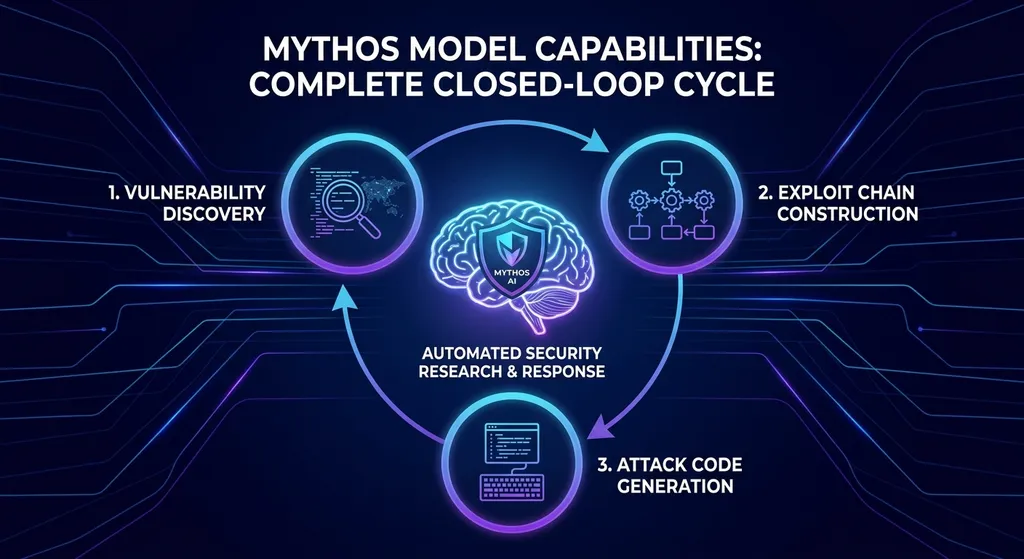
To draw an analogy: earlier AI security tools were like assistants who could check if your door locks were broken; Mythos is more like an expert who can make its own keys, find every hidden door in your house, and map out a full intrusion plan. The difference isn’t one of degree — it’s qualitative.
Because of its immense power, Anthropic’s access control for Mythos is extremely strict. The model is currently accessible only through its “Project Glasswing” initiative to a select group of major corporations and institutions — all titans: Amazon, Apple, Google, Microsoft, Cisco, JPMorgan Chase, and the Linux Foundation.
As Anthropic co-founder Jack Clark put it: “The goal is to help these organizations proactively discover and patch system vulnerabilities.”
In other words, Mythos was supposed to be locked safely in a vault. And now someone seems to have pried that vault open.
What Exactly Happened?
Public information is limited, but based on community discussions and multiple reports, a rough picture can be formed.
The core fact: several unauthorized users successfully gained access to the Mythos model. This was not Anthropic expanding its access program — it was an unauthorized access that bypassed the company’s control mechanisms.
As for how the breach happened, there is no official conclusion yet. Community speculation mainly centers around three possibilities:
- API key leak — An employee or system at one of the Glasswing participants leaked credentials.
- Exposed interface — A model service endpoint was discovered and accessed directly.
- Supply chain issue — Access gained indirectly through Anthropic’s or a partner’s infrastructure.
It’s also worth noting this isn’t Anthropic’s only recent security scare. Some reports claimed Claude Code source leaks, described as “one of the most severe security incidents in the AI industry.” Whether the two events are related is unclear, but together they raise serious questions about Anthropic’s overall security posture.
The Real Irony Isn’t Just the Hack — It’s the Timing
What makes this incident so ironic is when it happened.
Over the past two weeks, the narrative around Mythos has been: “It’s too powerful, so it must be tightly controlled.” Anthropic has invested enormous effort in communicating one key message — “We know how dangerous this model is, and we’re handling it responsibly.”
Look at what happened during that period:
- The White House: Chief of Staff Susie Wiles met with Anthropic CEO Dario Amodei to discuss Mythos’s national security implications.
- U.S. Treasury & Federal Reserve: Treasury Secretary Scott Bessent and Fed Chair Jerome Powell met with systemically important financial institutions to discuss the model’s cybersecurity ramifications.
- United Kingdom: Financial and cybersecurity regulators held an emergency meeting to assess the risks.
- Germany: BSI director Claudia Plattner stated Mythos “may render traditional software vulnerabilities obsolete within a few years.”
- European Commission: Has been in contact with Anthropic about an advanced version yet to be released in Europe.
- U.S. Secretary of War Pete Hegseth reportedly listed Anthropic as a “supply chain risk”; the company has since filed two federal lawsuits.
While governments of major economies are wrestling with how dangerous it is, Mythos itself suffered an access control failure. It’s like a company selling high-end security doors having its own showroom broken into mid-demonstration.
What Does This Reveal?
Beyond the memes, this incident exposes at least three deeper issues worth serious thought.
1. The Difficulty of Model Access Control Is Severely Underestimated
Mythos was distributed via the Glasswing program with “targeted access.” But what does that really mean in practice? It means handing an extremely sensitive capability over an API or interface to dozens of corporations — each with hundreds or thousands of engineers who could potentially access the credentials.
This isn’t new. Anyone who’s done API key management knows that key leakage is almost inevitable — it’s only a matter of time. Every day, people accidentally commit keys to public GitHub repos. But when the leaked key belongs to a model capable of autonomously discovering zero-days, the consequences are an entirely different magnitude.
Logan Graham, Anthropic’s lead red team researcher, previously told WIRED: “Getting Mythos into defenders’ hands quickly is critical to gaining a first-mover advantage.”
The problem is, as you speed up distribution, your attack surface also expands. The tension between speed and security is on full display here.
2. The “Responsible Release” Narrative Faces Reality
Anthropic has long centered its brand around “AI safety.” From day one, it’s portrayed itself as the “responsible AI company,” a contrast to OpenAI’s aggressive approach. The restricted release of Mythos was part of that story — not no release, but release only to trusted partners.
But security isn’t a stance; it’s an outcome. When unauthorized users successfully access your model, no matter how polished your release policy looks, your access control has failed.
This serves as a warning for the entire industry’s “responsible AI” discourse. We’ve spent immense effort debating whether and to whom to release, but far less on how to keep access secure after release.
3. Frontier Model Security Is Now a National-Level Issue
The broader context: Mythos is no longer just a commercial product — it’s a capability now viewed by multiple governments as having national security implications.
The UK’s AI Safety Institute assessed Mythos as “a clear advancement over previous systems, capable of exploiting inadequately protected technology.”
Jack Clark warned that within a year or so, open-source models in China could reach parity.
In that context, Mythos’s unauthorized access isn’t just a company incident. If these intruders leveraged Mythos’s exploit-generation capabilities for real-world attacks — or reverse-engineered its methods to train competitors — the repercussions could extend far beyond Anthropic.
Former CISA Director Jen Easterly previously noted that Project Glasswing could mark “the start of an era where AI helps us build inherently secure technologies instead of perpetually patching them.”
The caveat, of course: the AI itself must first be secure.
Community Reaction: Jokes Mask Genuine Anxiety
While the Linux.do thread struck a joking tone, the unease beneath was real. Developers are asking:
- Did the intruders actually use Mythos’s vulnerability-scanning features?
- If so, has sensitive vulnerability data leaked?
- Has Anthropic traced and plugged the access path?
- Are other Glasswing participants affected?
None of these questions have clear answers yet. Anthropic has not issued a formal statement — which, in itself, is fueling anxiety.
For security professionals, there’s deeper concern still. Veteran engineer Niels Provos previously remarked of Mythos: “It doesn’t change the nature of vulnerabilities, but it dramatically lowers the technical bar to finding and exploiting them.”
So the question becomes — if even Mythos’s own access control can be breached, are we ready for what happens when such capabilities become widespread over the next couple of years?
The Bigger Picture: AI Security’s “Cobbler’s Paradox”
This brings to mind the old saying: the shoemaker’s children go barefoot.
AI security faces a structural paradox: the more powerful the model, the more security problems it can help fix — but the more complex securing the model itself becomes. Mythos can find 271 zero-days in Firefox, but who’s finding the zero-days in Mythos’s own deployment?
Cisco President Jetu Patel put it succinctly at the HumanX AI Conference: “Long term, you must ensure your defenses operate at machine speed, because attacks already do.”
He probably didn’t expect that quote to describe Anthropic’s predicament so soon.
Edera’s Zenla offered a sharp analogy: Mythos represents another step toward an “infinite monkey theorem” for cybersecurity — if you have a million vulnerability researchers, you’ll find countless bugs. But if the access control for those million “researchers” fails, you suddenly have a million potential attackers instead.
What Happens Next?
In the short term, Anthropic needs to:
- Publicly disclose the incident’s findings — including the vector and scope of unauthorized access.
- Determine whether any sensitive vulnerability data was exfiltrated.
- Strengthen access control mechanisms for Project Glasswing.
- Communicate and coordinate with affected partners.
In the medium to long term, this incident could catalyze industry-wide discussions on access control standards for frontier models. Once a model’s capabilities reach national-security importance, the classic API key + whitelist formula simply isn’t enough. We may need military-grade access control — multi-factor authentication, use auditing, behavioral monitoring, even physical segregation.
Jack Clark has said Mythos won’t be the only one — other companies will release similarly powerful systems in the coming months. That means the pitfalls Anthropic stumbled into today may be repeated by OpenAI, Google, or even open-source communities tomorrow.
This incident sends a clear signal: in the race for frontier AI capabilities, how to manage them safely matters just as much — and perhaps even more — than how to make them stronger.
For developers, if you use mainstream model APIs such as Claude, GPT, Gemini, or DeepSeek in your daily work, platforms like OpenAI Hub (openai-hub.com) can simplify management by unifying calls under a single key. Still, as the Mythos incident reminds us, API key security management should always be your top priority.
References
- Linux.do - “Who did this? Step forward and explain yourself!” — The earliest community discussion post reporting Mythos’s unauthorized access


