
Aether Fuyáo Open Source: A Revolution in the Aesthetics of Local AI Agents on Android

Domestic developers have launched **Aether Fuyáo**, the first visually appealing local AI Agent tool for Android, and announced its open-source release. It focuses on local execution and privacy-first design, though support for OpenAI-compatible APIs is still under development.
Aether Fuyiao Open Source: The Aesthetic Revolution of Android Local AI Agents
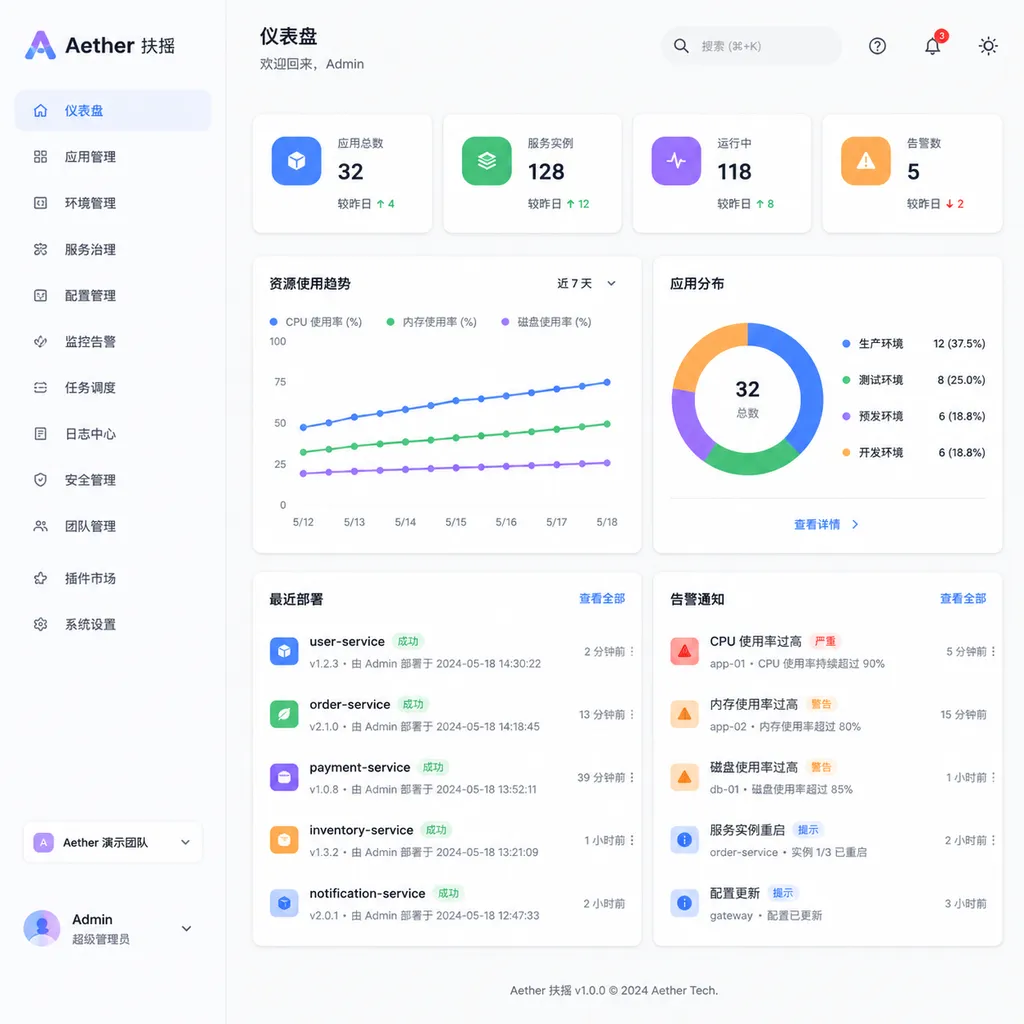
A new Android local AI Agent tool called Aether Fuyiao was officially open-sourced today. It is the first domestic mobile-end local Agent project focusing on “high aesthetics”. When announcing the release in the Linux.do community, the developer plainly stated:
“Still fixing it, still fixing it — this tool doesn’t yet properly support the OpenAI-compatible API.”
This candid release style perfectly fits the open-source community’s ethos — release first, then fix issues along the way.
Why Yet Another Agent Tool?
By 2026, the AI Agent space has become crowded. From AutoGPT, AutoGen, to MetaGPT, open-source frameworks are everywhere. From specialized Agents like Lovart.ai (for design) to general-purpose Agents, vertical use cases are constantly being refined. Aether Fuyiao’s focus — local execution on mobile — is actually a smart angle.
The pain points of mobile AI Agents are clear: cloud API calls have latency, require internet, and pose data-upload privacy risks. Especially under China’s network conditions, calling overseas APIs can be frustrating. Running locally, while demanding device performance, results in complete data control and zero-latency feedback.
Aether Fuyiao’s positioning as “highly aesthetic” is also significant in the developer-tools space. Look at why tools like RunApi or Jisuxiang (Speedbox) became popular — solid functionality is essential, but good-looking design makes users want to use it daily. The Android developer-tool ecosystem generally lacks visual polish, so if Aether Fuyiao truly nails the UI, it has a clear competitive edge.
Technical Trade-offs
From the information disclosed so far, Aether Fuyiao uses local model inference — meaning large language models run directly on Android devices, with high hardware demands. Considering that today’s flagship smartphones can already run quantized models at around 7B parameters, this setup is technically feasible.
However, the developer’s remark that “OpenAI compatible API support isn’t done” exposes a key issue: many developers are used to OpenAI’s API format. If Aether Fuyiao cannot integrate seamlessly, adoption becomes harder. That’s why API aggregation platforms like OpenAI Hub thrive — unified interface formats reduce integration friction.
Another technical challenge for local Agents is Tool Calling — the Agent’s ability to invoke external tools for complex tasks (e.g., checking weather, sending mail, manipulating files). Implementing this on Android means dealing with permission systems, sandboxing, background restrictions, etc. As the first mobile Agent to take this leap, Aether Fuyiao will likely have to tackle all these pitfalls firsthand.
Open Source Strategy Considerations
Choosing open source is an interesting move. The commercialization paths for AI Agents are relatively clear: sell SaaS services or offer private deployment. Aether Fuyiao going open source may reflect several considerations:
-
Unclear business model for mobile local Agents. Cloud Agents can charge per call, but how do local tools monetize? One-time licensing? Add-on services? Still uncertain. Open sourcing first to build user base and reputation, then exploring monetization later, is a safe approach.
-
The technical barrier isn’t too high. Frameworks for large-model inference (like llama.cpp, MLC LLM) are open source, and Android development is a mature stack. The real moat lies in product polish and ecosystem building — open-sourcing can actually accelerate both.
-
Chinese developers embrace open-source tools. Projects like ChatDev and BabyAGI have gained huge domestic traction. Developers are willing to contribute code and publicity for well-made open tools.
Comparison with Existing Solutions
Placed in the broader AI Agent landscape, Aether Fuyiao faces many competitors:
Cloud-based Agent frameworks (e.g., AutoGen, LangChain): stronger functionality and model choices, but rely on network connectivity and APIs.
→ Aether Fuyiao’s strength: local operation.
→ Its weakness: model capabilities limited by device performance.
Desktop Agent tools (AI assistants): better performance but lack portability. Mobile Agents shine when used in fragmented scenarios — accessible anytime, anywhere.
Other mobile AI tools: most are simple chat interfaces or single-purpose apps (AI writing, AI drawing). Few have true Agent behavior capable of autonomous tool invocation. Aether Fuyiao might be among the first to do so.
Architecturally, Aether Fuyiao seems like AutoGPT on Android — the pipeline being: receive user instruction → break down task → call tools → return results. Mobile limits (compute, memory, battery) mean heavy optimization is required.
The Importance of API Compatibility
The stated lack of proper OpenAI-compatible API support is a real issue. OpenAI’s API format has become a de facto standard — Claude, Gemini, and domestic Chinese models all provide compatible endpoints. Without this support, Aether Fuyiao suffers:
- High integration cost: developers must adapt their code specifically for Aether Fuyiao.
- Fragmented ecosystem: many tools/frameworks built around the OpenAI API won’t integrate directly.
- Poor interchangeability: switching between local and cloud models isn’t as easy as changing an endpoint.
Hence, platforms like OpenAI Hub are valuable — they unify API formats for seamless model switching. For Aether Fuyiao, adding this capability should be a top priority.
The Privacy Advantage of Local AI
In an era of heightened privacy awareness, locally running AI Agents have a natural edge. All data processing stays on-device — no servers involved — making them ideal for sensitive content like personal notes, work documents, or private chats.
Cloud APIs not only risk data leaks but could potentially reuse data for training. Even if major providers promise otherwise, no one can guarantee it. Local execution eliminates this concern altogether.
Of course, local operation has trade-offs: limited model capability, slower iteration compared to cloud models, and battery/thermal constraints. Yet for certain users — privacy-conscious professionals, enterprise use — these trade-offs make sense.
Reactions from the Open Source Community
Judging from discussions in the Linux.do community, developers are cautiously optimistic. The local Agent concept is well-received, but doubts linger about current maturity levels.
Releasing with a “still fixing it, still fixing it” attitude is common in open-source — launch a usable version early, then iterate via feedback. Benefits: faster user insights; risks: poor initial experience may cause early churn.
Comparable to other open-source AI projects, Aether Fuyiao faces several critical to-dos:
- Documentation and examples: success depends heavily on clear docs — detailed guides, API references, best practices.
- Community building: engage developers, respond to issues, accept PRs, run community events.
- Ecosystem growth: allow plug-ins; open extension APIs. Think VS Code — plug-in ecosystems define long-term competitiveness.
- Performance optimization: critical on mobile — inference speed, memory footprint, battery drain must all be tuned continuously.
The Future of Mobile AI
Zooming out, Aether Fuyiao represents a key trend: AI shifting from cloud to local, from simple chat to complex Agent behaviors.
Smartphone compute power enables this. Flagship chips — Snapdragon 8 Gen 3, Dimensity 9300, Apple’s A-series — all include powerful NPUs for AI inference. With hardware ready, the software ecosystem will naturally follow.
Edge computing also drives this movement. Even with 5G/WiFi 6 boosting speeds, physical latency remains. For real-time AI tasks (translation, AR assistance), local inference is the only way to achieve true responsiveness.
But challenges persist — chiefly, model capacity vs. device limits. A 7B-parameter model barely runs on phones, still inferior to 70B+ cloud models. Delivering decent experience on limited hardware is the universal mobile AI problem.
A potential solution: hybrid architecture — simple tasks processed locally, complex ones offloaded to cloud. This needs intelligent task routing. If Aether Fuyiao implements OpenAI API compatibility well, hybrid support will come naturally.
Lessons for Developers
Aether Fuyiao’s release offers several takeaways for AI app developers:
1. “Local-first” is worth exploring. Cloud APIs are powerful, but local operation wins on latency, cost, and privacy — especially vital for enterprise (ToB) use cases.
2. Open source accelerates product validation. The AI space changes fast — closed development risks misdirection. Open-sourcing invites real feedback and collaborative progress.
3. Standards compatibility matters. OpenAI’s API format is the practical global standard. Supporting it minimizes friction and maximizes interoperability.
4. UI/UX as differentiation. Many tools provide similar functions; those that look great and feel smooth keep users. “High aesthetics” is no gimmick — it’s concrete competitive power.
Conclusion
As the first open-source, highly aesthetic Android local AI Agent, Aether Fuyiao fills a void in mobile AI tooling. Despite current issues (OpenAI API compatibility, incomplete functions), its direction feels right.
Local AI Agents won’t replace cloud-based ones but will become an important complement — just like desktop and web apps coexist. The key lies in finding fitting use cases and leveraging strengths accordingly.
For developers, now is an opportune time to enter mobile AI — hardware readiness, rapid open-source evolution, but a shortage of polished products and scenarios. Aether Fuyiao has taken the first step; more projects will surely follow.
How far Aether Fuyiao goes depends on team execution and community traction. Open-source success never happens overnight — it takes sustained effort and iteration.
“Still fixing it, still fixing it” is a good start; hopefully, we’ll soon hear “fixed it, fixed it.”
References
- Official Release! “Aether Fuyiao” Open-Source High-Aesthetic Android Local Agent - Linux.do — official project announcement including developer notes on the current version


