
Self‑Built Relay Pool Connecting to GPT‑5.5: A Hardcore Experiment on Performance and Cost

A developer built a self-hosted API relay pool on a physical machine and successfully connected to GPT-5.5. Starting from this case, we break down the real costs and engineering trade‑offs of three approaches: self-hosted relays, open‑source gateways, and aggregation platforms.
Someone posted on the LINUX DO forum, saying they’d set up a relay pool on a physical machine, connected it to GPT‑5.5, and as a side project launched a giveaway for usage credits. The post wasn’t long—36 people took part—and it looked like a personal tinkering project.
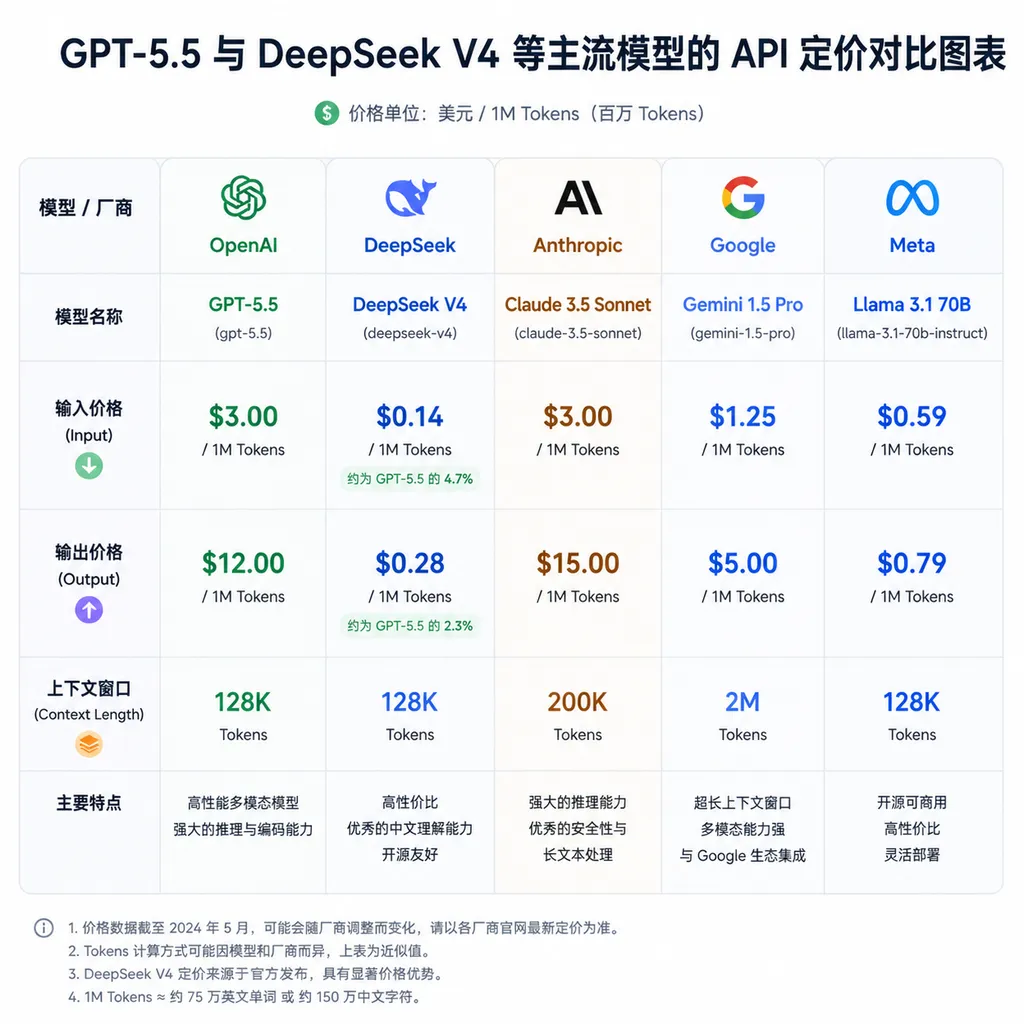
But behind this lies an increasingly common developer dilemma: since the release of GPT‑5.5, API pricing has once again shattered the ceiling—the output side now costs nearly 1,230 RMB per million tokens. For independent developers hoping to run Agent workflows in production, that number alone is enough to stop most in their tracks.
Self‑hosting a relay pool is essentially inserting a custom proxy gateway layer between the official API and the client calls. The goals are straightforward: reduce latency, unify interfaces, balance load across multiple keys, and spread costs.
None of this is new—but GPT‑5.5 has changed both the engineering complexity and the economics of the approach.
Why Everyone Is Building Relays Now
Let’s start with the background.
By 2026, the large‑model API market looks completely different from two years ago. GPT‑5.5 truly represents a qualitative leap in reasoning—it’s the model OpenAI explicitly positions as an “agent‑native brain,” outperforming predecessors in Lean formal verification, bioinformatics assistance, and multi‑step reasoning. Officially, it boasts a 30 % token efficiency improvement, meaning it completes the same tasks with fewer tokens.
But the price has doubled.
Meanwhile, DeepSeek V4‑Flash’s output costs only 1.91 RMB per million tokens—a 643‑fold gap from GPT‑5.5 Pro. That’s not a discount difference; it’s a difference of scale.
So developers face a very real choice: either grit your teeth and pay the official API cost, or find ways to optimize in the middle. A self‑hosted relay pool is one of those optimizations.
What Exactly Does a Self‑Hosted Relay Pool Build?
The forum poster didn’t share their tech stack (to comply with forum rules, they didn’t even link the site), but from the description and discussion you can reconstruct the rough architecture.
A typical self‑hosted relay pool includes these layers:
- Reverse proxy layer: Nginx or Caddy entry point, handling TLS termination and basic traffic routing
- Gateway logic layer: handles authentication, request rewriting, model routing, and key rotation
- Upstream connection pool: maintains connections for multiple API keys, performs load balancing, rate‑limit avoidance
- Billing and logging: tracks token usage per request, enabling cost sharing
In plain terms, you run a program on your server exposing an OpenAI‑compatible API endpoint. Internally, it holds multiple official keys; when a request arrives, it automatically picks an available key and forwards it upstream.
The idea is simple—the tricky part lies in the details.
Key Rotation and Rate‑Limit Circumvention
OpenAI enforces strict rate limits (RPM and TPM) per API key, with GPT‑5.5 limits tighter than earlier versions. At high concurrency, a single key quickly hits error 429.
A core benefit of a relay pool is smart rotation among keys. The simplest scheme is round‑robin, but production setups require finer‑grained policies:
import time
import threading
from dataclasses import dataclass, field

@dataclass
class KeySlot:
    key: str
    rpm_remaining: int = 60
    tpm_remaining: int = 800000
    last_reset: float = field(default_factory=time.time)
    cooldown_until: float = 0.0

class KeyPool:
    def __init__(self, keys: list[str]):
        self.slots = [KeySlot(key=k) for k in keys]
        self.lock = threading.Lock()

    def acquire(self, estimated_tokens: int = 1000) -> KeySlot | None:
        now = time.time()
        with self.lock:
            for slot in self.slots:
                # reset counters each minute
                if now - slot.last_reset >= 60:
                    slot.rpm_remaining = 60
                    slot.tpm_remaining = 800000
                    slot.last_reset = now
                # skip keys in cooldown
                if now < slot.cooldown_until:
                    continue
                if slot.rpm_remaining > 0 and slot.tpm_remaining >= estimated_tokens:
                    slot.rpm_remaining -= 1
                    slot.tpm_remaining -= estimated_tokens
                    return slot
        return None  # all keys unavailable

    def report_429(self, slot: KeySlot):
        """cool down this key for 30 seconds after a 429"""
        slot.cooldown_until = time.time() + 30
This snippet shows basic key‑pool management. In reality you also handle expired keys, depleted quotas, and per‑model limits—each extra condition adds more complexity.
Latency Optimization
Another goal of self‑hosting a relay pool is lower latency.
GPT‑5.5’s inference clusters are in North America; direct connections from mainland China face many network hops and trans‑Pacific jitter. According to a Juejin article reviewing multi‑model API integration, direct calls to OpenAI’s official API show P50 latency around 1.8 s and P99 up to 5.2 s. During peak hours (overlapping with U.S. working time) it’s even worse.
A self‑hosted relay in a well‑connected datacenter can, in theory, optimize via:
- Connection reuse: keep persistent upstream connections, avoiding the TLS handshake cost each time
- Nearby placement: hosting in Hong Kong or Japan shortens RTT dramatically
- Warming and caching: cache identical‑prompt responses (though hit rates are low for LLMs)
But here’s reality: one physical machine has fixed network conditions. You can’t replicate the global edge‑node deployments of commercial aggregators. So the latency‑optimization ceiling of self‑hosting is clear.
Real Comparison of Three Paths
A self‑built relay is just one path to handle multi‑model calls. Across options, developers generally have three routes.
Path 1: Pure Self‑Build, Start from Scratch
That’s what the forum poster did—buy hardware, write gateway logic, manage key pools yourself.
Pros: full control; no middlemen; data never touches third parties. For strict‑security scenarios (e.g. enterprise tools handling sensitive data) it may be the only choice.
Cons:
- Initial cost: hardware, bandwidth, domains, certificates
- Ongoing maintenance: follow every upstream API change—OpenAI revised specs at least thrice last year
- Stability risk: single point of failure, no fallback; if it crashes at 3 a.m., everything downstream fails
Best suited for teams with ops expertise, strict data isolation needs, and high enough volume to amortize fixed costs.
Path 2: Open‑Source Gateways—Standing on Shoulders
The community already has many mature open‑source gateways. The trendy one lately is Sub2API, a popular AI gateway project with 15 K stars.
Sub2API turns AI subscriptions into shareable APIs: you connect your Claude Max, GPT Pro, etc., the platform balances load and handles billing, then distributes shareable API keys.
The stack is Go backend + Vue 3.4 frontend and deploys easily. Highlights:
- Sticky Session: same user’s consecutive requests go to the same upstream account, preserving context—crucial for long sessions like Claude Code
- Auto rate‑limit switching: when one account hits limits, switch automatically
- Tool compatibility: Claude Code, Cursor, Codex CLI work after changing Base URL
But Sub2API focuses on “car‑pooling,” not high‑availability production gateways: several people share one subscription and split the cost, rather than running production‑grade APIs.
Can it run GPT‑5.5 Agent workflows? Yes—but you must handle high availability, monitoring, and recovery yourself. Open‑source projects give 80 % functionality; the remaining 20 % of production hardening often consumes 80 % of the workload.
Path 3: Aggregation Platforms—Pay for Time
The third route is commercial aggregated APIs. They share three traits: unified interface (usually OpenAI SDK compatible), single key accessing multiple models, domestic network optimization.
Per Juejin’s benchmark, aggregator latency shines:
| Metric | Direct Official API | Self‑Hosted Fallback | Aggregation Platform | |---------|--------------------|----------------------|----------------------| | P50 Latency | ~1.8 s | ~2.0 s | ~300 ms | | P99 Latency | ~5.2 s | ~3.5 s | ~800 ms | | Maintenance Cost | Low (but unstable) | High | Almost zero |
A 300 ms P50 vs 1.8 s direct is 6× faster. Users feel the difference—one “instant,” the other “spinning.”
Aggregators achieve this by deploying edge nodes close to upstream endpoints; domestic requests go to local nodes, then via optimized lines to upstream. Such infra investment is beyond individual developers.
Platforms like OpenAI Hub follow this model—one key covers GPT, Claude, Gemini, DeepSeek, etc.; unified format compatible with OpenAI SDK; direct domestic access. For independent devs this saves not only network tuning but constant API‑version adaptation.
The trade‑off: all traffic passes a third party, raising concerns about data security and vendor lock‑in.
How Costs Add Up
Beyond tech details, the decision often comes down to math.
Assume you’re an indie developer running GPT‑5.5, consuming 500 K tokens/day (input + output), ~15 M/month.
Direct official API costs:
GPT‑5.5 Pro output ≈ 1,229 RMB/million tokens. With input/output ratio 3 : 1 and inputs ¼ output price, monthly cost ≈ 6 K–8 K RMB—not counting retries.
Self‑Hosted Relay costs:
API fees unchanged—you still call official endpoints—plus:
- Server/VM: 500–2,000 RMB/month
- Bandwidth: 200–500 RMB/month
- Your own time: priceless (or very costly)
It won’t cut API costs; it saves latent and stability costs—time‑outs, 429 errors. With a big key pool, rotation boosts throughput, indirectly lowering cost per token.
Open‑Source Gateway (car‑pool mode):
Five people share one GPT‑5.5 Pro plan via Sub2API—each pays about ⅕. But usage must be staggered; hitting caps together hurts everyone. And shared accounts sit in OpenAI’s ToS gray zone.
Aggregation Platform costs:
Usually official price + service fee. But fewer retries, higher efficiency, and unified interface offset this. If you call OpenAI + Anthropic + Google, maintaining three SDKs yourself may cost far more in engineering hours.
A Commonly Ignored Issue: API Fragmentation
The forum poster only connected GPT‑5.5, but most developers use multiple models.
Typical multi‑model workflow: GPT‑5.5 for complex reasoning, Claude for code review, Gemini for multimodal tasks, DeepSeek for economical runs—four models, four APIs, four auth methods:
- OpenAI: Bearer Token
- Anthropic:
x-api-keyheader - Google: OAuth or special endpoint formats
- DeepSeek: OpenAI‑compatible with extra fields
Each new model means a whole new adapter layer. As one Juejin author bluntly put it: “Maintaining multiple SDK adaptation layers alone is a heavy burden for independent devs; every vendor’s version bump forces sync updates, diverting time from actual product work.”
Extending a self‑built relay to multiple models grows exponentially complex—and that’s why many give up and choose aggregators. It’s not that self‑hosting can’t do it, but that continuous maintenance cost kills the ROI.
Practical Advice
If you still want to build a relay pool yourself, here are some practical tips:
Server Choice : prefer Hong Kong or Japan light‑cloud servers; RTT to OpenAI ≈ 50–80 ms vs. much higher from mainland. Physical machines offer stable bandwidth but need more ops work. For reasonable latency, cloud is fine.
Gateway Framework: don’t code from scratch. OpenResty (Nginx + Lua) or Go‑based light gateways are mainstream. If you like Python, FastAPI + httpx async works but performs worse under high concurrency.
Key Management: prepare ≥ 5 API keys for rotation. GPT‑5.5 limits are tight; one key caps quickly at scale. Implement a health‑checked key pool, auto‑drop invalid or expired keys.
Monitoring: Prometheus + Grafana are standard. Track each key’s 429 frequency, P50/P99 latency, token rate. Flying blind is dangerous.
Disaster Recovery: set a fallback model. If GPT‑5.5 fails, auto‑switch to GPT‑5.4 or Claude—better degraded than down.
# Simplified relay‑pool configuration example
upstream:
  models:
    - name: gpt-5.5
      endpoint: https://api.openai.com/v1/chat/completions
      keys:
        - sk-key1
        - sk-key2
        - sk-key3
      max_rpm_per_key: 60
      max_tpm_per_key: 800000
      fallback: gpt-5.4
    - name: gpt-5.4
      endpoint: https://api.openai.com/v1/chat/completions
      keys:
        - sk-key4
        - sk-key5
      max_rpm_per_key: 120
      max_tpm_per_key: 2000000

server:
  listen: 0.0.0.0:8080
  tls: true
  cert: /etc/ssl/certs/gateway.pem
  key: /etc/ssl/private/gateway.key

rate_limit:
  strategy: token_aware
  cooldown_on_429: 30s
  health_check_interval: 60s
The Essence of It
Back to that forum post: 36 participants, prizes were GPT‑5.5 usage credits—small scale, but signifying a trend: developers are no longer content as pure API consumers, they’re innovating at the middleware layer.
It’s like how people once built their own VPN on a VPS—official routes too expensive or slow, so build your own. Difference: AI API relay has higher technical and maintenance barriers.
For most independent devs, unless you need strict data isolation or simply enjoy tinkering, the ROI of self‑hosting is low. Time spent maintaining gateways and fixing failures is time lost building features and running experiments.
Which path to choose depends on how you value your time.
If your hour is worth 200 RMB and self‑hosting costs 5 extra hours weekly in maintenance, that’s 4,000 RMB/month hidden cost—possibly more than an aggregator’s fee.
Tools exist to serve you, not the other way around.
References:
- LINUX DO Forum: Self‑Hosted Relay Pool Connecting GPT‑5.5 Test — original post with background and discussion
- Juejin: Engineering Challenges of Multi‑Model API Integration — comparison of direct, self‑hosted fallback, and platform latency/stability data
- Juejin: Sub2API Open‑Source AI Gateway Overview — open‑source project with 15 K stars enabling AI subscription sharing and load balancing


