
The Ministry of Industry and Information Technology launches a special “AI + Software” initiative, with intelligent programming and MaaS emerging as new hotspots.
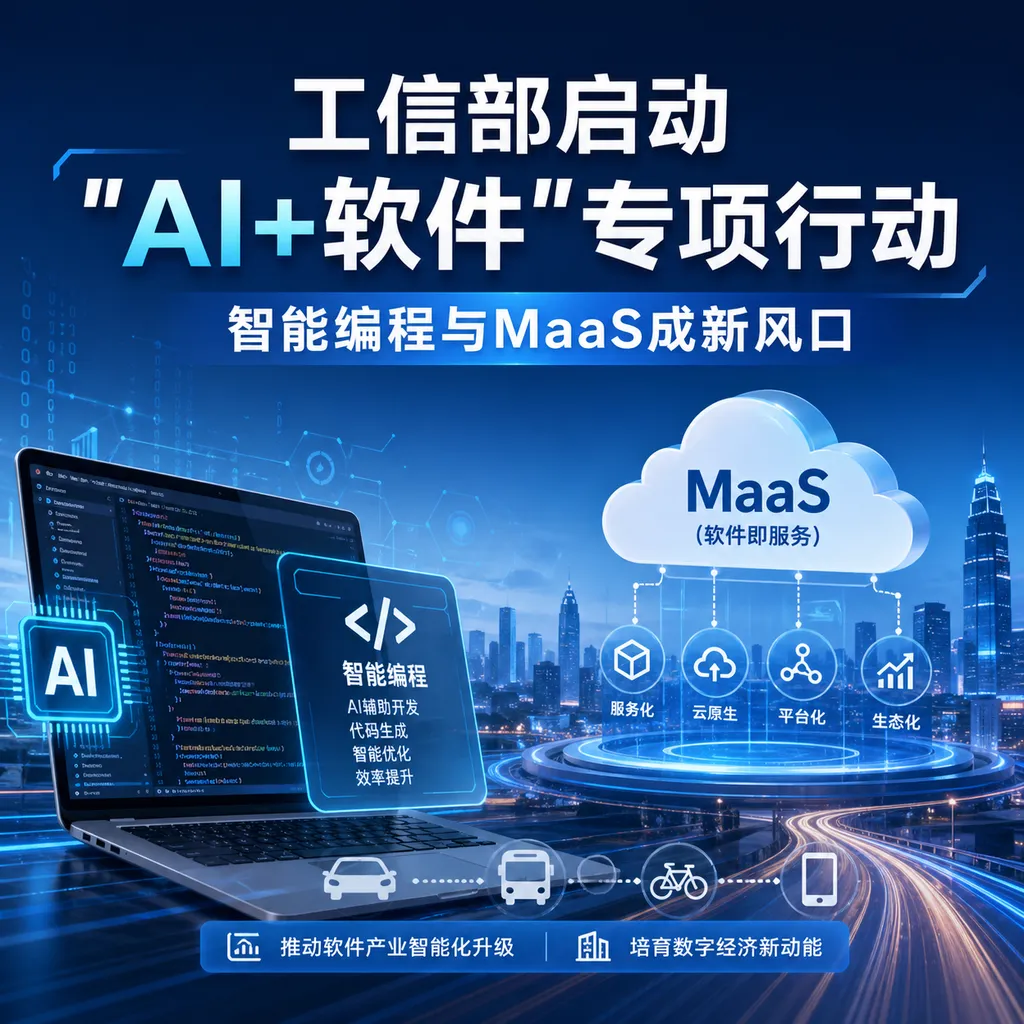
Ke Jixin, Vice Minister of the Ministry of Industry and Information Technology, announced the launch of a special initiative on "AI + Software," focusing on advancing intelligent programming R&D and applications, fostering new business models such as Model-as-a-Service (MaaS) and Agent-as-a-Service, and accelerating the intelligent transformation of the software industry.
MIIT Launches "AI + Software" Special Initiative: Intelligent Programming and MaaS as Emerging Frontiers
On April 28, Vice Minister of Industry and Information Technology Ke Jixin revealed at a State Council policy briefing that the Ministry of Industry and Information Technology (MIIT) will carry out a “Artificial Intelligence + Software” special initiative to accelerate the R&D and application of intelligent programming, and to foster new business models such as Model as a Service (MaaS) and Agent as a Service. Following the inclusion of the “Artificial Intelligence +” initiative in the 15th Five-Year Plan, this marks another clear policy signal to empower the software industry with AI.
Policy Signal: A Key Step from Concept to Implementation
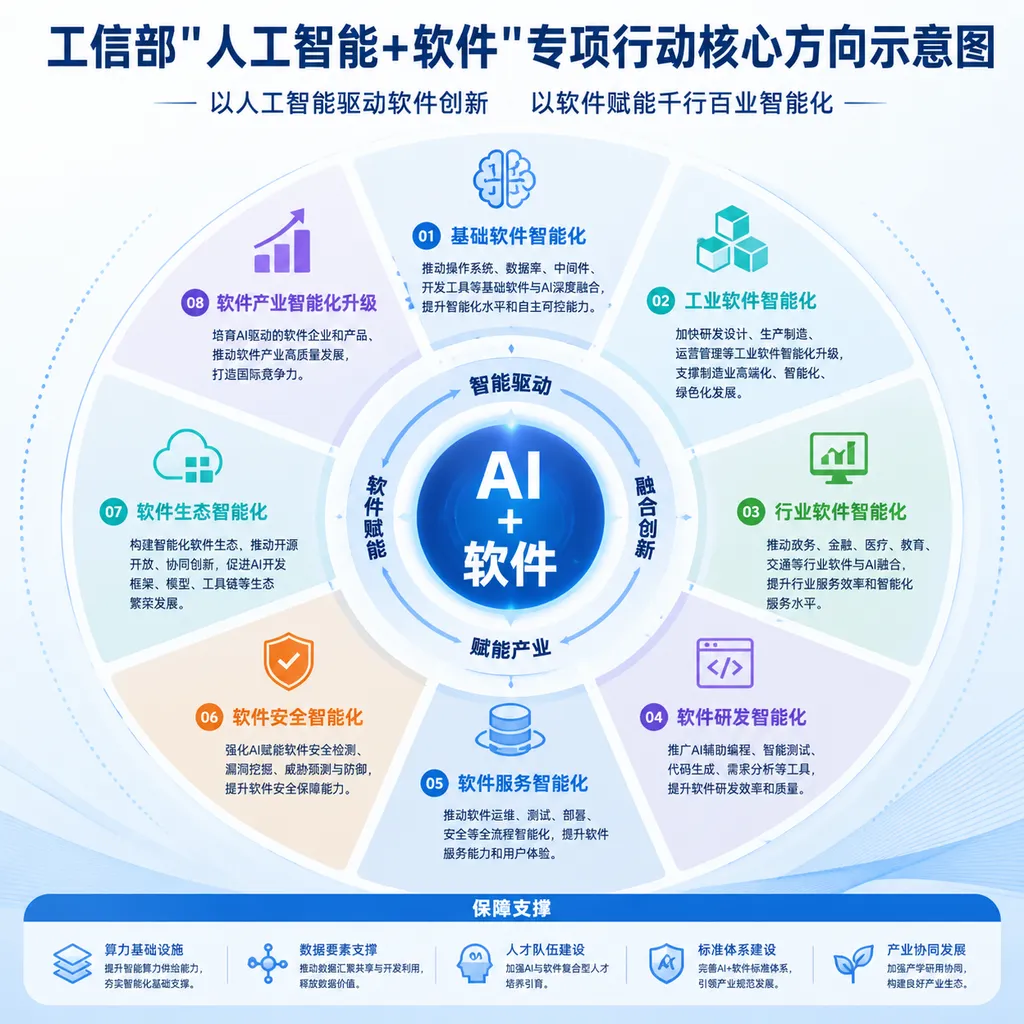
This special initiative is not just empty talk. Ke Jixin identified three key directions: intelligent programming R&D and application, cultivation of new business models such as MaaS and Agent as a Service, and intelligent upgrades of foundational and industrial software. In plain terms — AI will genuinely permeate the entire software development lifecycle, from writing code to deploying services, and from operating systems to industrial control software.
In intelligent programming, tools like GitHub Copilot and Cursor have already proven market demand. But domestic vendors have yet to establish a clear leader in this field. By explicitly calling for “accelerated R&D and application,” MIIT signals that policy resources will lean toward this area. For developers, this could mean more domestic AI programming assistants, especially tailored for vertical scenarios like industrial software and embedded development.
MaaS (Model as a Service) and Agent as a Service offer an even broader imagination space. MaaS essentially packages large model capabilities into APIs, allowing enterprises to use AI without training their own models. This model is already established overseas — OpenAI’s and Anthropic’s API businesses are classic examples. Chinese companies like Baidu, Alibaba, and Tencent are also pursuing this path, though commercialization progress varies. MIIT listing MaaS as a key area for development could lead to standardized APIs, lower integration barriers, and make it accessible for SMEs to adopt AI cost-effectively.
Agent as a Service: From Chatbots to Digital Employees
Agent as a Service is a newer concept. Unlike traditional chatbots, agents can proactively plan tasks, invoke tools, and execute multi-step operations. For example, if you tell an agent “Help me book a flight to Shanghai tomorrow,” it not only responds “Sure,” but actually searches flights, compares prices, makes the booking, and even handles payment.
This capability is transformative for enterprise applications. Imagine a customer service agent that automatically handles 80% of routine inquiries, a dev agent that generates code frameworks from specification documents, or an operations agent that monitors systems and auto-fixes faults around the clock. This isn’t science fiction — OpenAI’s GPTs and Anthropic’s Claude Projects are already moving in this direction. If domestic vendors can seize this policy opportunity and build benchmark cases in verticals (finance, manufacturing, government), the potential is enormous.
However, Agent as a Service faces challenges of reliability and cost control. Agents often need multiple large-model calls and external API accesses — every invocation costs money. Mishandled task planning could lead to infinite loops or wrong actions. This demands smarter underlying models, lower inference costs, and robust architectures. The emergence of cost-efficient models like DeepSeek-V3 makes commercialization feasible — when inference costs drop to 1/10 of previous levels, large-scale agent deployment becomes possible.
Intelligent Transformation of Foundational and Industrial Software
MIIT also stressed “accelerating the intelligent upgrades of foundational and industrial software.” This is a tough nut to crack.
Foundational software (OS, databases, middleware) and industrial software (CAD, EDA, MES) have long been dominated by foreign vendors. Domestic alternatives have been discussed for years, but gaps remain in user experience and ecosystem maturity. Could AI offer a chance to leapfrog?
Possibly. For instance, Alibaba’s PolarDB already uses AI for query optimization and fault prediction; in industrial software, CloudWalk uses large models for knowledge verification in engineering design, improving engineer efficiency. Yet these are isolated breakthroughs, not systemic advantages. MIIT highlighting intelligent upgrades may drive joint efforts among industry, academia, and research, speeding up technology deployment.
For developers, this means new career opportunities. Professionals who understand both AI and industrial software will be in high demand. If you’re working on CAD plugin development, database kernel optimization, or embedded systems, learning large-model application development now will give you a competitive edge in coming years.
Open-Source Ecosystem Development: More Than Empty Promises
Ke Jixin also mentioned “strengthening the open-source ecosystem,” which is an important signal.
China’s AI open-source ecosystem has made visible progress — models like DeepSeek, Qwen, and GLM rank high globally and see decent downloads. But compared to global platforms like Hugging Face and GitHub, the domestic ecosystem is still fragmented. Models are open-sourced, but supporting toolchains, community docs, and best-practice examples are lacking, making adoption cumbersome for developers.
If MIIT is serious about “strengthening open-source ecosystem development,” several steps may follow:
- Promote standardization of open-source licenses. Current domestic AI model licenses vary widely — some allow commercial use, others don’t; some require open-sourcing derivatives, others don’t. Standardization would lower usage barriers for enterprises.
- Build domestic open-source platforms. Platforms similar to Hugging Face for model hosting or GitHub for code collaboration, but aligned with local compliance and network conditions.
- Provide funding for open-source projects. Following examples like the Apache and Linux Foundations, allocate financial, legal, and operational backing to worthy projects so developers can focus on tech instead of survival.
Impact on Developers and Enterprises
The special initiative affects different stakeholders differently:
For Developers: Intelligent programming tools will multiply, but job loss fears are overblown. AI now handles repetitive coding, unit test generation, and code reviews — complex system design, architecture decisions, and business understanding still require humans. Learning to leverage AI for efficiency and spending time on higher-value work is the right approach.
For Software Enterprises: MaaS and Agent as a Service open new revenue models. SaaS vendors can package AI capabilities as value-added services; solution providers in vertical industries can use agents to reduce implementation costs and enhance client satisfaction. But choosing the right base model is crucial — performance, cost, and compliance all matter. Aggregation platforms like OpenAI Hub are valuable here, offering one key to access multiple mainstream models and cutting switching costs.
For AI Vendors: Policy benefits will boost the market but also intensify competition. The MaaS market will shift from the “battle of the hundreds of models” phase to one where “applications rule.” Having a strong model alone isn’t enough — solid APIs, docs, reliability, and fair pricing matter too. Whoever makes it easy and affordable for developers and businesses wins.
Supporting Policies Worth Attention
MIIT also highlighted several supporting measures:
- Improve the digital-intelligent transformation service system for manufacturing and nurture quality service providers. This implies more integrators and consulting firms stepping in to assist traditional enterprises with AI adoption.
- Advance the industrial internet innovation program to enhance computing power layout and edge computing infrastructure. AI applications aren’t confined to the cloud — edge environments (factories, warehouses, retail sites) require computing too, creating demand for edge AI chips and lightweight models.
- Implement an industrial data foundation initiative to build high-quality datasets. Data is AI’s fuel, and industrial data is often scattered, inconsistent, and costly to label. Government-led data collection across industries would significantly lower AI adoption barriers.
If implemented well, these policies could form a full “computing–data–model–application” ecosystem. Startups should watch for concrete support measures like government procurement, industrial funds, and tax incentives.
In Closing
The “AI + Software” special initiative is not the first policy statement, but this time the focus and direction are clearer. Intelligent programming, MaaS, and Agent as a Service are no longer mere buzzwords — they represent commercially validated models abroad and fast-emerging opportunities at home.
For developers, now is the best time to learn AI application development. For enterprises, AI is no longer “nice to have” but foundational infrastructure — “use it or fall behind.” For the software industry, this could be another paradigm shift following mobile internet and cloud computing.
Policy provides guidance and resources, but ultimately success depends on technology and products. Those who can build AI software tools that developers love and enterprises are willing to pay for will thrive in this new wave.
References
- MIIT: To Launch “AI + Software” Special Initiative, Accelerate Intelligent Programming R&D and Application – IT Home
Official statement by MIIT Vice Minister Ke Jixin at the State Council policy briefing, clarifying the three main directions of the special initiative.


