
Musk personally admitted: Grok was trained using OpenAI models
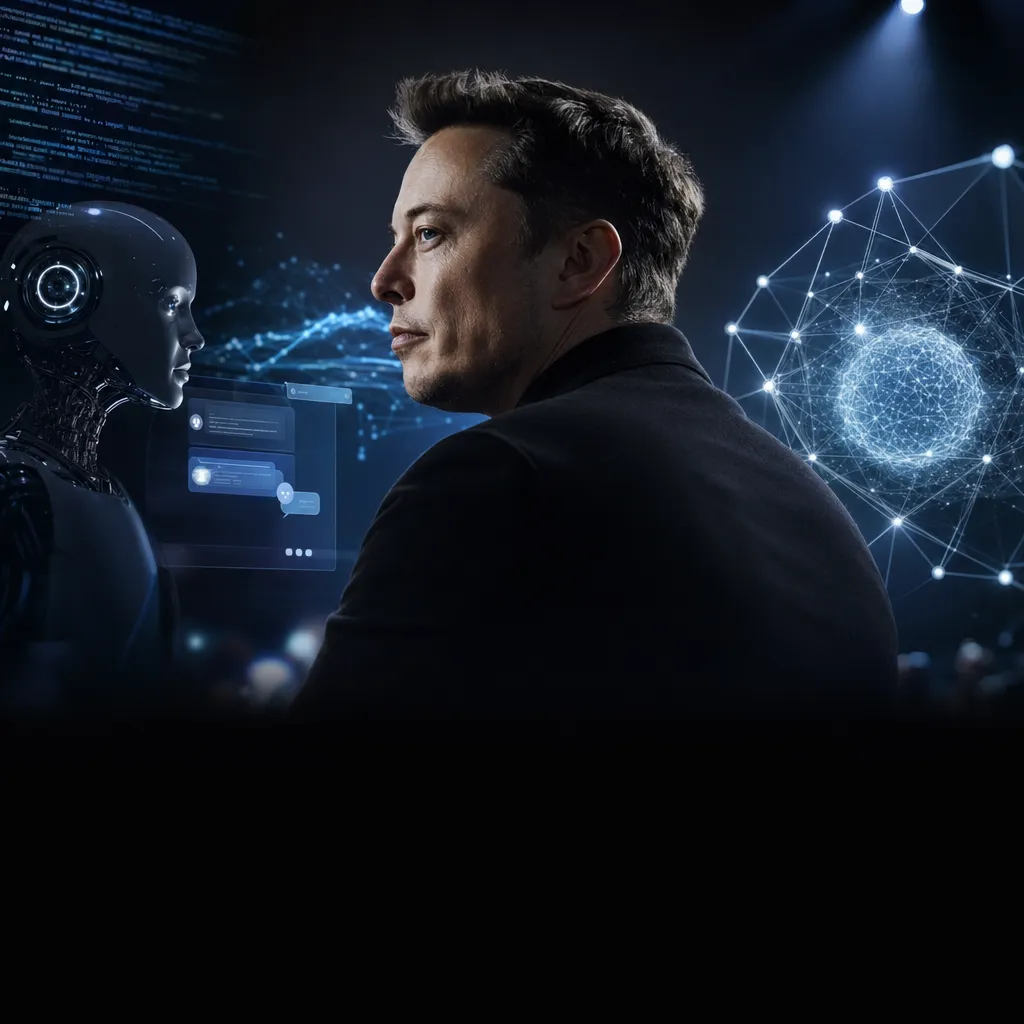
In federal court, Musk admitted that xAI used OpenAI’s models to train Grok, completely igniting the controversy over the legality of model distillation. The boundaries of intellectual property in the AI industry are being redrawn.
Musk Admits: Grok Was Trained Using OpenAI Models; Model Distillation Legality Debate Erupts
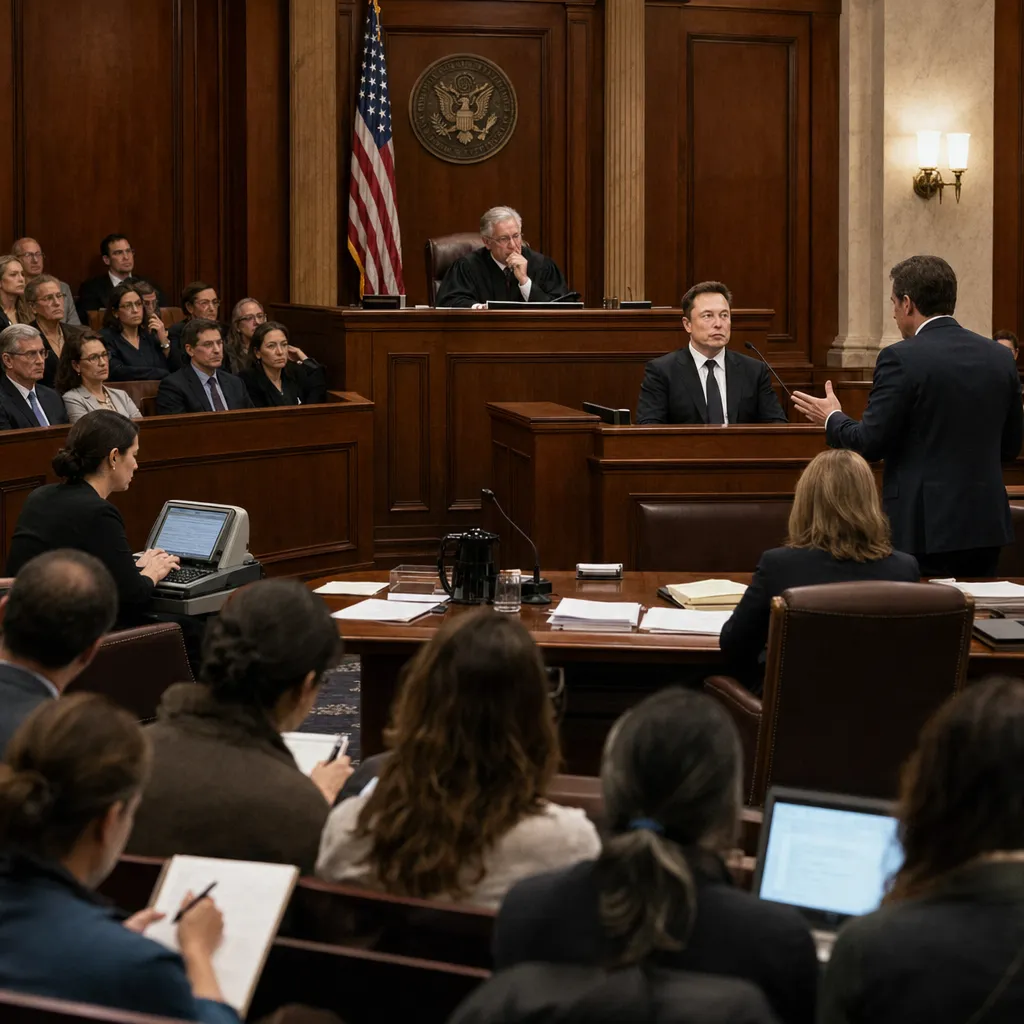
On April 30, in a federal courtroom in California, Musk personally admitted from the witness stand something everyone in the AI industry knows but no one wants to say out loud — xAI did use OpenAI’s models to train Grok.
This statement carries weight far beyond the scope of a business lawsuit. It thrusts “model distillation,” a long-standing gray-area industry practice, directly under the spotlight.
What Happened in Court
The background isn’t complicated. The legal dispute between OpenAI and Musk has been ongoing for quite some time, and one of the core issues in this trial is whether xAI enhanced Grok’s capabilities using OpenAI’s models through a distillation approach.
Musk was directly asked on the witness stand whether he knew what model distillation was and whether xAI had used this technique. His answer was affirmative.
This admission was explosive not only because of the feud between Musk and OpenAI — he was a co-founder of OpenAI, later turned rival, and founded xAI to compete directly — but also because it is the first time a leading AI company’s founder publicly confirmed cross-company model distillation in a legal setting.
In the past, everyone simply understood and kept quiet. Now, it’s on record, black and white.
Model Distillation: The AI Industry’s Open Secret
Let’s clarify the technology first.
The core idea of model distillation is simple: a large model acts as the “teacher,” and a smaller model acts as the “student.” The student doesn’t need to learn from scratch — it just imitates the teacher’s outputs: how the teacher answers questions, reasons, and organizes logic.
This technique is perfectly legal and an industry standard. OpenAI uses GPT-4 to distill smaller, faster models; Google employs Gemini Ultra to train Gemini Flash; Anthropic applies similar internal methods. When a company uses its own large model to train its smaller models, there’s no problem.
The controversy lies in this: can you use someone else’s large model to train your own?
Imagine this: a Michelin three-star chef spends twenty years creating a unique recipe. You eat at his restaurant every day, meticulously record the flavors and textures, then go back to your own restaurant and reproduce them. You didn’t steal his recipe — you only “tasted” the results. Yet your dishes taste nearly identical to his.
Is that theft?
Technically, cross-company distillation typically works like this: you send large numbers of carefully designed prompts via the API to a target model, collect its outputs — including answers, reasoning paths, and chains of thought — and then use that data as training corpus to fine-tune or train your own model.
It’s cheap and effective. A team might spend only tens of thousands of dollars in API calls to get a model that approximates the capabilities of a top-tier one trained for hundreds of millions.
That’s why nearly all cutting-edge labs explicitly prohibit using their API outputs to train competing models. But enforcement differs from rules — and in reality, this red line gets crossed repeatedly.
Why Musk’s Admission Matters
Model distillation has long been controversial, but previously it remained at the level of “accusations” and “speculation.”
Anthropic once released a report accusing several companies of industrial-scale distillation. OpenAI and Google have repeatedly expressed frustration over such practices. At one point, the three leading U.S. labs even formed a temporary alliance to prevent distillation through watermarking, request monitoring, and traceability techniques.
But all of this was one-sided—claims from the “plaintiff.” Accused companies either denied, stayed silent, or diplomatically said, “We only use publicly available and compliant data.”
Musk’s testimony breaks the stalemate.
For the first time, a top AI company’s chief decision-maker has publicly, under oath, admitted to using a competitor’s model to train its own product. No rumors, no anonymous leaks, no industry gossip — this is sworn testimony in court.
This means several things:
First, model distillation has moved from “industry rumor” to “legal fact.” Future discussions won’t rely on speculation — there’s a case on record.
Second, OpenAI’s contractual enforcement is under scrutiny. If xAI did violate OpenAI’s usage terms, how far will OpenAI pursue it? Compensation? Injunction? The outcome will shape how the entire industry treats API usage clauses.
Third, the legal boundary of model distillation must be redefined. Existing frameworks — copyright law, trade secret law, contract law — offer no clear rules for “training an AI model using another AI model’s outputs.” This case could become a landmark precedent.
Industry Ripple Effect: Who’s Nervous
Musk’s testimony was like a stone tossed into calm water — ripples spreading across the industry.
Frontier Labs: Accelerating Defensive Tech
OpenAI, Anthropic, and Google have long been deploying anti-distillation defenses: invisible watermarking (embedding invisible markers in outputs), request pattern analysis (identifying abnormal bulk usage), output fingerprinting (embedding traceable patterns). These are gradually being implemented.
Musk’s admission will accelerate this. In the coming months, API risk control will tighten dramatically, thresholds for detecting abnormal calls will be lowered, and rule-breaking accounts will face faster suspensions.
Small and Mid-Size AI Firms: Forced to Shift Survival Strategies
For smaller teams relying heavily on distillation, this news is devastating.
Over the past two years, distillation has been a survival strategy for many. No need for supercomputing power, massive datasets, or huge research teams — just API access and sufficient call budget, and you could quickly build a “decent” model. Development costs cut by over 90%; product timelines reduced from years to months.
Now that path is closing. Technically, anti-distillation measures are maturing; legally, Musk’s testimony provides precedent; commercially, investors will start scrutinizing whether a company’s technology is truly self-developed or “borrowed.”
Teams with no original architecture, no independent data pipeline, and full reliance on distillation face a difficult future: stagnation, shrinking funding, and diminishing market competitiveness — a predictable chain reaction.
Self-Research Advocates: Benefiting from Cleanup
Conversely, companies that have stayed committed to self-research will benefit from this shake-up.
When the industry bubble bursts and capital returns to rationality, teams with genuine technical barriers will gain more attention and resources. Those developing original pretraining architectures or deeply cultivating vertical-domain self-research will see their long-term value reassessed.
It doesn’t mean self-research is morally “superior” — technology choices are business decisions. But as distillation’s shortcut risks rise sharply, self-research’s relative advantages become more apparent.
The Deeper Question: Where Are AI’s Intellectual Property Boundaries?
What Musk’s testimony ignited is actually a fundamental issue the AI world has long avoided: who owns AI model outputs?
Traditional IP law rests on human authorship — every book, song, or piece of code has a clear creator. But AI outputs are a new species — not pure copies and not purely original, but results of statistical learning from vast datasets.
So when you use GPT-4’s outputs to train another model, what exactly are you “taking”? OpenAI’s IP? The rights of the original data providers? Or something completely new that existing law can’t define?
There’s no simple answer. But Musk’s statement forces the industry to face the question seriously.
From a contract perspective, if xAI employees agreed to OpenAI’s API terms that clearly prohibit using outputs to train competitors, this is likely a straightforward breach of contract.
From an IP standpoint, it’s more complex. Knowledge transfer in distillation is fundamentally different from plagiarism or piracy. The student model doesn’t copy parameters or architecture — it simply “learns” from the teacher’s outputs. It’s like someone who’s read many books writing his own — can you say he plagiarized all he read?
Expect a wave of lawsuits, regulatory debates, and standards-making in the coming years. Musk vs. OpenAI may become a defining case for AI’s intellectual property boundaries.
What This Means for Developers
If you’re an AI developer, this could impact you more directly than you think.
API usage terms will tighten. Major providers will further restrict terms, clarifying rules on output usage. If your work involves using third-party model outputs for training or fine-tuning, review those terms carefully.
Risk controls will become more sensitive. Bulk queries, unusual calling patterns, high-frequency structured prompts — previously these might trigger rate limits; now they may cause outright bans. Normal development won’t suffer, but if your usage “looks like distillation,” you could be flagged.
Open-source models will grow in value. As proprietary model APIs become increasingly restricted, open-source freedom rises. Llama, Qwen, Mistral — within license limits, these models can be used far more flexibly for downstream training and fine-tuning.
Self-training capabilities gain importance. For individuals and teams alike, building independent model training and fine-tuning pipelines — rather than fully depending on third-party APIs — will be key competitive strength.
Musk’s Contradictory Position
One last intriguing detail is Musk’s own position in this matter.
He co-founded OpenAI, later left over ideological differences, criticizing its shift away from open-source and non-profit ideals. He founded xAI, clearly aiming to compete with OpenAI. He has publicly condemned OpenAI’s closed strategy and commercialization.
Then, in court, he admitted xAI used OpenAI’s models to train Grok.
This contradiction doesn’t need over-analysis. From a business standpoint, leveraging a competitor’s public API to improve your product is rational. But narratively, someone who’s vowed to “defeat OpenAI” admitting his product rests on OpenAI’s tech foundation is ironic.
It also highlights a broader reality: capability gaps among frontier models are narrowing — partly because newcomers “borrow strength” from pioneers via methods like distillation. It’s not one company’s issue but a structural feature of the industry.
What Comes Next
The trial is ongoing, and a final verdict could take months or longer. But regardless of legal outcome, Musk’s testimony has already shifted the industry’s tone.
In the short term, expect to see:
- More AI firms pushed to disclose data sources and training methods
- API providers rapidly deploying anti-distillation measures
- Investors tightening technical due diligence
- Legislative discussions on AI intellectual property accelerating
In the long term, this may mark a turning point — from “wild growth” to “regulated competition.” Model distillation won’t disappear; as a technique, it has legitimate value within compliance. But “quietly using others’ models to train your own” is moving from the gray zone to the courtroom.
For the industry, that might not be a bad thing. When shortcuts close, true innovation finally gets its chance to shine.
This article is based on publicly available reports and analysis. It does not constitute legal or investment advice. The legal status of model distillation remains in flux; for compliance issues, consult a qualified legal professional.
References
- Reddit Discussion: xAI and the Pentagon Reach Deal to Use Grok in Classified Systems — Background information on xAI’s cooperation with the U.S. Department of Defense


