
Before release, it must pass the White House test: Microsoft, Google, and xAI have all signed.

The U.S. Department of Commerce’s CAISI has reached a new agreement with Microsoft, Google DeepMind, and xAI. The three companies will grant government access for national security assessments before releasing frontier models publicly. Existing agreements with OpenAI and Anthropic have also been renegotiated.
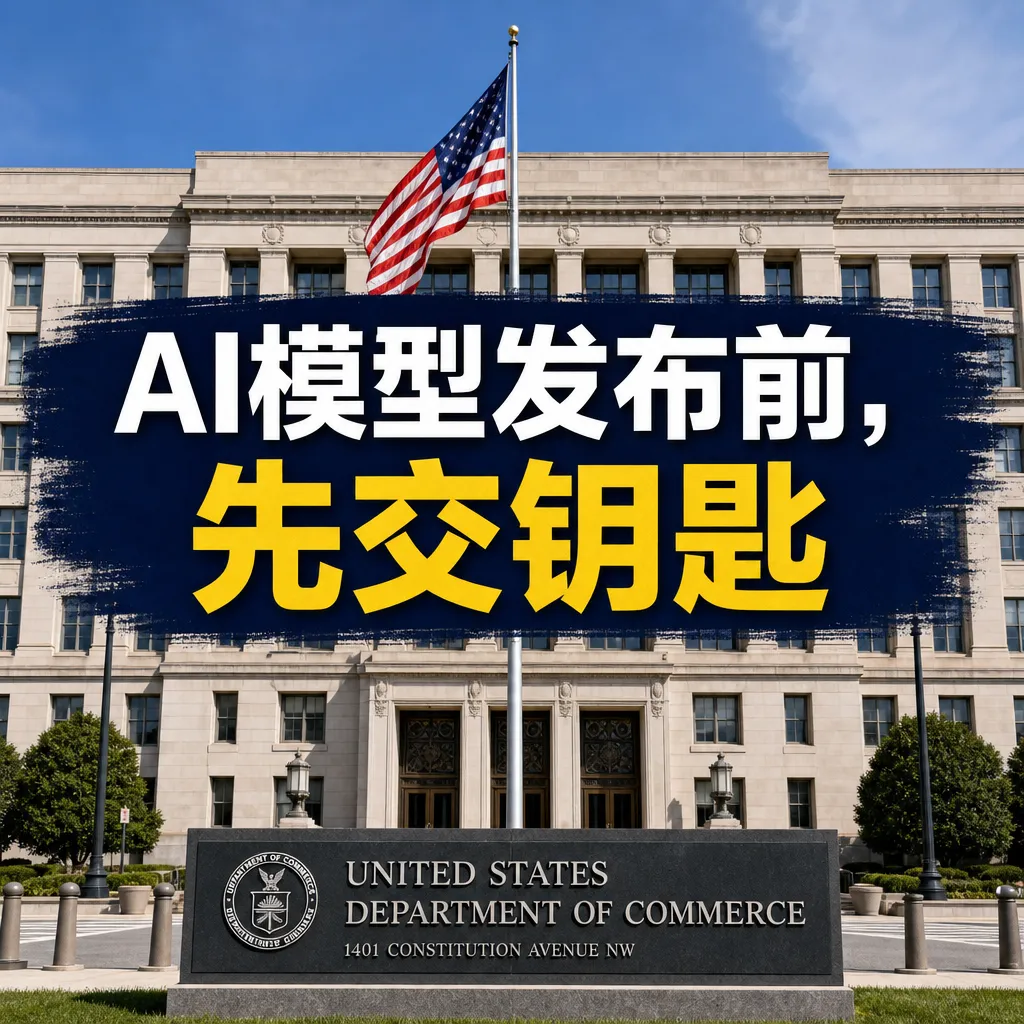
May 5 — the U.S. Department of Commerce’s Center for Artificial Intelligence Standards and Innovation (CAISI) officially announced an agreement that pulled the entire frontier AI field into its orbit: Microsoft, Alphabet’s Google DeepMind, and Musk’s xAI all agreed to hand over access to the U.S. government for a national security review before releasing their next-generation models.
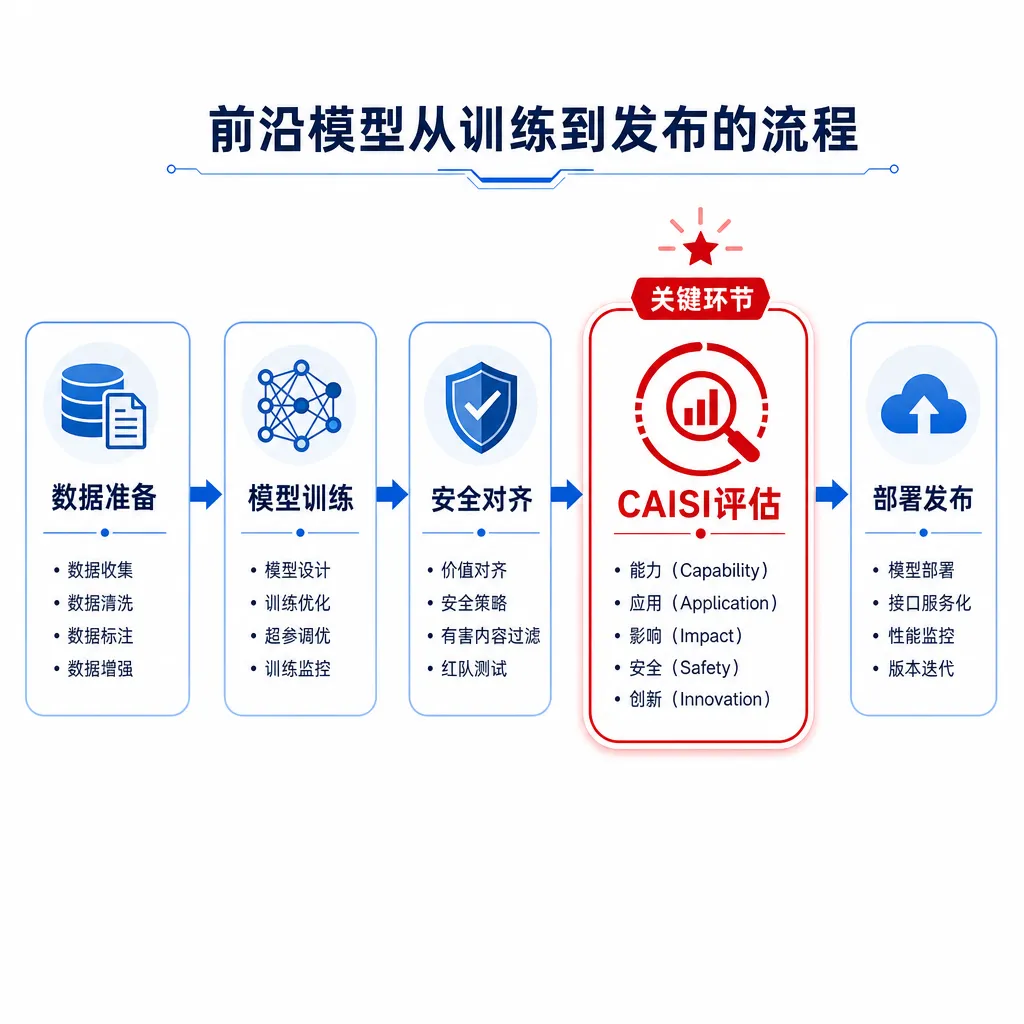
This is not a voluntary “safety initiative,” nor a symbolic memorandum. According to CAISI, the government will have actual pre-release access to the models, including authorization to run “targeted research”—which means hands-on evaluation, probing, and checking capability ceilings. More crucially, developers will also submit to CAISI a version with the safety guardrails removed, explicitly for assessing national-security-level risks. Many reports mention this only briefly, but this detail is the real centerpiece of the entire story.
A Renamed Agency Quietly Expanding Its Power
CAISI might sound unfamiliar, but you’ve definitely heard of its predecessor—the AI Safety Institute (AISI) established under President Biden in 2023. When the Trump administration came to power, it rebranded the institute, replacing “Safety” with “Standards and Innovation,” instantly changing the political tone.
Yet its work hasn’t shrunk—it has grown in scope. In 2024, it cooperated only with OpenAI and Anthropic for pre-release evaluations; now it has added Microsoft, Google, and xAI, and also renegotiated the original agreements with OpenAI and Anthropic “to better align with the priorities of Trump’s AI Action Plan.” The phrasing sounds diplomatic, but in plain terms: the rules of the game now have a new author.
So far, CAISI has conducted over 40 model evaluations, many for yet-to-be-released frontier systems. Considering it only launched in 2024, that density shows that it is already, in practice, the main technical interface between the U.S. government and frontier research labs.
Interestingly, the agency has no formal legal status yet. It operates under executive power, relying on administrative agreements. Some lawmakers are pushing legislation to codify it, but before that passes, its very existence continues to expand its boundaries.
Mythos Took Everyone by Surprise
The timing of this agreement is no coincidence. Over the past few weeks, Anthropic’s Mythos system sparked considerable discussion across the AI community. Washington officials and U.S. industry alike worry about one thing: this generation of models has boosted cyberattack capabilities to a level that requires government intervention in advance.
In the past, AI risks meant “possible generation of harmful content” or “potential misuse for scams.” But now, when models show abilities to help discover vulnerabilities, write attack chains, or automate penetration tasks, the threat model completely changes—this is no longer a content safety issue but a case of offensive-capable tools.
CAISI Director Chris Fall phrased it cautiously: “To truly understand frontier AI technologies and their potential national security impacts, independent, rigorous, and quantitative evaluation frameworks are essential.” Still, taken together with concurrent measures, it’s clear the U.S. government believes this can no longer rely solely on corporate self-regulation.
Another Thread: Seven Defense Department Suppliers—Without Anthropic
Just one week before the CAISI announcement, the U.S. Department of Defense announced partnerships with seven AI companies to deploy their technologies into classified military networks. It’s a clear expansion of the military AI supplier roster.
Curiously, Anthropic is not among them. The reason is simple: Anthropic and the DoD are still wrestling over the scope of military use and safety restrictions on its AI tools. Anthropic has always treated its “acceptable use policy” as core to its identity, with firm red lines on military applications. When those red lines clashed with the DoD’s requirements, the outcome was exclusion from classified cooperation.
Viewed together, the U.S. government’s frontier AI strategy is increasingly clear:
- At the entry point: CAISI conducts pre-release reviews to establish a capability baseline
- At the application end: Defense contracts identify suppliers for classified uses
- At the compliance end: renegotiated agreements bring companies under administrative alignment
This is a coordinated strategy, not isolated actions.
For Companies, How Does This Equation Work?
From Microsoft’s, Google’s, and xAI’s perspective, signing this agreement was never much of a choice.
On one hand, frontier model release cycles are extremely tight, with new versions nearly every quarter. Any government criticism over “security issues” could slow launch schedules. Letting CAISI review ahead of time effectively pre-emptively smooths regulatory friction.
On the other hand, U.S. government procurement and defense contracts are a growing pie. OpenAI and Anthropic have long established government business channels; Microsoft and Google are deeply embedded on the cloud side; xAI needs visibility and legitimacy—so the cost of not signing outweighs that of signing, a calculation any CFO can do.
The truly interesting question is: to what extent will pre-release evaluations shape the actual form of the models?
Suppose CAISI finds that a frontier model provides unusually high assistance in bioweapon synthesis tasks—does it have the authority to require strengthening safeguards, delaying release, or adjusting training data distribution? The agreement is administrative, carrying no hard legal force, but in practice, “the government is uneasy” is reason enough for a major company to delay a launch.
Developer Perspective: Does This Matter?
In the short term, developers calling the APIs won’t feel much difference. Models will still launch, interfaces still connect, docs still update. But several medium- to long-term effects are worth tracking:
- Release cycles may slow down: especially versions involving agentic capabilities, code execution, or security research—pre-review could add weeks.
- Capability curves may be “trimmed”: certain functions flagged by the government as high-risk might be weakened or toggled off in public releases, widening gaps between enterprise and consumer versions.
- Open-source vs. closed-source divide will deepen: frontier closed models go through government review, open models continue flowing freely on Hugging Face. Their divergences in capability, compliance, and usable scenarios will create two parallel ecosystems.
- National-level supply will grow more complex: if U.S. firms hand model capabilities first to U.S. government reviewers, some abilities may fall under export controls; overseas developers will need to track regional availability more carefully.
For developers in China, this kind of news serves as a reminder: multi-model redundancy is increasingly crucial. Any single supplier may face pace adjustments due to policy changes. Keeping flexibility at the API orchestration level is a rational decision. That’s also where platforms like OpenAI Hub derive their value—one key switches among GPT, Claude, Gemini, Grok, and DeepSeek, ensuring you aren’t stuck when policy shifts.
One Unanswered Question
Perhaps the most intriguing line in CAISI’s statement describes the partnership as “expanding work oriented toward the public interest.” Yet “public interest” in the hands of an executive agency without statutory authority leaves a lot of room for interpretation.
So far, CAISI’s work means evaluating models and providing risk reports—a technically neutral role. But once it’s codified by legislation, or if the Trump administration indeed—as The New York Times reports—issues an executive order establishing a formal government review process for AI tools, CAISI’s role may slide from that of “evaluator” to “approver.” And that’s a fundamentally different position.
Microsoft, Google, and xAI may have signed not just a pre-release access agreement today, but also the first sleeper rail on a compliance track that could define AI governance in the coming years. Worth watching closely.
References
- ITHome: U.S. government signs agreement with Microsoft, Google, xAI to review frontier AI models ahead of release — Full Chinese compilation of Reuters’ original report, including CAISI director’s statement and Defense Department supplier details.


