
Claude Code limit doubled: Anthropic buys computing power from SpaceX

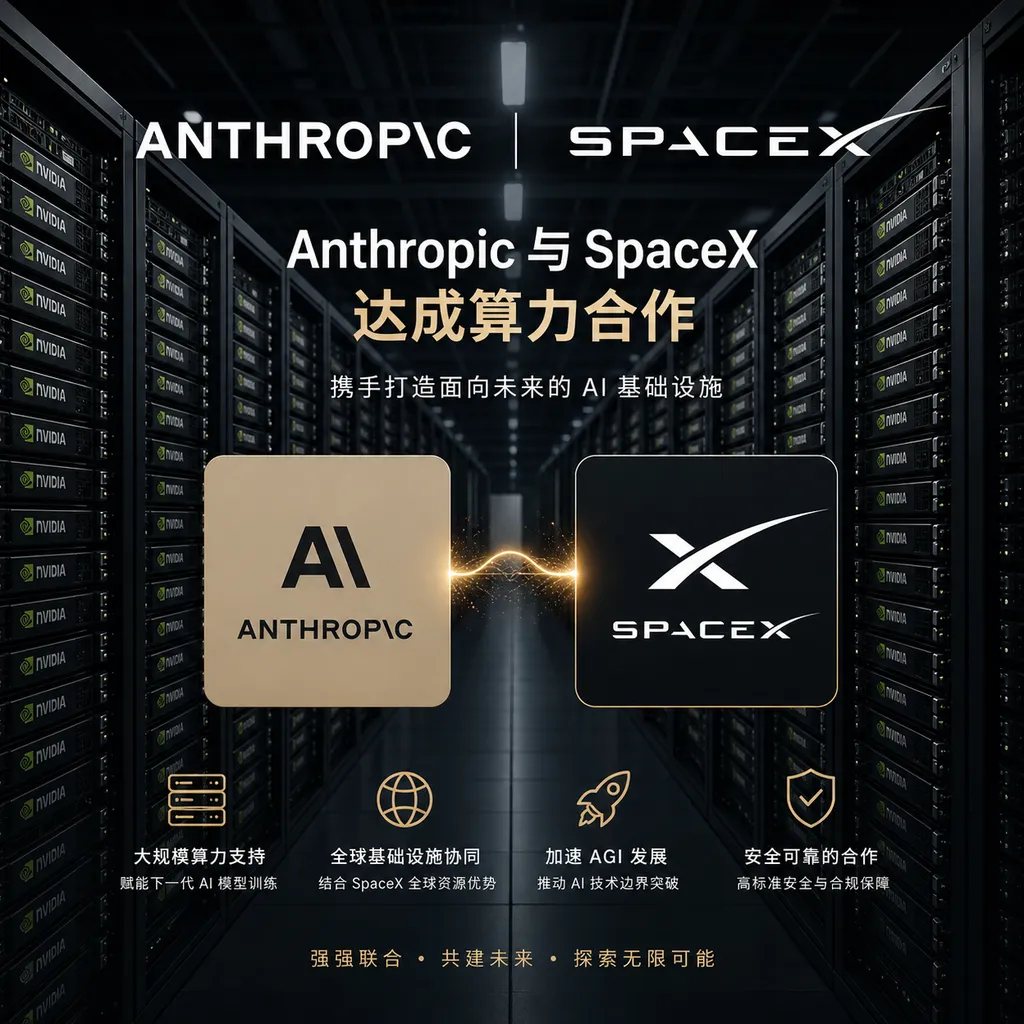
Anthropic announced a computing power collaboration with SpaceX. Starting today, the five-hour rate limit for Claude Code will be doubled, the throttling for Pro/Max accounts during peak hours will be canceled, and the Opus API rate limit will be substantially raised accordingly. Developers will directly benefit, and the industry signal is even more intriguing.
A rather dramatic piece of news: Anthropic announced yesterday that it has reached a compute power cooperation agreement with SpaceX, and as a direct result, the usage limits for the Claude Code and Claude Opus APIs have been raised across the board starting today.
For developers, this isn’t a minor “terms update” notice—it’s a real, tangible quota increase.
Three Things Effective Today
Anthropic’s announcement spelled it out clearly:
First, the five-hour rate limit for Claude Code is doubled. This applies to Pro, Max, Team, and seat-based Enterprise plans. Those experiences where you’d get cut off halfway through a script are gone—now you can theoretically finish coding, then grab a coffee.
Second, Pro and Max accounts will no longer face reduced throughput during peak hours on Claude Code. Those “why did it suddenly slow down?” or “why did my quota suddenly vanish?” moments during weekday afternoons happened because Anthropic quietly lowered personal account weights during heavy load. That switch is now fully turned off.
Third, Claude Opus API rate limits have been significantly raised. The new TPM/RPM table shows 2–3× increases for Tier 4 and above. Opus has always been Anthropic’s most bottlenecked model, and this relaxation is substantial.
All three changes point in the same direction: the bottleneck in compute supply has been opened up.
Where the Compute Comes From: xAI’s Unused GPUs
To see the context of this, we have to rewind a few months.
xAI’s Colossus 2 data center expansion in Memphis last year packed over 200,000 H100/H200 units, plus incoming B200s. It was one of the largest single-site setups in the world. Musk himself posted multiple photos of it on X. The issue: Grok’s weekly active users never took off, and xAI couldn’t win enterprise clients against Anthropic or OpenAI. This massive asset remained chronically underutilized.
This isn’t an industry secret. Analysts noted late last year that xAI’s GPU-hour cost hadn’t dropped with bulk orders—because they simply couldn’t sell enough capacity.
Anthropic, conversely, was in the opposite situation. After Claude 3.7 Sonnet, Claude Code’s daily actives skyrocketed, and enterprise demand outstripped supply. From AWS’s Trainium to Google’s TPU, every rentable chip was rented—but it still wasn’t enough. Developers kept venting on forums about the “five-hour cat-feeding quota” all winter and spring.
So we ended up with a combination that seems bizarre but makes total business sense: Anthropic bought compute from SpaceX (which, in practice, is xAI’s infrastructure backend).
SpaceX being listed as the seller is interesting—the official release names SpaceX, not xAI. One interpretation is that xAI’s infrastructure assets were transferred under an entity controlled by Musk, making the deal more palatable from both regulatory and PR perspectives. After all, saying “we’re buying compute from a competitor” would be awkward for both sides.
Whatever the packaging, the real effect is clear: idle GPUs now have users, and compute-starved models now have somewhere to run.
What This Means for Developers
Over the past six months, Claude Code has been Anthropic’s most capable product—by far. After Opus 4’s release, it pulled ahead of GPT and Gemini in coding, long-context refactoring, and multi-file collaboration. The main complaint was rate limiting—nothing kills momentum like seeing “You’ve reached your usage limit” halfway through refactoring a 300-file project.
Here’s what these changes mean specifically:
- Max subscribers ($200/month): Double the message quota in a five-hour window, no more peak-hour throttling, resulting in roughly 2–2.5× throughput.
- Pro subscribers ($20/month): Also get doubled quotas. For solo developers, Claude Code can now be a serious productivity tool instead of a demo toy.
- API users: Raised Opus TPM limits mean long-context agents and batch code generation can finally run properly. Even Tier 4 Opus users used to hit RPM bottlenecks frequently.
One note of caution—the change affects quotas, not pricing. Opus token pricing remains input $15/M, output $75/M, still among the most expensive tiers of closed-source models. More quota means higher bills—don’t celebrate too early.
API Call Example
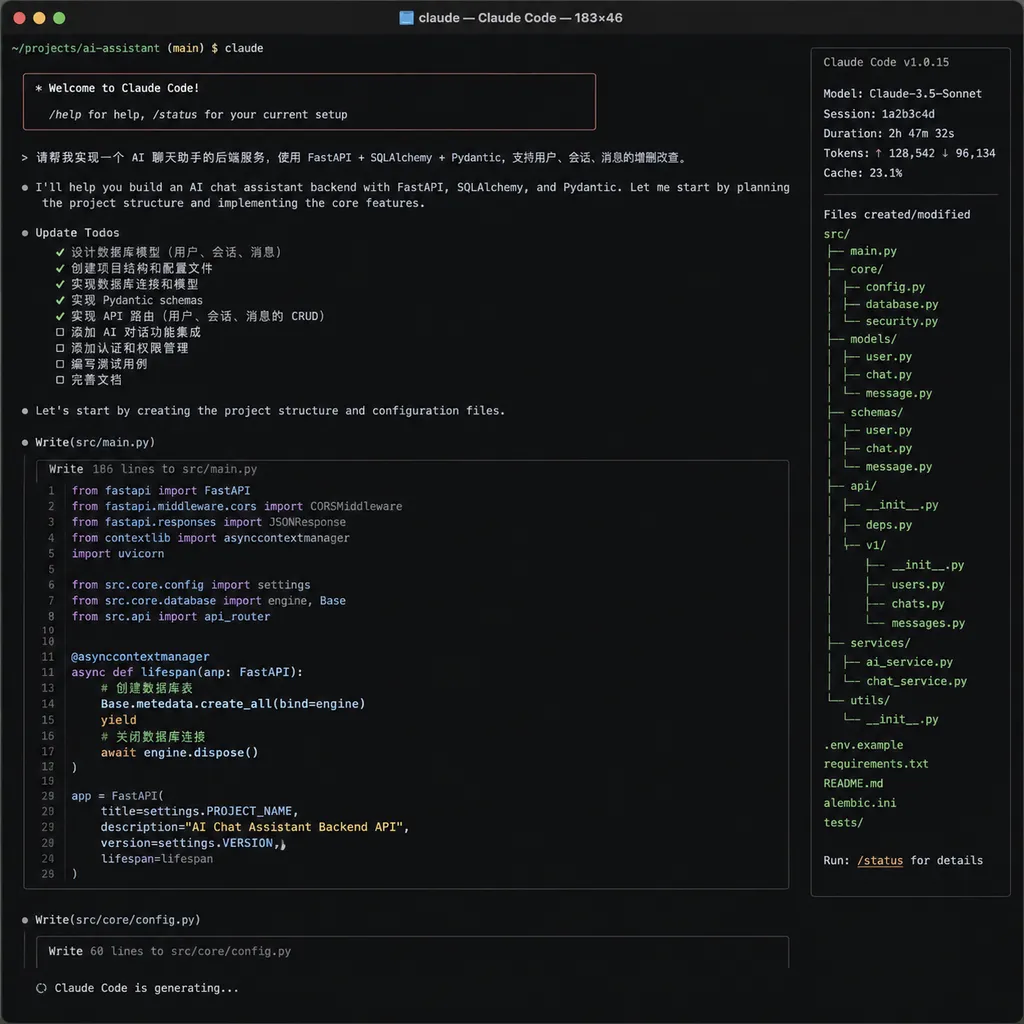
Developers wanting to take immediate advantage of the new Opus limits can keep using the same call structure. Here’s an example using OpenAI Hub to call Claude Opus 4, providing direct domestic access and OpenAI-format compatibility—no code changes needed:
from openai import OpenAI

client = OpenAI(
    api_key="your-openai-hub-key",
    base_url="https://api.openai-hub.net/v1"
)

response = client.chat.completions.create(
    model="claude-opus-4",
    messages=[
        {"role": "system", "content": "You are a senior Rust engineer."},
        {"role": "user", "content": "Help me rewrite this async code into a zero-allocation version and explain each trade-off."}
    ],
    max_tokens=8192,
    temperature=0.2,
)

print(response.choices[0].message.content)
Streaming output, tool_use, and prompt caching are all still supported. The underlying Claude Code API protocol hasn’t changed—only the backend routing and quota pools have. OpenAI Hub has already synced to the new rate limits, so enterprise keys will automatically see higher throughput—no manual plan changes needed.
The Flavor Behind the Deal
Beyond product updates, this move sends noteworthy signals to the industry.
First, closed-source AI companies are now openly “trading” compute among themselves. Since Microsoft and OpenAI ended their exclusivity, Amazon, Oracle, and Google have all entered the mix. Now even xAI’s infrastructure is being rented out to Anthropic—proof that compute has been fully commoditized. A GPU is a GPU; as long as price and compliance align, ownership no longer matters.
Second, xAI is effectively conceding in the model race. Grok 4.3 launched with little fanfare—even Musk didn’t post about it—and its roadmap shifted from “beat ChatGPT” to “support X as an AI assistant.” Rather than let GPUs depreciate idle, better to rent them out for cash. This is textbook semiconductor foundry strategy, now applied to AI infrastructure.
Third, Anthropic’s growth pressure is eased—for now, but not solved. Claude’s enterprise customer base is expanding, and AWS’s Trainium2 production is ramping up, but models like Opus still fundamentally rely on NVIDIA’s Hopper/Blackwell clusters. Industry sources say this deal with SpaceX is around $3 billion over one year (not officially confirmed)—enough for one or two quarters of incremental capacity. Anthropic will have to keep looking for supply next.
In a Sentence
For developers: this is Anthropic’s most generous change in six months—quota doubled, no more peak-hour throttling, effective immediately, no waitlist. If you stopped using Claude Code due to limits, now’s the time to bring it back into your workflow.
For the industry: xAI selling compute to Anthropic speaks louder than any keynote—it shows that by 2026, AI competition will hinge less on “who has the better model” and more on “who has a balanced ledger.” When the cash burn ends, GPUs take no sides.
References
- Discussion on Anthropic–SpaceX compute cooperation — Linux.do community’s firsthand summary and discussion of the cooperation details and new quota table


