
Musk has rented Colossus 1 to Claude, and Anthropic’s limits have fully doubled.
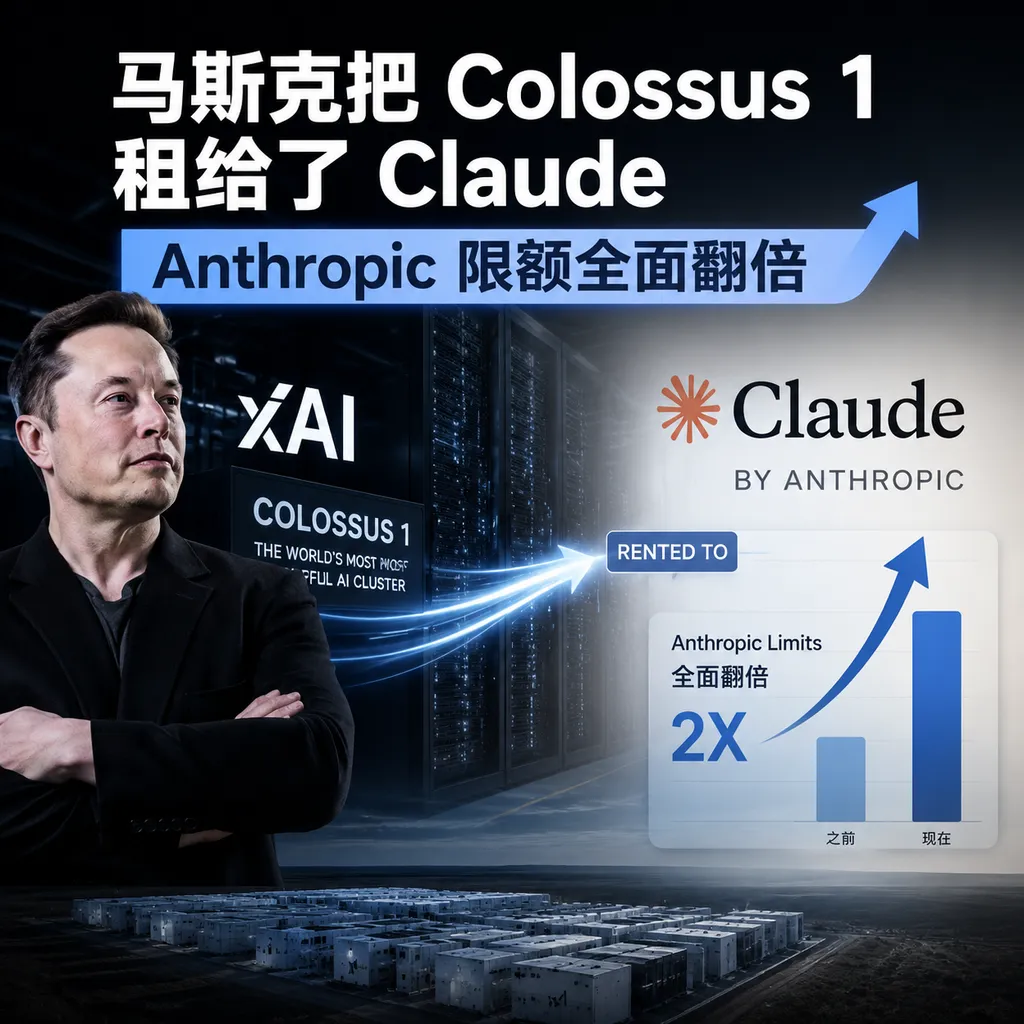
Anthropic has secured all computing power of SpaceX’s Colossus 1 supercomputer—over 220,000 NVIDIA GPUs will now support Claude. The five-hour Claude Code allowance for Pro/Max/Team/Enterprise plans is immediately doubled, and the Opus API rate limit has been significantly increased.
Musk Rents Out His Old Flagship to a Direct Competitor
On May 6 local time, Anthropic and SpaceX simultaneously announced that they had signed a computing power agreement: Anthropic will take over the entire capacity of the Colossus 1 data center and can deploy it online within the month. Immediately afterward, Anthropic officially announced that the usage limits for paid Claude users would be comprehensively raised starting today.
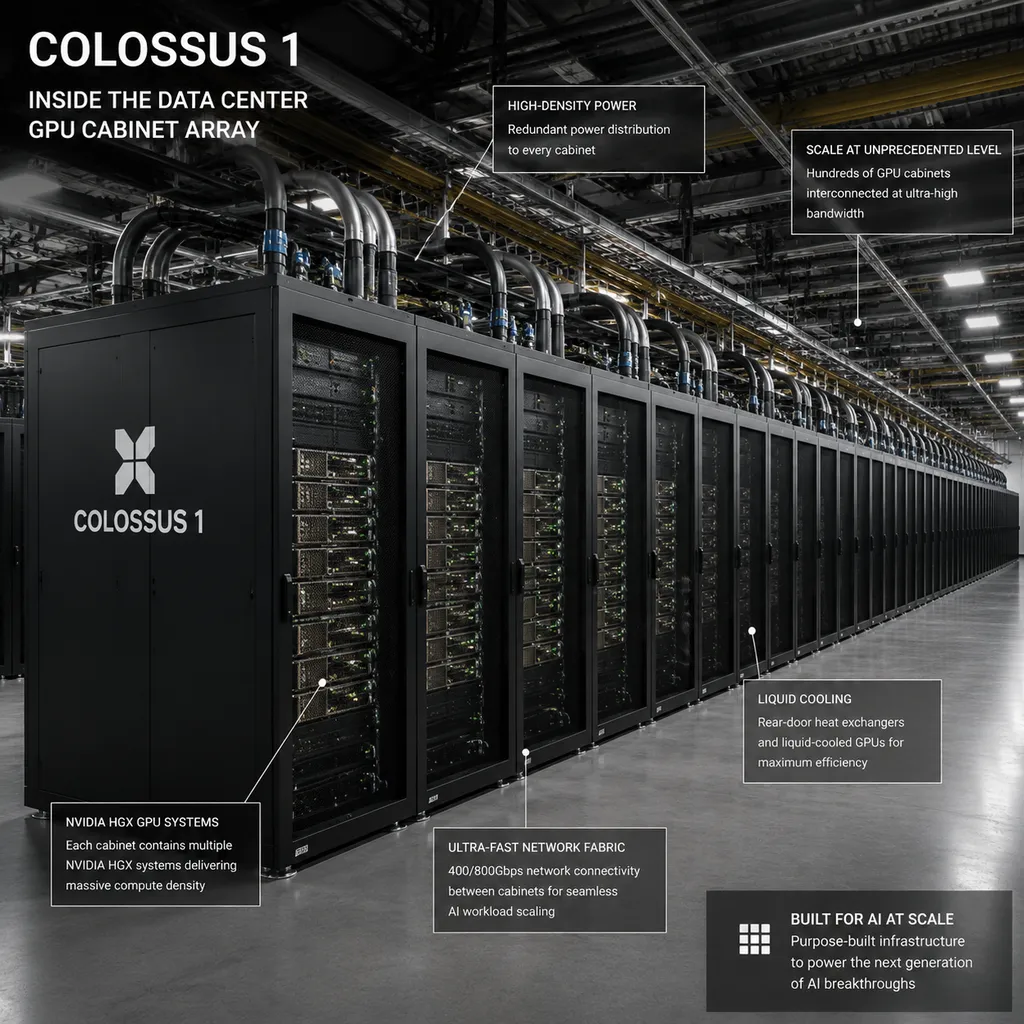
If you only look at the names of the partners, this seems like just another compute‑power purchase between Anthropic and SpaceX. But once you add some background, it gets interesting—Colossus 1 is the supercomputer located in Memphis, Tennessee, originally xAI’s main machine for training Grok. It has over 220,000 NVIDIA GPUs and consumes more than 300 megawatts. On February 2, SpaceX completed its all‑stock acquisition of xAI with a combined valuation of $1.25 trillion, bringing Colossus 1 under SpaceX’s ownership.
In other words, Musk has rented xAI’s old flagship—an entire data center—to the direct competitor Anthropic for running Claude. According to outside estimates, those 220,000 GPUs make up nearly half of xAI’s total 500,000 GPU fleet. xAI was able to let it go because its training focus has already shifted to Colossus 2, the new‑generation flagship that came online in January, which operates on a gigawatt scale.
Such is the drama of the AI industry: obsolete compute depreciates quickly but remains scarce and precious in others’ hands.
What Limits Have Been Raised
Anthropic directly translated this expansion of capacity into tangible user‑side increases. Three changes take effect today:
- Claude Code five‑hour rolling limit doubled: Applies to Pro, Max, Team, and seat‑based Enterprise plans. The original Pro token quota per window was enough for medium‑scale agent tasks; now each cycle has twice the “stamina.”
- Removal of Pro and Max peak‑hour throttling: Previously, during North American daytime peaks, these tiers were temporarily slowed, meaning users frequently hit their limits. That throttling mechanism is canceled entirely as of today.
- Major increase in Opus API rate limits: This is the most substantial benefit for developers. As Claude’s top tier, Opus’s previous RPM and TPM limits were a bottleneck for long‑context, multi‑turn agent workflows; after this adjustment, enterprise integration pressure should noticeably ease.
Anthropic didn’t give precise percentages, but judging from feedback by heavy Claude Code users on Linux.do and Reddit, the five‑hour window was the most common pain point over the past few months—especially for big repository refactors or SWE‑bench tasks, where a single PR often hit the wall mid‑run. Doubling that limit isn’t icing on the cake, it’s the critical jump from “barely usable” to “free to work.”
What It Means for Developers
For teams using the API, the Opus line is the one to watch. Opus is clearly positioned for code agents, long‑document analysis, and complex reasoning tasks, but many teams found that “the model is strong, the limit stops you.” A typical case: a 24‑hour rolling pool of agent workers, several instances hitting Opus concurrently, triggering 429s within minutes.
After the increase, engineering workarounds like token‑bucket shaping, retry backoff, and multi‑key rotation will face far less pressure—though not disappear entirely. The design will shift from “must architect around rate limits” to “plan capacity for normal peaks.”
If you connect to Claude through an aggregation platform like OpenAI Hub, this adjustment will appear directly in upstream forwarding capacity. OpenAI Hub has already synced Anthropic’s new limits; a single key can access Claude Opus / Sonnet / Haiku, all OpenAI‑compatible, with direct China connectivity and no VPN needed. Use it as before:
from openai import OpenAI

client = OpenAI(
    api_key="your-openai-hub-key",
    base_url="https://api.openai-hub.net/v1"
)

response = client.chat.completions.create(
    model="claude-opus-4",
    messages=[
        {"role": "system", "content": "You are a senior backend engineer."},
        {"role": "user", "content": "Help me refactor this Go service's error-handling logic, prioritizing observability."}
    ],
    max_tokens=4096,
    temperature=0.2
)

print(response.choices[0].message.content)
For individual developers subscribed to Claude Code, the upgrade is seamless—no configuration changes necessary. After logging in, quotas automatically double, and the obtrusive peak‑hour slowdown notice should disappear.
A Casual Mention of Space
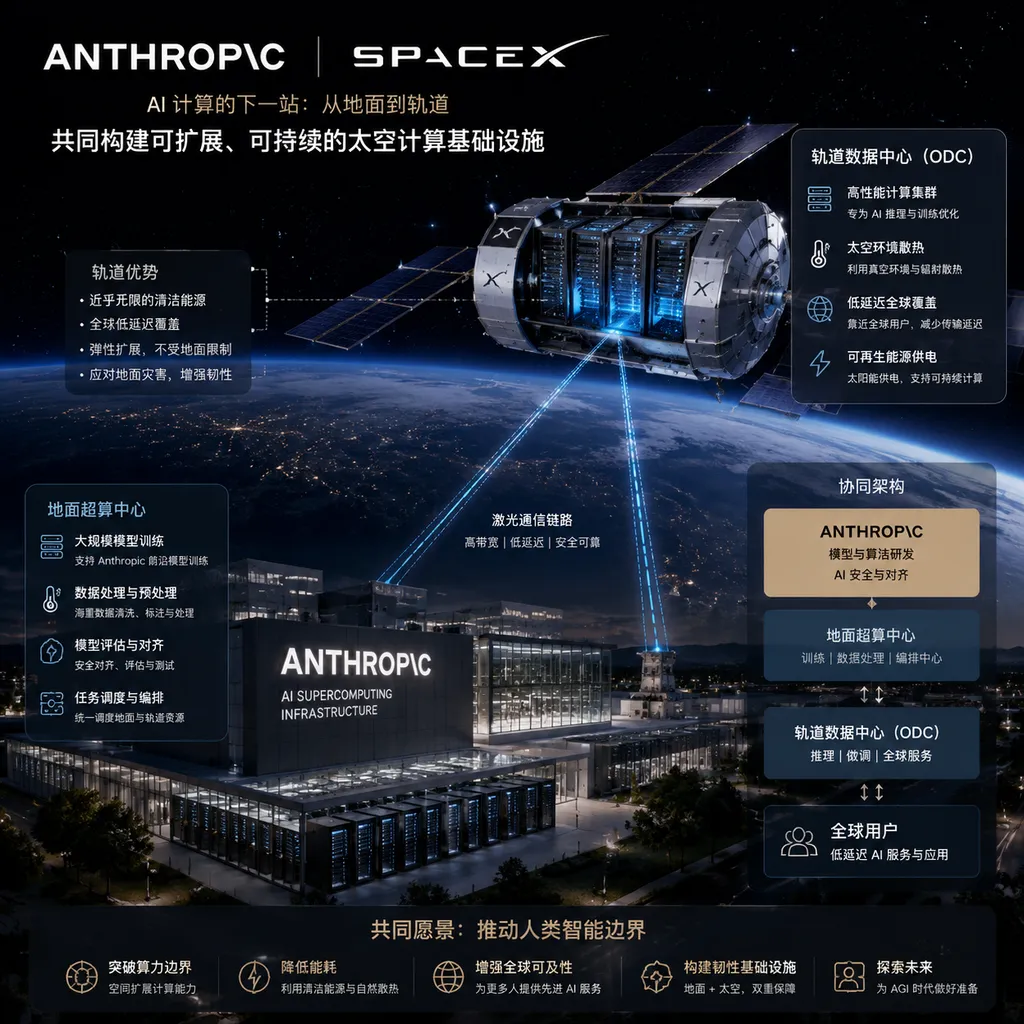
Buried in the announcement is a line easy to overlook: Anthropic said it is “interested in jointly developing orbital AI compute on the multigigawatt scale” with SpaceX—essentially putting data centers into space.
That was originally Musk’s playbook—SpaceX has already applied to the FCC to deploy up to one million satellite‑based data centers powered directly by on‑orbit solar energy, using vacuum heat dissipation to bypass Earth’s water‑and‑power limits. Until now, only Musk had been voicing that vision.
Now that Anthropic has picked it up, the meaning changes. It’s no longer a one‑sided sci‑fi proclamation by SpaceX; at least one top AI lab is willing to join, signing cooperation memoranda. Orbital data centers remain unrealistic in the short term—thermal control, radiation hardening, maintenance, and latency are formidable issues—but the idea of “how to break the compute bottleneck in the next decade” now has two major players backing it.
Interestingly, Anthropic and Musk have sparred publicly over AI safety more than once. Yet now, for the purely pragmatic reason of compute power, they find themselves at the same table—proof that business gravity outweighs ideology.
Anthropic’s Compute Sprint
Today’s deal is only one link in Anthropic’s recent string of massive compute contracts. On the timeline:
- With Amazon, cooperation up to 5 GW, of which nearly 1 GW will come online by end 2026, using Trainium chips
- With Google and Broadcom, also 5 GW, deploying on TPUs from 2027
- With Microsoft and NVIDIA, including a $30 billion Azure compute commitment
- With Fluidstack, jointly investing $50 billion in U.S. AI infrastructure
- Now adding SpaceX’s full Colossus 1 capacity and an intent to co‑develop orbital compute
Taken together, the compute scale Anthropic has locked in for the next two to three years is approaching a medium‑sized nation’s grid peak. The “multi‑vendor, multi‑architecture, multi‑geography” mix is deliberate—avoiding single‑point dependency and matching chip types to tasks: NVIDIA for training, Trainium and TPU for inference, leased resources for bursts.
Compared with OpenAI’s deep binding to Microsoft and xAI’s tight coupling with SpaceX, Anthropic looks more like a procurement‑driven player—signing with whoever offers cheaper or more available power. The trade‑off is higher coordination cost and supply‑chain complexity; the benefit is freedom from vendor lock‑in.
A Pragmatic View
Setting grand narratives aside, the most tangible value of this deal for users is simple: starting today, Claude can do twice the work at no extra charge.
That’s rare in the AI industry. Over the past year, most large‑model vendors have shortened context discounts, raised Pro‑tier prices, or moved top models to higher‑priced plans. Anthropic’s reversal—passing new compute directly to users—is telling:
First, paid‑user renewals and NPS clearly matter a lot to Anthropic, especially for Claude Code, which has become its key product for reclaiming the developer market. Limit experience must not lose ground.
Second, compute is truly beginning to “overflow”—at least relative to a single vendor’s current needs. When you sign future capacity on the 10 GW scale, older hardware becomes short‑term inventory to offload. Renting Colossus 1 for Claude is a utilization play for SpaceX/xAI and emergency reinforcement for Anthropic—a win‑win.
The narrative around AI infrastructure has shifted from “who can buy GPUs” to “who can activate idle compute.” This transfer of Colossus 1 is the most representative transaction of that new stage.
References
- IT Home: SpaceX grants Anthropic access to Colossus 1, featuring over 220 K NVIDIA GPUs — Chinese‑language first report of the cooperation and GPU specs
- Linux.do: Claude and SpaceX reach computing‑power agreement; all paid plans’ five‑hour windows doubled — Analysis by Bao Yu detailing limit changes and background


