
Perplexity integrates AI Agent into Mac: Personal Computer now fully open to all users
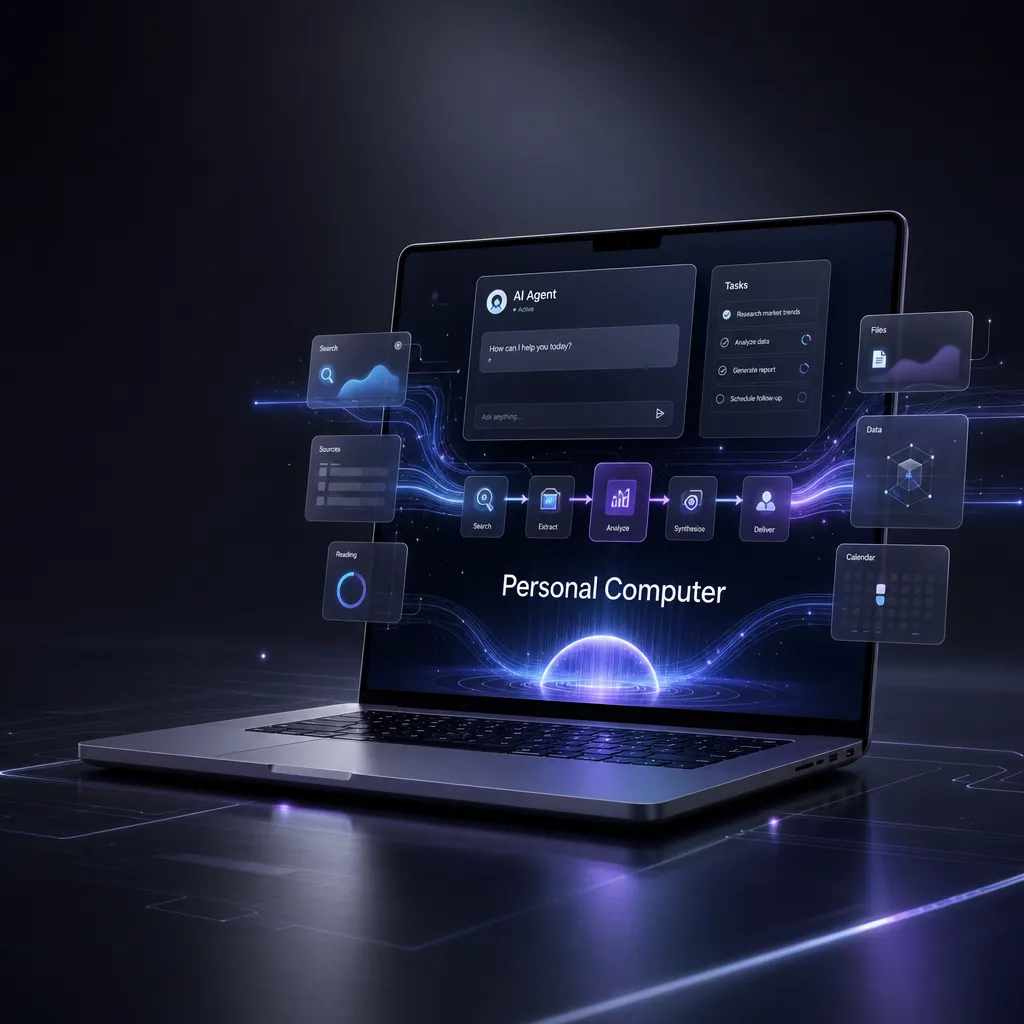
On May 7, Perplexity announced that Personal Computer is now fully available on the Mac platform. This desktop AI agent, positioned as “always online,” can take control of files, applications, and even the entire machine, turning an idle Mac mini into a digital employee operating 24/7.
Perplexity Puts Its AI Agent into the Mac: Personal Computer Now Fully Open
On May 7, Perplexity announced that its desktop-level AI agent product Personal Computer is now fully open on Mac. All users can download and use it—no more waitlists, no more Max-only subscriptions.
This move is more radical than it appears. Two months ago, Personal Computer was just a concept demo in private beta: turning an idle Mac mini into an "always-on" AI agent to handle your emails, make slides, and manage candidate spreadsheets. Now, it’s directly available to all Mac users. Perplexity CEO Aravind Srinivas’s oft-repeated line on X—“Traditional operating systems take commands, AI operating systems take goals”—finally has a large-scale embodiment.
What It Really Is: Not an Assistant, but a Resident Agent
To understand Personal Computer, you first need to distinguish it from other “AI assistants” on the market.
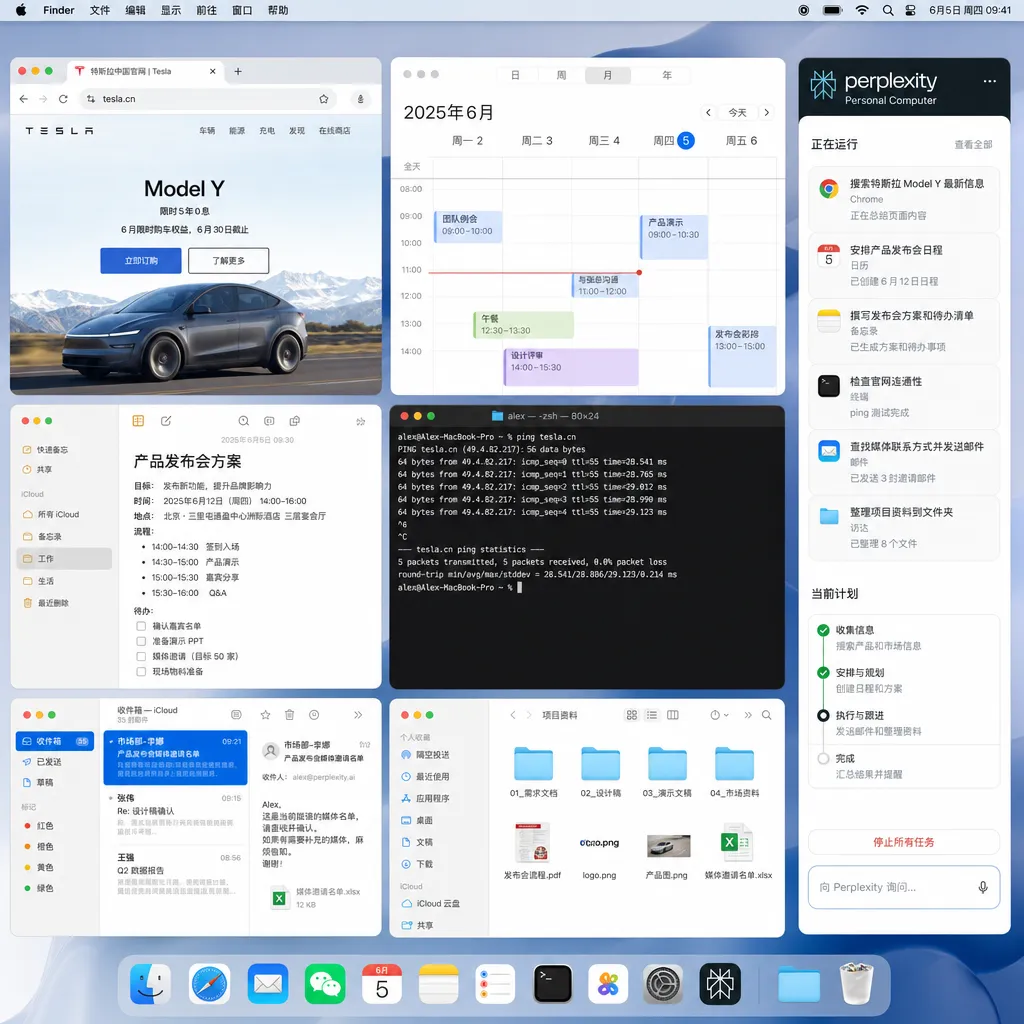
Claude’s Computer Use and OpenAI’s Operator (the product line jokingly referred to as “OpenClaw” in leaks) are essentially session-based agents: you start a task, it completes it, and then it’s done. Personal Computer takes a different route: it resides on one of your Macs—ideally a plugged-in, always-on Mac mini—connected to your iCloud, email, calendar, Notion, Figma, and Terminal. It sits there, waiting for you to assign it work from your phone, browser, or any device.
The official recommendation is macOS 14 Sonoma or later, with Mac mini as the preferred hardware. The reasons are clear: M-series chips mean low power consumption, always-on connectivity, and direct local file access—hitting the sweet spot for a “dedicated AI host.” You use your MacBook during the day, then let that quiet Mac mini on the shelf handle your emails, scrape data, or draft reports overnight.
What It Can Do: From “Writing Emails” to “Running Entire Workflows”
Perplexity’s launch demo showcased several representative use cases:
- Cross-app file handling: Have it convert a Numbers financial sheet into a 10-slide Keynote fundraising pitch deck, automatically adding visuals and data charts.
- Batch decision-making tasks: Feed it a folder of resumes to sort, score, and recommend based on job descriptions.
- Persistent monitoring: Keep an eye on your inbox and automatically draft replies for specific types of emails, pending your approval before sending.
- Voice + text channels: From your phone, say “revise the client contract from yesterday, change payment terms to Net 60,” and your Mac mini at home gets to work.
This mode of interaction is fundamentally different from session-based agents—it’s more like hiring a remote assistant, not opening a ChatGPT tab.
Security Design: Audit Logs, Human Approval, and the Emergency Brake
The biggest concern with AI agents has never been capability but trust. An agent that can read all your files and log into your accounts could be more dangerous than ransomware if it goes rogue.
Perplexity provides three layers of safeguards:
- Full audit logs — Every tool invocation, file read/write, and API request is logged and traceable.
- Manual confirmation for sensitive actions — Sending emails, deleting files, or touching your wallet requires explicit approval; or you can use a “do-then-revert” mode to roll back any changes you don’t approve of.
- Emergency kill switch — There’s a literal button in the product. As Srinivas put it during demo: “If it starts deleting your emails like crazy, you need to be able to stop it immediately.”
This setup looks more enterprise-ready than OpenAI’s Operator. Operator solves risk by running the agent in a cloud sandbox isolated from your real machine. Personal Computer does the opposite—gives the agent your Mac keys, but backs that with approvals and rollback. Which approach wins, the market will decide.
Pricing and Strategy: $200/Month, Still Not Cheap
It’s free to download, but the full capabilities of Personal Computer still require a Max subscription at $200 per month. That puts it in the same tier as ChatGPT Pro and Claude Max.
Perplexity doesn’t have its own base model and has long faced the question: “Why charge that much?” Personal Computer is one of its answers: competing not on models, but on scenarios and system integration. A resident Mac, an approval-and-audit system, and a cross-device control plane—these are things OpenAI and Anthropic haven’t done yet.
But with a $200/month paywall, this isn’t a mass-market product anytime soon. Perplexity’s logic is clear: start by targeting high-value professionals, solo founders, and consultants. In Srinivas’s own words, this type of product lets one person run a billion-dollar company because it “never sleeps.”
Key Points Developers Should Note
- Hybrid architecture (local files + cloud inference) — Personal Computer reads files and operates apps locally but sends reasoning requests to Perplexity’s servers. You’ll need to account for latency, privacy, and compliance separately. If your company is strict about data residency, legal review will be required.
- Not an open platform — There’s no public Agent SDK or plugin system yet. Compared with ChatGPT’s GPTs or Claude’s MCP protocol, Personal Computer is a closed-loop product, not a developer ecosystem.
- Mac-exclusive window — No Windows or Linux versions are announced. The Mac mini’s hardware makes sense for now, but expanding to Windows will be necessary for enterprise adoption. How long that takes remains to be seen.
- Relationship with Perplexity Computer — Last month’s Perplexity Computer was the cloud edition; Personal Computer is its localized, personalized counterpart. The two will likely converge over time.
Industry Context: The Agent War Enters the “Desktop OS” Era
Looking toward 2026, the AI agent war has shifted from “Can it be done?” to “Where will it happen?”:
- OpenAI is betting on the browser (Operator) and enterprise APIs.
- Anthropic is betting on the protocol layer (MCP) and developer toolchains.
- Google is betting on Android + Chrome integration.
- Perplexity chose the desktop OS, specifically Mac—the most closed ecosystem with the strongest paying user base.
Apple’s own Apple Intelligence rollout has been slow, giving Perplexity a narrow but valuable window. Whether Personal Computer can claim the “Mac desktop AI” territory depends on three things: how deeply it integrates third-party apps, how compliant its enterprise version is, and—when Apple decides to step in.
For developers, the key question isn’t “Should I subscribe?” but: When an agent can live on the desktop, are your product’s APIs, permission models, and callback mechanics ready to be consumed by an AI?
That question matters far more than whether you buy Personal Computer or not.


