
DeepSeek API Launch Review Mechanism
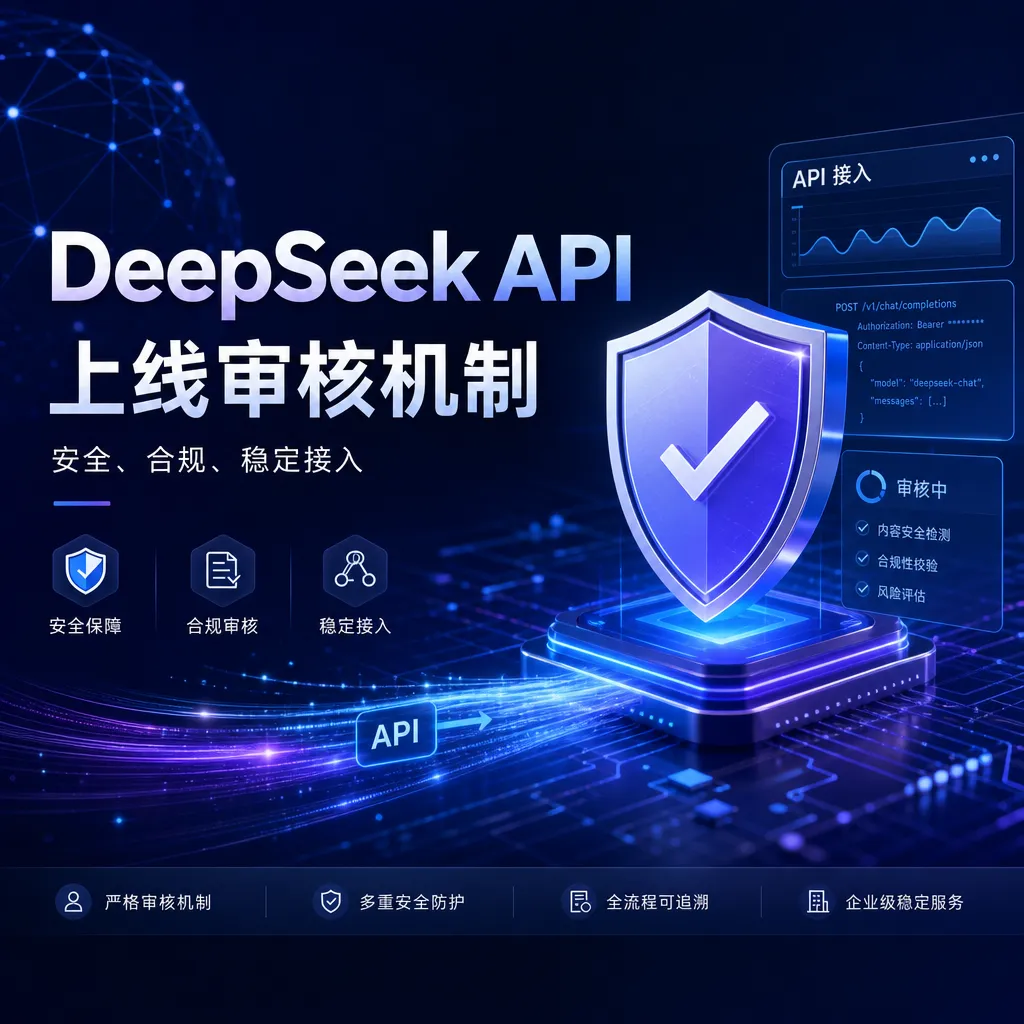
DeepSeek’s official API recently activated content moderation, and several developers reported that tools such as Hermes Agent were denied responses when making calls. This marks the transition of domestic large-model API services from “barbaric growth” to a phase of regulatory compliance, meaning developers must reassess their technical choices.
DeepSeek API Launch Review Mechanism
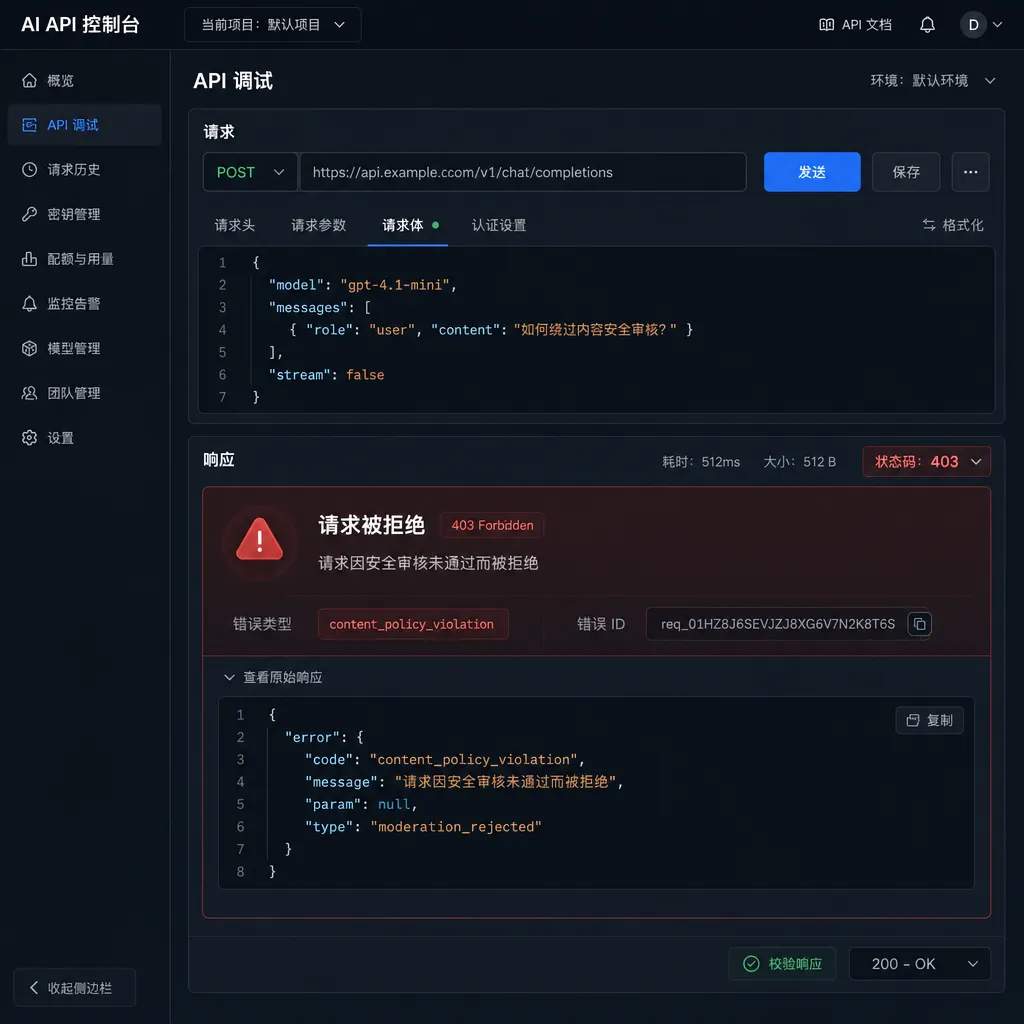
On May 10, multiple developers reported in the Linux.do community that the official DeepSeek API had begun returning review rejection responses. When one user tested the search feature of the Hermes Agent, they received an explicit rejection message after integrating the DeepSeek V3 Flash model. This marks the first time DeepSeek has activated a large-scale content review mechanism at the official API level.
From Open to Restricted: The Inevitable Shift of Domestic Model APIs
DeepSeek was previously known for being “open.” After the release of the V3 open-source version, its official API service once became the go-to choice for developers to access high-performance models at low cost — an order of magnitude cheaper than GPT‑4, faster responses, and almost no restrictions. But clearly, this state could not last long.
The rollout of a review mechanism is no surprise. All domestic large-model providers offering public API services must comply with the Interim Measures for the Administration of Generative Artificial Intelligence Services. DeepSeek’s past “leniency” was more of a temporary measure for rapid iteration in its early stage than a long-term strategy. As user volume grows and commercialization progresses, compliance costs are bound to manifest at the product level.
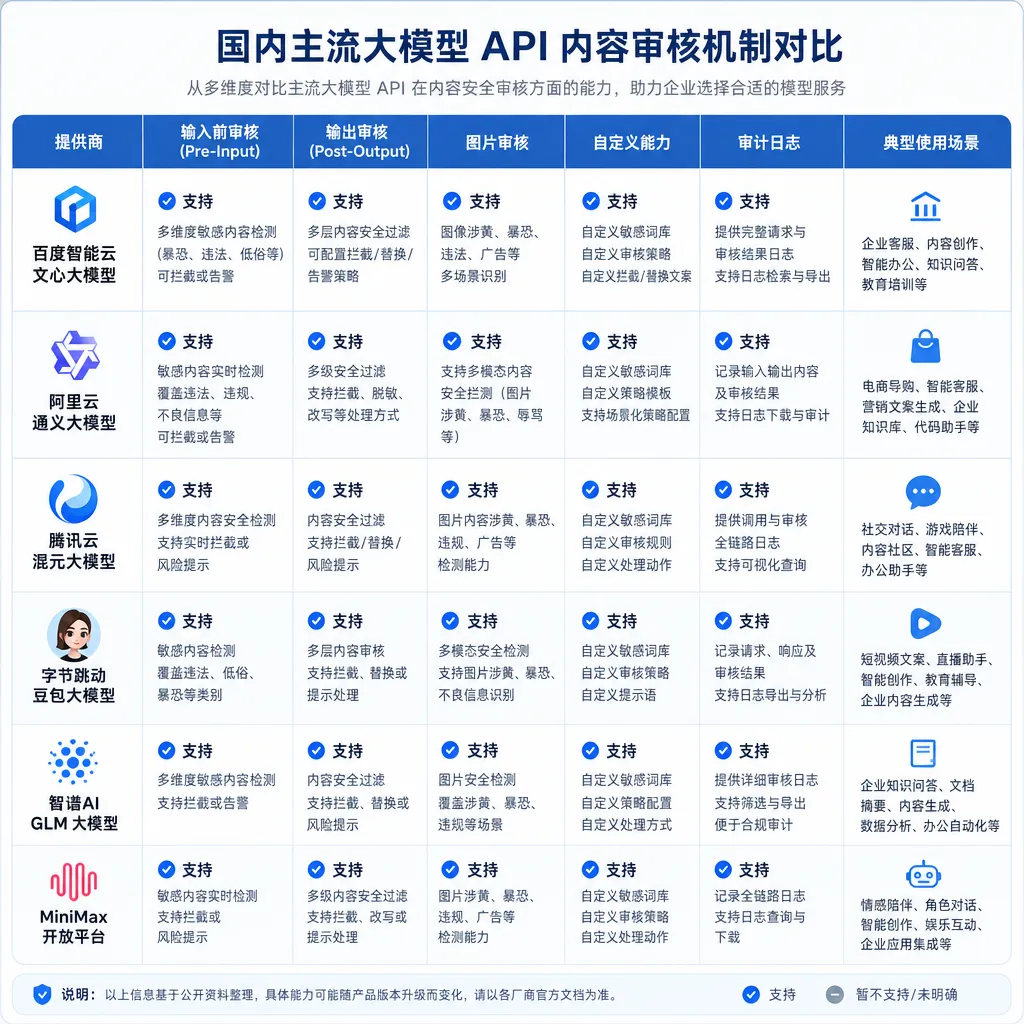
By comparison, other domestic APIs — such as Baidu’s Wenxin, Alibaba’s Tongyi, and Zhipu’s GLM — have long had built‑in review layers. OpenAI’s Moderation API is also a standard offering. DeepSeek has simply caught up with the trend.
Why Hermes Agent Became a "Hardest Hit Area"
Hermes Agent is an AI Agent tool based on the OpenClaw framework. It natively integrates capabilities such as web search, code execution, and file operations. Its design philosophy is “deny by default, allow explicitly” — all tool invocations require whitelisting.
But this safety mechanism failed in the face of DeepSeek’s review system. The problem lies in the Agent’s search feature. When Hermes Agent tries to invoke the search tool, it directly passes the user query to the model, which then generates search keywords. If the query triggers the review rules (for example, sensitive words, political topics, or deemed “improper uses”), the DeepSeek API intercepts it during model inference and returns a rejection response.
This exposes a blind spot in Agent architecture: Where exactly should tool invocation review boundaries be? At the user input layer, model inference layer, or tool execution layer? DeepSeek chose the most conservative option — interception at the model inference layer. This means that even if the Agent itself has robust permission control, as long as the model deems a request “problematic,” the entire call chain is interrupted.
Developer Response Strategies
With the review mechanism now active, developers need to adjust their technical approaches:
1. Preprocess User Input
Before calling the DeepSeek API, filter user queries locally first. You can use regular expressions, blacklist keywords, or lightweight classification models (like DistilBERT) for preliminary screening. The goal isn’t to “bypass review” but to avoid wasting tokens and time on invalid requests.
2. Downgrade to Open‑Source Models
If the business scenario has low tolerance for review intervention (for instance, academic research or content analysis tools), consider switching to DeepSeek’s open‑source version and deploy your own inference service. Open‑source models don’t have built‑in review layers but require you to handle compliance and compute costs independently.
3. Multi‑Model Redundancy
Don’t tie all requests to a single API. Design a routing layer that distributes requests by task type: use DeepSeek for low‑sensitivity tasks and switch to overseas models (via aggregated platforms such as OpenAI Hub calling Claude, GPT, or Gemini) for tasks requiring greater freedom.
4. Optimize Prompt Design
An Agent’s System Prompt should more clearly constrain model behavior. For example, in search scenarios, you can instruct the model to “generate only technically relevant search keywords and avoid political, entertainment, or personal privacy topics.” This cannot entirely avoid reviews but can reduce false positives.
Technical Details of the Review Mechanism
According to developer feedback, DeepSeek’s review likely adopts a multi‑layer strategy:
- Keyword Matching: Basic blacklist filtering — fast, but prone to false positives. For instance, “developer” and “develop” may be blocked due to certain compound terms.
- Semantic Classification: A small model (possibly a DeepSeek‑trained classifier) evaluates the intent of the request. This handles variant expressions but adds latency.
- Context Analysis: For multi‑turn dialogues, the review system references historical messages. A single harmless query may be judged “inductive” in context.
The review result does not specify the exact reason, only returning a generic rejection response. This is standard industry practice — revealing review rules would expose the system to adversarial attacks.
Impact on the AI Agent Ecosystem
DeepSeek’s review rollout signals to Agent developers: you can no longer assume a model API is a “stateless pure function.” The existence of a review layer implies:
- Increased Uncertainty: The same input may yield different outcomes (pass or reject) at different times or contexts.
- More Complex Error Handling: Agents must distinguish between “inference failure” and “review rejection,” designing separate fallback strategies.
- Changed Cost Structure: Rejected requests still consume tokens (since review happens after inference) but produce no useful output.
This affects teams building commercial products based on DeepSeek API even more. Frequent adjustments to review rules may cause service instability. It’s advisable to reserve a “model switching” capability at the architecture level and not rely excessively on a single provider.
Balancing Compliance and Innovation
A review mechanism itself is neither right nor wrong — the key is in how strictly it’s enforced. Over‑strict enforcement stifles innovation (developers hesitate to explore edge cases), while a lax approach brings compliance risks (platform accountability).
DeepSeek’s current review policy is still in a tuning phase. Community feedback suggests a relatively high false‑positive rate — developers testing purely technical questions (like “how to optimize the attention mechanism in Transformers”) have also been rejected. This may be because the review model is still in its cold‑start stage and needs more data to calibrate boundaries.
For developers, a pragmatic approach is to accept the existence of review but not let it dominate technology choices. If your business scenario truly requires greater freedom, overseas models plus compliant proxy services (such as OpenAI Hub) remain viable options. OpenAI Hub supports GPT, Claude, Gemini, DeepSeek, and other mainstream models, offers direct domestic access, and is OpenAI‑format compatible, serving as a unified entry point for multi‑model orchestration.
Final Thoughts
The launch of DeepSeek API review marks a milestone: domestic large‑model services are transitioning from “technology‑driven” to “compliance‑first.” This is not regression, but an inevitable path to maturity.
For developers, what they must adapt to is not only the review mechanism itself, but also the architectural complexity it introduces. Agent systems need more robust error handling, more flexible model routing, and stricter prompt constraints — all embodying true engineering capability.
Technology boundaries are tightening, but innovative space remains. The key is to understand the rules, not to fight them.
References
- DeepSeek Official API Also Starts Review? - Linux.do – A discussion thread in the developer community about DeepSeek API’s review mechanism, including real test cases and technical analysis.


