
Mira Murati’s new company aims to redefine AI interaction.

Thinking Machines, founded by former OpenAI CTO Mira Murati, has officially unveiled the concept of an “Interactive Model,” enabling AI to perceive, think, and respond in real time like a human collaborator, rather than passively waiting for commands.
Mira Murati’s New Company Wants to Redefine AI Interaction
Thinking Machines, founded by former OpenAI CTO Mira Murati, officially revealed what they’ve been working on this Monday: “Interaction Models.” The concept sounds simple, but it targets a very core issue — today’s AI model experiences are too fragmented.
Current Models Are “Waiting,” Not “Collaborating”
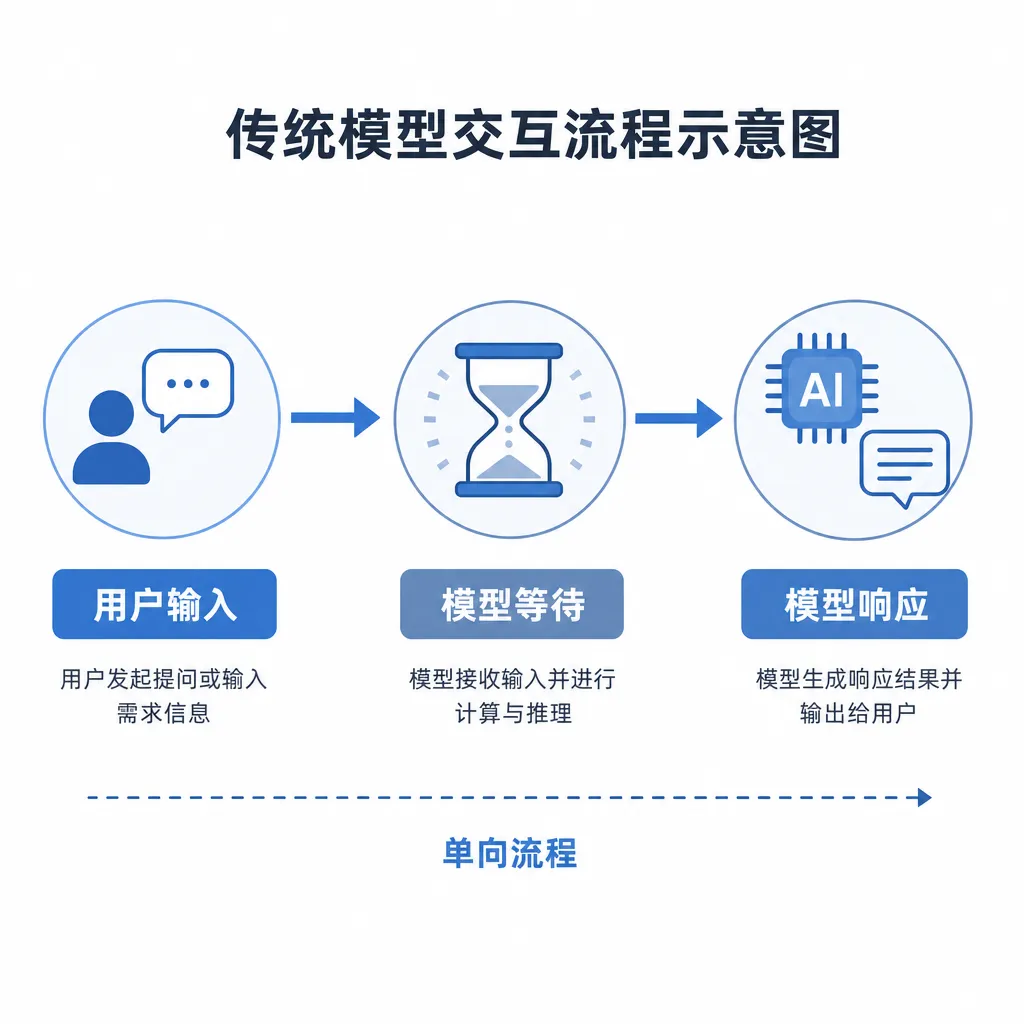
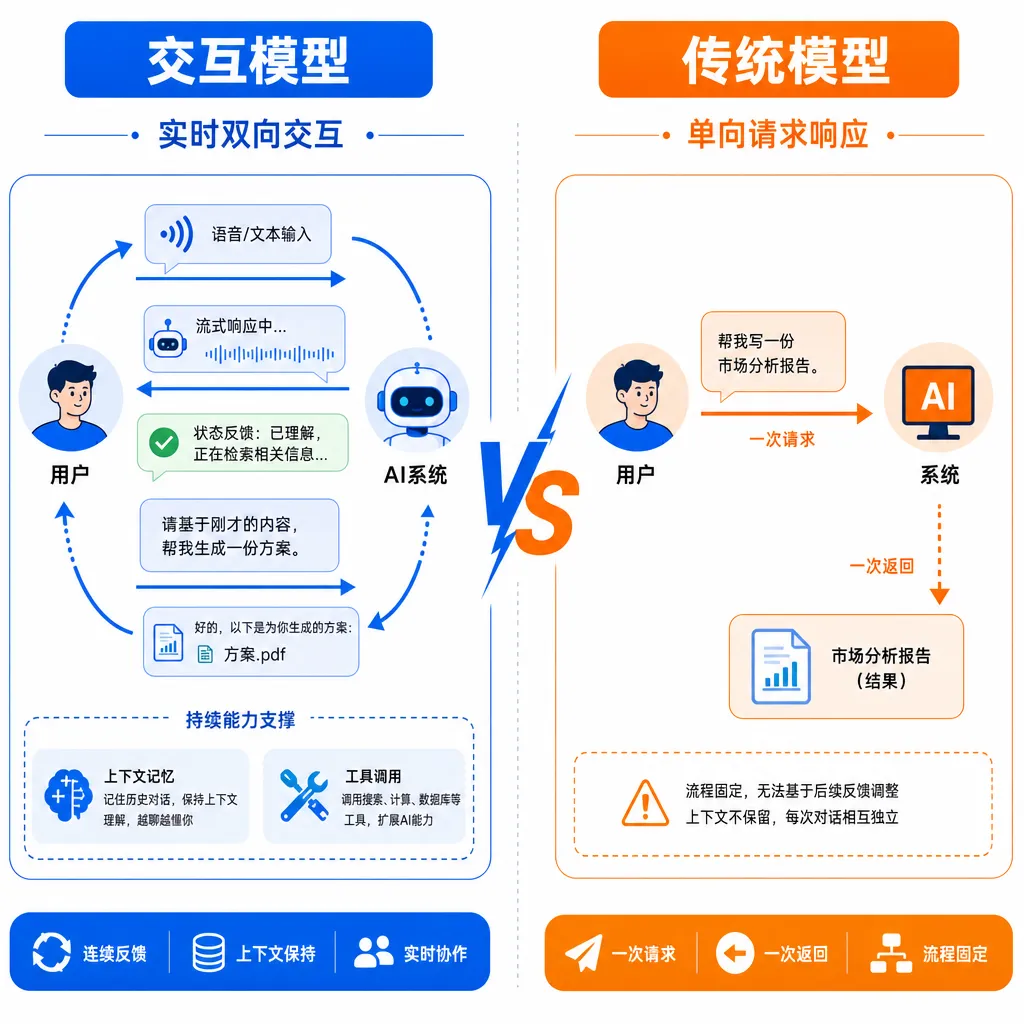
Thinking Machines pointed out the problem directly in their blog: the way AI models currently operate is single-threaded. When a user is typing or speaking, the model just sits there waiting — it has no perception of what the user is doing or how. Only after the user hits enter or stops talking does the model start processing.
This kind of interaction is essentially “You finish talking, then I think,” instead of “We think together.” The conversation is broken into discrete rounds; each one must end completely before the next can begin. That’s nothing like how human collaboration works.
When humans collaborate, you can see each other’s expressions, hear tone changes, notice pauses or quickened speech. These cues continuously shape how you respond and what you say next. Current AI models, however, perceive none of this — they only see the final submitted text or audio; everything in between is a black box.
What Interaction Models Aim to Do
Thinking Machines’ proposed Interaction Models aim to change this situation. According to them, Interaction Models will:
- Continuously receive multimodal input: not just text, but real-time streaming audio and video
- Perceive user state in real time: understanding what the user is doing and how, not just waiting until they’re done
- Think and respond simultaneously: processing input as it’s being given, able to interject, ask questions, or adjust on the fly
- Take proactive actions: not just responding, but initiating tasks and calling tools when needed
This sounds much more like describing a genuine collaborative partner rather than a question-answering machine. The key distinction lies in “real-time” and “bidirectionality” — the model becomes an active participant, not just a passive executor of commands.
From an engineering standpoint, this requires:
- Streaming processing capabilities: handling unfinished, continuously changing input streams
- Multimodal fusion: simultaneously understanding text, voice, and visual signals while capturing temporal relationships among them
- Interruption and recovery mechanisms: adjusting smoothly when the user changes their mind or adds context mid-interaction
- State management: maintaining complex conversational states, including ongoing interaction context, not just history logs
How Hard Is This?
The concept of Interaction Models isn’t new, but implementing it is tough because of several key challenges:
Latency
Real-time interaction demands extremely low latency. Human conversational rhythm operates at the scale of hundreds of milliseconds. If an AI’s response delay exceeds one second, the experience feels unnatural. Although large models are getting faster, achieving true real-time multimodal performance still requires architectural and inference-level optimization.
OpenAI’s GPT-4o and Gemini’s real-time API are moving in this direction, but they mainly focus on “fast response,” not “continuous perception.” Interaction Models demand that a model start understanding and reasoning while the user is still speaking — a much higher bar for streaming processing.
Multimodal Alignment
Synchronizing text, speech, and visual signals is complex. A user might be speaking while pointing at the screen, or their tone might contradict their words. The model needs to interpret relationships among these signals, discern which carry primary meaning, and handle conflicts between them.
Most current multimodal models can understand multimodal inputs, but not necessarily manage their temporal alignment well. For instance, if a user says “not this one” while pointing somewhere on the screen, the AI must connect speech, gesture, screen content, and timing — far more complicated than basic image-text understanding.
The Boundaries of Proactivity
Knowing when AI should interject versus wait quietly is subtle. Too many interruptions disrupt the user’s flow; too few make real-time collaboration meaningless. The model must grasp unspoken social norms around human collaboration — often implicit and context-dependent.
Further, if models can take initiative, where should their action boundaries lie? Which actions require explicit consent, and which can be autonomous? That’s not only a technical issue but one involving trust and safety design.
How It Differs from Existing Solutions
Several existing products already explore similar directions:
OpenAI’s Advanced Voice Mode supports real-time voice conversations and can interrupt or understand tone, but remains mostly voice-only and still follows a turn-taking structure.
Anthropic’s Claude excels at long-form understanding and multi-turn chat, yet still uses the traditional request-response mode.
Google’s Gemini Live also enables real-time voice interaction and multimodal input, but so far it functions as stitched-together modality processing, not truly integrated real-time fusion.
Thinking Machines’ focus on “continuous perception” and “real-time collaboration” — if achieved — would represent a qualitative leap. It’s not a simple feature upgrade but a paradigm shift: from tool to partner.
Mira Murati’s Background
Mira Murati spent over six years at OpenAI, rising from VP of Applied AI and Partnerships to CTO. She led the development and release of GPT-4, DALL-E, and ChatGPT. Inside OpenAI, she was known for her strong execution and product intuition. When Sam Altman was briefly ousted, she even served as interim CEO for a few days.
She left OpenAI last September, amid speculation about strategic disagreements. In April, Thinking Machines was revealed to have secured funding from investors like Vinod Khosla. It’s now clear she didn’t leave because she was pessimistic about AI, but because she wanted to pursue what OpenAI wouldn’t or couldn’t do.
OpenAI’s strategy is “general foundation models + API + applications,” centered on building stronger models. Thinking Machines is betting on better interaction. These are distinct technological paths — one vertical (deepening capability), the other horizontal (expanding interactivity).
The team also includes several former OpenAI staffers, particularly engineers experienced in multimodal and real-time systems — a team composition well aligned with their mission.
What It Means for Developers
If the Interaction Model approach proves viable, developers will face several changes:
API Design Gets More Complex
Traditional LLM APIs use a stateless request-response pattern: you craft a prompt, send it, and wait. Interaction Models likely need persistent connections, streaming I/O, and stateful session management — raising development complexity.
But that also means more possibilities. For example, you could build true real-time collaboration tools where an AI assistant offers live suggestions as a user codes, not only after a snippet is complete.
Application Scenarios Expand
Today’s AI apps mostly follow the “user asks → AI answers” flow — great for search, Q&A, and content generation. Interaction Models open up new frontiers:
- Real-time collaboration tools: AI can record, summarize, and remind live during meetings, not after
- Education: an AI tutor can observe problem-solving processes and intervene timely, not just mark finished work
- Creative assistance: providing live feedback to writers, artists, or musicians during creation
- Customer service & sales: adapting tone and strategy based on user’s pauses, tone, or expression
The common thread: AI participates rather than just responds.
Evaluation Standards Change
Current LLM metrics emphasize accuracy, generation quality, and reasoning ability. Interaction Models will require assessing:
- Response timeliness: intervening or helping at appropriate moments
- Context coherence: maintaining consistent understanding through continuous interaction
- Multimodal fusion quality: correctly interpreting combined signals
- Reasonable proactivity: ensuring initiative aligns with user expectations
These are more subjective, scenario-dependent metrics — harder to benchmark.
Where the Industry Is Heading
Thinking Machines isn’t alone here. OpenAI, Google, and Anthropic are all investing in real-time multimodal interaction, though with differing focuses.
OpenAI’s advantage lies in powerful models and a well-built ecosystem, but its core strategy still centers on stronger general models. Real-time interaction remains more of a product-level improvement than a core direction.
Google has hardware leverage — Pixel phones and Nest devices could host interaction models — and deep expertise in voice and vision. But its challenge is fragmentation across too many product lines, making concentrated investment difficult.
Anthropic emphasizes “safe and controllable AI.” They might approach interaction through the lens of interpretable collaboration, focusing on user understanding and control of AI behavior.
Startups gain from focus and agility. Thinking Machines can go all-in on interaction models, without worrying about backward compatibility or internal trade-offs. If they can outperform general models in a vertical scenario (say, education or collaboration tools), they could secure meaningful advantage.
From a technical evolution standpoint, interaction models represent AI’s natural step from “tools” toward “agents.” Today’s so-called AI agents mostly still rely on request-response models augmented by planning and tool use. True agents should continuously perceive, decide, and adapt — fully aligned with the goals of Interaction Models.
Challenges and Risks
Beyond the technical hurdles discussed earlier, several non-technical risks remain:
User Acceptance
People are used to today’s interaction patterns. A suddenly talkative or interrupting AI might not appeal to everyone. Some will find it natural, others intrusive. Product design must carefully balance between proactivity and restraint.
Privacy and Security
Continuous audio/video input means the AI will see and hear much more, raising privacy demands. Users must clearly understand what is captured, how it’s used, and where it’s stored.
Real-time interaction could also increase edge-computing exposure — if mishandled, it may amplify data leakage risks.
Business Model
Interaction Models might cost more to run, as they require continuous streaming processing and state maintenance. Token-based billing could be too expensive; time-based pricing may feel unfair if users pay for “idle time.” New pricing logics will be required.
Impact on OpenAI Hub Users
Thinking Machines hasn’t released a public API yet, and its product form remains unclear. But if API access arrives in the future, OpenAI Hub will integrate it promptly.
For developers already on OpenAI Hub, pay attention to these directions:
- Real-time interaction use cases: if your app needs persistent collaboration or perception, begin planning how to leverage Interaction Models
- Multimodal fusion: experiment now with GPT-4o or Gemini to gain experience for future migration
- Streaming workflows: OpenAI Hub already supports streaming; start using it to get comfortable with live interaction patterns
If Interaction Models truly materialize, they will mark a new paradigm in AI app development. Learning and preparing ahead means you’ll be ready when maturity comes.
Mira Murati and Thinking Machines are essentially trying to answer a fundamental question: What form should AI existence take?
A passive tool — or an active partner?
An obedient executor — or a perceptive, thinking collaborator?
The answer will shape the next decade of AI products.
No matter how successful they end up being, Thinking Machines’ exploration is a step in the right direction.
References
- Thinking Machines Official Blog – Interaction Models – full explanation of the concept
- The Verge Report – detailed coverage of Thinking Machines and Interaction Models


