
**"History Simulator: Chongzhen"** now supports custom model integration.
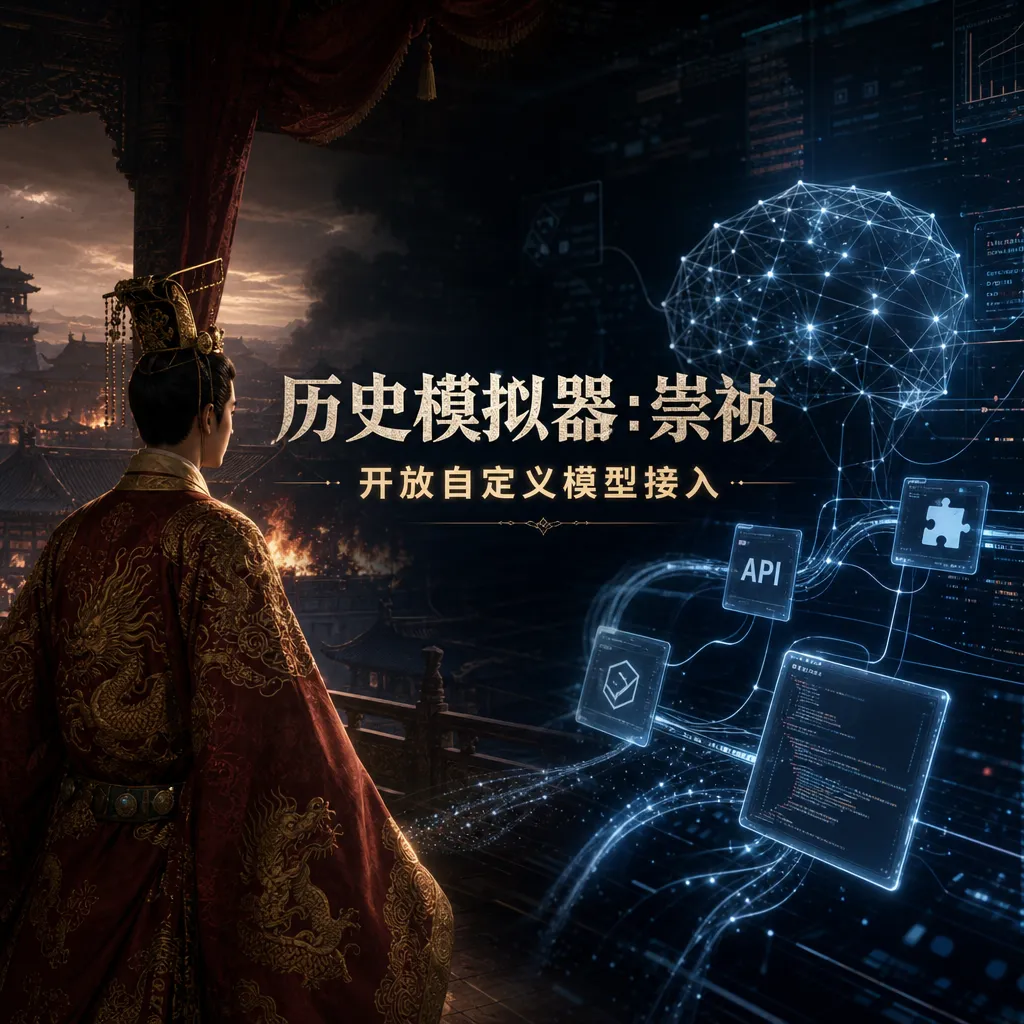
After the domestic AI game *History Simulator: Chongzhen* sparked controversy over its "buyout + token-based charges" model, the official team announced that they would open custom API access and a creative workshop feature, allowing players to connect their own large-model services and create script content.
"History Simulator: Chongzhen" Opens Custom Model Integration — AI Game Commercialization Takes Another Step Forward
The Chinese AI game History Simulator: Chongzhen announced today that it will open custom API integration and launch a creative workshop feature. This is the latest official response following player controversy over the "buyout + token fee" model.
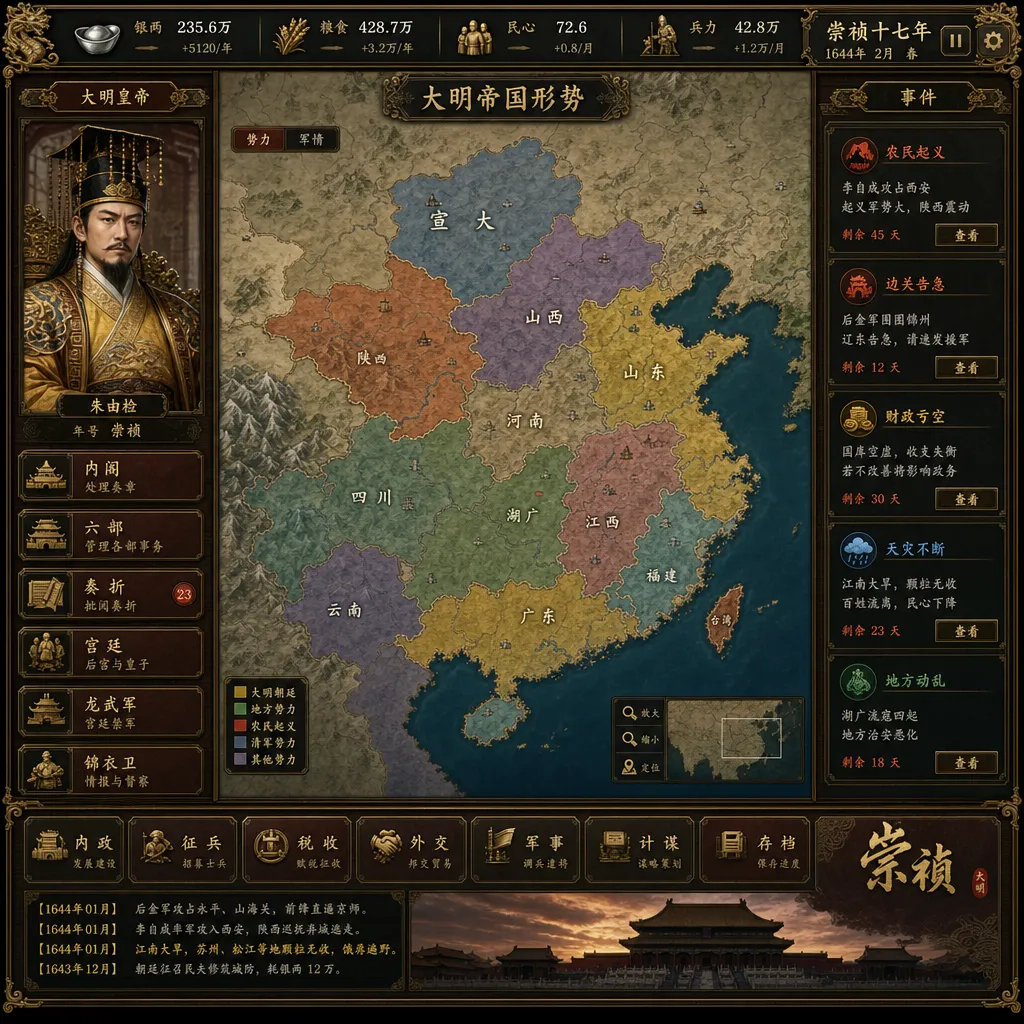
The Origin of the Controversy: How Should AI Games Charge Players?
History Simulator: Chongzhen adopts a business model rarely seen in the gaming industry: after paying 48 RMB to buy out the base game, players must purchase additional tokens to cover the cost of AI-generated content if they wish to continue the storyline.
Essentially, it introduces cloud service billing logic into games. For developers, this makes perfect sense—AI inference has a real cost, so charging per usage is reasonable. But for players, it breaks the expectation that a game purchase grants a complete experience or that in-game spending relates only to optional items or skins. It’s hard to imagine paying extra for every dialogue in The Witcher 3.
The core of the debate is not about the payment itself, but whether such a model suits the gaming medium. Games emphasize immersion and continuity, but if players constantly need to monitor their “token balance,” the gameplay gets disrupted. Moreover, most players have no concept of tokens—they don’t know how much one conversation costs or how long 48 RMB will last.
The Official Solution: Give Players the Choice
In response to criticism, the developers proposed two solutions:
1. Open Custom API Integration
In the future, players will be able to connect large-model services within the “supported range,” freely selecting models and controlling costs. This means:
- Transparent costs: Players can use their own API keys and pay directly to model service providers according to official pricing, eliminating “secondary billing.”
- Model selection: For better story quality, players may use GPT-4 or Claude; for lower costs, DeepSeek or domestic open-source models.
- Technical barrier: Friendly for developers, but ordinary players will need to understand concepts like API keys, model selection, and token billing.
This “BYOK” (Bring Your Own Key) approach is common in native AI applications such as writing tools and customer service bots. But in gaming, this is a first.
Technically, the game must:
- Standardize API calls to be compatible with mainstream model formats (OpenAI, Anthropic, domestic platforms)
- Provide an interface for switching and configuring models
- Handle response-format differences and latency between models
- Ensure security of player-provided API keys
Interestingly, the official statement mentions “models within the supported range,” implying that not all models will be accepted. Restrictions may include:
- Required model capability (context length, role-playing ability)
- API format compatibility
- Content safety control (to prevent inappropriate outputs)
Players looking to connect their own models can consider platforms like OpenAI Hub, which aggregate APIs for GPT, Claude, Gemini, DeepSeek, and others, simplifying configuration and access.
2. Launching the Creative Workshop
The creative workshop lets players build their own scripts, rules, and gameplay on top of the game’s core framework. The possibilities are broad:
- UGC ecosystem: Players can create scripts for different historical periods (“Three Kingdoms Simulator,” “Republic Era Simulator”) or even alternate histories.
- Gameplay innovation: Beyond history simulation, players could design mystery-solving or role-playing experiences.
- Community-driven: High-quality content can be shared within the workshop, forming an ecosystem similar to Steam’s Workshop.
Essentially, this turns the game from a closed product into an open platform—a concept long proven by titles like Minecraft, RimWorld, and The Elder Scrolls series, whose mod communities greatly extended their lifespans.
But an AI game’s workshop brings its own challenge: balancing creative freedom with content safety. Traditional mods are static and easy to review; AI outputs are dynamic, and what players upload might just be a prompt template. The actual generated content depends on AI behavior at runtime. The official statement mentions “upload review rules,” whose details will merit attention.
The Commercialization Dilemma of AI Games
The controversy around History Simulator: Chongzhen essentially reflects AI gaming’s double-edged nature:
Cost structure changes: Traditional games have near-zero marginal cost—the server load doesn’t scale much between one and ten thousand sales. For AI games, each interaction invokes model inference, making marginal cost significant. A flat buyout price might lead to losses.
User mindset conflict: Players are accustomed to “buyout = full experience” or “free + in-app purchases” models. A “buyout + pay-per-use” hybrid feels alien. Even if costs are explained, “the more you play, the more you pay” feels wrong to many.
Current AI game commercialization models include:
- Subscription: Monthly/yearly unlimited use—good for high-frequency users but hard to price.
- Buyout + limited tokens: A buyout includes a token quota; after depletion, players may replenish or connect their own API. (Chongzhen’s current plan.)
- Free + ads: Ad revenue covers costs—but AI inference is far pricier than normal game servers, so ads rarely suffice.
- Open-source + community: The framework is open; players host their own instances, and developers monetize via premium content or tech support.
The “custom API” strategy blends models 2 and 4—offering convenience via official hosting for casual players and autonomy via self-managed models for advanced users.
Technical Implementation Challenges
Though “open API access” sounds simple, implementation involves complex technical details:
API Format Compatibility
Major model APIs differ slightly. OpenAI’s Chat Completions API is becoming a standard, with Anthropic, Google, and domestic providers mostly compatible—but details vary:
- Parameter names: Some use
max_tokens, othersmax_output_tokens - Streaming: SSE formats differ
- Error handling: HTTP codes and response structures are inconsistent
Games need an adaptation layer to unify these formats—or restrict players to OpenAI-format APIs via aggregators like OpenAI Hub.
Context Management
Historical simulation demands long-term memory: each decision affects subsequent events, requiring continuity in AI context.
For example, a 50-round campaign with 500 tokens per interaction equals 25k tokens in total. Costs per session could vary dramatically:
- GPT-4: $1.00 per session
- Claude 3.5 Sonnet: $0.45
- DeepSeek-V3: $0.035
That’s a thirtyfold difference—hence the appeal of open API integration based on player budgets and quality preferences.
Latency and Experience
Inference speeds differ widely. GPT-4-Turbo’s first-token latency averages 1–2 seconds, while DeepSeek-V3 responds in under 500 ms. Fast feedback matters in interactive gameplay.
Games may need to:
- Display model performance estimates
- Implement intelligent caching
- Support streaming output to reduce perceptible waiting
Content Safety
Once players use custom API keys, the developers lose direct control over generated outputs. What if someone’s model produces inappropriate content?
Possible safeguards include:
- Secondary moderation at the game level
- Explicit terms defining user responsibility
- A whitelist of approved model providers with built-in content filters
The Creative Workshop’s Potential
If executed well, the creative workshop could surpass the main game in value. Consider successful precedents:
Minecraft: Mods turned a sandbox builder into RPGs, puzzles, survival, and education games.
RimWorld: Over 5,000 mods, from minor add-ons to total gameplay overhauls.
Skyrim: Thirteen years later, its mod community thrives—with over five billion downloads.
AI games could unlock even more potential because:
- Lower creative barrier: No programming or modeling skills—just write prompts and setup docs.
- Endless diversity: Dynamic AI content ensures variety far beyond static mods.
- Rapid iteration: Adjusting prompt templates is far quicker than rebuilding assets.
Possible new content types include:
- Historical scenarios: Three Kingdoms, Warring States, Republic era, Cold War...
- Alternate settings: Steampunk, cyberpunk, fantasy worlds.
- Unique gameplay: Mysteries, business simulations, diplomacy strategy.
- Educational uses: History lessons, decision training, immersive role-play.
The workshop could also address a key AI-game issue—content exhaustion. Although AI generates variable outputs, its underlying logic may feel repetitive. UGC contributions sustain innovation and freshness.
Implications for the AI Gaming Industry
This update in History Simulator: Chongzhen offers several lessons for the industry:
1. Business Models Need Innovation
Copying traditional game or SaaS pricing won't suffice. AI games require distinct strategies—possibly hybrid or novel ones.
The key is helping players perceive both cost and value. If tokens feel like “paying for computation,” users resist; if tokens feel like “paying for a unique, personal storyline,” they accept.
2. Open Ecosystems Have More Longevity
Traditional games succeed as closed products because their content is fixed. AI games, producing dynamic content, can’t predict every outcome.
Open APIs and workshops signal acceptance of imperfection—offering a framework for community co-creation. This mindset, familiar in open-source and Web3, remains rare in gaming.
3. Technical Players Are Key Early Adopters
Those willing to manage their own APIs are advanced users—few but valuable:
- They understand AI logic and cost models
- They provide high-quality feedback
- They create sophisticated UGC
- They evangelize and grow the community
Many tech products—Linux, Blender, Stable Diffusion—thrived by serving early technical users first.
4. The Core Strength of AI Games Isn’t AI Itself
Once players can use any model, the real strengths lie in:
- Game framework design — turning AI outputs into coherent gameplay
- Prompt engineering — crafting instructions for consistent quality
- Context management — maintaining narrative continuity
- User experience — making technical complexity feel invisible and rewarding
These form the true moat. AI models will become commodity services, but good design remains irreplaceable.
Outstanding Questions
The official note mentions that “launch timeline, supported models, and upload review rules” will be announced later. Key clarifications needed include:
Which models are supported?
- Only GPT/Claude/Gemini, or also open-source models like Llama, Qwen, DeepSeek?
- Will locally deployed models be allowed?
- Minimum requirements—context length, role-playing ability?
Technical API details?
- What data must users provide—API key, base URL, model name?
- How will key security be handled—local storage or encrypted transfer?
- Will performance testing and benchmarking be built in?
Workshop review mechanism?
- What review steps apply to uploads?
- How long will review take?
- How will dynamic AI outputs be handled?
Pricing adjustments?
- How will official token usage be priced?
- Will subscriptions or alternative plans appear?
- Will player-created content be sellable?
Answers to these will determine whether the changes truly address player concerns and create a viable blueprint for AI game monetization.
Final Thoughts
The controversy and updates around History Simulator: Chongzhen sum up the growing pains of AI gaming. The field is young—no mature business logic, no settled best practices. Everyone is experimenting.
Opening custom APIs and creative workshops is a commendable step. It acknowledges AI gaming’s uniqueness and empowers players with choice. But success will depend on execution details and community management.
The future of AI gaming may not hinge on a single hit title, but on an open ecosystem where developers supply frameworks and tools, players craft content and gameplay, and AI delivers infinite possibilities. History Simulator: Chongzhen is taking a promising first step in that direction.
References
- Chinese AI game History Simulator: Chongzhen sparks controversy over “buyout + token charging” model; official response to open model integration — ITHome — Original report and official announcement


