
MediaTek Releases Dimensity AI Agent Engine 2.0: System-Native Claw and Agent OS Ecosystem
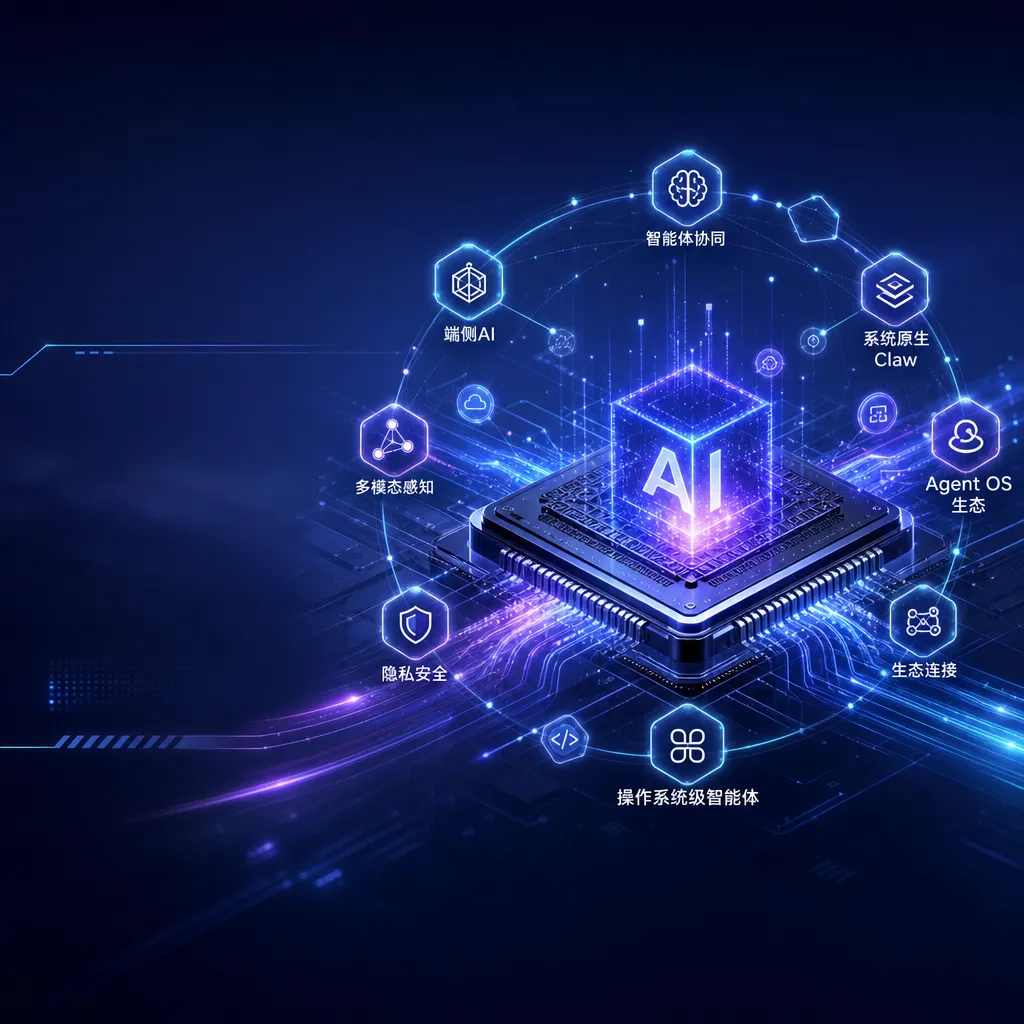
At MDDC 2026, MediaTek released the Dimensity AI Agentization Engine 2.0, introduced the system-native Claw technology, and joined forces with OPPO, Xiaomi, and Transsion to build the Agent OS ecosystem. Through low-power real-time sensing and cross-application driving capabilities, it pushes AI agents from the cloud to the edge.
MediaTek Launches Dimensity AI Agent Engine 2.0: System-Native Claw and Agent OS Ecosystem
On May 13, MediaTek unveiled the Dimensity AI Agent Engine 2.0 at its MDDC 2026 Developer Conference in Shanghai. The highlight is Dimensity’s SensingClaw technology—a foundational sensing architecture designed for Agent OS. This is not just a chip upgrade, but MediaTek’s systematic answer to one fundamental question: how to make AI shift from passive response to active perception, how to enable cross-app collaboration on the device side, and how to make agents truly dynamic while protecting user privacy.
SensingClaw: The “Nervous System” of Agents
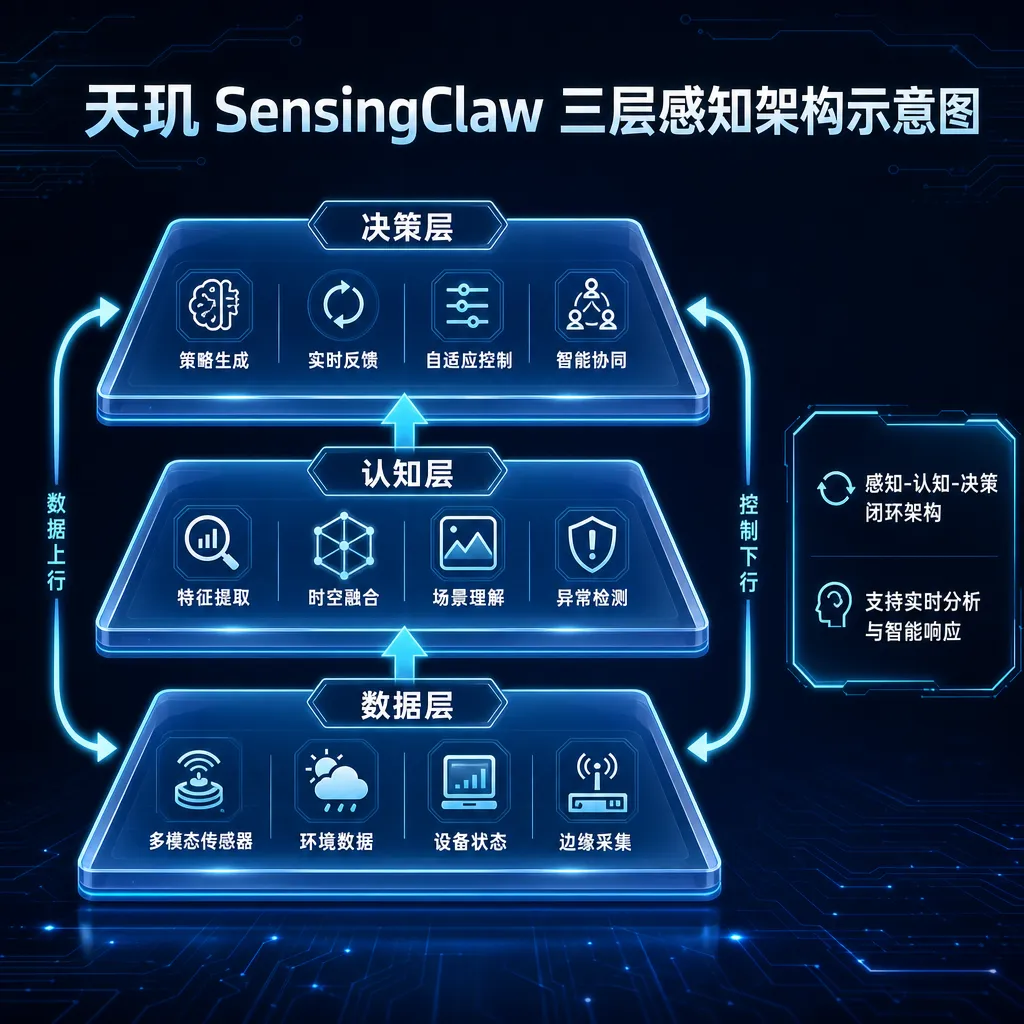
At the heart of Dimensity SensingClaw lies a low-power, always-on sensing capability. Traditional smartphone AI systems need manual activation, while SensingClaw maintains an independent sensing unit that continuously monitors the environment, user behavior, and app states at milliwatt-level power consumption. This means agents can continuously understand user intent in the background without draining battery life.
Technical details from MediaTek reveal that SensingClaw integrates a three-layer sensing architecture:
- Environment Sensing Layer: Uses sensor fusion (accelerometer, gyroscope, light, microphone) to identify user scenarios—whether driving, in a meeting, or exercising.
- Behavior Sensing Layer: Analyzes usage patterns to predict user needs. For instance, if a user typically opens Calendar and Maps at 8 a.m. each day, the system preloads traffic info.
- App Sensing Layer: Monitors data flow between applications to understand cross-app task chains. For example, when the user taps a location link from WeChat and opens Maps navigation, the agent recognizes it as a single “travel task.”
The key lies in the word “active.” Traditional AI assistants act as Q&A bots—users ask, AI answers. SensingClaw gives the agent a closed-loop capability of “observe–reason–act,” which aligns far more closely with the true definition of an AI agent.
System-Native Claw: Chip–OS Collaboration
More noteworthy is MediaTek’s collaboration with OPPO, Xiaomi, and Transsion on System-Native Claw. This is not simply an SDK integration—it deeply embeds Claw capabilities into the smartphone OS layer.
System-Native Claw has three key features:
1. Active Perception and Execution
No manual trigger required. For example, when a user says “Remind me about the meeting tomorrow at 3 p.m.” in WeChat, the agent automatically creates a calendar event, sets the reminder, predicts commuting time based on location, and sends a departure alert 30 minutes ahead. This is enabled by Claw’s multimodal understanding (text, time, location) and cross-app orchestration.
2. Seamless Cross-Device Continuity
The agent operates beyond a single device. A web page browsed on a phone can continue seamlessly on a tablet; navigation unfinished in the car automatically transfers to the phone when exiting the vehicle. Claw achieves millisecond-level task transfer through edge–cloud collaboration.
3. On-Device Privacy Protection
All sensing and reasoning happen locally—nothing is uploaded to the cloud. MediaTek emphasizes this as a bottom line for Agent OS: the more an agent understands the user, the more crucial privacy protection becomes. SensingClaw encrypts stored sensing data; only authorized apps can access it, and all access is logged and auditable.
The technical challenge is balancing sensing capability, power consumption, and privacy. MediaTek addresses this by delegating frequent sensing tasks (like environmental listening) to low-power coprocessors, while complex reasoning tasks (like multi-turn dialogue understanding) invoke the NPU, achieving optimal energy efficiency through heterogeneous computing.
Agent OS Ecosystem: From Chip Maker to Platform Builder
What MediaTek unveiled is not merely technology—it’s an ecosystem strategy. The goal of Dimensity AI Agent Engine 2.0 is to enable downstream partners to swiftly build Agent OS platforms instead of developing operating systems from scratch.
This is a clever strategy, as the implementation of agents requires three layers of collaboration:
- Chip Layer: Provides computing and sensing power (MediaTek’s role)
- System Layer: Handles task scheduling and permission management (OEM role)
- Application Layer: Delivers smart user experiences across use cases (developer role)
MediaTek’s open SensingClaw API and developer tools allow OEMs to customize agent capabilities on their own OSes. OPPO’s ColorOS, Xiaomi’s HyperOS, and Transsion’s HiOS will each implement their own agent functions on this shared foundation of sensing and scheduling capabilities.
This model—“unified foundation, differentiated experience”—avoids ecosystem fragmentation (no brand-specific adaptation required for developers) while giving manufacturers plenty of room for customization. Compared with Apple’s closed ecosystem and Qualcomm’s loose partnership model, MediaTek has found a middle path.
Dimensity AI Developer Kit 3.0: Lowering the Agent Development Barrier
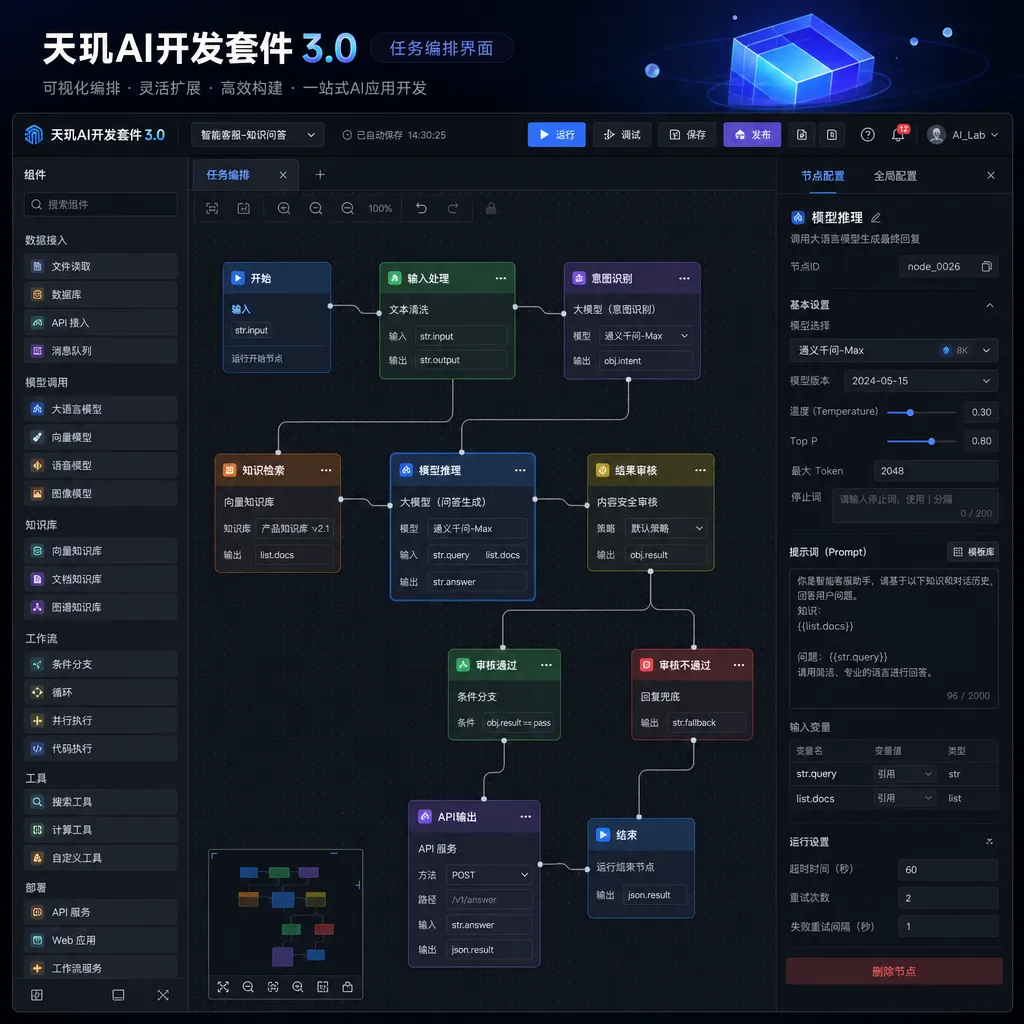
Alongside Engine 2.0, MediaTek launched the Dimensity AI Developer Kit 3.0, with key upgrades in on-device multimodal agent capabilities and toolchain optimization.
Multimodal capability means the agent can handle text, images, speech, and video together. For instance, if a user photographs a restaurant menu and asks “How is this dish made?”, the agent must recognize the dish name from the image, retrieve the recipe database, generate steps, and narrate them via speech synthesis—requiring visual, NLP, and TTS models to collaborate.
Developer Kit 3.0 offers a model-fusion framework, enabling unified API calls across multiple modalities without worrying about low-level operator scheduling or memory management. MediaTek preloads popular open-source models such as Qwen‑VL and Whisper, allowing developers to fine-tune them directly instead of training from scratch.
In deployment tools, the kit supports model quantization, pruning, and distillation, allowing cloud-scale models to be compressed for on-device execution. For example, a 7 billion–parameter model can be reduced below 2 GB with INT8 quantization, running at 20 tokens/s inference speed on Dimensity 9400+, adequate for smooth conversational experiences.
More importantly, Developer Kit 3.0 includes an agent task orchestration tool. Developers can define an agent’s sensing rules, decision logic, and execution actions visually—without complex state-machine coding. For example, defining a “smart travel assistant” requires only dragging modules:
- Sensing Module: Listen for calendar events
- Decision Module: Determine if travel reminders are needed
- Execution Module: Query traffic via Maps API and push notifications
This low-code approach dramatically lowers the development threshold, enabling more developers to participate in the Agent ecosystem.
Competitive Comparison: MediaTek’s Differentiated Path
AI agents are the main battleground for mobile chips this year—Qualcomm, Apple, and Samsung are all in play. How does MediaTek differ?
Compared with Qualcomm: Snapdragon 8 Gen 4’s AI engine offers stronger raw compute (45 TOPS vs. Dimensity 9400+’s 35 TOPS), but MediaTek’s advantage lies in system-level synergy. SensingClaw represents an end‑to‑end optimization—from perception to reasoning and execution. Qualcomm provides a powerful “engine”; MediaTek delivers the full “autonomous‑driving system.”
Compared with Apple: Apple Intelligence takes a closed‑ecosystem route—Apple defines all agent capabilities. MediaTek embraces openness, giving OEMs and developers greater freedom to innovate. Within the Android world, this open approach is inevitable—no Android vendor wants to fully depend on the chip maker’s agent solution.
Compared with Samsung: Exynos 2500 also touts agent features but mainly for Galaxy devices. MediaTek’s client list spans OPPO, vivo, Xiaomi, Transsion, and others—yielding a far larger ecosystem. Moreover, since MediaTek doesn’t make phones itself, it avoids competing with its customers—creating inherent trust.
Technically, MediaTek is betting on on‑device agents rather than cloud‑based agents. This choice reflects two trends:
- Tightening Privacy Regulations: EU GDPR and China’s Personal Information Protection Law restrict cross‑border data flow; on‑device inference avoids compliance risk.
- Rapid Model Miniaturization: Emerging small models like DeepSeek‑R1 and Qwen 2.5 prove large models can now run locally. MediaTek’s bet: if on‑device performance is good enough, users won’t need the cloud.
Whether this bet pays off depends on market results in the next year or two—but for now, on‑device agents appear the most feasible path to deployment.
Developer Ecosystem: MediaTek’s Long Game
In essence, competition among intelligent agents is ecosystem competition. Even the most powerful chips are useless without application support. MediaTek understands this, dedicating much of MDDC 2026 to ecosystem building.
Its approach combines “lighthouse projects + developer incentives.” By partnering first with leading apps (such as Amap, Meituan, Douyin) to create showcase cases proving tangible user value, MediaTek then follows up with developer contests and training programs to attract broader participation.
For example, its “Smart Travel Assistant” co‑developed with Amap can automatically plan routes based on calendar events, anticipate congestion, and suggest alternatives. Although not technically complex, it requires Amap to open APIs for agent calls—MediaTek provides technical and business mediation.
Another case is the “Smart Ordering” collaboration with Meituan: when users discuss dinner plans in a WeChat group, the agent analyzes the conversation, recommends nearby restaurants, and even generates orders. This demands three‑way integration among messaging, location, and food‑delivery services—a cross‑app data‑flow standard encouraged by MediaTek.
The true value of these examples lies not in flashy functionality but in validating the business model of agents: by reducing user operation steps and increasing app engagement time and frequency, they ultimately drive GMV growth. Only when app providers see ROI will the ecosystem truly thrive.
Challenges and Unknowns
Though Dimensity AI Agent Engine 2.0 looks promising, real‑world implementation faces hurdles.
First: Power Consumption. Despite MediaTek’s low‑power design claims, continuous sensing inevitably draws energy. If users notice shorter battery life with agents enabled, the experience suffers. Finding balance among sensing frequency, inference accuracy, and power usage—unique per user—will be key.
Second: Privacy Trust. The more proactive the agent, the more users worry about data exposure. MediaTek pledges on‑device processing, but verification is difficult. Any single data‑leak incident—even from a third‑party app—could damage trust across the ecosystem. Transparent privacy auditing is needed so users can see exactly which data the agent accessed and actions taken.
Third: App Integration. Agent OS requires open APIs from apps, yet competitors often resist openness. For instance, WeChat is unlikely to grant access to chat data; Taobao may restrict direct order creation. This calls for system‑level standards—or incentive models tying openness to commercial benefit.
Fourth: User Habits. Agents thrive on proactive behavior, but many users prefer passive operation—disliking phones that “act on their own.” Balancing initiative and restraint demands deep user research and iterative product design.
These challenges are not MediaTek’s alone—they require industry‑wide collaboration. Still, MediaTek has taken the first step, delivering a fairly complete technical and ecosystem framework.
Final Thoughts
MediaTek’s launch of Dimensity AI Agent Engine 2.0 essentially answers the question: What should an intelligent agent be?
A cloud‑hosted super‑brain or an on‑device personal assistant? A standardized feature set defined by vendors, or a customizable service shaped by users? A closed‑ecosystem moat, or an open‑platform connector?
MediaTek’s answer: on‑device, open, collaborative. This may not be the ideal solution, but it is currently the most realistic.
From a broader viewpoint, agent competition is only beginning. Apple has Apple Intelligence, Google has Gemini Nano, Qualcomm has AI Hub, and MediaTek has SensingClaw. Each bets on differing technologies and ecosystem strategies. Success will depend on who can best turn technology into user value and ecosystems into sustainable business cycles.
For developers, this is an exciting era. Chip vendors, phone makers, and app providers are all courting developer engagement with tools, funding, and traffic support. The window for agent‑app innovation may last just a year or two—early movers will reap the first big rewards.
For users, agents still need time to prove themselves. Today’s agents resemble “advanced smart shortcuts” more than sci‑fi AI companions. Yet the speed of iteration is astonishing—by this time next year, we may see agents that truly understand you.
The most insightful line from MediaTek’s launch event was: “An intelligent agent is not a feature—it’s a paradigm shift.” From passive response to active perception, from point‑level optimization to system collaboration, from vendor definition to user empowerment—this is the essence of agents. Dimensity AI Agent Engine 2.0 is only the start; the real transformation lies ahead.
References
- Chipmaker MediaTek Launches AI Agent Engine 2.0, Collaborating with Multiple Phone Makers on System‑Native Claw – 36Kr News Flash covering key launch highlights
- From Chips to Agent Platforms: MediaTek Reshaping AI Experience Boundaries – Tencent Cloud Developer Community in‑depth analysis
- Dimensity 9400+ Release and AI Agent Leadership Program Kick‑off – iGao7 report on MDDC 2025


