
Anthropic bans OpenClaw: subscription users removed from third-party tools
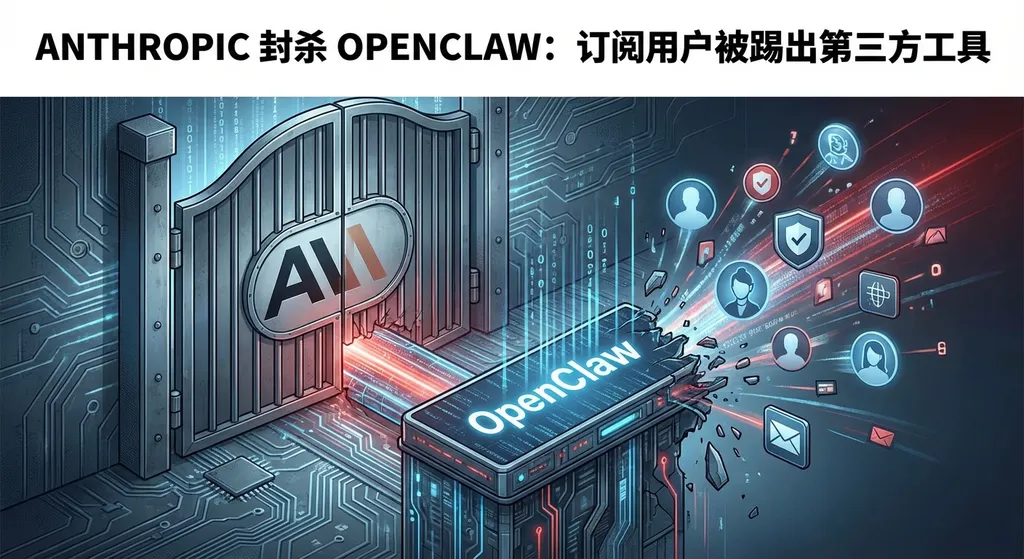
Starting April 4, Anthropic will forcibly cut off third-party tools such as OpenClaw from accessing Claude subscription credits, forcing users to switch to pay‑as‑you‑go billing. This ban came after the founder of OpenClaw joined OpenAI, revealing a battle between platforms over user relationships.
Anthropic Bans OpenClaw: Subscription Users Removed from Third-Party Tools
On April 4, Anthropic officially took action against OpenClaw.
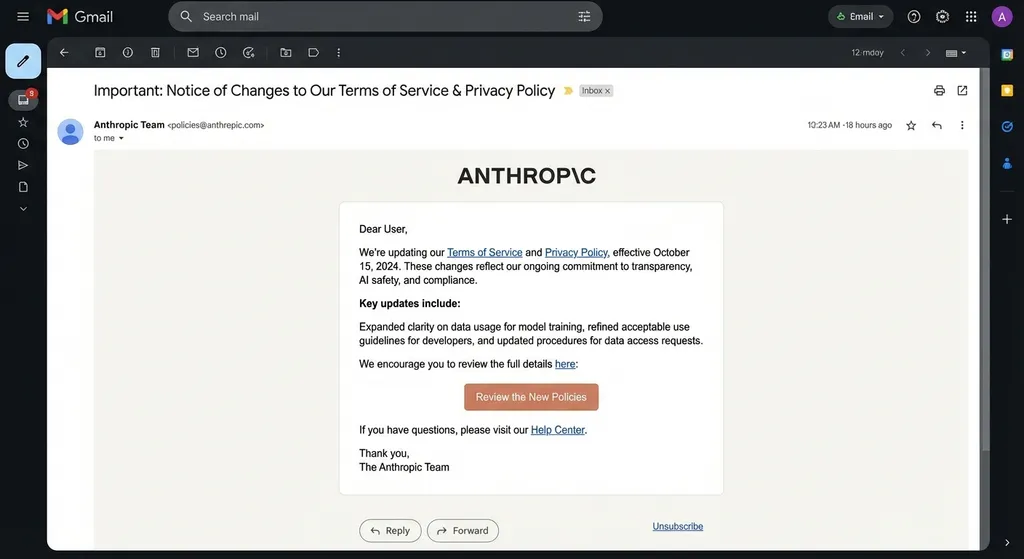
Starting from 3 p.m. Eastern Time today (3 a.m. Beijing Time on April 5), all subscription users using Claude through OpenClaw found their monthly quota suddenly invalid. Want to keep using it? You can—but only through API usage-based billing, no monthly plan, no discount.
Claude Code head Boris Cherny announced this on social media. The emails went out Friday evening—a classic time for internet companies to drop bad news so the buzz dies down over the weekend.
This is not just a routine policy adjustment—it’s a planned cleanup operation with a clear goal: to push third-party tools out of the Claude ecosystem.
Why OpenClaw?
What is OpenClaw? Simply put, it’s an open-source tool that makes Claude easier to use. Developers can use it to integrate Claude into their workflows for automated coding, testing, and debugging. Many teams use it to run AI Agents that work 24/7.
And that’s where the problem lies.
Anthropic’s subscription pricing was designed for human-scale usage: a few hours a day, a few dozen questions, occasional coding. But tools like OpenClaw don’t use models this way—they run at machine speed. A single active user running tasks via OpenClaw for a week can consume compute resources equivalent to thousands or even tens of thousands of dollars in API usage.
In the email, Anthropic stated bluntly that the subscription pricing model couldn’t sustain that level of usage.
But that’s just the surface reason. The real spark was that OpenClaw’s founder, Peter Steinberger, joined OpenAI earlier this year.
To Anthropic, OpenClaw went from being a “third-party tool that enhances user experience” to a “Trojan horse from the rival camp.” Since its founder is now with the competition, his tool would no longer get access to subscription quotas.
Peter responded calmly on social media: “I’ve been trying to talk them down for a week—no luck. First they copied my features, and now this…”
That one sentence says a lot. Copy features, then ban. The order is revealing.
Not the First Ban
Anthropic isn’t the first to act against OpenClaw.
Meta was earlier in banning internal use of OpenClaw, citing security compliance. Google soon followed by mass-suspending OpenClaw user accounts—several users reported having their accounts disabled without warning and getting no replies to appeals.
Three tech giants, one target. The logic behind this is consistent: these platforms don’t want third-party tools building stable user dependency within their ecosystems. Once users get used to accessing Claude through OpenClaw, Anthropic loses direct control over user relationships.
For any company trying to build a platform business, that’s unacceptable.
What Should Developers Do?
For developers depending on OpenClaw, this ban came out of nowhere.
Many teams have workflows built around OpenClaw. Now, they either accept usage-based billing (which could multiply costs), or migrate to Anthropic’s native tools—Claude Code or Claude Cowork.
Anthropic offered a bit of “consolation money”: a one-time subsidy equal to one month of subscription fee, claimable before April 17. But for heavy users, that hardly covers the cost gap.
The more important takeaway is the signal this sends: AI platforms are shifting from openness and collaboration toward corporate walled gardens.
Over the past two years, the flourishing of the AI tool ecosystem largely relied on open APIs and relaxed usage policies. Developers could freely combine different models and tools to build custom workflows. But now, platforms are tightening control, forcing users back into proprietary ecosystems.
This isn’t a technical issue—it’s a business decision.
Alternative API Options
If you’re an OpenClaw user, here are a few options:
- Use the Claude API directly: billed by tokens, transparent but potentially more expensive
- Migrate to Claude Code: Anthropic’s own tool, similar functionality but closed ecosystem
- Switch models: such as GPT‑4, Gemini, DeepSeek, etc.
If you want to keep using Claude’s API without being locked into a single platform, consider an API aggregator service. For example, platforms like OpenAI Hub let you call all major models with one key, domestic access included, OpenAI‑format compatible. If any platform changes policies, you can quickly switch models without rewriting code.
Example code (OpenAI-compatible format):
import openai

# Configure API (e.g., OpenAI Hub or other compatible services)
openai.api_base = "https://api.openai-hub.net/v1"
openai.api_key = "your-api-key"

# Call Claude model
response = openai.ChatCompletion.create(
    model="claude-3-opus",
    messages=[
        {"role": "user", "content": "Help me refactor this code"}
    ]
)

print(response.choices[0].message.content)
The benefit of this method: if Claude stops working, you can simply change the model parameter to gpt-4 or deepseek-chat—the rest of the code stays the same.
Platform Calculations
Why did Anthropic act now?
One reason is cost pressure. According to Anthropic’s spokesperson, the number of paid Claude subscribers has more than doubled this year, and usage is accelerating. Meanwhile, the company recently adjusted limits, cutting service intensity during peak hours to balance demand and capacity.
Another reason is product strategy. Over the past two months, Anthropic has rolled out four major new features, including significant upgrades to Claude Code and Claude Cowork. These tools are clearly positioned to replace third-party solutions like OpenClaw.
Roll out in-house tools first, then ban competitors—a familiar but effective playbook.
The issue is that this approach hurts developer ecosystems in the long term. When a platform uses policy enforcement to clear the field, developers lose trust in its toolchain. Next time they choose tools, they’ll lean toward more open, less lock-in-prone options.
This Isn’t the End
Anthropic’s email made it clear: this policy “is being enforced first on OpenClaw but applies to all third-party toolchains and will soon extend to more tools.”
OpenClaw is just the first. Other third-party tools will soon be removed from the subscription whitelist as well.
This ban is essentially a battle over user relationships. AI companies don’t want to be just model providers—they want to control the entire workflow, from input to output, from tools to data.
But that desire for control may backfire. When developers find themselves trapped inside a closed ecosystem, they’ll vote with their feet.
April 4—remember this date. It marks the day the AI industry began shifting from open collaboration to corporate division.
References
- Overnight shake-up: Anthropic officially bans OpenClaw! Global developers hit hard within 24 hours – Coverage by Xinzhiyuan detailing timeline and background
- Anthropic announces official ban on OpenClaw – Details of official policy change timing and specifics
- Anthropic’s new rule: extra charges for Claude calls via OpenClaw and other third-party tools – Caixin report analyzing cost impact on users
- Breaking: OpenClaw has been banned – Includes response from OpenClaw founder Peter Steinberger
- Claude can’t take it anymore: limits first, bans next, the most expensive users are being cut off – Sina Finance analysis revealing Anthropic’s cost pressures


