
Google Gemini Spark Exposed: A True Intelligent Agent That Can Clean Up Emails and Edit Documents
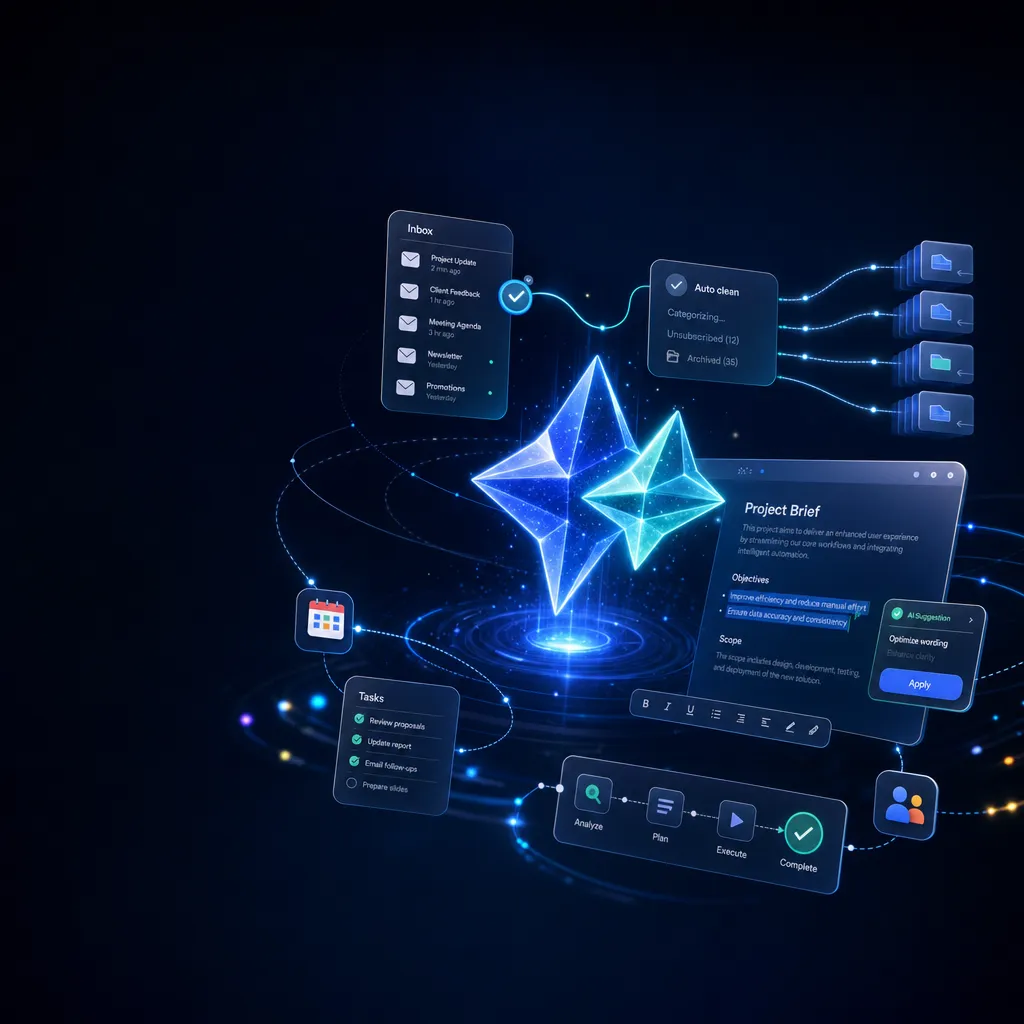
Google Gemini is about to launch an intelligent agent feature called **Spark**, which will go beyond simply answering questions—it will be able to directly perform tasks such as cleaning up Gmail, organizing notes, generating news summaries, and even creating reusable automated workflows.
Google Gemini Spark Exposed: The Real Agent That Can Clean Up Emails and Edit Documents
Google is finally getting serious about the agent race. The newly leaked Gemini Spark is no longer just a chatty assistant—it’s an executor that can get things done for you: cleaning up emails, organizing meeting notes, generating customized news summaries, and even executing multi‑step workflows across apps.
The logic behind this upgrade is clear—shifting from conversational AI to task‑executing agents. Users no longer need to hand‑hold it through each step; they just need to specify the final result, and Spark will automatically invoke Gmail, Docs, Calendar, and other Google apps to complete the operation.
What Can Spark Do?
According to Android Authority and several sources, Spark’s abilities are broader than expected:
Basic Task Execution
- Clean spam and promotional content from your Gmail inbox
- Automatically organize related notes and documents before important meetings
- Generate personalized daily news digests
- Index and act on information across different apps
Reusable Automated Workflows
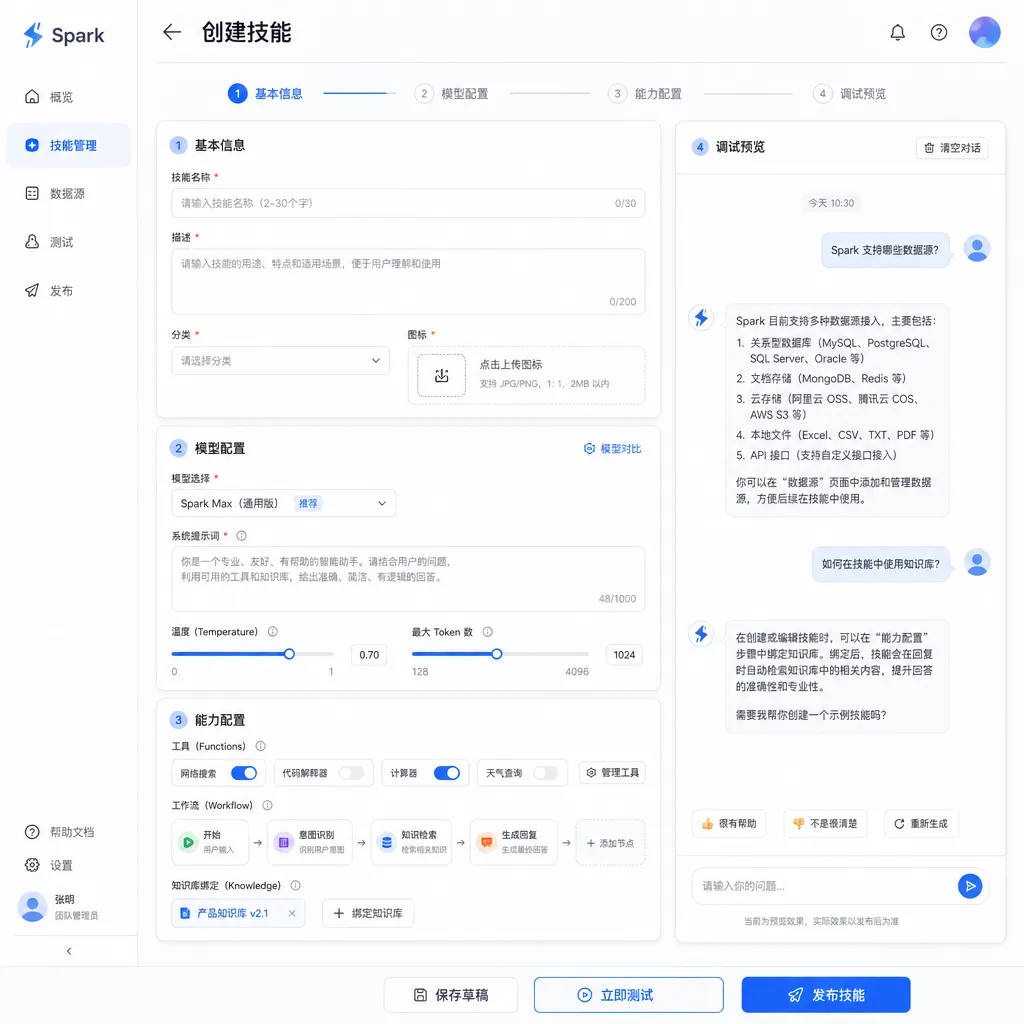
The most noteworthy feature is “Skills.” Users can create instruction templates using variable inputs to handle repetitive tasks. For example, you could set up a “weekly report generator” skill that automatically, every Friday, pulls meeting notes from Calendar, filters important emails from Gmail, summarizes project progress from Docs, and produces a structured draft report.
This logic is similar to Claude’s Projects feature, but Spark’s advantage lies in its deep integration with the Google ecosystem. Claude Projects requires manual context upload, while Spark can directly access your Gmail, Drive, and Calendar data.
Multi‑Step Workflows and Cross‑App Collaboration
Leaked screenshots show Spark can already access the full Google Workspace suite (Gmail, Docs, Sheets, Calendar, etc.). Support for third‑party apps may come later, though Google will likely focus on perfecting its own ecosystem first.
More boldly, users can allow Spark to run automatically without manual approval. This means you could set a “clean inbox every morning at 8 AM” routine, and Spark would execute it autonomously, step‑free. That’s a notable efficiency boost—but it also raises a trust question: you’ll have to believe Spark won’t delete important emails by mistake.
Browser Control and File Access
Testing Catalog leaks suggest Spark may gain the ability to control Chrome like an agent and to access local or cloud files. However, at present Spark can’t fully control the computer the way OpenClaw or Claude Cowork can. Google’s strategy seems conservative: validate feasibility within its own apps first, then gradually expand permissions.
What’s the Relationship Between Spark and Remy?
It’s important to clarify a common misconception: Spark and the previously leaked Remy are not the same, but both belong to Google’s intelligent‑agent strategy.
Remy is an internal codename currently in employee testing, positioned as an “always‑on personal agent.” It operates at a deeper level—monitoring what users need to attend to, learning preferences, and handling complex tasks. The name comes from Latin Remigius (“oarsman”), and also references the cooking rat from Ratatouille—a typical Google naming style that mixes cultural and functional metaphors.
Spark is the productized version for general users, with a narrower focus on automating everyday workflows. You can think of Remy as Google’s experimental playground, and Spark as the commercial release for the public.
Timeline‑wise, Remy surfaced in early May, Spark in mid‑May, and Google I/O will take place later this month—very likely where Spark will be officially announced, with more details on Remy.
Competing With Claude Cowork and OpenClaw
The agent race has heated up sharply this year, largely thanks to OpenClaw’s viral rise early in the year. OpenClaw could reply to messages, search the web, even control an entire computer—briefly becoming a phenomenon. However, its founding team joined OpenAI in February, and the product itself ceased updating.
Anthropic then launched Claude Cowork, capable of automatically writing code, debugging, and submitting PRs inside IDEs—directly integrating into developers’ workflows. In comparison, Spark targets everyday task automation for ordinary users rather than developer toolchains.
The three differ mainly in permission scope:
- OpenClaw – fully controls the computer; maximum power, maximum risk
- Claude Cowork – limited to the IDE and repository environment
- Spark – limited to Google Workspace apps
Google’s approach is more conservative but also more practical. Full desktop control sounds impressive but comes with high risk when mistakes happen. By confining Spark’s permissions to Google’s own apps, Google solves most daily tasks while minimizing errors.
Technical Implementation: Likely Uses Independent Models
Interestingly, leaks suggest Spark may use independent AI models to complete tasks. This means Spark might not rely solely on the Gemini main model but instead invoke smaller, specialized models optimized for specific tasks.
That design makes sense. The core of an agent isn’t conversational fluency but task planning and execution. Conversation requires a large model, but filtering emails or extracting schedule data can be handled by smaller ones—lower cost, faster response. Google may use Gemini for task understanding and planning, and dedicated small models for execution.
This could explain why Spark can “run automatically without manual review”—small‑model outputs are more controllable and less error‑prone.
When Will It Be Available?
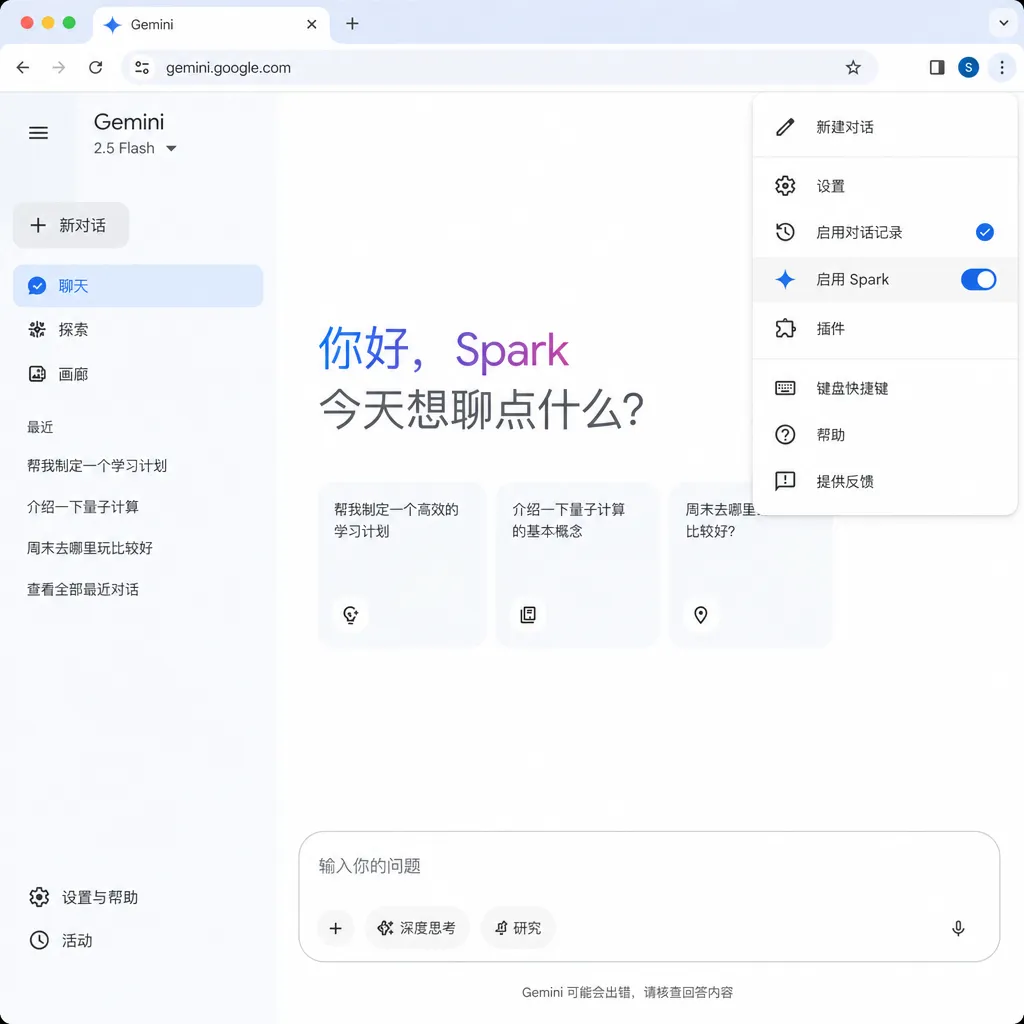
Spark is still in early preview; only a few users can see the enable option in the overflow menu of Gemini for Android. Google I/O will be held later this month, and most expect Spark’s official release there.
Even after launch, it will likely start as a limited test, gradually expanding access. Google is cautious with AI products, especially those touching user data and automation, so it will validate in small scale before full rollout.
In terms of maturity, Spark currently supports only Google Workspace apps—no third‑party integration yet. To rival Claude Cowork or OpenClaw, Google still needs to open more APIs and permission interfaces, which will take time.
The Next Step for Agents: From Execution to Decision‑Making
The ultimate goal of the agent race is not just “helping you do things” but “making decisions for you.” Spark, Claude Cowork, and OpenClaw are still on the execution level—you tell them what to do, they do it. A true intelligent agent should proactively find problems, propose solutions, and make decisions.
For instance, Spark can now “clean your inbox every morning,” but it can’t yet decide which emails are important or deletable. Future agents should analyze your email habits, automatically categorize priority messages, flag tasks, and even reply to routine emails on your behalf.
That requires stronger contextual understanding and greater user trust. Google’s current approach is to perfect the execution layer first, then gradually move toward decision‑making. Spark’s Skills feature serves as a transitional step: users define rules, the agent executes them, trust accumulates, and eventually autonomous decision‑making follows.
From this perspective, Spark isn’t the endpoint—it’s the first step in Google’s agent strategy.
References
- Challenging Claude Cowork? Google Gemini’s mysterious agent “Spark” exposed—can clean emails and edit documents – IT Home — Source of Spark features and screenshots
- Benchmarking OpenClaw: Google’s new AI agent “Remy” now under internal testing – IT Home — Internal testing info and name origin of Remy


