
CheapRouter is here: pack Claude Code and Codex into one client
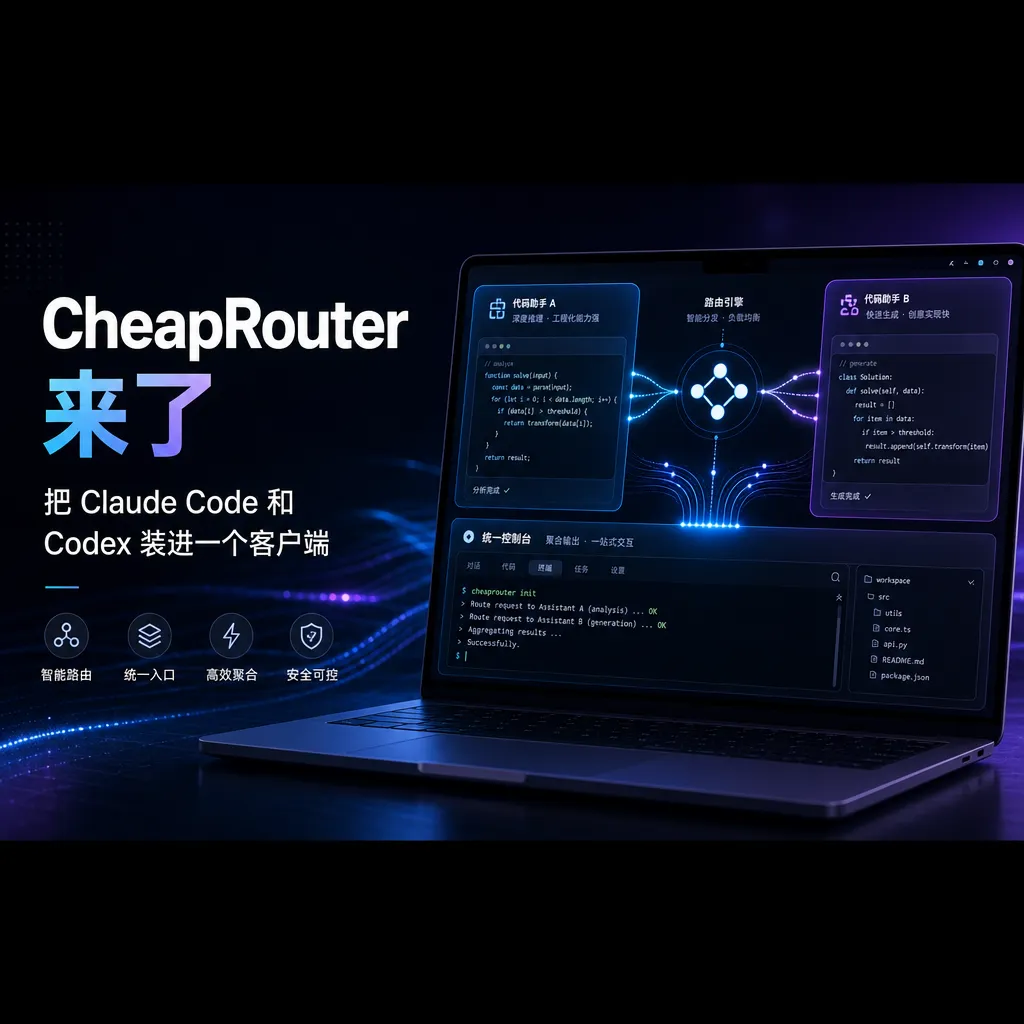
The CheapRouter client, developed as a secondary fork of Paseo, officially debuts — featuring automatic installation of Claude Code/Codex, built-in routing, and Git Worktree parallel agents, targeting configuration pain points faced by domestic developers.
CheapRouter Takes “Ready to Use Once Installed” Seriously
Over the past couple of days, a client called CheapRouter went live on Linux.do. The name sounds like a relay service, but the author immediately drew a line: they don’t want to make “just another OpenRouter,” but rather an AI Agent Workbench that can directly fit into a developer’s workflow.
The background isn’t complicated. Over the past year, Claude Code and OpenAI Codex CLI have almost become the default setup for overseas developers. However, if you want to use these two tools in China, the process is essentially fixed: first bypass the firewall, then find a relay, configure the BaseUrl and API Key, fiddle with environment variables, handle the many configuration files that come with the CLI, redo everything on a new machine, redo everything again for team collaboration, and manually change configurations each time you switch models.
Relay stations solve the issue of “whether requests can be sent,” but the pain points of Agent-type tools like Claude Code and Codex have long shifted away from the request layer. What CheapRouter wants to do is to completely handle the issue of “getting it to run stably” once and for all.
How It’s Different from a Relay Station
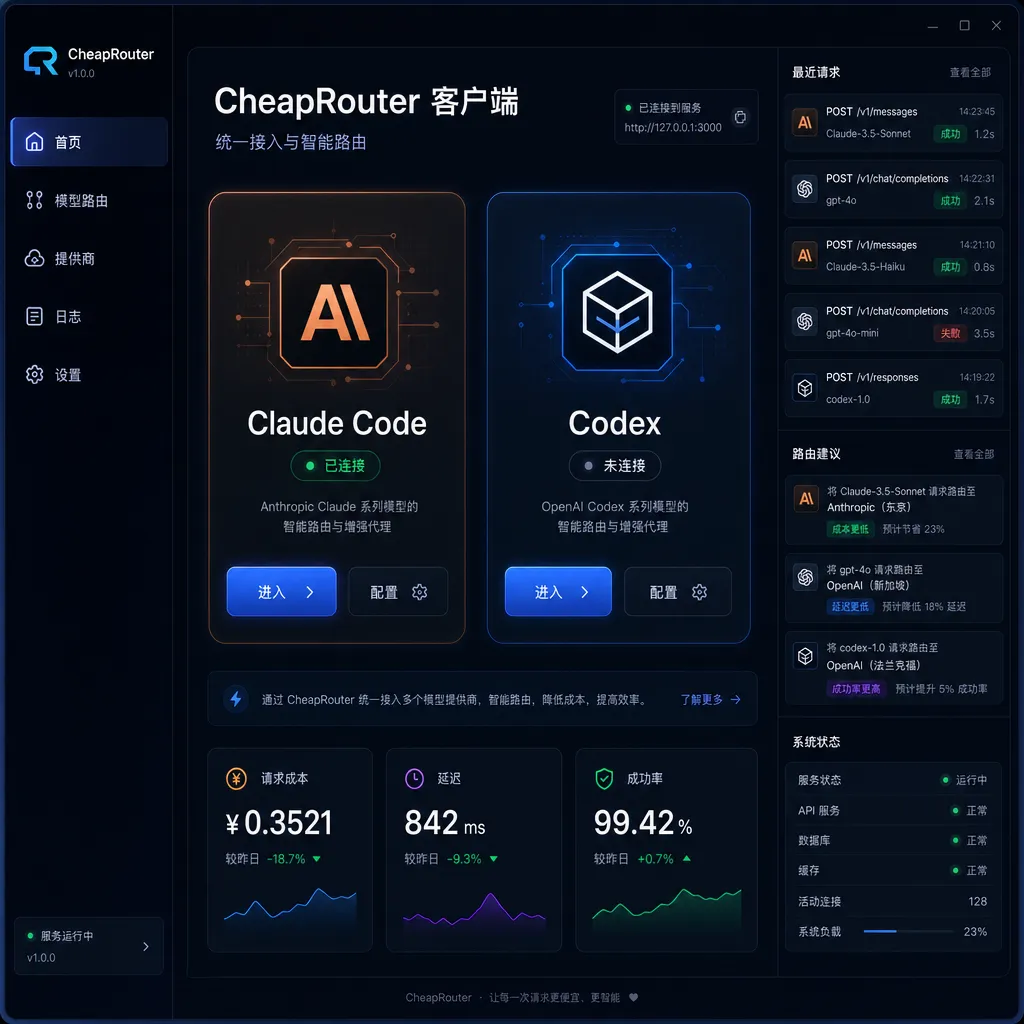
Let’s clarify its positioning first. CheapRouter describes itself as an “integrated AI programming client with controllable built‑in AI services.” In developer speak, that roughly breaks down into several layers:
The first layer is hosting and automation.
The client actively checks the local environment, automatically installs Claude Code and Codex CLI, and writes routing configurations after login. On a new machine, theoretically, you don’t need to touch environment variables like ~/.claude/settings.json or OPENAI_BASE_URL anymore. This may be a nice convenience for seasoned developers, but for newcomers just trying out Claude Code, the reduction in entry barriers is very tangible.
The second layer is model switching by task.
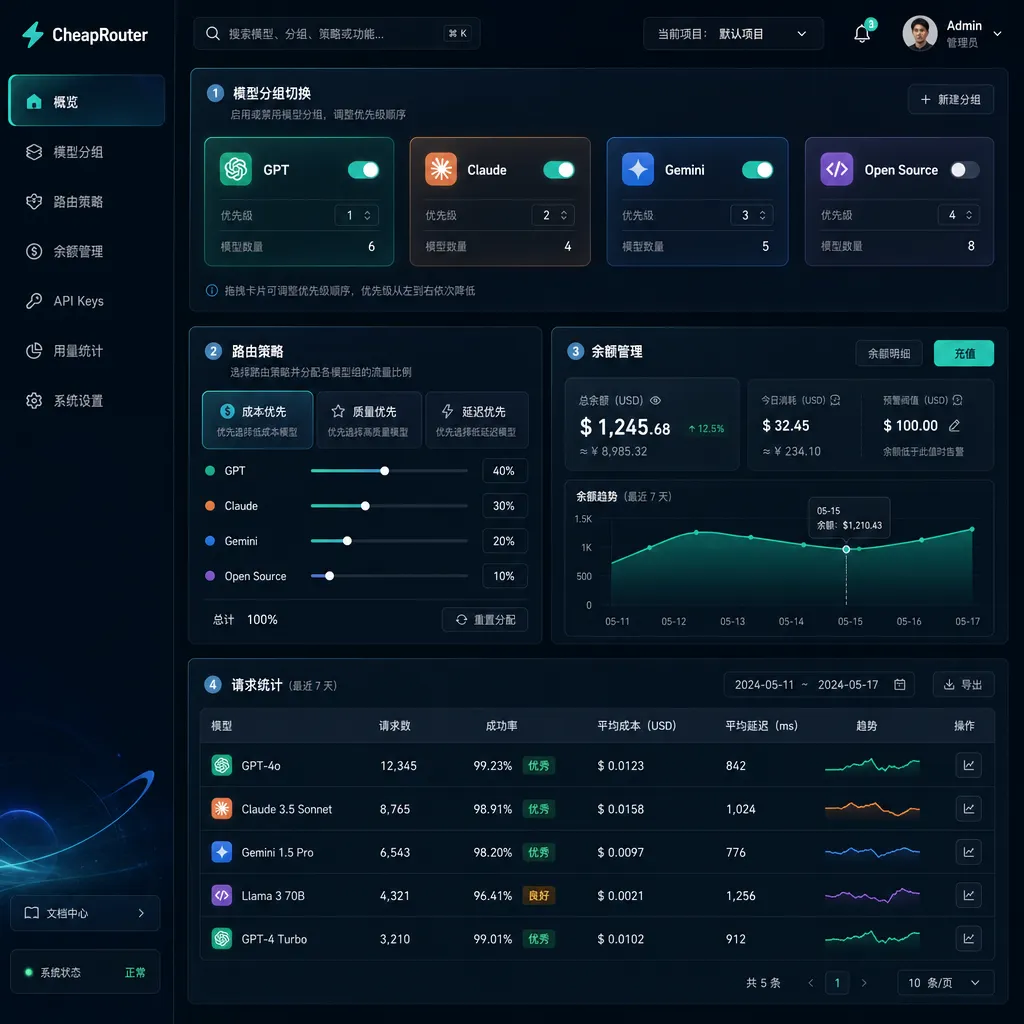
Claude Code defaults to Sonnet/Opus, and Codex defaults to the GPT series, but in real development, not every task deserves to run on the most expensive model. Renaming a variable or writing a unit test can be done with a cheaper model; tasks like refactoring architectures or complex debugging can switch to a stronger model. CheapRouter turns this into model group switching and even supports BYOK and custom endpoints—meaning you can use its built‑in services or plug in your own keys.
The third layer—and the most interesting feature in my opinion—is Git Worktree parallel Agent execution.
Git Worktree Parallel Agent: A Detail Worth Highlighting
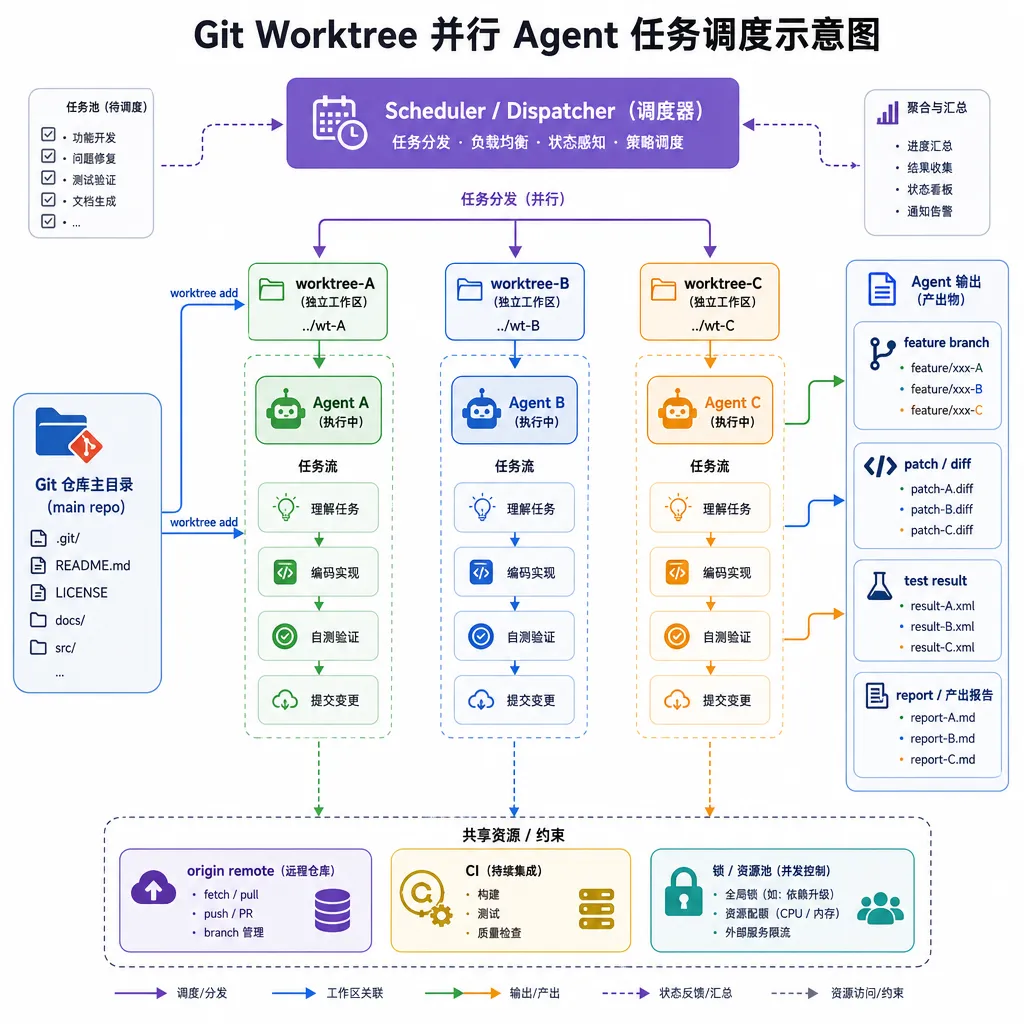
Anyone who has used Claude Code or Codex intensively for Agent tasks knows one thing: multiple Agents working in the same project will clash. One Agent edits src/auth.ts, another is refactoring src/router.ts, but they share the same workspace—file locks, git state, dependency installs overwrite each other, and things soon go awry.
A common community workaround is manually running git worktree add to create branch directories, isolating each Agent in its own workspace. But this process requires manual branch naming, worktree paths, cleanup logic—no one wants to do that every time.
CheapRouter builds this in: each Agent task automatically lands in its own worktree, to be merged or discarded after completion. It’s not revolutionary technology, but it turns a real engineering pain point into a plug‑and‑play capability—the right direction. Among today’s AI programming clients, this is one of the few treating “parallel Agent isolation” as a first‑class citizen.
Based on Paseo, with Added Localization
The author is upfront that the foundation is the open‑source project Paseo. Paseo provides the baseline architecture for multi‑Agent workflows across platforms. CheapRouter builds on top of it with features tailored for domestic developers:
- Client login and hosted service (no need to set up your own relay)
- Automatic installation of Claude Code / Codex CLI
- Payment and balance management (RMB settlement, no foreign card required)
- Independent routing for Claude Code and Codex (no interference)
- Model group switching
- Model marketplace and real‑time status visibility
- BYOK and custom endpoints
- Git Worktree parallel Agent
The key differentiators are direct domestic connectivity and RMB billing. These may seem minor, but anyone who’s tried to top up Anthropic using an overseas credit card or experienced Claude’s API hiccups at 3 a.m. knows—they are the two biggest practical barriers for domestic use of Agent tools.
The author also mentions having looked at products like KiloCode, but while KiloCode leans more toward IDE plug‑ins, CheapRouter takes the route of a standalone client plus CLI hosting—different positioning.
Comparison with 9Router, claude-code-local, and Others
Many products have emerged recently around “local AI coding routing.” Here’s a quick overview:
| Solution | Positioning | Suitable Scenarios | |-----------|--------------|-------------------| | 9Router | Local intelligent routing proxy | Users with multiple keys wanting custom scheduling | | claude-code-local | Fully offline Claude Code | Strong privacy, corporate intranets | | CheapRouter | Integrated client + hosted service | Developers wanting the fastest way to use Claude Code/Codex | | KWCode family | Local small models + MoE architecture | Companies preventing code from leaving the network |
The trade‑offs are clear. 9Router gives you scheduling power but doesn’t care where the keys come from; claude-code-local focuses strictly on privacy but requires strong local compute; KWCode pursues a small‑model + task‑splitting engineering path.
CheapRouter targets another market: developers who don’t want to tinker but still want to use the original Claude Code and Codex. This group is actually the majority—independent developers and small teams who neither want to self‑host inference nor manage a bunch of relay configurations. They just want to open a terminal and start claude with a single command.
Points Worth Noting
After trying it out briefly, here are a few takeaways:
The automatic installation step is more solid than expected.
Installing Claude Code can be tricky—Node versions, npm global paths, Anthropic Key setup—that often trips up novices. CheapRouter internalizes this process; after login, it’s basically one click and done.
Model group switching UI is critical.
The value isn’t in “being able to switch” but in “switching painlessly.” If you have to open a config file and edit lines every time, the feature is useless. CheapRouter integrates it into a drop‑down menu within the client; just pick before running a task—well‑designed, approachable UX.
Visible usage and balance are nice bonuses.
Claude Code itself lacks a good usage dashboard; spending all night running Agents without knowing the cost is commonplace. Having real‑time consumption and balance displayed in the client at least keeps you aware.
Five‑dollar signup credit is generous—enough to run plenty of tasks at current Sonnet rates, sufficient to experience the full toolchain. It’s a restrained customer acquisition strategy, without exaggerated “free for a month” gimmicks.
Remaining Challenges
To be fair, products of this type share common concerns.
First is long‑term stability. Any relay or hosting service relying on third‑party models is constrained by upstream API policy changes. Both Anthropic and OpenAI have imposed varying degrees of restrictions on relays. CheapRouter’s client‑hosted service model must consistently balance compliance and availability.
Second is ecosystem coupling. Claude Code and Codex evolve rapidly, and CheapRouter must keep up with CLI updates. Every time the official protocols or configuration formats change, the client must release a matching version. This is a universal challenge for any product that acts as a “shell” around upstream tools.
Third, Agent workflows themselves are still evolving. Git Worktree parallelism is only one isolation method; lighter approaches may appear later (such as container‑based Agent sandboxes). The client architecture needs enough flexibility for expansion.
These issues don’t belong to CheapRouter alone—they’re common challenges across the AI programming client sector.
In Summary
CheapRouter is a product that systematically lowers the usage cost of using the two star Agent tools, Claude Code and Codex. It doesn’t try to replace the models or reinvent the Agent framework; instead, it earnestly finishes the four tasks of installing properly, configuring correctly, running stably, and visualizing clearly. For domestic developers, what gets saved is the entire chain of hassle—from configuration, to top‑ups, to parallel scheduling.
Incidentally, if you’re already using aggregation platforms like OpenAI Hub to run Claude, GPT, or Gemini, CheapRouter’s BYOK mode can directly plug in your existing keys as back‑ends. Its custom endpoints support the OpenAI‑compatible format, so migration cost is basically zero.
For tools, the worst thing isn’t lacking features—it’s leaving necessary loops unclosed. CheapRouter’s current version closes those loops quite thoroughly.
References
- CheapRouter client release post (Linux.do) — The author’s full introduction of CheapRouter’s design concept, feature list, and relationship with Paseo


