
Shanghai Mobile launches a general Token service: 400,000 tokens for 1 yuan, with the carrier entering the AI computing market.
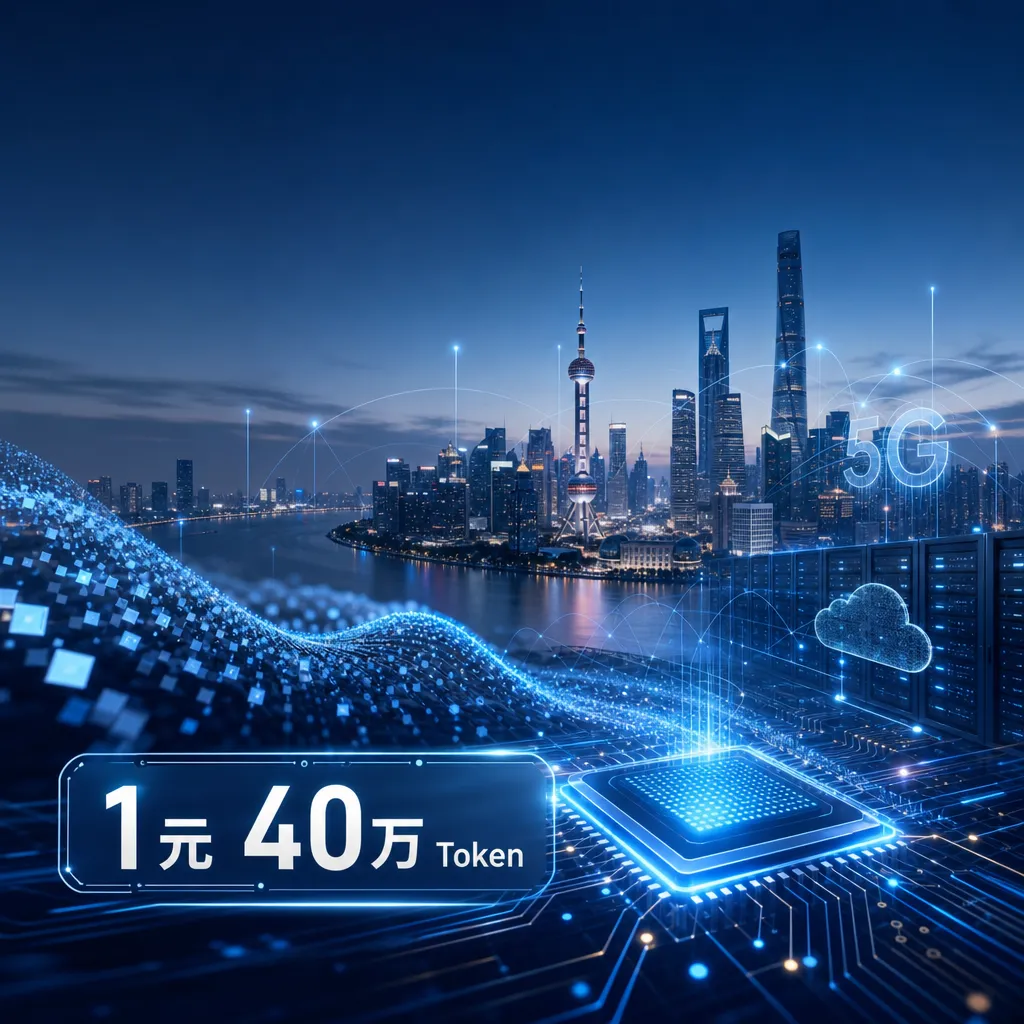
Shanghai Mobile released a universal Token service today, offering 400,000 Tokens for 1 yuan. It supports payment via phone bill and cross-platform multi-model access. Following Shanghai Telecom, this is the second carrier to launch a Token pricing plan, marking the official entrance of AI computing power into the “carrier billing” era.
Shanghai Mobile Launches Universal Token Service: 400,000 Tokens for 1 Yuan, Carriers Join the AI Compute Race
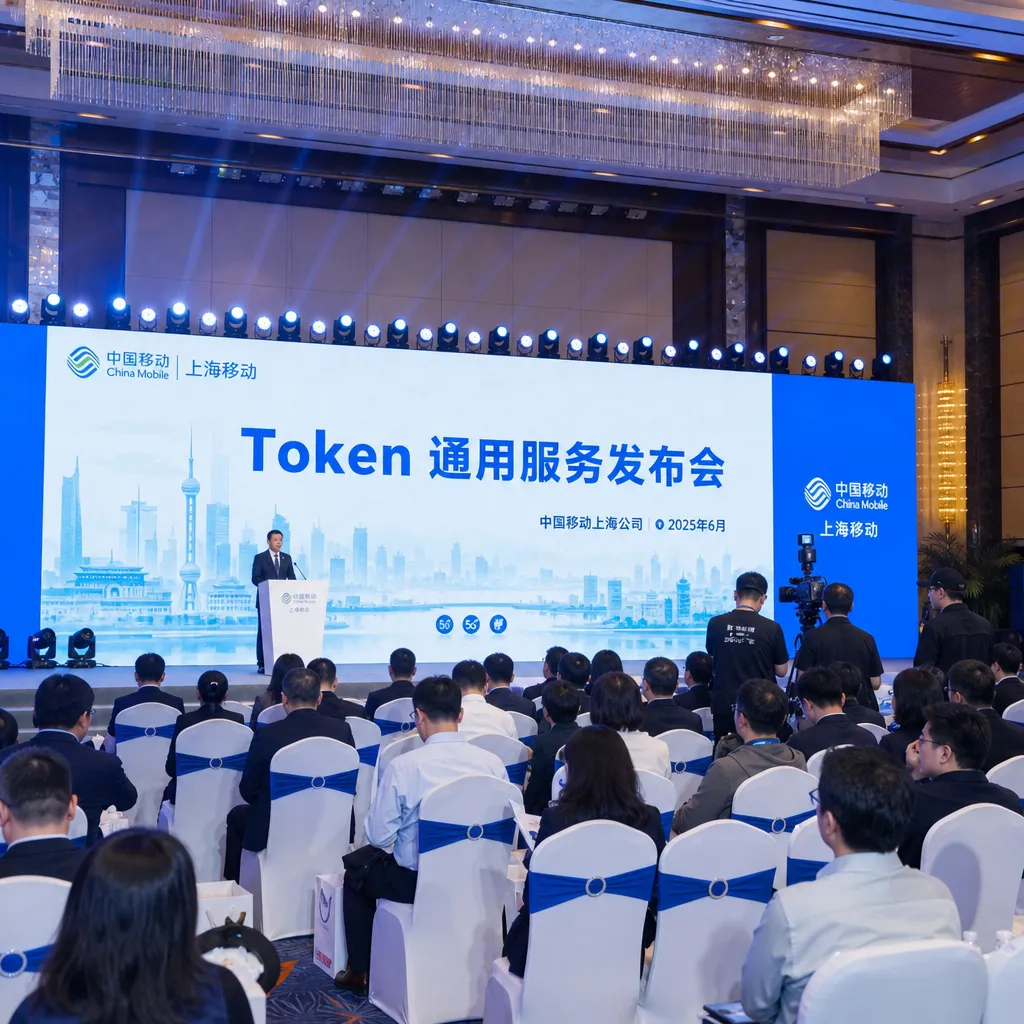
On May 17, World Telecommunication Day, Shanghai Mobile announced the launch of its Universal Token Service at the “Intelligent Empowerment for a Tech-Driven Shanghai” conference. The service is priced at 1 yuan per 400,000 tokens, supports payment via mobile phone bills, and allows cross-platform, multi-model usage. This makes it the second telecom operator to officially roll out a token pricing plan, following Shanghai Telecom’s offer of 1 yuan per 250,000 tokens.
Carriers are now beginning to sell tokens. The key here isn’t the lower price compared to the market rate—it’s that this turns AI compute power into a fundamental telecom service, like data or call minutes. You buy what you use, pay through your phone bill—no credit card, no top-up, no international payment worries.
Why Carriers Want to Sell Tokens
Shanghai Mobile’s new token service has three main features: one number for all uses, cross-platform access, and billing via phone credit. After purchase, users can call multiple models within the AI-native workspace jointly launched with Tencent—“one quota, one price, any model.”
How competitive is this pricing? Let’s compare with major models:
- GPT-4o: Input $2.5/1M tokens, Output $10/1M tokens
- Claude 3.5 Sonnet: Input $3/1M tokens, Output $15/1M tokens
- Kimi K2.5 (Shanghai Telecom reference): Input about ¥0.004/1K tokens
- Shanghai Mobile Token Service: ¥0.0000025/token (based on 400,000 tokens per yuan)
At first glance, Shanghai Mobile’s cost per input token looks attractive. But here’s the key: they’re selling credit points, not literal input/output tokens tied to specific models. Looking at Shanghai Telecom’s case—1 yuan buys 250,000 credit points, “enough for about 250,000 input tokens using Kimi K2.5”—it appears that consumption rates vary across models and tasks (input/output).
The carrier’s advantage isn’t absolute pricing but payment convenience and user accessibility. For everyday users and small businesses unwilling to mess with credit cards, USD top-ups, or API setups, “phone bill deduction + ready-to-use functionality” is much easier. As China Telecom President Liu Guiqing said in a March earnings meeting, Token services are a key future business, aiming to “strengthen proprietary Tokens and expand the ecosystem.”
The AI Infrastructure Logic Behind Carriers
The real highlight of Shanghai Mobile’s event was not the Token service itself but the 5G-A Super Uplink Network, with tokens bundled as a complementary product. Viewing the two together reveals the carrier’s new positioning in the AI era: selling not just connectivity, but integrated ‘Connection + Compute + Model’ services.
The 5G-A Super Uplink, through three technologies (4.9GHz frame structure adjustment, supplementary uplink SUL, uplink triple carrier aggregation), pushes peak uplink speeds to 1 Gbps and stabilizes ubiquitous coverage at 20 Mbps. What does this capability mean for AI?
- Real-time multimodal interaction: high-quality video streams, large file uploads, and AR/VR content generation all demand stable uplink.
- Edge computing scenarios: industrial vision, autonomous driving, and telemedicine need rapid data upload to cloud or edge nodes.
- Embodied intelligence: robots and quadrupeds requiring real-time sensing and decision-making rely heavily on uplink performance.
Shanghai Mobile’s compute-side strategy is also clear: a “2+N+X” hierarchical compute service system with total intelligent compute power of 11.2 EFLOPS, supported by the domestic “HuXinHe” compute base and the MoMA Model Aggregation Intelligent Service Platform. The platform’s role is “model routing + token management,” letting the system handle model selection automatically based on tasks.
This logic resembles platforms like OpenAI Hub, but carriers have advantages in:
- Vertical integration of network + compute + model: From 5G-A uplink to edge nodes to model invocation, carriers can control the full chain.
- Established billing system: Both enterprise and personal users already have billing relationships, removing trust barriers.
- Localized deployment: Carriers can offer private environments for government and enterprise clients concerned about data compliance.
400,000 Tokens for 1 Yuan vs 250,000 Tokens for 1 Yuan — Which Is Better?
Shanghai Telecom released its Token service (1 yuan for 250,000 credits) on May 16, and Shanghai Mobile followed the very next day with 400,000 tokens per yuan—about 60% more. However, this comparison may not be apples-to-apples, as the billing models differ:
- Shanghai Telecom: explicitly says “using Kimi K2.5 as example, 1 yuan ≈ 250,000 input tokens,” supporting 30+ major models.
- Shanghai Mobile: states “1 yuan for 400,000 tokens,” co-launched with Tencent’s AI-native workspace, but with no public model list.
If the 400,000 tokens refer to actual input tokens, it’s cheaper. If they are credit points (similar to Telecom’s system), then it’s just different terminology. Judging by what was emphasized—“one quota, one price, any model”—the latter seems more likely.
The ecosystem integration may be the real difference:
- Shanghai Telecom’s selling point: “standard API + 30+ models” for developers and technical users.
- Shanghai Mobile’s selling point: “Tencent AI workspace integration + phone billing” for office and consumer use.
Shanghai Telecom is also offering 25 million free credits to users for a one-month trial, and starting in June, “Better Home” package users will automatically gain token benefits. Shanghai Mobile hasn’t announced similar promotions yet but likely will.
Three Issues With Carriers Selling Tokens
The model sounds promising, but there are still several issues to watch.
1. Model Selection and Transparency
Which models can users actually “choose freely” from? Are GPT-4o and Claude 3.5 included, or mainly domestic open-source models? Capabilities differ greatly—if users pay but only get mid-tier models, the experience will suffer.
Shanghai Telecom says it supports 30+ models but hasn’t published the list. Shanghai Mobile only mentioned Tencent partnership—Tencent’s “Hunyuan” model is self-developed, but integrating GPT or Claude would raise compliance and settlement challenges.
2. Input–Output Ratio
Most model costs lie in output tokens; input tokens are much cheaper. If carriers charge only for input, generation-heavy tasks (writing, coding) will drain credits fast. If they charge for both input and output combined, billing becomes more complex.
Shanghai Telecom’s example: “10 yuan for 2.5 million credits, sufficient for automatically summarizing 100 e-books of 100,000 words each.” Summary tasks have low output; if instead generating text, those same credits wouldn’t last.
3. Ecosystem Lock-in
Carrier Token services are likely tied to their platforms. Shanghai Mobile’s AI workspace with Tencent, or Shanghai Telecom’s “AI Family Assistant,” are both closed ecosystems. Tokens may not work with third-party tools like Cursor or Cline for AI coding.
Platforms like OpenAI Hub win through standardized APIs + easy model switching, usable in any OpenAI-compatible tool. If carriers keep closed ecosystems, their appeal will diminish.
Will AI Compute Become the Fourth Network?
In telecom, there’s a saying: voice network, data network, IoT network—and now, AI compute network.
Shanghai Mobile’s “intelligent network” concept centers on a new digital-intelligence ecosystem powered by token operations, including:
- MoMA model aggregation platform—unified access to multiple models
- AI+DATA trusted data space—addressing data security and privacy
- Universal Token Service—making compute measurable and billable
From a business standpoint, carriers have natural advantages in this new service:
- Existing user base: tens of millions of subscribers and enterprise clients with no need for new acquisition
- Mature billing infrastructure: prepaid, postpaid, bundled plans—systems proven over decades
- Government and enterprise trust: recognized for reliability and security
But the challenges are clear:
- Rapid tech iteration: with model versions renewing every few months, can carriers’ procurement pace keep up?
- Cost control: AI compute is far costlier than traditional telecom resources—how much subsidy can they bear?
- Ecosystem openness: a closed platform can’t compete with native AI firms like OpenAI or Anthropic.
As China Telecom’s Liu Guiqing said: “Strengthen proprietary Tokens, expand ecosystem Tokens.” These two goals can conflict—proprietary models mean lock-in, while ecosystem growth means openness. Balancing the two will test strategy and resolve.
What It Means for Developers
Should developers care about carriers’ Token services?
In the short term, not very cost-effective. Though 400,000 tokens per yuan sounds cheap, if usage is limited to certain platforms or models, it’s less flexible than direct API access. OpenAI Hub-like aggregators already support dozens of models, OpenAI-compatible formats, and domestic connectivity ideal for developers.
In the long run, worth watching. If carriers genuinely build a “fourth network” of AI compute, new scenarios could emerge:
- Edge computing + AI inference: 5G-A uplink + edge compute nodes + model calls for millisecond latency
- Enterprise private deployment: carriers could host models in local data centers with internal token billing
- IoT + AI integration: IoT devices directly calling carrier AI without servers
If carriers open standard APIs (e.g., OpenAI-compatible), their appeal to developers would grow. Currently, however, both Shanghai Mobile and Shanghai Telecom focus on proprietary tools, with uncertain openness.
Final Thoughts
Carriers selling tokens is essentially an infrastructure play for the AI era. Just as 4G sold data and 5G sold network slicing, the AI era sells compute and model access—an inevitable transformation path for telecom.
Shanghai Mobile’s 1 yuan per 400,000 tokens is competitively priced, but its real moat lies in vertical integration of Network + Compute + Model, coupled with the built-in phone bill payment system. If carriers can ensure openness and smooth experience, AI compute could indeed become the “fourth network” after voice, data, and IoT.
But if they remain closed, locked to proprietary platforms, growth will be capped. Developers and enterprises value flexibility, portability, and rich ecosystems, not another proprietary system to adapt to.
For stable, compliant, and easy-to-use AI capability—like government, enterprise, or IoT scenarios—carrier token services are a solid choice. For those needing diverse model access, customization, and global deployment, open aggregators like OpenAI Hub remain better suited.
Both paths can coexist and even complement each other. Carriers can build the foundational infrastructure and inclusive services, while aggregators provide flexibility and ecosystem diversity. The AI compute market is big enough for multiple approaches.
References
- Shanghai Mobile Launches Universal Token Service, 1 Yuan for 400,000 Tokens - Linux.do – Community discussion summarizing key launch details
- Shanghai Mobile Announces Commercial Launch of 5G-A Super Uplink and 1 Yuan for 400,000 Tokens Universal Service - IT Home – Official launch coverage


