
Tencent launches the zero-code AI application platform "Toast"
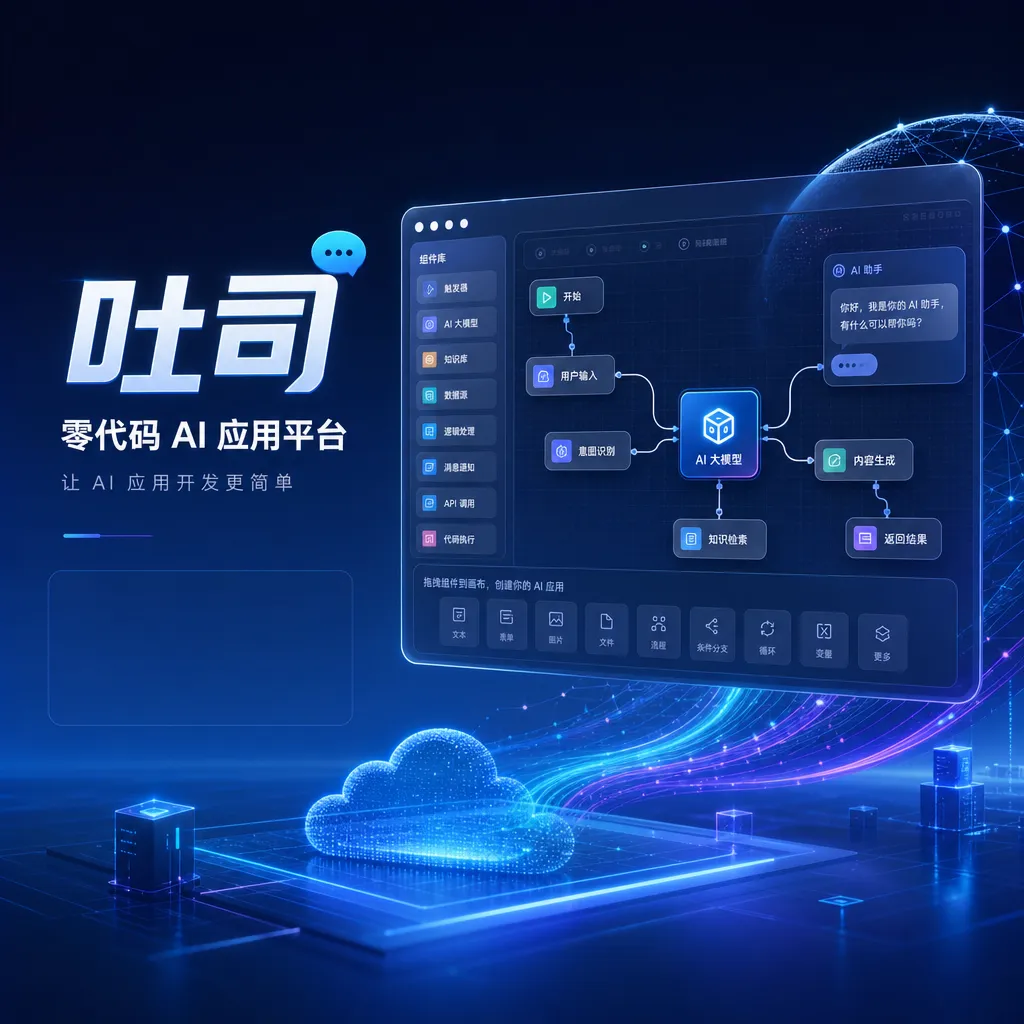
Tencent launches the AI application generation platform **"Toast"**, where users can create installable Android apps simply by describing their ideas in natural language. It is positioned as "exploratory ambient programming," focusing on turning inspiration into reality and fostering a co-creation ecosystem.
Tencent Launches No-Code AI Application Platform “Toast”
Tencent today officially launched the AI application generation platform Toast, a product positioned as an “Exploratory Vibe Coding” tool. Users only need to describe their ideas in natural language, and the AI can automatically break down features, generate prototypes, and package them into installable Android apps with one click. The Android version is now available on MyApp Store and the official website, while the iOS version will be released later. It is free for a limited time during public beta.
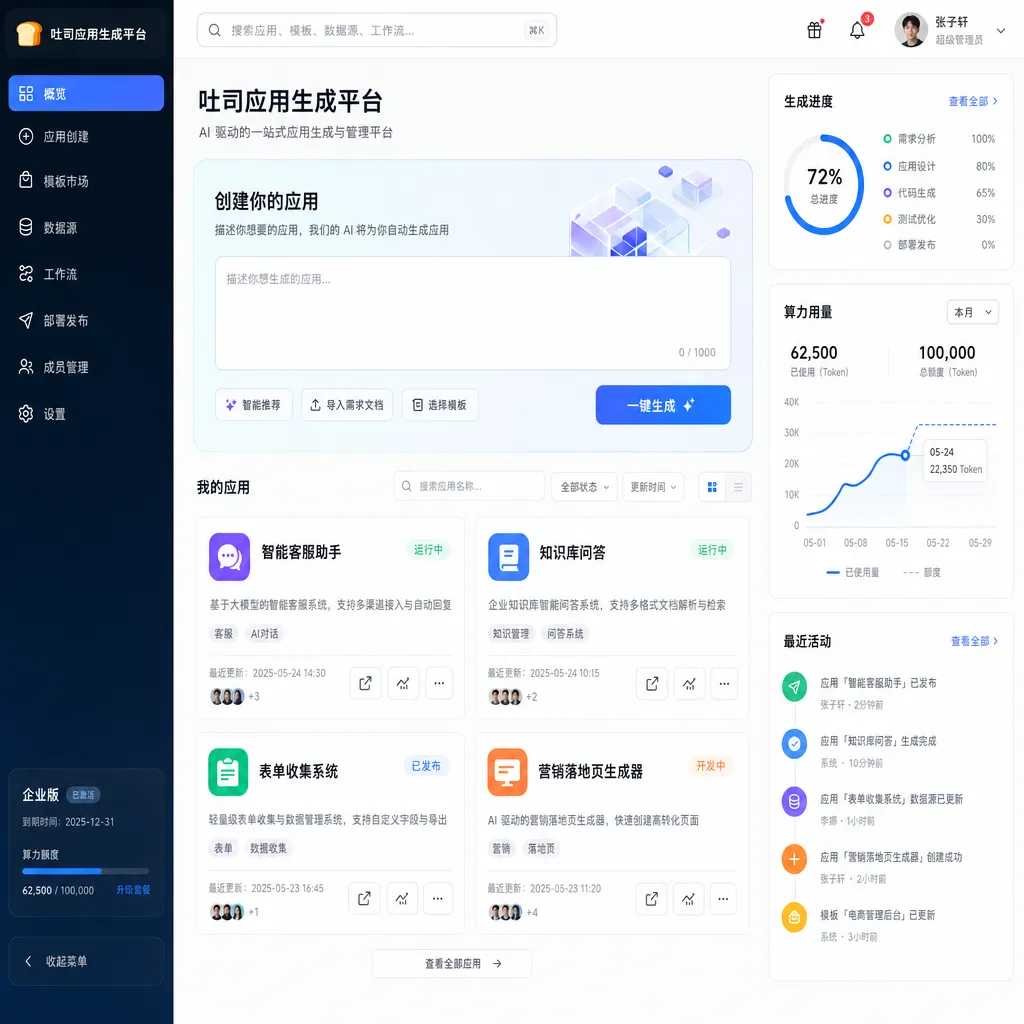
From Idea to App, Completely No Code
The core capability of Toast is reducing the technical barrier of app development to zero. The entire process works like this: users type a few sentences describing what they want—such as “make a bookkeeping app that can photograph and recognize invoices”—and the AI automatically decomposes the idea into concrete functional modules like “camera,” “OCR recognition,” “ledger list,” and “statistical charts.” Through multiple rounds of dialogue, users can fine-tune details by saying, for example, “change the theme color to blue” or “add a monthly budget reminder,” and the AI generates real-time previews. Once everything looks right, users can click one button to package it into an APK, install it on their phones, and start using it.
There are no code editors, no UI design tools, and no compilation setups in this process. Tencent has handed the entire app development workflow—product planning, interaction design, code implementation, testing, and packaging—to AI. Users only need to clearly express what they want, and the rest is handled by the system.
Four Core Capabilities
Tencent defines four main scenarios for Toast:
1. Create Applications
This is the basic feature. User inputs idea → AI decomposes it into functions → multi-turn dialogue for adjustments → one-click APK packaging. The whole process is visualized, allowing users to see prototype changes in real-time. For example, if you say “add a dark mode,” the preview instantly switches to a dark theme.
2. Social Sharing
The generated app can be shared with others via links, QR codes, or installation packages—not just screenshots, but fully installable applications. Others who get your link can install and use it directly on their phones.
3. Inspiration Square
Users can publish apps they’ve created as templates so others can replicate them with one click (“make the same app”). This design is similar to a mini-program template marketplace, but lighter—when you see an interesting utility app, you can click once to make your own version based on it.
4. App Search
By clicking “Ask Toast,” users can search for apps released by others or describe their needs for the AI to find suitable apps. For instance, saying “find a tool that tracks running routes” makes the AI recommend relevant apps from the square.
What Is “Vibe Coding”?
Tencent labels Toast as an “Exploratory Vibe Coding Product.” The concept of Vibe Coding has recently been discussed widely among developers; its core idea is that coding should not be constrained by syntax, frameworks, or toolchains but should return to the essence of “expressing ideas.”
Traditional low-code platforms (like Mendix or OutSystems) focus on “lowering technical barriers,” but they still rely on dragging components and configuring logic. Users still need to understand concepts like “database tables,” “API endpoints,” and “state management.” Toast, on the other hand, frees users from those abstractions—they just need to describe what they want the app to do, and the AI handles the implementation.
This model’s advantage is its very low barrier to entry—anyone can use it. Its downside is also clear: generated apps are relatively simple; complex business logic, performance optimization, and security enhancement—issues that professional developers care about—are beyond the AI’s current abilities. Hence, Tencent positions it as an “exploratory” product—not to replace professional development but to allow ordinary users to quickly validate ideas and build prototypes.
Competing With Replit Agent and Bolt.new?
Toast easily reminds people of products like Replit Agent, Bolt.new, or v0.dev. But a closer look shows its positioning differs:
- Replit Agent and Bolt.new target developers, generating web app code that users can view and modify. Their goal is to “speed up development,” not “replace it.”
- v0.dev focuses on generating front-end UI components, outputting React/Vue code snippets that developers need to integrate into projects.
- Toast targets completely nontechnical users, generating packaged APKs that users don’t see or need to modify. Its goal is to “let non-developers make apps.”
Technically, it's likely that Toast maintains an internal library of templates and components. The AI’s job is to select proper templates, assemble components, and adjust parameters according to user descriptions, finally packaging the output. This approach offers high generation speed and stability but limited flexibility—you can only build apps supported by existing templates.
By contrast, Replit Agent truly writes code and can theoretically implement any logic, but generation quality is unstable and often requires manual debugging.
The Potential for a Co-Creation Ecosystem
Tencent emphasizes “inspirational co-creation” and a “closed-loop distribution” model. The idea is intriguing: if Toast accumulates enough user-generated apps, the square could become a “marketplace of ideas.” For instance, one person makes a “Pomodoro + white noise” focus tool; another modifies it into a “Pomodoro + to-do list”; a third adds “sync to calendar.” Each iteration builds on another’s work, leading to a long-tail app ecosystem.
This model resembles early “light apps” or “mini programs,” but even lighter. Mini-programs require JavaScript and framework knowledge, while Toast-generated apps require none. If Tencent later opens app publishing and downloading channels, we might see a group of “non-developer creators”—people who don’t code but consistently produce useful tools.
Of course, whether this ecosystem takes off depends on two factors: the quality of AI-generated apps and Tencent’s willingness to invest in platform operations. If it’s just a demo with no follow-up, it’ll end up as another “lab experiment.”
Where Is the Technical Barrier?
Although Toast is zero-barrier for users, its backend implementation is not simple. It must solve several challenges:
1. Understanding Requirements
User descriptions in natural language are often vague and incomplete. “Make a bookkeeping app” could mean many things—should it support multiple currencies, category statistics, report exports? The AI must complete requirements through multi-turn conversations without overwhelming users with too many questions.
2. Function Decomposition
Turning an idea into executable modules requires AI to understand common app development patterns. For example, “photo-based invoice recognition” decomposes into: camera access → image upload → OCR recognition → data structuring → local database storage. This requires product and technical knowledge.
3. Prototype Generation
Generated prototypes must be usable in interaction and design—not just “placing buttons.” They must follow Android design guidelines, fit different screens, and handle edge cases (e.g., network disconnection or denied permissions).
4. Code Generation and Packaging
Since it needs to output an installable APK, the AI must generate a complete Android project, configure Gradle build scripts, manage dependencies, and handle signing and packaging. If any part fails, users get an app that won’t install or crashes on startup.
Tencent hasn’t disclosed which large models power Toast, but based on its functionality, it likely uses multiple models in coordination: one for requirement understanding and dialogue, one for code generation, and another for UI design. The system’s stability and quality depend on this cooperation.
Obvious Limitations
Toast currently supports only Android; the iOS version is still in development. This is not simply “adding another platform”—iOS’s app distribution system is very different. Android apps can install via APKs, while iOS requires the App Store or TestFlight, with developer account and device restrictions. If Toast-generated iOS apps can only distribute through TestFlight, user experience will suffer.
Another limitation is complexity. Based on current information, Toast suits simple utility or content apps. But if you want to build a “WeChat-like social app” or a “TikTok-style short video platform,” AI won’t manage it. Such apps require complex backend architectures, real-time communication, recommendation algorithms, and content moderation—far beyond “describe → generate.”
There’s also a crucial yet overlooked concern: where does the app data reside? If only stored locally, data is lost when switching devices. If there’s cloud sync, Tencent must provide backend services, implying server costs, data security, and privacy compliance. No mention of this appears in Toast’s introduction, so it may only support local storage at launch.
Will It Disrupt the App Development Market?
Whenever “AI-generated app” tools appear, people ask: will developers lose their jobs? The short answer: not in the short term. In the long run—it depends.
Tools like Toast replace only simple, well-defined, low-performance apps—such as an internal attendance tracker for small businesses or a fan interaction mini app for content creators. These projects used to cost thousands in outsourcing; now they can be built with Toast. This market segment will shrink.
But for complex commercial applications—e-commerce platforms, financial systems, ERP software, or games—AI tools are nowhere near capable. These require handling concurrency, data consistency, security, performance, system integration, and iterative maintenance. Such tasks demand professional expertise and judgment.
More realistically, AI will change how developers work. Instead of spending time on repetitive CRUD code, UI layouts, or edge-case handling, developers can offload those tasks to AI and focus on architecture design, performance tuning, and debugging—in short, higher-level problem-solving.
Why Is Tencent Doing This?
Tencent has a history of incubating innovative products, most remaining internal experiments. The fact that Toast reached public beta shows Tencent sees potential in this direction.
Strategically, Tencent has been conservative in AI applications. Baidu has Ernie Bot and a suite of AI-native apps; Alibaba has Qwen and DingTalk AI; ByteDance has Doubao and Coze. Tencent, despite its Hunyuan large model, has a limited presence on the consumer side. Toast may be Tencent’s attempt to gain influence in “AI + app development.”
Another possibility: extending the mini program ecosystem. WeChat Mini Programs are a mature app distribution platform, but they still require coding knowledge—understanding front-end frameworks, lifecycle management, and APIs. If Toast can lower the entry barrier, allowing non-developers to create mini program–like lightweight apps, it would strengthen Tencent’s ecosystem.
These, of course, remain guesses. Tencent hasn’t disclosed Toast’s long-term strategy or monetization plans. It’s too early to judge its prospects—let’s wait for public beta feedback and user data.
Is It Worth Trying?
If you’re a developer, Toast may not be your thing—its generated apps are limited, with inaccessible, uneditable code. It’s more of a “quick prototyping tool” than a “development tool.” But if you need to validate a product idea quickly or show an interactive demo to a client, Toast can save you time.
If you’re a product manager or designer, Toast is useful for concept verification. Instead of drawing prototypes and writing PRDs while waiting for dev scheduling, you can directly use Toast to make a running app, show it to your team or users, and gather feedback fast.
If you’re a regular user with no tech background, Toast might be your first chance to “make your own app.” While simple, turning your idea into a real working tool can be a delightful experience.
Overall, Toast is an interesting experiment. How far it goes depends on Tencent’s investment and user adoption. AI-generated applications are definitely a future trend, but it’s still early days, with a notable gap between tool capability and user expectations.
References
- Tencent launches AI app generation platform “Toast”: positioned as an “exploratory vibe coding product,” supports one-click app prototype generation – IT Home — Official release and feature introduction


