
The Full Story of Anthropic’s Ban on OpenClaw
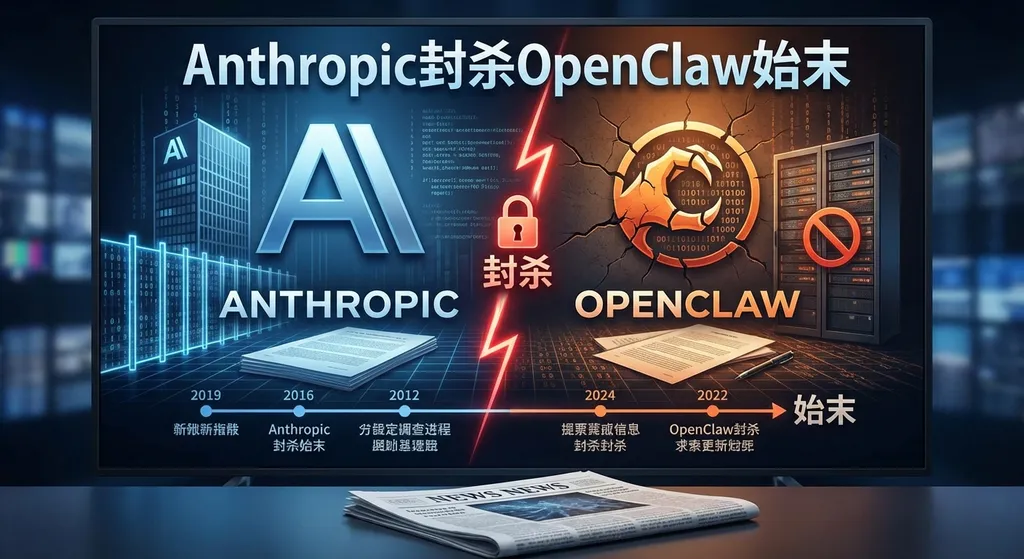
On April 4, Anthropic officially banned the use of Claude subscription credits for third-party tools like OpenClaw, forcing developers to switch to pay-per-use API billing. Behind this blockade were two key triggers: a founder’s departure to OpenAI and the subscription model being overexploited.
3 A.M.: The Hammer Falls
At 3 a.m. Beijing time on April 5, Anthropic officially terminated OpenClaw's access to the Claude subscription service.
No beta test, no transition buffer—Claude Code lead Boris Cherny made it crystal clear in his tweet: starting now, Claude Pro/Max subscription quotas no longer cover any third-party tool usage. Want to keep using OpenClaw? Two options: buy an Extra Usage package, or bring your own API key and pay by usage.
Within hours, the news shot to the top of Hacker News, sparking an uproar across the developer community.
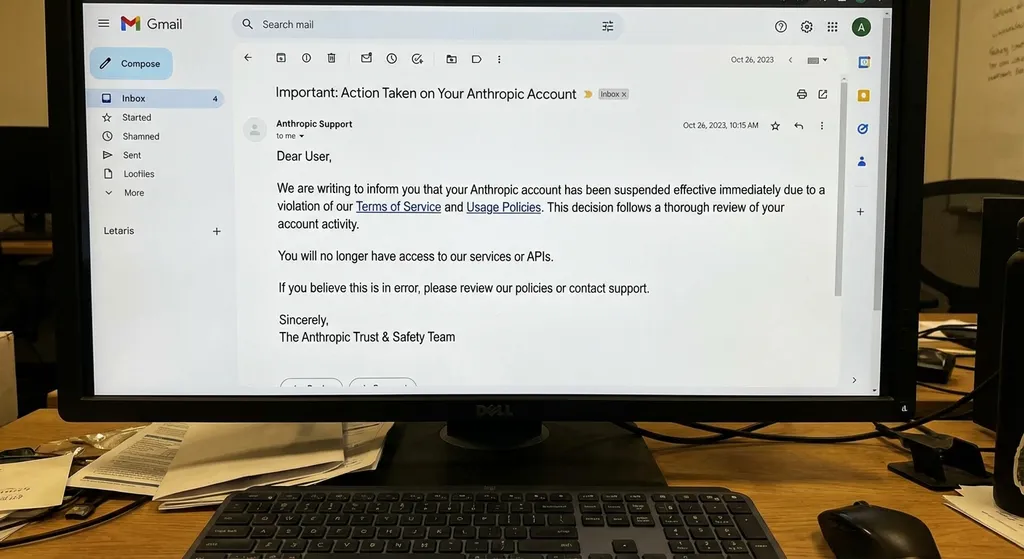
And the timestamp on that notification email—Friday evening, April 3—was textbook timing for an internet company to drop bad news: drop it before the weekend, and by Monday the outrage has cooled off. This time, Anthropic didn’t even bother to look graceful.
The Numbers: From $20 to Sky-High
First, let’s talk about what this means for developers.
Claude Max subscriptions top out at $200/month, and Pro at $20/month. Previously, OpenClaw users could use OAuth authorization to tap that quota and run their AI Agents 24/7—writing code, controlling desktops, processing files—virtually anything.
But how bad was the actual token burn? Industry estimates suggest that a fully “trained” OpenClaw Agent could consume between $1,000 and $5,000 worth of API equivalents per day.
Two hundred dollars of monthly fees couldn’t even cover a day.
Someone made a vivid comparison: it’s like paying $200 to enter an all-you-can-eat buffet, then emptying the restaurant’s entire lobster tank. Of course the restaurant will flip the table.
Now, with API pay-per-use pricing, the same workflow can take your monthly cost from $20 to several thousand. For indie developers and small teams, this isn’t a price hike—it’s a locked door.
Anthropic’s “compensation package” looks generous, but it’s really sharp accounting:
- One-time subsidy equal to one month’s subscription (Pro users $20, Max users $100–200), claimable before April 17
- 30% discount on Extra Usage packages (Anthropic’s first time discounting extra usage)
- Full refund available for subscription cancellations
Twenty bucks in compensation for developers now burning thousands in monthly API costs is like tossing alms to beggars. The 30% discount is tied to continued payments—it’s basically pulling users from a “buffet” plan into a “pay-as-you-go” scheme.
Four-Month Siege: The Tightening Noose
Anthropic didn’t change its stance overnight. Reviewing the timeline reveals a step-by-step crackdown that looks more like a military campaign:
January: Technical block. Anthropic added a server-side check rejecting OAuth tokens issued by unofficial Claude Code clients. Meanwhile, a cease-and-desist letter landed on OpenClaw’s desk demanding a name change—the reason: excessive brand similarity. This didn’t alarm regular users, but blocked the backdoors on both technical and legal fronts.
February: Terms update. The Terms of Service (ToS) explicitly added a clause forbidding OAuth tokens from Free, Pro, or Max accounts to be used with third-party automation tools. This closed the previous gray area once and for all.
March: Feature replication. Claude Code quickly rolled out new features—Dispatch for mobile remote control of desktop tasks, Channels connecting Telegram and Discord. Within four weeks, OpenClaw’s core features were replicated one-to-one. AI blogger Matthew Berman nailed it: “they just built an OpenClaw of their own.”
April: The formal kill. The email went out, and the connection was severed for good.
Four months—from quiet throttling to open termination—the escalation says one thing: Anthropic was losing too much money here.
The subscription model’s business logic banks on most users not using their full quota. Regular users ask questions and write code; token usage stays moderate. But Agent tools like OpenClaw broke this balance—they run nonstop, perform concurrent tasks, loop endlessly. That’s not using AI; that’s burning cash.
Anthropic offering subsidies, discounts, even refunds shows they fully expected users to bail. But after running the numbers, the conclusion was clear: keeping it open costs more than losing customers.
The Real Trigger: “Father of Lobsters” Joins the Rival Camp
If it were only about the money, Anthropic could’ve eased into quota tightening. But the abrupt finality of this ban points to a more sensitive reason.
OpenClaw founder Peter Steinberger—known in developer circles as the “Father of Lobsters”—officially joined OpenAI this February.
This isn’t just any developer. He knew Claude’s ecosystem inside-out; his OpenClaw project transformed Claude from a chat model into a full-blown AI assistant, racking up over 190,000 GitHub stars in half a year—the world’s most popular AI Agent tool. In short, OpenClaw was the crown jewel of the Claude ecosystem.
And then, its unofficial ambassador walked straight into the rival’s headquarters.
From Anthropic’s point of view: you’re using my subscription quota, my model capabilities, and your founder now works for my competitor—how can I trust your tool?
To them, OpenClaw turned from “ecosystem partner” into a “Trojan horse,” a data collector sitting inside their backyard. Once the founder switched sides, the tool inevitably did too.
Peter publicly responded with evident frustration. He said that he and OpenClaw Foundation board member Dave Morin had tried multiple times to engage Anthropic, only securing a one-week delay of enforcement. His take: “Anthropic copied our features into their closed framework, then shut the open-source software out.”
Polite words—with a clear meaning: copy first, kill later.
The Core Issue: Subscriptions vs. the Agent Era
Beyond the business feud and personnel drama, this incident exposes a deeper industry conflict: the fundamental mismatch between large-model subscription pricing and AI Agent usage patterns.
Subscription pricing is based on human usage frequency—how many questions a person can ask, how much code they can write. That’s bounded. Model providers set prices on the assumption that most users underutilize their quota; heavy users might do more, but overall it balances out.
Agents change the equation entirely.
Agents don’t sleep, procrastinate, or attend meetings. They run 24/7, execute multiple tasks simultaneously, and loop calls until completion. A single Agent can burn as many tokens in a day as a human might use in a year.
Once Agents become the main users, subscriptions go from “reliable profits” to “bottomless loss.”
Anthropic isn’t the first, and won’t be the last. Google’s Gemini subscriptions face similar risks—OpenClaw also supports Gemini, and the same exploit could easily be replicated.
You can expect more model providers to follow suit: subscriptions for human users, API pay-as-you-go for Agents. Two systems, two price tiers.
For developers, that means one thing: Agent costs will soar, and the era of “cheap unlimited access” is closing fast.
Where Do Developers Go From Here?
After the ban, developers relying on the OpenClaw + Claude subscription combo have limited paths forward:
1. Switch to API pay-as-you-go. The route Anthropic clearly prefers. Pros: no restrictions. Cons: expensive. For high-frequency tasks, monthly bills can be dozens of times higher than before.
2. Move to other models. OpenClaw supports multiple models; with Claude gone, you still have GPT, Gemini, DeepSeek, etc. For use cases not tied to Claude, this is the most practical option.
3. Go back to official tools. Anthropic’s Claude Code already replicates most of OpenClaw’s core functions, and as the official product, it’s immune from bans. The tradeoff: losing OpenClaw’s open-source flexibility and community ecosystem.
4. Explore local deployment. Teams with computing resources can run open-source models (like DeepSeek or the Llama series) for local Agents, completely bypassing subscription and API costs. The gap with Claude’s capability still exists—but it’s shrinking.
For those switching to APIs, one real issue arises: managing multiple keys, different request formats, and rate-limit policies across providers. If your Agent workflow needs to flexibly hop between Claude, GPT, Gemini, and DeepSeek, using an API aggregation service will save headaches. Platforms like OpenAI Hub let you call major models through a single key, with OpenAI-compatible endpoints—and no network hassles.
Here’s a sample for calling Claude through a compatible aggregated API—the migration cost is minimal:
import openai

client = openai.OpenAI(
    api_key="your-openai-hub-key",
    base_url="https://api.openai-hub.net/v1"
)

response = client.chat.completions.create(
    model="claude-sonnet-4-20250514",
    messages=[
        {"role": "system", "content": "You are a helpful coding assistant."},
        {"role": "user", "content": "Write me a Python script that batch renames all .txt files in the current directory."}
    ],
    max_tokens=2048
)

print(response.choices[0].message.content)
If your Agents were already using OpenAI’s SDK, switching takes only a base_url and model update—no logic rewrite needed. For multi-model workflows (e.g., Claude for code generation, GPT for document summarization, DeepSeek for Chinese tasks), this unified interface pays off even more.
The Bigger Picture: The Age of Walled Empires Begins
This isn’t just about OpenClaw.
Anthropic’s email spelled it out: the policy “starts with OpenClaw enforcement but applies to all third-party tool chains and will soon expand further.”
Meaning—any third-party tool using OAuth access to Claude subscriptions is now in their firing line. Today it’s OpenClaw; tomorrow it could be any Agent framework piggybacking on subscription quotas.
Zooming out, this marks a turning point—from “open ecosystem” to “walled garden” in the AI industry.
For the past two years, model vendors eager to capture ecosystems and developers embraced third-party integrations. OpenClaw’s 190,000-star success was largely due to Claude and Gemini allowing OAuth access for subscribers. That openness fueled a booming ecosystem—but also unsustainable costs.
Now, with Agents threatening model sustainability, providers are flipping their stance: ecosystems can exist, but only inside my rules; access can be granted, but only at my price.
For developers, the signal is clear: never build your core workflow on a single vendor’s goodwill. Today’s open API can become tomorrow’s ban notice. Staying multi-model and multi-channel isn’t optional—it’s survival strategy.
Final Thoughts
Back to this specific event.
Anthropic’s OpenClaw ban makes business sense—no company can afford subscribers draining their token pool unchecked. But the execution was ugly: a Friday night notice, 24-hour enforcement, token compensation that’s symbolic at best.
Peter Steinberger’s leap to OpenAI added a “corporate revenge” flavor: copy the features, close the gate, then push users toward pricier billing. A well-rehearsed play.
Yet, let’s be fair—the AI Agent cost problem is real. If every Agent could run unlimited calls on a $20 subscription, no model provider could survive. Anthropic just happened to be the first to break the illusion.
Soon, the entire industry will confront the same question: how should AI services be priced in the Agent era?
The answer might matter far more than the OpenClaw ban itself.
References
- Synced Review: Overnight Policy Shift—Anthropic Officially Bans OpenClaw — Event overview with Boris Cherny’s statement and email screenshot
- Zhihu Column: Overnight Fallout—Anthropic Officially Bans OpenClaw — Developer perspective with full four-month timeline
- The Paper: Lobster Tool Banned? Anthropic Plans Extra Charge for Third-Party Usage — Cites The Verge, includes policy details
- Sina Finance: Breaking! Claude Bans OpenClaw — Boris Cherny’s tweet and compensation breakdown
- Sina Finance: Anthropic Blocks Third-Party Token Farming — Effective date, alternatives, and subsidy plan
- NetEase: Major Shake-Up! Anthropic Bans OpenClaw — Cost impact analysis for developers
- Sohu: Anthropic Adjusts Claude Subscription Policy — Discussion on business models in the Agent era


