
Tongyi releases a real-time translation model, experience link malfunction sparks heated discussion
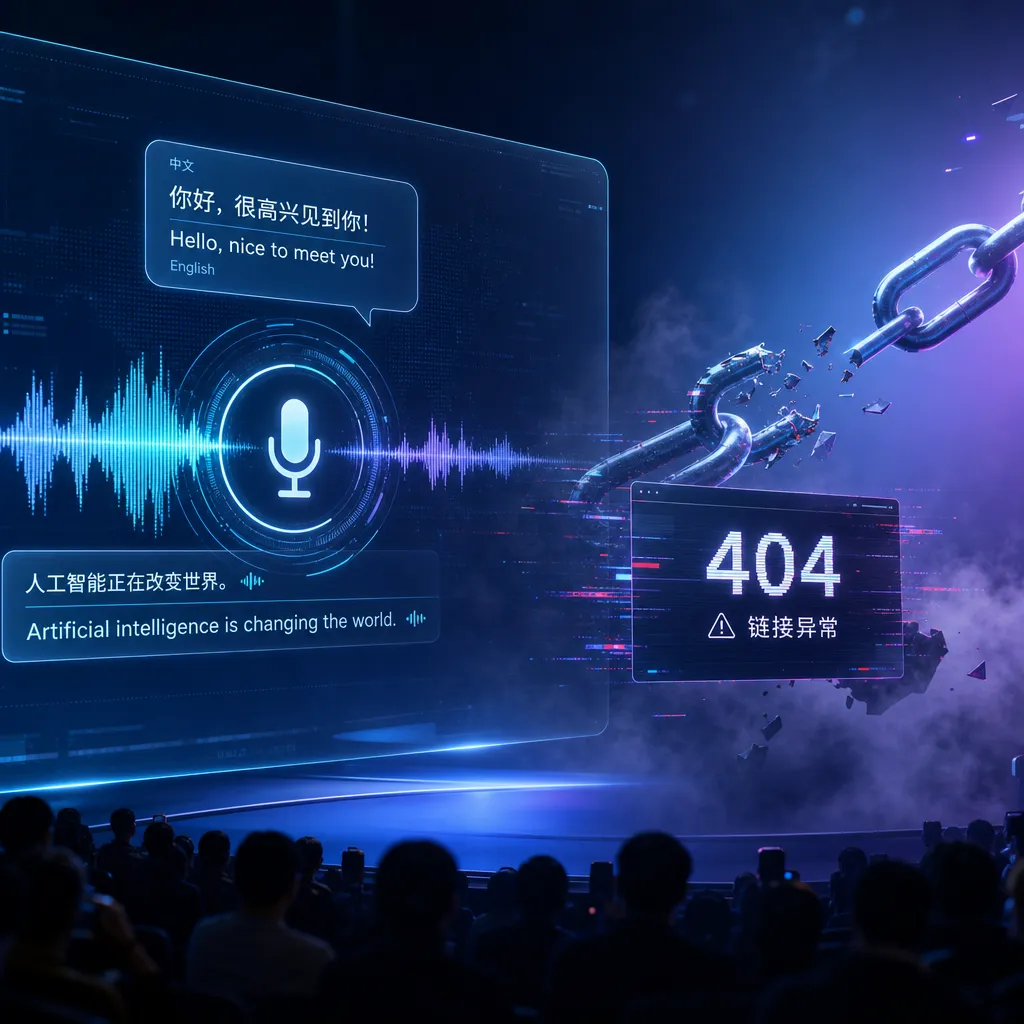
The Alibaba Qwen team has launched the translation model Qwen-MT, but all the official demo links are invalid, causing complaints in the developer community. This “amateurish” release happens to coincide with the launch of ByteDance’s Doubao simultaneous interpretation model 2.0, intensifying the competition between the two companies in the speech translation field.
Tongyi Releases Real-time Translation Model, Broken Demo Links Spark Heated Debate
Last night, Alibaba’s Qwen team under Tongyi launched its new translation model, Qwen‑MT. It should have been a noteworthy technological milestone — yet all the official demo links were broken, leaving developers unable to even see what the model looked like. One user on the Linux.do community ranted: “Tongyi’s so makeshift — all the links are wrong, no idea how to even test it!”
The mishap couldn’t have come at a worse time. On the same day, ByteDance’s Volcano Engine officially unveiled its Doubao Live Interpretation model, Seed LiveInterpret 2.0. It delivered impressive technical results and fully functional demo links. The contrast made Alibaba’s blunder especially awkward.
Behind the Link Failure: A Breakdown in Product‑Launch Process
From a technical perspective, Qwen‑MT itself may not have any issues. Alibaba has extensive experience in machine translation. Its end‑to‑end speech translation model Gummy, introduced at last year’s Apsara Conference, already demonstrated strong real‑time streaming translation. But this launch’s elementary error revealed disarray in the product‑release process.
A standard release flow should go like this:
The tech team completes training and testing → the product team sets up the demo environment → the marketing team prepares promo materials → multiple internal test rounds confirm the links work → public release.
Judging by what happened, Alibaba likely skipped the crucial “internal validation” step, or failed to properly separate test and production environments — causing the public links to point to internal addresses.
Such errors aren’t unusual even for big tech firms. Product managers push deadlines, tech teams rush delivery, testing gets squeezed, and no one does a full user‑journey check before launch. The result: slick PPTs, flashy demo videos — and a 404 when users click the link.
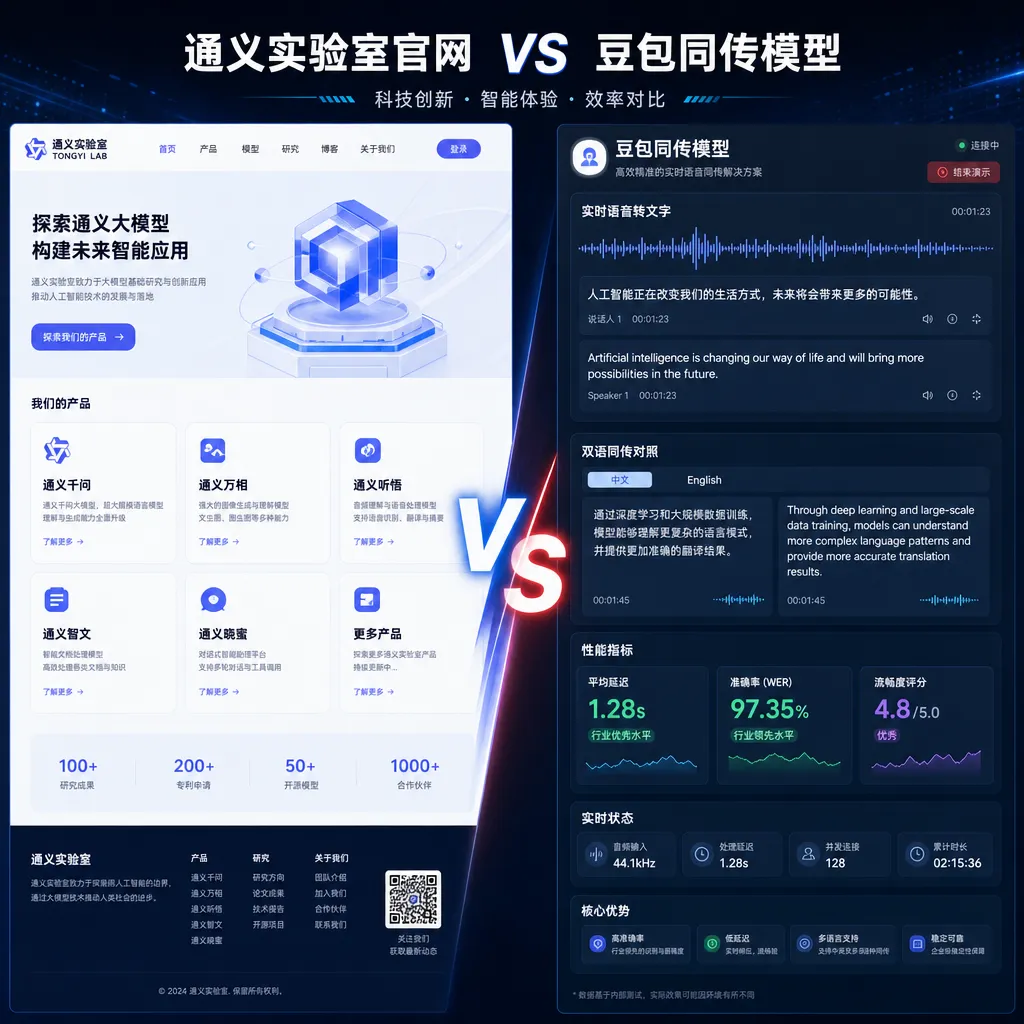
The irony: Tongyi Lab’s website boasts that “the Qwen LLM, pretrained at trillion‑parameter scale, supports natural language understanding, text generation, visual and audio comprehension, tool use, role‑playing, and AI‑Agent interaction.” Powerful as it sounds — what good is it if users can’t even get in?
Doubao LiveInterpret 2.0: ByteDance’s Ambition in the Voice Track
By comparison, ByteDance’s rollout looked far more professional. The Doubao Simultaneous Interpretation model, Seed LiveInterpret 2.0, not only leads in technical metrics but also offers a seamless user experience. Users can test Chinese–English two‑way translation directly on the Volcano Engine platform; the model clones the user’s timbre in real time and outputs translated speech with minimal latency.
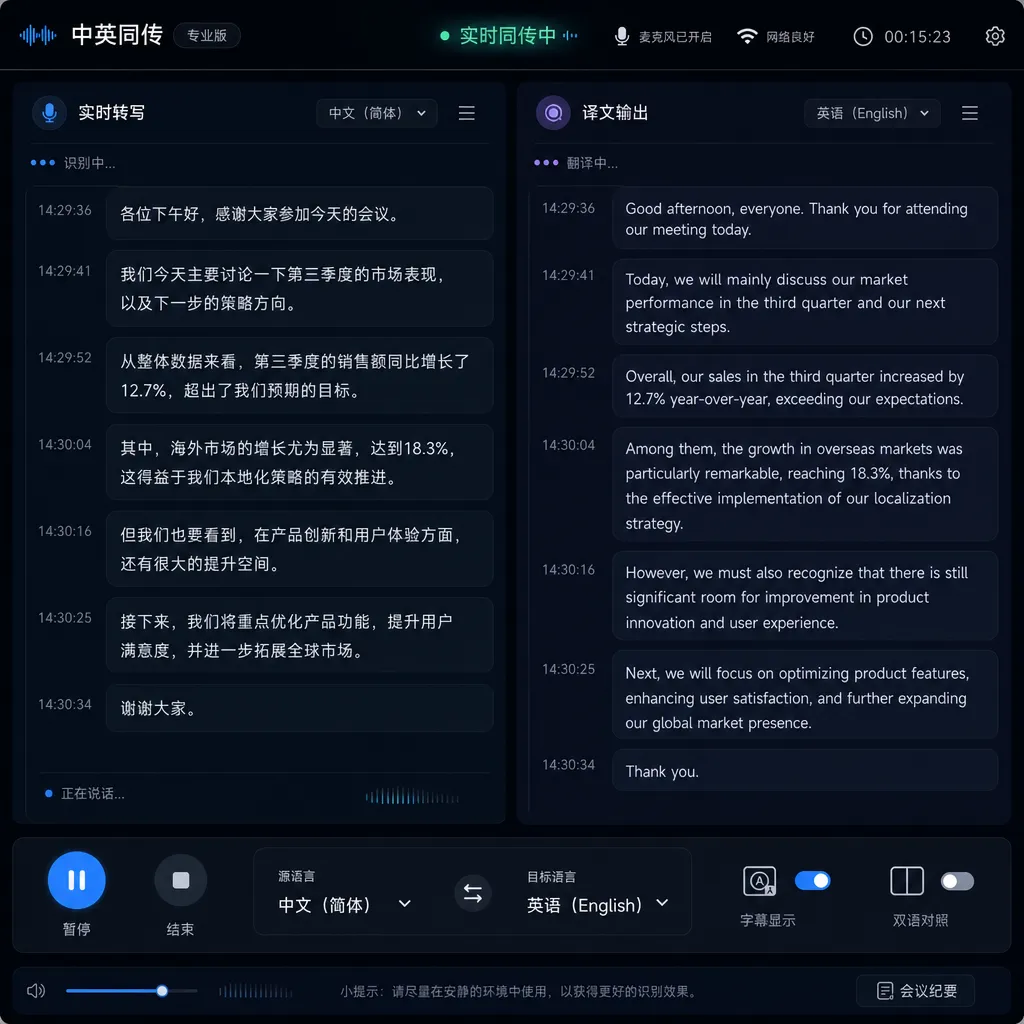
Technically, this model handles more than simple speech generation — it performs three tasks simultaneously: speech recognition (understanding what you say), machine translation (converting to another language), and speech synthesis (speaking naturally). These must run in streaming mode; if the model waits until you finish speaking to translate, latency kills the conversation flow.
Benchmark data from ByteDance shows that Seed LiveInterpret 2.0 achieves an average human‑evaluated translation quality score of 74.8 out of 100 in Chinese–English tasks — top‑tier among its peers. More importantly, it automatically decides whether to repeat subjects based on context and handles pauses or disfluencies in natural speech — details that distinguish robotic from human‑sounding translation.
One developer tested a line from Lu Xun: “Let every bit of warmth give off a bit of light; the infinite distance, countless people” — the model handled those short pauses flawlessly. Others found, however, that when interpreting English lectures, the voice‑cloning effect dropped sharply, with little similarity. This shows the model’s cross‑lingual consistency remains imperfect and needs improvement.
The Voice‑Translation Race: More Than a Translation Tool
It’s too narrow to compare Qwen‑MT and Doubao merely as translators. The real significance of this wave of models is that voice interaction capability has reached maturity — translation is just one application.
The timeline makes this clear. In 2024, ByteDance released its flagship speech‑generation foundation model, Seed‑TTS; in January, its first end‑to‑end speech understanding and generation model Realtime Voice Model; in April, it open‑sourced the bilingual Chinese–English TTS model MegaTTS3; and a month ago, launched the Doubao Podcast Model. These steps clearly aim to build a full voice‑tech matrix.
Alibaba isn’t standing still. Its Gummy model from last year’s Apsara Conference could already stream real‑time speech recognition and translation, though without voice cloning. Releasing Qwen‑MT now likely seeks to advance translation capability — but the bungled launch drowned that progress in ridicule.
Widen the view and you’ll see all major foundation‑model vendors piling into voice. OpenAI’s advanced voice mode, Meta’s Seamless Streaming (nearly 100 input languages, 36 output voices), MiniMax’s Speech‑02 (supports 200k‑character input, 30+ languages), iFLYTEK’s conference and translation earbuds — even Elon Musk’s xAI added an interactive 3D virtual girl Ani to its Grok app.
Everyone’s charging into this field for an obvious reason: Voice interaction is the key entry point of next‑generation AI products.
AI Hardware: The Last Lifeline
Each +1 improvement in text‑only chat UX might demand +100 in model quality and +10 000 in compute, algorithms, and architecture — a terrible ROI. Speech interaction, by contrast, offers a more natural, efficient experience and a clear commercialization path: AI hardware.
Since 2023, wearable AI assistants have proliferated — from Humane’s AI Pin and Rabbit R1 to Plaude and TicNote recording devices (nearly $100 million annual revenue), to ByteDance’s Ola Friend earbuds. AI hardware has effectively become the industry’s “lifeline” for monetization.
Why hardware? Because screen‑free devices like glasses and earbuds are natively suited to voice interaction, and they spur the market to explore hidden opportunities.
When announcing Seed LiveInterpret 2.0, ByteDance revealed the model would be quickly integrated into Ola Friend earbuds by August — signaling its intent: real‑time speech‑interaction experience is becoming the new battleground for AI devices.
Alibaba is making similar moves. Two days after Qwen‑MT’s launch, it unveiled its first AI glasses at WAIC. ByteDance is rumored to release its own glasses later this year. China’s brewing “hundred‑glasses battle” stands firmly on the foundation of real‑time voice interaction.

Technical Readiness: How Far to Go?
Back to the tech itself: today’s speech‑translation models still face clear limits.
First, language coverage. Doubao 2.0 focuses on Chinese–English. Compared with Meta’s Seamless Streaming (≈100 input and 36 output languages), that’s a gap. ByteDance still has a long road here.
Second, consistency of voice cloning. Performance varies by language direction — good from Chinese→English, noticeably worse from English→Chinese. Cross‑lingual consistency needs work.
Third, translation accuracy for specialized terminology. Domain‑specific terms still trip it up — a pain point in meetings, academia, and other professional settings.
On the flip side, these gaps reveal enormous room for optimization. Whoever solves them first will hold the edge in the race for AI’s next‑generation interaction gateway.
Commercialization Challenges: Dreaming of Profit from Models Alone
While overseas AI players are already experimenting with varied pricing models, domestic foundation‑model vendors stay mostly silent — except for a few structured schemes around AI Agents. As people often say: “Relying on models alone for profit is just a dream.”
Hence the rush into hardware. Hardware carries a clear pricing model; users pay for tangible experience. It also locks users into an ecosystem. ByteDance’s Ola Friend earbuds can activate the AI assistant with the wake phrase “Doubao Doubao.” It’s not revolutionary yet, but demonstrates a viable path to monetization.
Alibaba’s thinking is likely similar: AI glasses + Qwen‑MT translation target just‑need use cases like cross‑border travel and conferences — markets with clear commercial value and paying users.
The problem: hardware has steep barriers. Supply‑chain management, quality control, after‑sales service — all weak spots for internet companies. Meanwhile competition is fierce: iFLYTEK, Huawei, Xiaomi are all in. Whether Alibaba or ByteDance can break through remains uncertain.
Lessons From the Mishap
So, why did Tongyi’s launch flop?
On the surface, it’s a process breakdown. But deeper down, perhaps Alibaba didn’t view the project as strategic. If it had, such rookie mistakes wouldn’t happen.
A subtler issue: Alibaba’s AI rhythm seems unfocused — Gummy one moment, Qwen‑MT the next, then AI glasses — everything in motion, nothing perfected. ByteDance’s path is far clearer: build out the full voice‑tech stack first, then land it through hardware for a commercial loop.
For developers, this is also a reminder: Don’t blindly trust big‑tech credentials — user experience reigns supreme. No matter how advanced a model is, it’s worthless if users can’t access it. When choosing technologies, stability, reliability, and documentation often matter more than parameter counts.
The voice‑translation contest has just begun. Alibaba’s flop gave ByteDance a perfect publicity moment, but long‑term success will depend on technical depth and product polish. Whoever first conquers consistent voice‑cloning, terminology accuracy, and multilingual coverage will lead the next era of AI interaction.
As for Tongyi’s Qwen‑MT — let’s talk again once the links work.
References
- Tongyi messes up a real-time translation model launch – Linux.do — Developer community discussion of the failed release
- Doubao launches new simultaneous interpretation, taking aim at Alibaba’s AI glasses? – 36Kr — Technical analysis and industry insights on Doubao 2.0


