
Green Mountain launches Claude Max unified API gateway: 1.2x real multiplier challenges the industry

Green Mountain launches the Claude Max Enterprise Dedicated Gateway, billed at the official 1.2x true rate. It supports all mainstream clients such as Claude Code, Cursor, and Cline. By maintaining its own account pool and cutting out intermediaries, heavy team users can save thousands of dollars per year.
Green Mountain Launches Unified Claude Max API Gateway: 1.2x True Multiplier Challenges Industry Norms
In the past couple of days, a post on LinuxDO has been widely shared among developer circles — Green Mountain has launched a dedicated Claude Max enterprise line, promising billing at 1.2x the official Anthropic rate with detailed usage logs for reconciliation.
For those long immersed in the Claude proxy market, that number stands out. The industry norm has been anywhere from 1.3x to 1.5x, and most of the so‑called “1.2x” proxies actually charge closer to 1.4x in practice — inflated multipliers are an open secret in this niche. Green Mountain is clearly aiming to call out the bluff.
In short — what’s happening
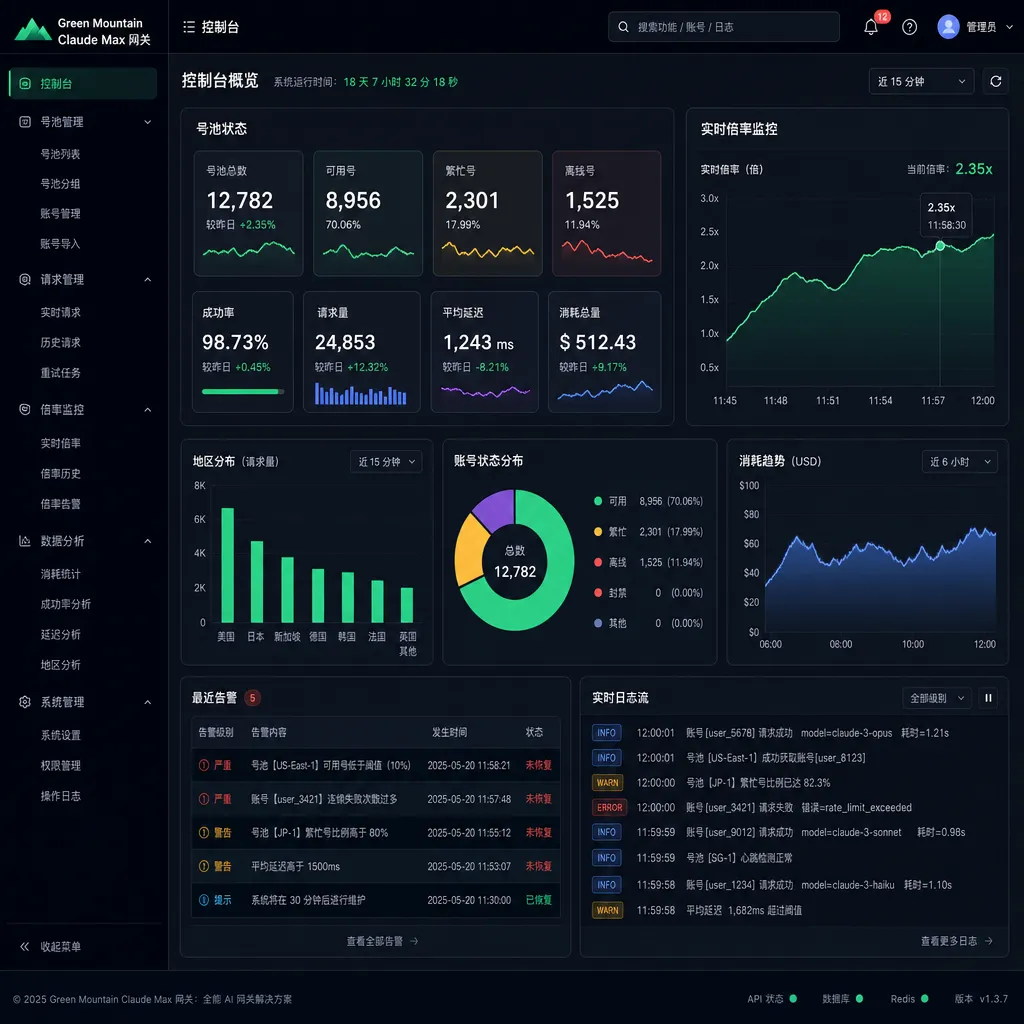
Green Mountain (domain zz.aigm99.cn) has built a unified AI gateway based on the New API framework, focusing on three key points:
- Self‑hosted Claude Max account pool, optional external linkage, cutting out first‑ and second‑tier proxy markups
- 1.2x true multiplier, promising official cost × 1.2 = final bill, with log‑by‑log reconciliation
- Full client compatibility: Claude Code, Cursor, Cline, Roo Code, Continue — all plug‑and‑play via the OpenAI‑style protocol
There are also community‑style touches like LinuxDO one‑click login (no registration) and a QQ Q&A group (1091368043). In essence, this is a refined proxy service aimed at heavy Claude users and small teams — not a “unlimited plan” for casual users.
1.2x vs 1.5x — how much money is that per year?
Decimals alone aren’t very revealing — the math is. Suppose a 5‑person team spends $1,000/month on official Claude compute (a modest level for a team using Claude Code for active development):
| Channel Type | Advertised Multiplier | Actual Multiplier | Monthly Bill | Annual Difference | |--------------|-----------------------|-------------------|---------------|-------------------| | Proxy A | 1.2x | 1.5x (inflated) | $1,500 | — | | Proxy B | 1.3x | 1.4x (hidden markup) | $1,400 | Save $1,200 | | Green Mountain | 1.2x | True 1.2x | $1,200 | Save $3,600 |
What does $3,600 a year mean? Roughly the cost of a top‑spec M4 Pro MacBook Pro. For a 5‑person dev team, that’s not “pocket change” — it’s a direct cost‑line improvement.
Scale that to $50,000 annual usage (say, a dozen engineers using Claude Code around the clock), and the difference between 1.5x and 1.2x is $15,000/year — that’s no longer one laptop, it’s a junior headcount.
Why can they afford 1.2x? Look at the cost structure
The excessive multipliers in the proxy market aren’t because Anthropic is restrictive — they come from too many middlemen. A typical legacy flow looks like this:
[Traditional Model]
Anthropic Max → Tier‑1 Reseller → Tier‑2 Proxy → You
                   ↑               ↑
                +15% markup     +20% markup     →  You end up paying 1.5x+
Every layer takes a cut. The longer the chain, the more the end user gets squeezed. There’s also an implicit drawback: each additional hop is another failure point, adding risks of account bans, throttling, and rate‑limiting.
Green Mountain’s model removes the middle layers:
[Green Mountain Model]
Anthropic Max → Green Mountain Self‑Hosted Pool → You
                                           ↑
                                    Only one markup
Self‑hosting means they buy, maintain, and load‑balance the Max accounts themselves. It’s real engineering work — health monitoring, quota balancing, anomaly blocking, automatic switching, and more. But a shorter chain naturally means lower multipliers.
This approach isn’t new — Cloudflare and CDN vendors have used it in bandwidth reselling for over a decade. The novelty lies in bringing it to the fast‑evolving AI API market.
What “compatibility” really means
When developers choose proxy services, multipliers are just one factor — the second is “can I switch with zero friction in my current toolchain?” The clients Green Mountain supports cover almost all the mainstream fronts:
- Claude Code: Anthropic’s official CLI, now the main battlefield for coding
- Cursor: editor‑side Claude entry, with the world’s largest developer user base
- Cline / Roo Code: VS Code plugin route, representing agent‑powered coding
- Continue: veteran open‑source AI coding assistant supporting custom backends
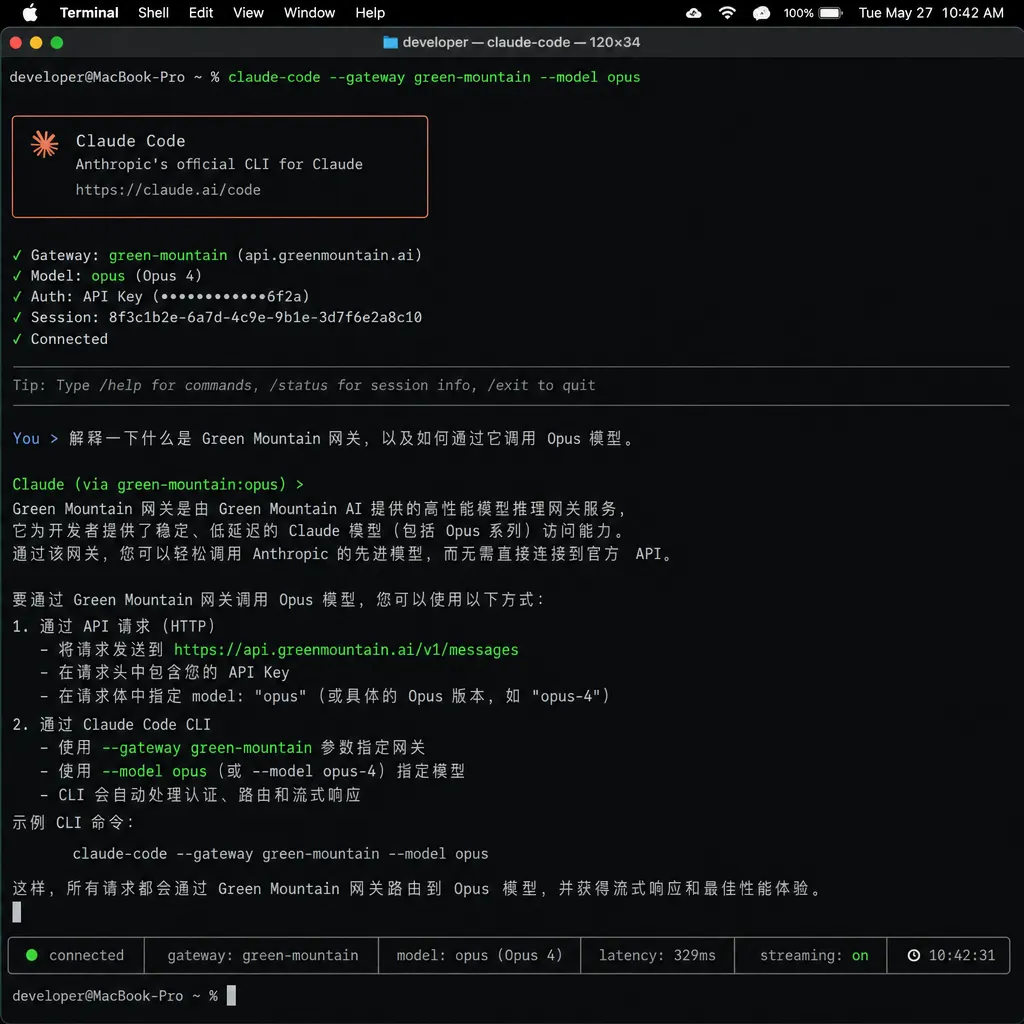
Technically, there’s no mystery — the New API framework already supports the OpenAI‑style protocol and has native Anthropic adaptation. Clients only need two environment variables changed:
# Claude Code connection example
export ANTHROPIC_BASE_URL=https://zz.aigm99.cn
export ANTHROPIC_API_KEY=<your Green Mountain key>

# For Cursor / Cline and other OpenAI-compatible clients
# just fill in the Base URL and API Key in settings
A small but notable detail: LinuxDO one‑click login. For Chinese developers, skipping phone and email verification altogether — just logging in with a LinuxDO account — is the kind of convenience you don’t want to give up once you’ve tried it.
Real market context: Anthropic tightening enterprise Max plans
To understand why Green Mountain launched now, look at the backdrop. Several Reddit threads have been buzzing — Anthropic is revising its enterprise Max plan policies, with some companies told they must switch to on‑demand API billing when contracts expire.
That means:
- The cost advantage of Max x20 enterprise bundles is fading — on‑demand API is pricier, and large usage quickly balloons monthly expenses.
- A wave of demand migration — teams relying on enterprise Max monthly plans will reassess third‑party gateways.
- Multiplier competition will intensify — whoever is stable, cheap, and compliant will capture that migration.
Choosing this moment to launch the 1.2x true multiplier line is a precise move by Green Mountain — directly targeting teams just cut off from enterprise Max who don’t want to pay full API price.
Honestly speaking — who this line fits, and who it doesn’t
After years reviewing AI tools, the last thing I’d do is call a product flawless. This one has a clear niche — and limits.
Best suited for:
- Small teams (3–20 people) heavily using Claude Code / Cursor
- Individuals or studios spending $500+ per month on Claude
- Latency‑sensitive, domestic‑connection scenarios
- Veteran users tired of fake multipliers and demanding “true billing” transparency
Less suited for:
- Large enterprises with strict compliance (should go directly with Anthropic or AWS Bedrock)
- Light users under $50/month (no real cost gain; switching adds overhead)
- Mission‑critical production pipelines needing strong SLA guarantees (a proxy, however stable, still depends on upstream pools)
A broader view: unified gateway competition is heating up
It’s worth noting that the “unified API gateway” track has clearly accelerated over the past year. Aggregator platforms like OpenAI Hub — one key to call all mainstream models (GPT, Claude, Gemini, DeepSeek), OpenAI‑compatible, domestic connectivity — follow the same idea as Green Mountain: consolidate scattered model providers into one interface, optimize billing, routing, and account pools.
The difference: OpenAI Hub focuses on multi‑model aggregation, while Green Mountain’s line focuses on deep Claude Max specialization. For developers, it’s not either‑or — use a hub for multi‑model workflows, and attach a dedicated Claude line for heavy use; that combination may be optimal.
In conclusion
For the past two years, the Claude Max proxy market has been “deep water, many traps, hard to reconcile.” Green Mountain’s move — publicly committing to a 1.2x true multiplier and line‑item log reconciliation — takes transparency one step forward.
Whether it can sustain that promise in account‑pool stability remains to be seen. But for developers evaluating proxy options, one more clearly priced choice is welcome. As multiplier wars heat up, the ultimate winner will be the user’s wallet.
References
- 【富可敌国】Green Mountain Claude Max Channel · True 1.2x Rate · Self‑Hosted Pool with Zero Middlemen – LinuxDO: Green Mountain Claude Max channel launch post including multiplier details, client compatibility list, and reconciliation commitment.
- Claude is dropping Max plans for enterprise – Reddit: Reddit discussion on Anthropic’s enterprise Max plan adjustment, providing background for current proxy‑market changes.


