
Opus 4.8 Revealed Ahead of Time: Claude Code and the Desktop Version Exposed
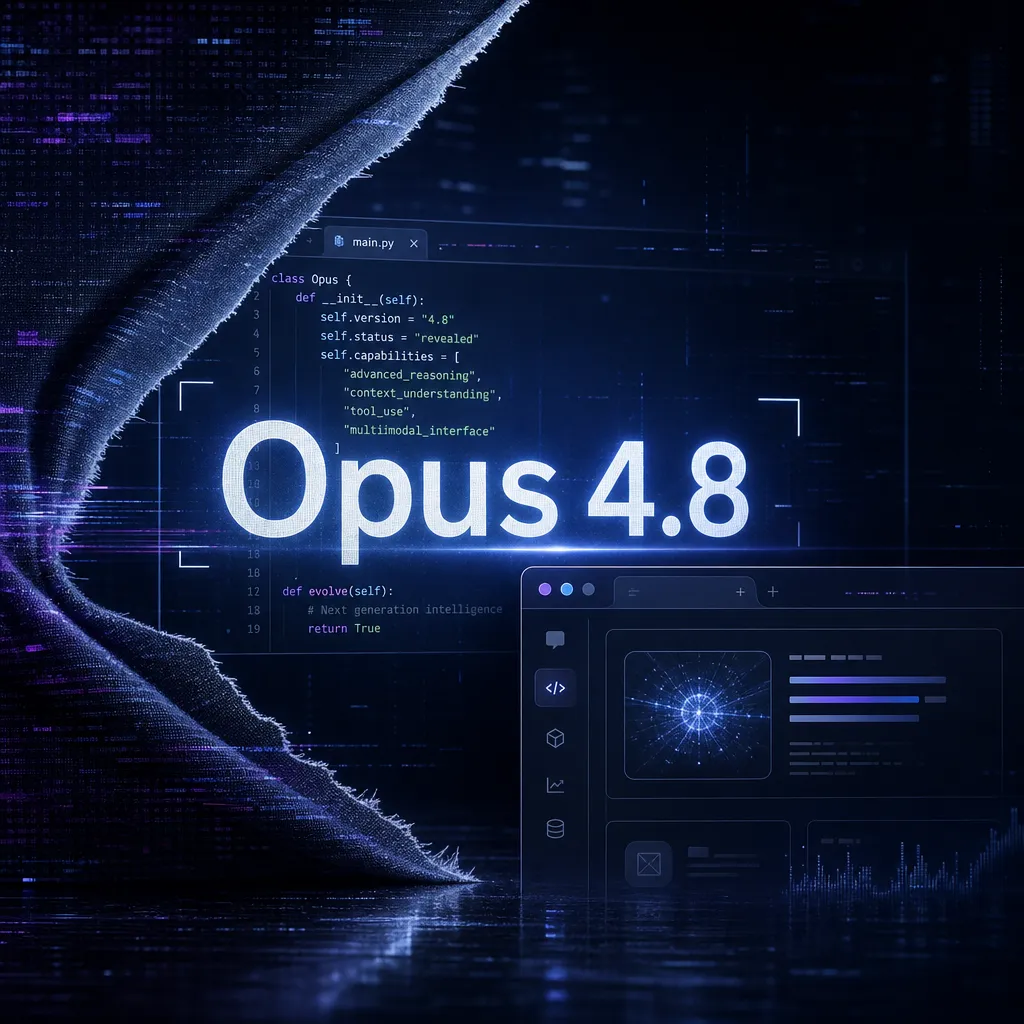
Developers discovered the Opus 4.8 label in the model selector of Claude Desktop and Claude Code, and almost simultaneously, **claude-opus-4.8** appeared in the Vertex AI backend. Only a month has passed since the release of 4.7, and Anthropic’s iteration pace is becoming increasingly aggressive.
Opus 4.8 Revealed Ahead of Schedule: Claude Code and Desktop Version Leak
Claude is about to release a new version—this time it’s not a guess, but an actual trace left behind.
Over the past couple of days, multiple developers digging through the Claude Desktop app’s code or browsing the model selector in Claude Code have found a yet-unreleased name—Opus 4.8. At the same time, someone captured claude-opus-4.8 listed in Google Vertex AI’s backend. Two independent clues point to the same conclusion: Anthropic is preparing to launch a new flagship model—most likely in June.
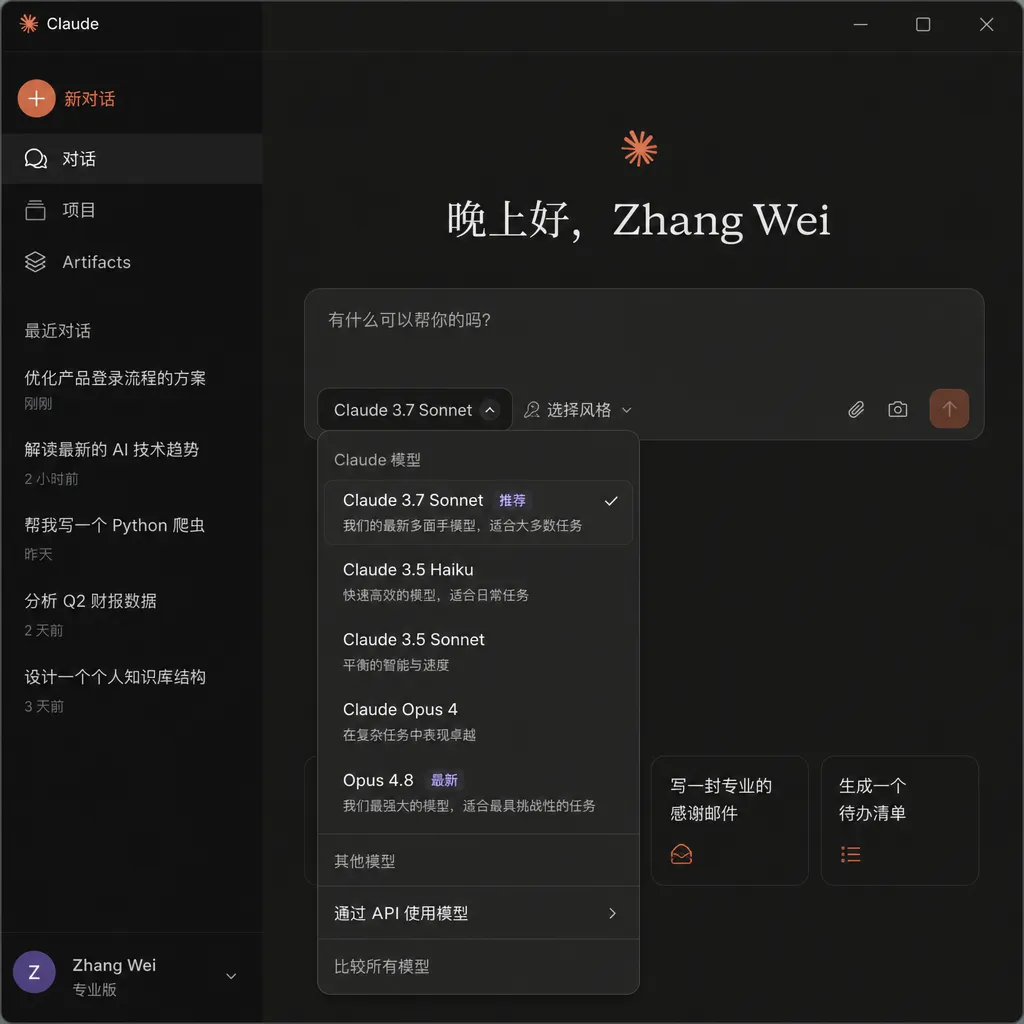
The discovery isn’t surprising. Both Opus 4.6 and Opus 4.7 followed the same script—first spotted by developers in Vertex AI’s backend, then officially announced weeks later. Essentially, Vertex AI has become Anthropic’s semi-public teaser window: Anthropic clearly knows about it but never bothers to seal the leak.
One Update Per Month—How Aggressive Is Anthropic’s Rhythm?
Looking back at the timeline shows how fast the cycles have become:
- In April, Opus 4.7 was released, outperforming Gemini 3.1 Pro and GPT-5.4 in public benchmarks
- By late May, Opus 4.8 was already being tested on Vertex AI
- Meanwhile, the internal codebase was repeatedly referencing Sonnet 4.8
This means Anthropic has accelerated to a minor version every month. This approach is totally different from past patterns—GPT‑4 to GPT‑4 Turbo took half a year; Claude 3 to Claude 3.5 took three or four months. The reason is simple: OpenAI is testing GPP‑5.6, Google’s Gemini 3.5 Pro is said to arrive in June, and OpenAI—facing IPO pressure—has been pushing hard on coding capabilities. When three major players are in a full‑on slugfest, even being slightly slower means you lose the public narrative.
The side‑effect is clear: version numbers are getting awkward. Opus has gone from 4.0 to 4.6, 4.7, now 4.8—no one knows how far 5.0 is. Given Anthropic’s naming habits, Opus 5 will likely mark a major architectural leap, not just incremental capability gains.
Sonnet 4.8 Skipping 4.7—There’s a Story Here
The Sonnet line is even more interesting.
On March 31, when Anthropic pushed an npm update for Claude Code (v2.1.88), a comically unfortunate mistake occurred—a missing line in the config caused a 59.8 MB source map containing 512 000 lines of TypeScript code and 1 900 internal files to be publicly uploaded to npm.
Claude Code project lead Boris Cherny later admitted on social media that it was “a normal developer error.” But “normal” didn’t help—the source map’s keyword filter contained references to sonnet-4.8 and opus-4.7, with no sign of sonnet-4.7.
This means Anthropic decided to have Sonnet jump directly from 4.6 to 4.8. In industry terms, this usually means one of two things: either 4.7 was tested internally and scrapped, or it’s simply to align version numbers with Opus for marketing consistency. Judging from code clues in the leaked source map, the latter seems more likely—Sonnet 4.8 is set to inherit the visual‑understanding upgrades from Opus 4.7, bringing UI design and architecture‑diagram recognition accuracy (98.5 % in Opus 4.7) down to the far cheaper Sonnet tier.
For developers, that’s big news. Opus runs are costly, and few can handle both visual + code tasks efficiently. But once Sonnet takes over that capability, workflows like “drop in a Figma screenshot and instantly get runnable React components” could move from demo to everyday use.
Mythos 1: The Allegedly “Too Dangerous” Model Emerges
Almost simultaneously with the Opus 4.8 leak, some Claude Web users briefly saw a model option named Mythos 1. Its ID was claude-mythos-1-preview, which was quickly removed, but new string entries in the source revealed its focus: Claude Code and Claude Security.
The Mythos codename has floated around for half a year. The earliest rumors claimed Anthropic had an internal “too dangerous to release” model line—used for adversarial training and high‑risk tests. With Mythos 1 now appearing, along with Anthropic’s security report published at nearly the same time (detailing recent vulnerability‑research results), we can confirm:
- Mythos 1 is not a next‑gen general model, but a specialized model focused on coding and security
- It will initially target enterprise clients, bundled with a new security dashboard (showing discovered vulnerabilities, 7‑day/30‑day trends, and categorizations)
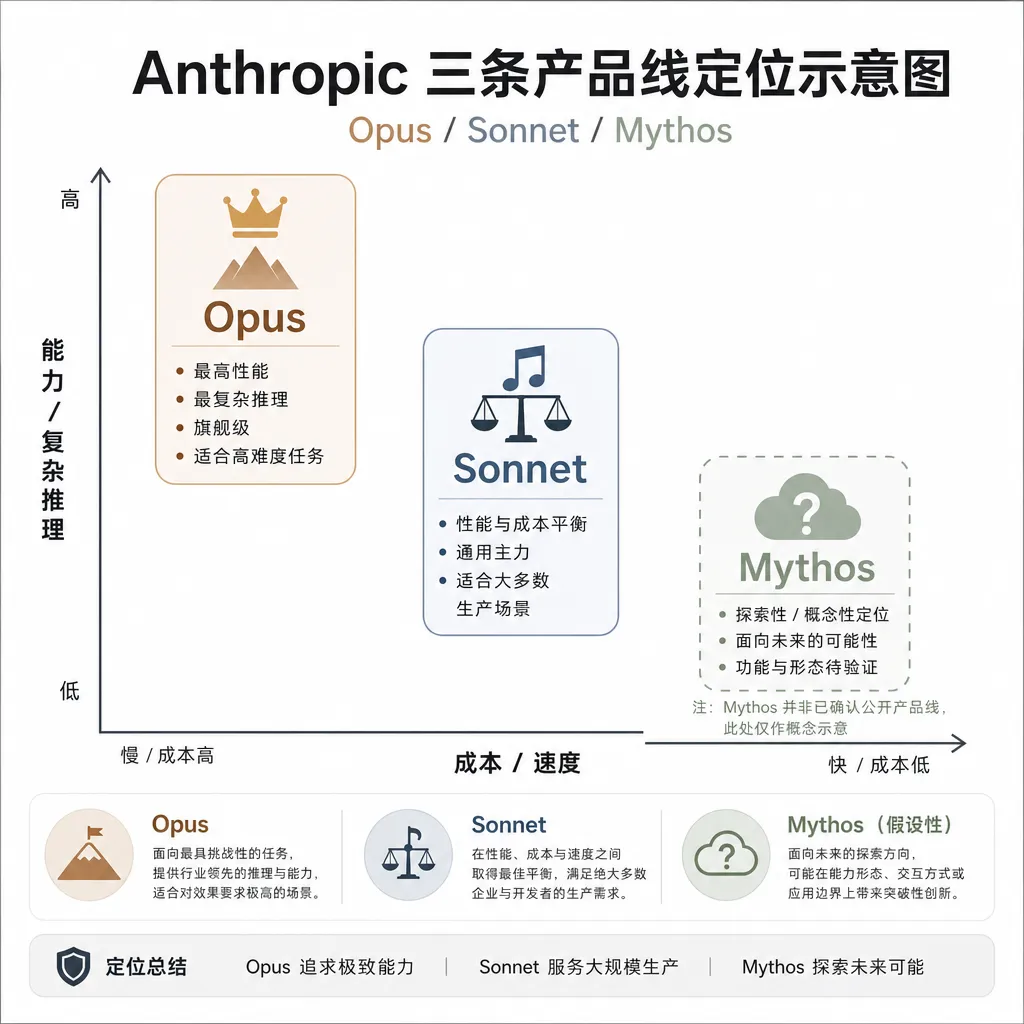
- This line runs parallel to Opus and Sonnet, not replacing either
This setup is very Anthropic—it’s always used “safety” as a defining differentiator from OpenAI. With Mythos 1, that distinction now extends into the model lineup: Opus covers general intelligence, Sonnet covers cost‑effectiveness, Mythos covers compliance and security auditing.
What Opus 4.8 Will Likely Strengthen
Based on Opus 4.7’s capability profile and Anthropic’s recent public hints, 4.8 is expected to focus on three main areas:
1. Long‑range stability for agent tasks
Opus 4.7 can already run continuous tasks for tens of minutes or hours inside Claude Code but still sometimes “loses the target” or gets stuck on irrelevant branches. 4.8 will likely improve goal‑tracking in long contexts, boosting success rates for multi‑step agent workflows.
2. Further refinement of visual understanding
Opus 4.7 hit 98.5 % accuracy for UI mockups and architecture diagrams, but handling of “dirty data”—handwritten notes, low‑quality screenshots, scans—still lags. Internal test leaks suggest 4.8 pushes this further.
3. Better tool‑use reliability
This has been developers’ biggest complaint this year—Claude’s format discipline in tool calls still trails GPT. If 4.8 fixes that chronic issue, API integrators will have genuine reason to celebrate.
What Will Change in API Usage
Following previous releases, the API identifier for Opus 4.8 should be claude-opus-4-8 or similar. Invocation remains fully compatible with existing Claude series models. Developers already integrated via OpenAI Hub will likely be able to switch the model field on release day without any code changes:
from openai import OpenAI

client = OpenAI(
    base_url="https://api.openai-hub.net/v1",
    api_key="your-api-key"
)

response = client.chat.completions.create(
    model="claude-opus-4-8",  # Replace with the new name after release
    messages=[
        {"role": "user", "content": "Refactor this code and explain optimization points"}
    ],
    max_tokens=4096
)

print(response.choices[0].message.content)
OpenAI Hub has consistently integrated new Claude models immediately—Opus 4.6 and 4.7 both went live the same day. Opus 4.8 should be no exception. For developers in China, this removes the hassle of VPNs and foreign accounts: one API key, instant model switching—a genuinely useful advantage for aggregator platforms.
A Few Notable Details
Version‑number inflation: The capability gap between Opus 4.6 → 4.7 → 4.8 already rivals some vendors’ major upgrades. Anthropic using minor increments for major changes may be a tactic to preserve narrative space for Opus 5.
Vertex AI’s “leak habit”: Three consecutive generations of Opus appearing first in Vertex AI’s backend seems too consistent to be a Google ops issue. It’s more likely Anthropic’s tacit pre‑release strategy—these semi‑public leaks generate small‑scale buzz before the official launch.
Tight linkage with Claude Code: This time, 4.8 was discovered in the Desktop version’s code model selector, not its chat interface. That suggests Anthropic’s product focus continues to shift toward the “AI programmer” direction—Opus 4.8’s main demo scenario will probably still be coding, not general conversation.
Final Thoughts
Model versioning has become so intense that “last month’s release” is instantly succeeded “next month.” For developers, that’s not always ideal—just integrate 4.7 and soon you have to reassess 4.8’s pros and cons. Yet on the flip side, fewer players can sustain this speed; the big three’s fierce competition keeps pushing actual capability thresholds downward.
Going by current momentum, Opus 4.8 should launch as early as next week or, at the latest, mid‑June. Mythos 1, due to its enterprise‑security focus, may go through a longer closed beta. We’ll be monitoring both the Vertex AI backend and Claude Desktop updates—once something new shows up, we’ll report it immediately.
References
- linux.do – Opus 4.8 Seems Close to Release, Model Selector Label Found in Claude Desktop: Original discussion on Opus 4.8 appearing in the Claude Desktop model selector
- linux.do – Is 4.8 Coming Soon?: Community thread on expected release timing
- linux.do – Claude to Receive Major Update; Opus 4.8 Model Reportedly Surfacing in Claude Code and Desktop: Pre‑release summary compiling multiple sources and comments from 9 developers


